This article was originally written in March 2019. It contained my opinions at the time concerning ethical issues in anime and how they can essentially be ignored. I now feel extremely embarrassed about the things I wrote, and I don’t want to create confusion on Anime Rants about where I stand at the present. That’s why I completely rewrote this article in January 2024. It now contains my updated thoughts and opinions.
Part 1: Introduction
Among anime fans are those without humanistic sensibilities, who do not care in the least about social justice. This sort of anime fan is typically a neckbeard or some other flavor of ignorant or malicious right-winger. These people don’t represent the majority of anime fans, but are an extremely vocal minority that holds a lot of influence in the world of online anime fandoms.
As a more socially aware person with a normal set of humanistic morals, you might hear about the greasy, privileged otaku type and mistakenly think it applies to all anime fans. I’m here to tell you that’s not the case. Many anime fans, including myself, care a great deal about social justice and being a good advocate to the best of our abilities. That’s right – I like anime and I also care about social justice.

The neckbeard type isn’t too keen on people like me being active members of anime communities, but they also won’t go out of their way to challenge me outside of cesspools like Twitter (I refuse to call it X). There’s a reason I only use that platform occasionally for connecting with other bloggers. All that to say, despite the whining from antisocial otakus, plenty of people like me still enjoy anime. That’s unlikely to change.
As someone who does care about ethics and improving the world, I am aware of many different problems in the anime industry. Despite these problems, I still choose to watch some anime series, and I’ll eventually explain how I can justify that for me personally. Before we go there, however, I wish to provide a few examples of problematic elements that plague Japanese anime as a form of media.

Part 2: Ethical Issues within Anime
Content Warning: The following section briefly mentions lolicons/pedophilia, sexual harassment, sexual assault, and rape.
First, we’ll discuss yuri and shoujo ai. In case you don’t know, shoujo ai means Girls’ Love and it focuses on powerful bonds between girls – sometimes romantic, but also any other kind of bond. Yuri is also about relationships between girls, but it’s usually explicitly sexual in nature. Don’t make the mistake of thinking these genres exist for LGBT+ representation. Some series do manage to depict interesting gay characters, but by and large, they are made for the male gaze.
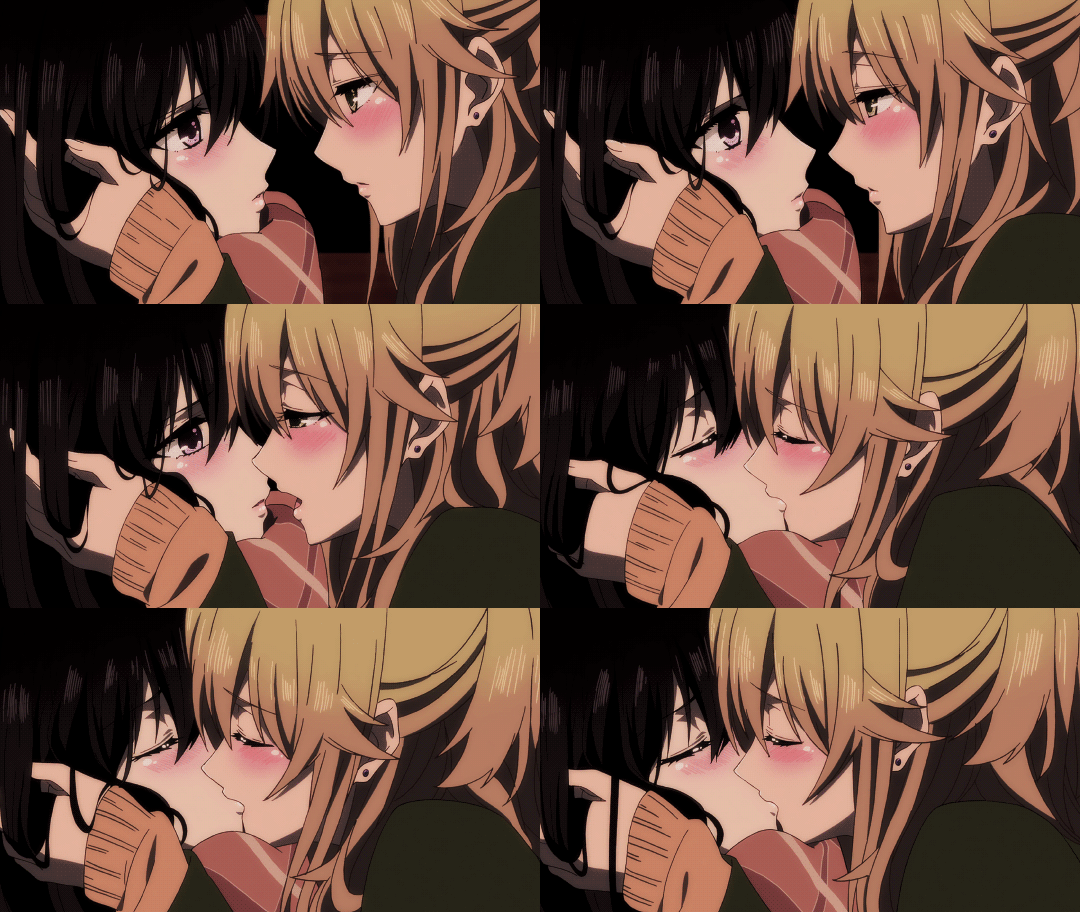
In addition to fetishizing queer romance and sexuality, much of yuri and shoujo ai serves to sexualize very young girls, usually anywhere from ages six to sixteen. That’s obviously a huge problem, and it leads us into a related topic: lolita and shouta anime. It’s gross to have to explain, but here goes. Lolita anime is targeted at “lolicons,” those who enjoy sexualizing extremely young female characters. Children. A lolita or a loli is a little girl, while a shouta (shounen lolita) is the male equivalent.
Five years ago, I was still doing “Lolicon Apologetics” because A) I feared being ridiculed and rejected by male anime fans, and B) I was still ignorant, not having heard any counterarguments against lolicons. This is one area in which I have completely flipped now that I know better. I don’t make excuses for lolicons. I consider them highly concerning. It’s technically true that not all lolicons are pedophiles, and not all pedophiles act on their desires. That still doesn’t make it acceptable to sexualize children – fictional ones included.

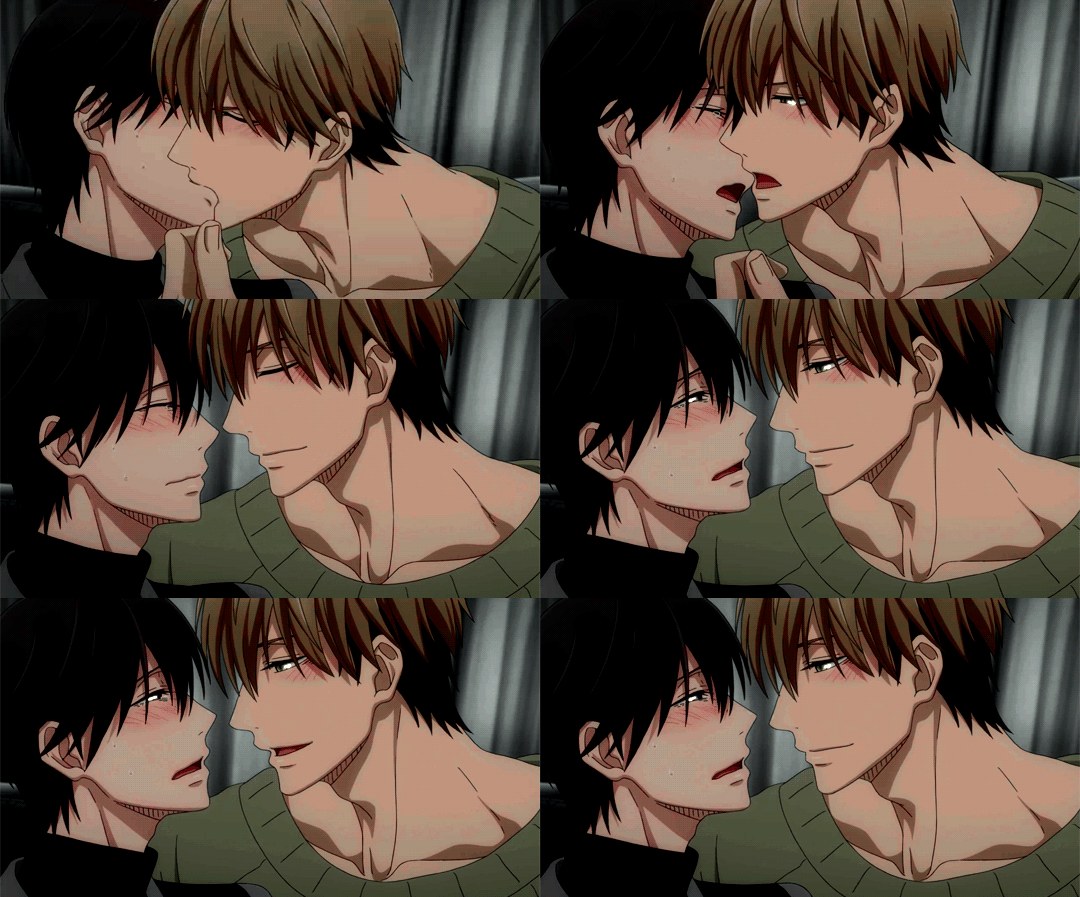
The next issue is the way the yaoi genre romanticizes sexual assault and sometimes rape. Yaoi is where male characters have sexual relationships with each other. This is different from shounen ai, which is also called BL (Boys’ Love). Since they are about light romance or bonds, shounen ai and BL shows rarely have the problem I’m referencing. The problem occurs much more in explicit yaoi animations.
In this type of anime, the couple is always made up of a dominant top (seme) and a submissive bottom (uke). All over the yaoi genre, uke characters get sexually assaulted or even raped by the seme characters. It’s often portrayed as hot and sexy. Instead of becoming traumatized, defensive, or furious, the uke characters magically fall in love with their abusers and rapists. I shouldn’t need to explain why this is problematic.
Another deeply rooted problem in anime is misogyny. This shows in several ways, including frequently insulting women, stereotyping women, and altogether failing to write decent female characters. This issue most likely won’t improve without a greater societal push in Japan against sexism. In the meantime, though, there are a few things that could help, such as adding more female creators and writers to the content-making process, and including more female characters who are well-written with stories of empowerment.
Lack of representation is another issue within anime, whether we’re talking about LGBT+ representation or ethnic/racial diversity. It’s especially difficult to get traditional otaku type to care about this, because the majority of them are cishet white males who don’t experience hardships related to their identities. It’s definitely going to be a tough and bitter uphill battle for people like me if we ever want to see consistent examples of good representation in anime.

Part 3: Why I Still Watch Anime
Before I talk about why I can justify watching anime, let me make it clear that this is a personal thing that will vary by individual. Not everyone has to choose the same way I did. If you find anime too difficult or frustrating to handle because of its underlying issues, then it’s fine to just not touch it. Alternatively, people like me can still watch anime, but we learn our boundaries and avoid watching shows that would upset us.

Now then, why do I still watch anime and consume so much of it every year? There are four main reasons. First of all, there are some genuinely good anime series with little to no ethical issues. Similarly, there are anime series with enough positive or thought-provoking elements to balance out my frustration with the systemic problems. Finding and analyzing this kind of rare anime makes me euphoric. For me, even if I have to trudge through a vast swamp of mud, it’s worth it to find the occasional gold nugget.
The second reason I continue to watch anime is that it’s the form of media I connect with most in my adult life. I love stories in every form, but I do have a preference for certain media types. When I was a kid, reading books was my favorite form of story consumption. But for many years now, I’ve been terrible at making myself read. So, I turn to my next favorite source of stories, one that is easier when you have ADHD: anime.
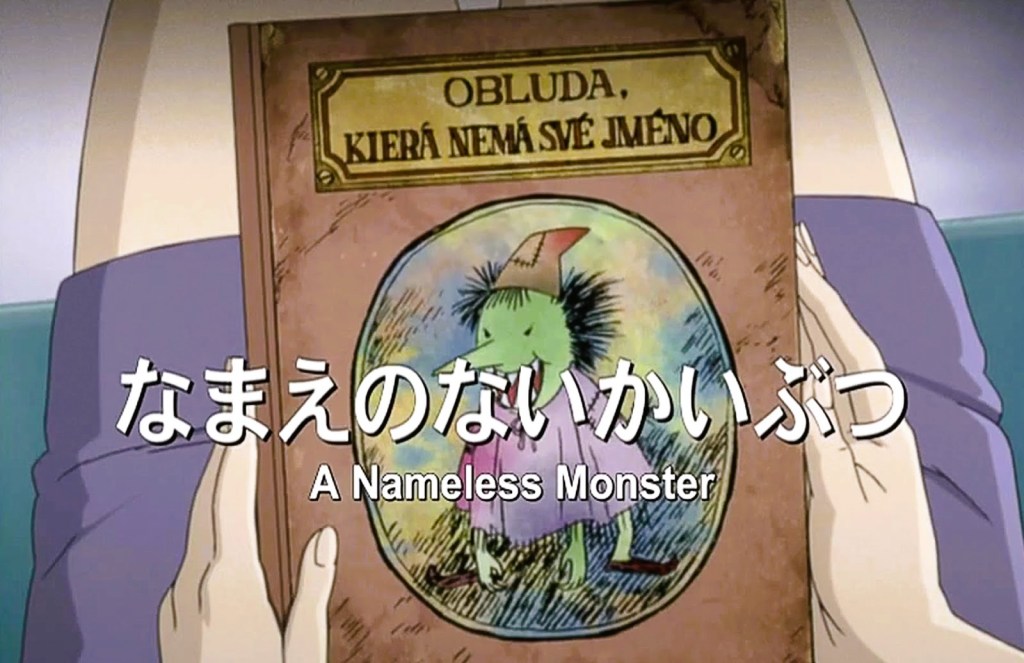
Anime is a beautiful treat for the senses, with powerful audio elements just like a movie, and many different styles of art and animation. Since I watch subtitled anime far more than dubs, I also engage my reading side. Anime has several narrative tricks that make it easier for me to vibe with the story. For instance, we often get to hear a character’s internal monologue or thoughts, giving us a whole new level of insight. There are more examples, but let’s move on to my next reason for sticking with anime.
In addition to helping me appreciate my senses, anime provides opportunities to learn that I find greatly appealing. For example, anime was my gateway into learning some Japanese. It sparked my interest in foreign language for the first time. Anime can inspire you to expand your knowledge-base by introducing mythology, historical backgrounds, and cultural information. There are even anime series like Cells at Work or Ascendance of a Bookworm that are specifically educational.

There’s one final reason to continue watching anime even with its abundant problems. Watching it and familiarizing yourself with the content can lead to important discussion opportunities. In other words, you can bring the problems to the attention of viewers who might realize yet. You can raise awareness of how far this industry needs to go to improve. Many productive and interesting interactions can be had with anime as a friendly way to spark it.
Key points for why I watch anime:
– Toughing it out for the few masterpieces of anime
– Appreciating anime’s unique style of storytelling
– Being inspired to learn new things from anime
– Using anime to prompt meaningful conversations
With that, we’ve been through all the major points I wanted to cover in this post. To put it in a nutshell: I care about social justice and human rights advocacy – and I also happen to love anime. It’s not as uncommon as you might think. There’s no good reason why people like me can’t join anime fandoms, enjoy the content, and help educate others about systemic issues in the industry. Thank you for reading. Sayonara until next time.
 Anime Rants
2 thoughts on “Rant: I Love Anime AND Social Justice!”