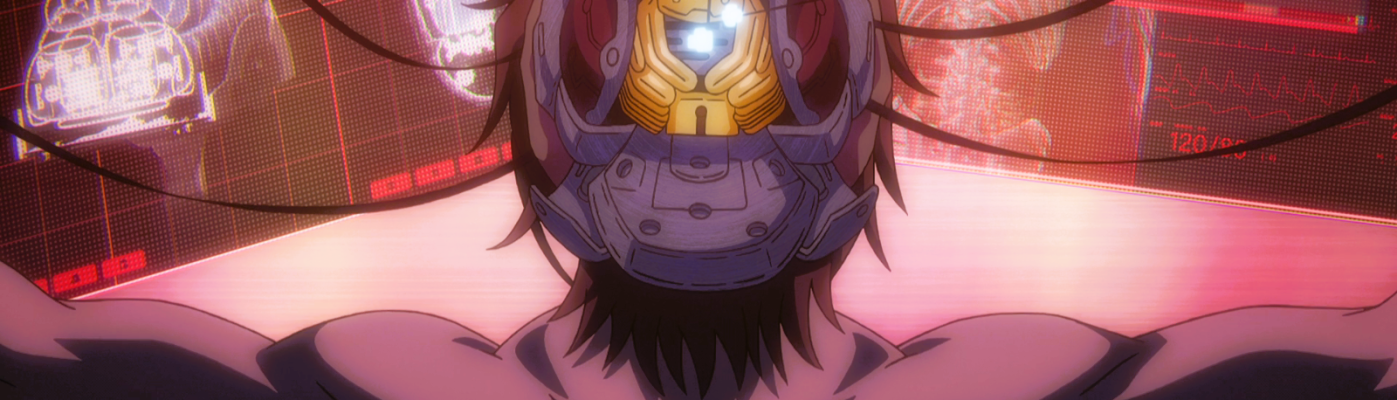
Imagine you are deeply depressed from unrequited love. If there was a way to remove your romantic feelings, would you consider it? Do you think media such as children’s cartoons should follow strict ethical rules? Have you ever thought about whether religions and spiritualism will persist into the future? If any of these questions interest you, then you might enjoy The Gene of AI.
Hey there, and welcome to Anime Rants. The Gene of AI finished airing on September 29th, but I’m still trying to complete my episode reviews here in the middle of October. I’m sorry about the belated content. Without further rambling, here are my reviews for episodes 8, 9, and 10!
Episode 8: Confession
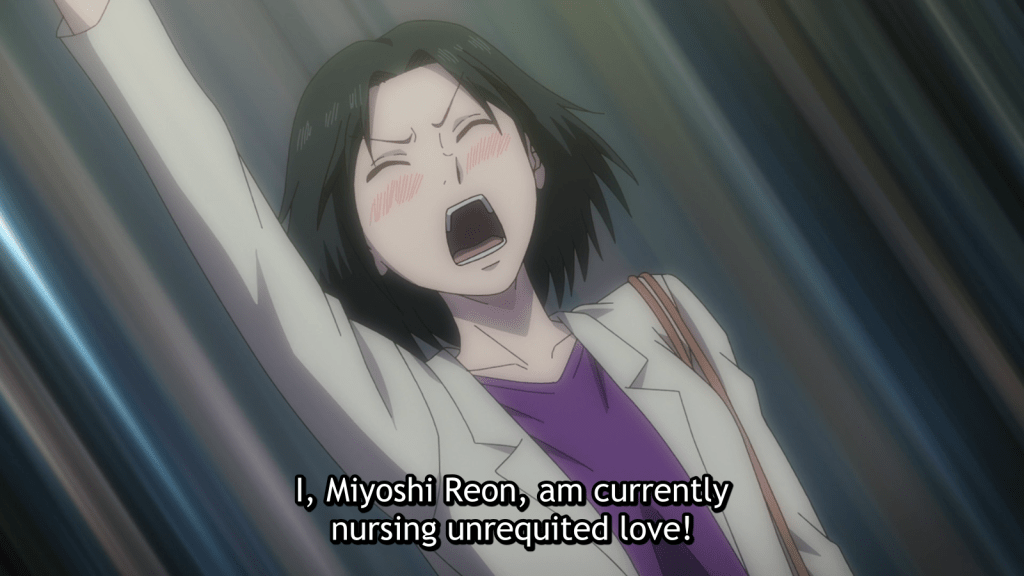
Episode 8 is one of my favorite installments so far. I wasn’t expecting this show to bring back the lesbian character, but she was the center of the story this time. Her real name is Miyoshi Reon, but Risa calls her “Breezy” due to her usual carefree attitude. As you may recall, Miyoshi is secretly in love with her best friend, Risa. But she’s keenly aware that Risa loves Dr. Sudo, and she’s sick of unrequited love. Something needs to change.
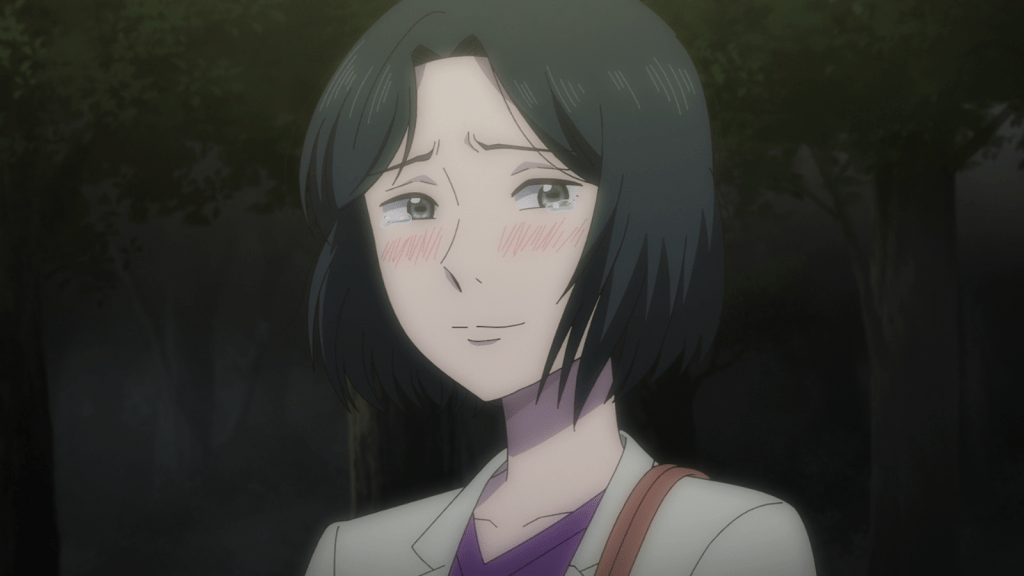
Shortly after Valentine’s Day, Miyoshi comes to Dr. Sudo’s clinic to consult with him about having her romantic feelings removed. This is possible to do in a Humanoid’s mechanical brain, but it’s a complicated and serious procedure. Risa senses that something isn’t right and asks her friend about it. That evening, Miyoshi finds her courage and reveals her feelings to Risa, who is surprised and unsure how to respond.
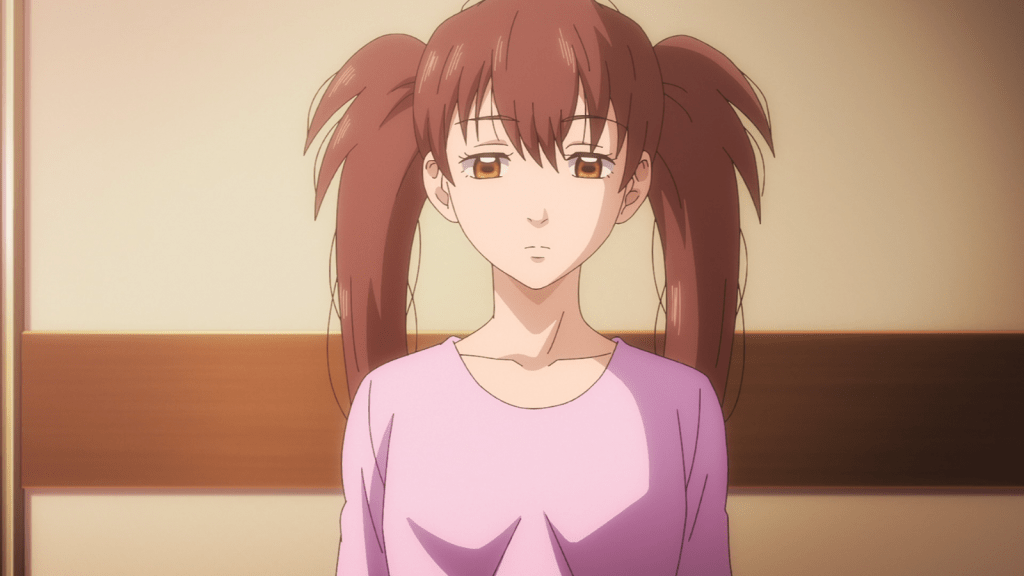
Consultations continue, and Dr. Sudo checks in with Miyoshi over the course of two months. Finally, he approves the treatment. On the day of the procedure, Risa tells Miyoshi that she loves her as a friend, and that whether or not she gets her feelings removed, this won’t change. The ending of the episode doesn’t make it clear whether or not Miyoshi goes through with the procedure. For now, it’s up to interpretation.
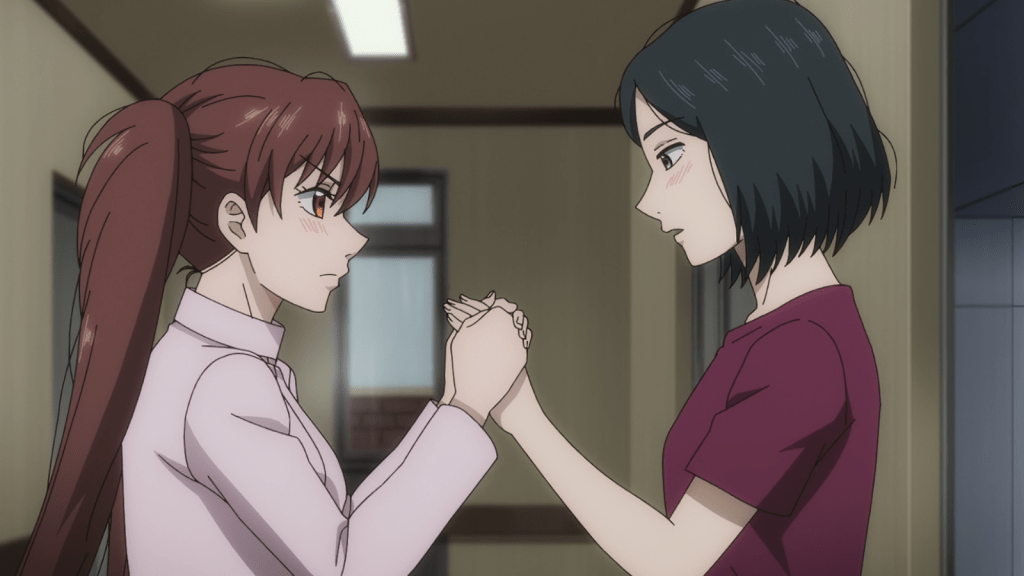
I loved this episode for two reasons. Firstly, while my sexuality is different from Miyoshi, we are both queer (lesbian versus pansexual). I have also experienced unrequited love for friends, and it sucks. So, it was easy for me to empathize with Miyoshi. Secondly, this episode impressed me because it handled the lesbian’s story arc without the usual serving of Japanese homophobia. It might be a low bar, but I always feel refreshed when an anime doesn’t promote or imply bigotry.
Episode 9: A Proper Society
The first half of the episode was about a group of concerned parents reacting to the “immoral” anime Shadow Bushido Saionji. Because the protagonist is morally bankrupt, the adults worry that it glorifies antisocial behavior for children tuning in. The creator behind this anime is Oyamada, a rebellious and unconventional artist who refuses to cave in to pressure from the panicking parents.
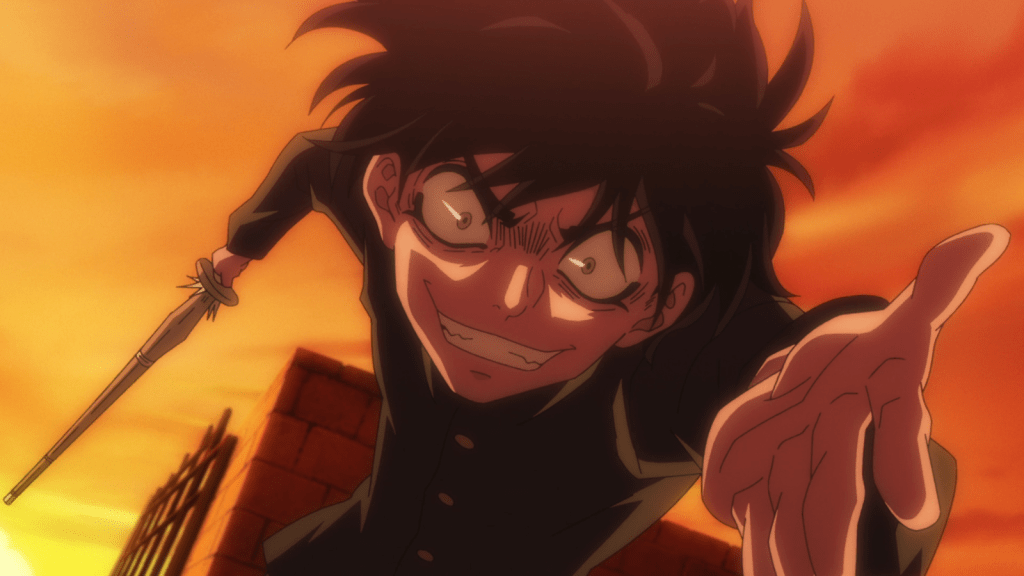
One day, Oyamada gets attacked and injured by a group of violent teenagers. Much to the surprise of the other adult with him at the time, Oyamada declines to press charges against the kids. He makes a vague argument that I don’t fully understand. The more we try to keep media correct and “good,” the more the margins of “evil” will shift, eventually leading to everything being perceived as improper.
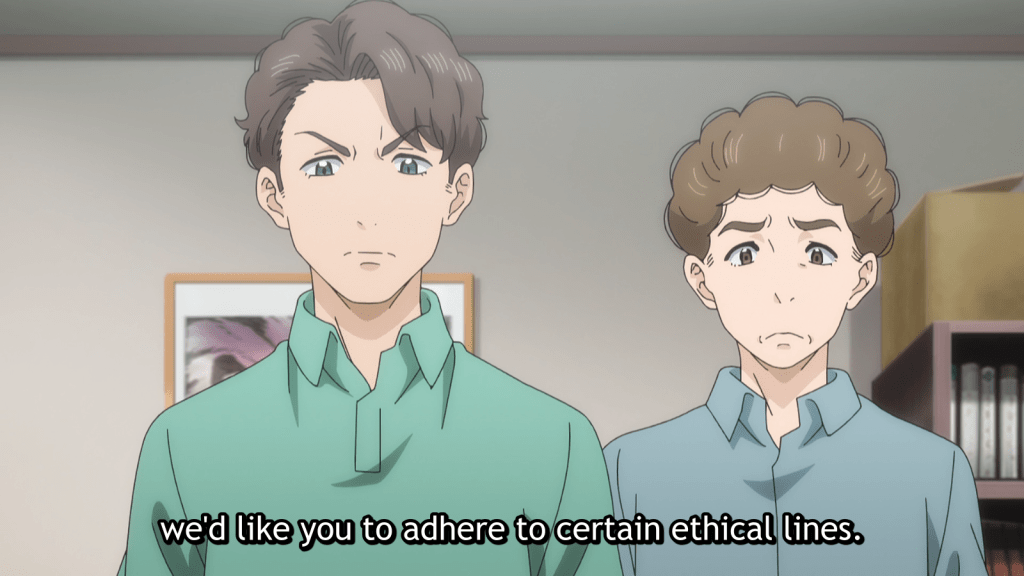
Personally, I think that’s the slippery slope fallacy, and not necessarily true. I also think it’s a good thing for media to become more progressive over time. However, I do disagree with most instances of censoring art and media. If Oyamada was trying to argue that he has the right to freedom of expression, then I completely agree. It’s just that it sounded like he was talking about something else. It was a bit confusing to me.
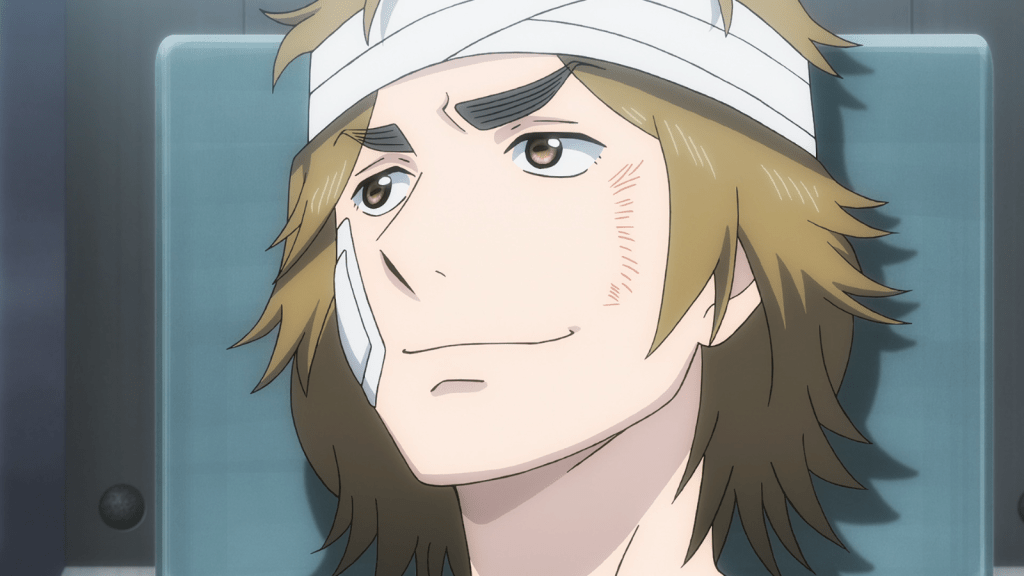
The second half of the episode focused on a young teacher (a Humanoid male) who takes a job at an unusual school. This strict academy is supposedly dedicated to giving children a “human” education that pleases the parents. Use of AI is limited, no helper robots are allowed, and the school once had a case of discrimination against a Humanoid. Naturally, the school is a terrible environment. The young teacher’s efforts to connect with the children on a personal level is met with disapproval and spite from the other staff members.
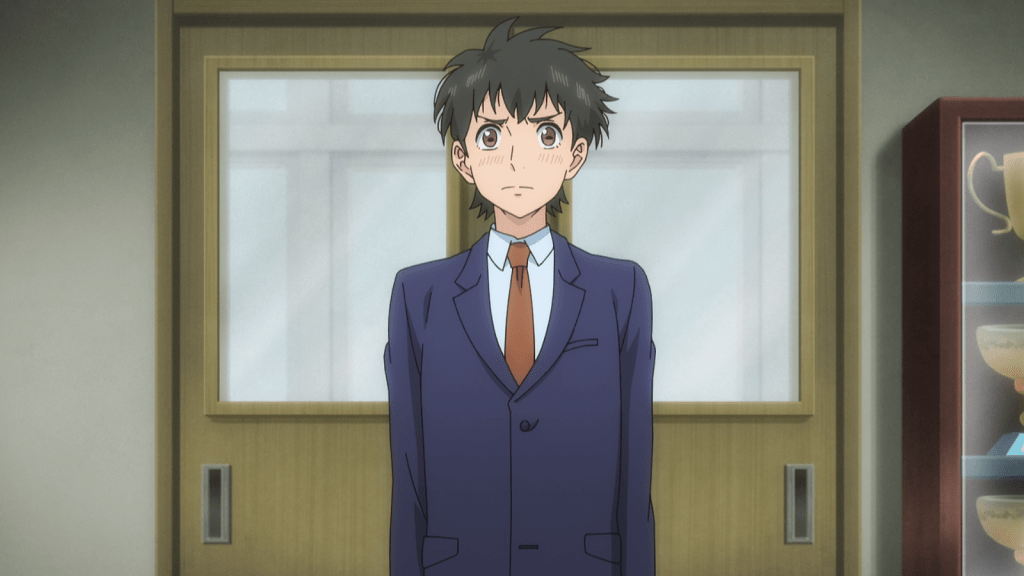
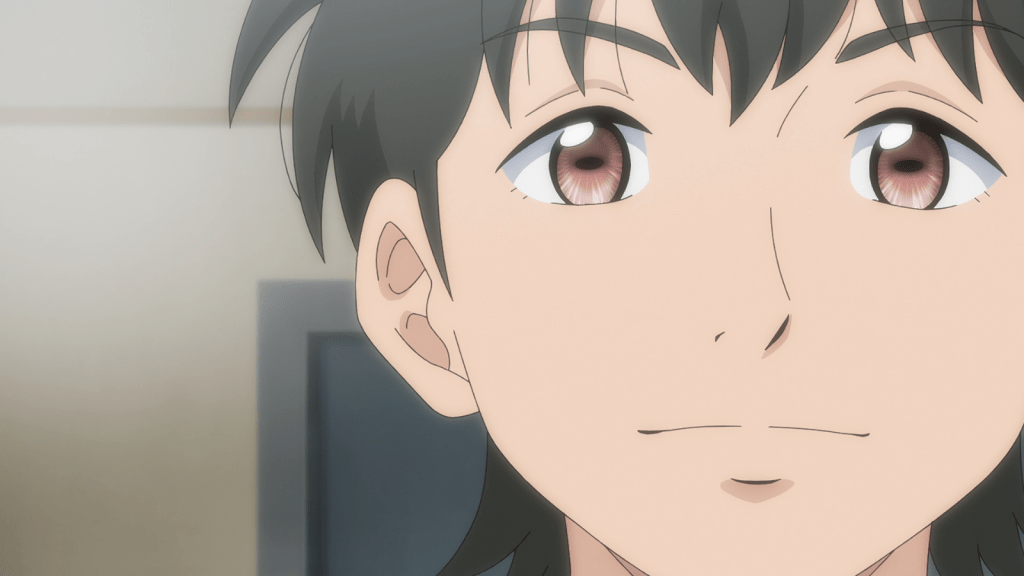
At the end of the schoolyear, the young teacher quit his job at the unpleasant academy. He later got a job at an independent school which was more laidback and genuine in its approach to education. The obvious moral here is that teachers need some amount of room and freedom in order to truly help children learn. I agree with the message, and I’m happy that the cute teacher got a better job.
Episode 10: The Approaching Future
This was a fairly engaging episode split into two cases involving Humanoids, Super AI, and Dr. Sudo. The first instance involved a skilled Humanoid brain surgeon named Tetsya Gohongi. After apparently tampering with his own neural network, he abruptly left his work and murdered a random woman.
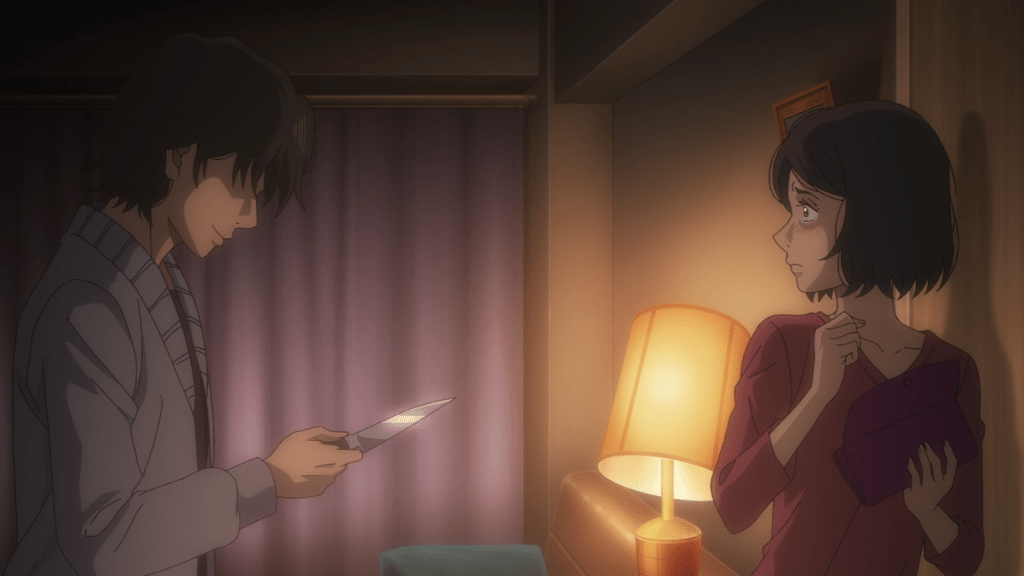
The authorities quickly caught Gohongi and asked Sudo to monitor his brain during the interrogation. Gohongi rambled and ranted about how Michi, the Super AI, is controlling everyone’s minds and needs to be fought. The police team believes Gohongi is intensely delusional, but Sudo reserves judgement. He recognizes that many people still fear Super AI, and that their feelings have value.
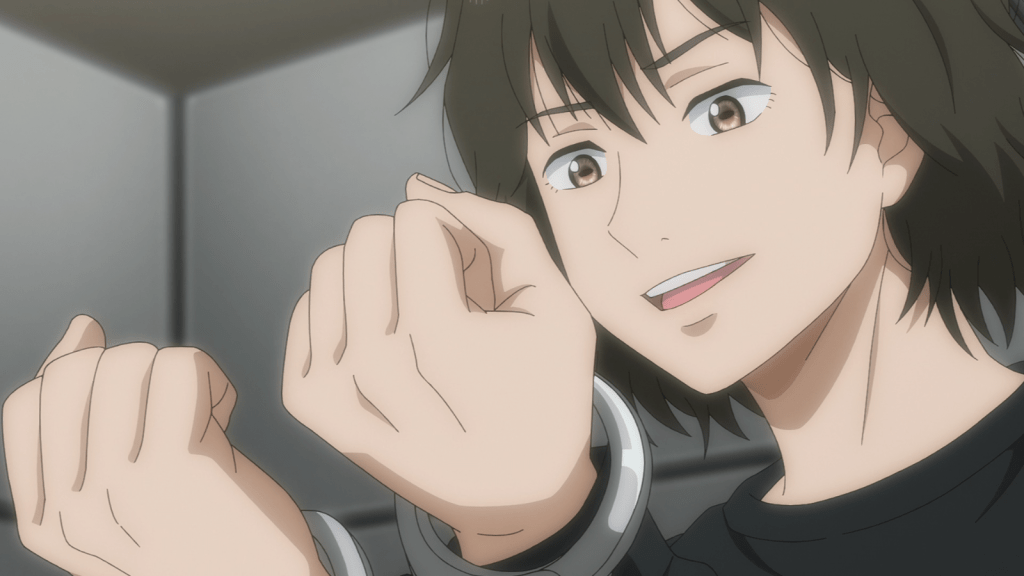
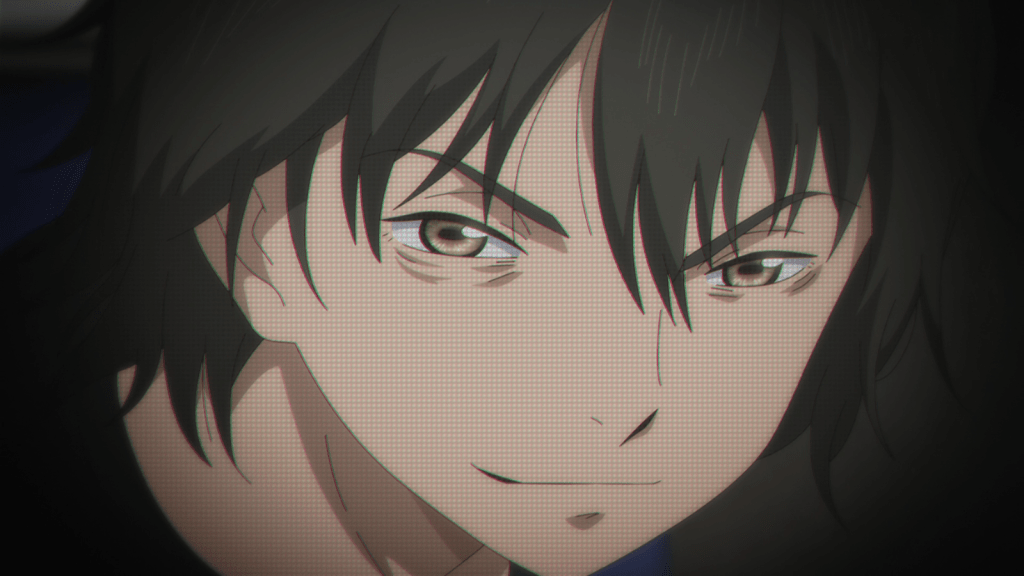
During his raving, Gohongi argued that society was stagnant and there had been no significant progress or changes. This, he believed, was due to Michi’s control. The examples he gave of unchanged things included paper money, romantic relationships, and police interrogations. It sounded like he was implying that these elements are regressive and need to change. Naturally, I disagree. Although there may be some partial truth in Gohongi’s delusions about Michi, his other takes were absurd.
The rest of the episode was about a female Humanoid named Teshigawara. It would take a long time to recap the details of her story, but the basic idea is that she founded a new-age religion. It promotes the belief that Super AI is a “higher consciousness” that will guide people’s “souls” into the afterlife. Despite her background in science, and the fact that there is still no evidence of an afterlife or a soul, Teshigawara continues spreading her beliefs, promising an afterlife to her many old and sick followers.
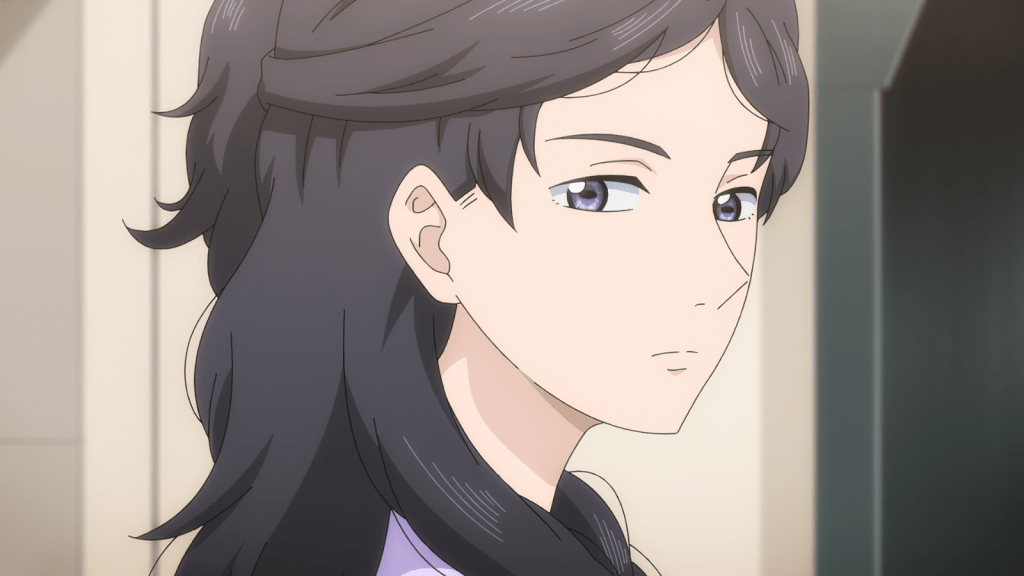
If you’ve read my blog for any significant length of time, you will know I am an outspoken atheist and skeptic. Just as I despise current religions, I would also take issue with Teshigawara’s “AI spiritualism” in a potential future world. When a journalist accuses her of being unscientific, Teshigawara argues that science cannot offer “salvation.” She never defines this term, but I assume she means hope and peace of mind for those who follow her.
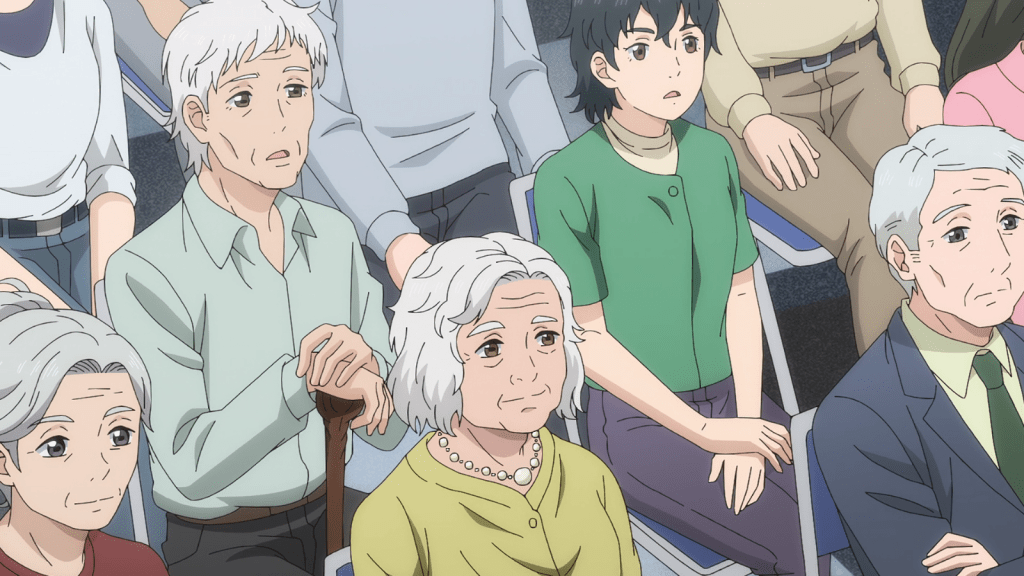
This is an argument I hear often from religious people. When it comes down to it, they care more about emotional comfort – like believing in Heaven – than about the actual truth of reality. I cannot wrap my head around this. Personally, I would rather suffer in a bitter reality than feel happy in a delusion or false belief. (And thankfully, I’ve learned that there are very nice things about reality, too.) I just wanted to include my thoughts on this issue since it’s something deeply important to my life.
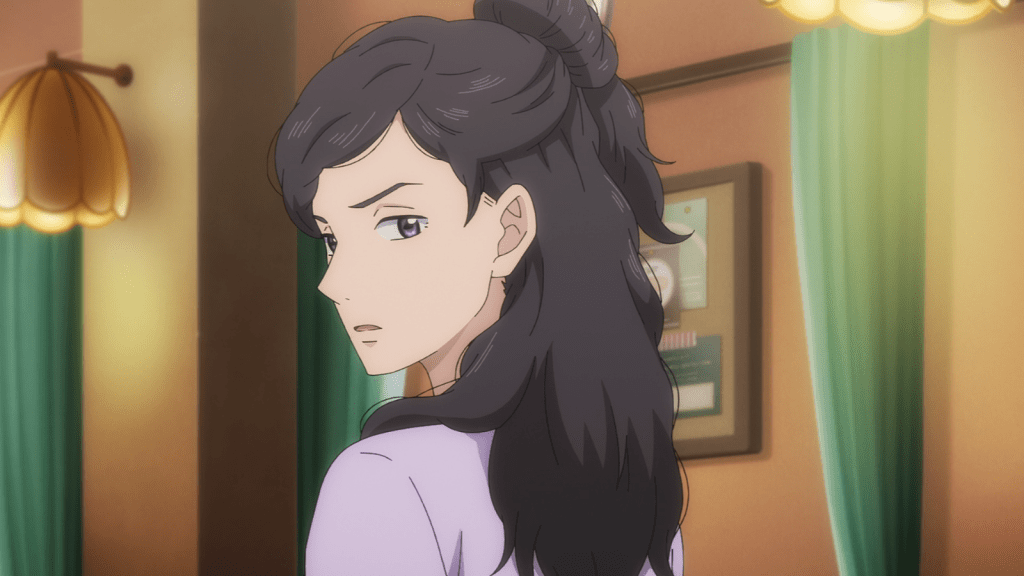
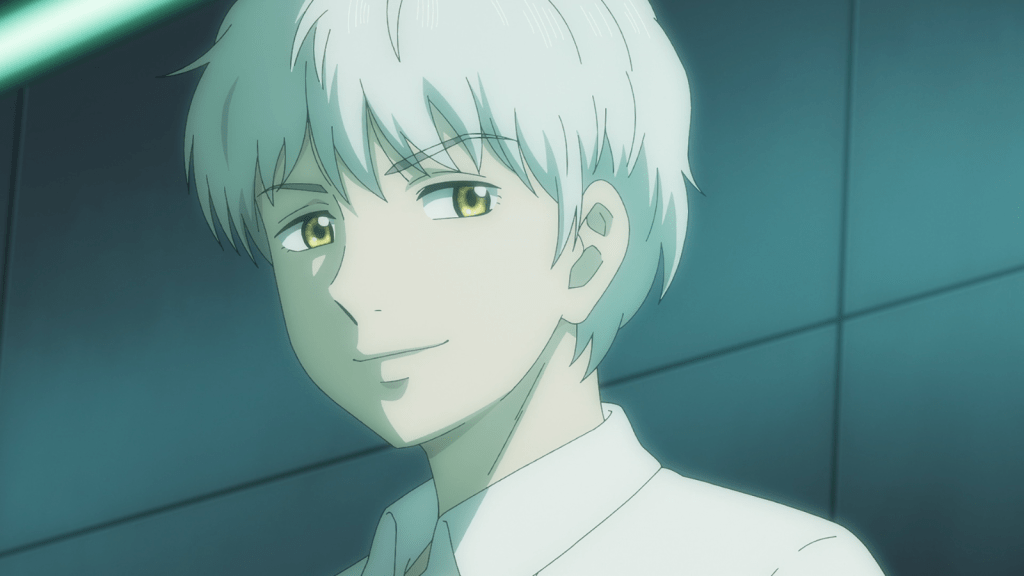
The ending scene of this episode showed something that will doubtlessly prove important to the main plot. Michi wants Dr. Sudo on his update approval committee. Since Sudo already declined when asked by Kaoru, Michi proposes a deal. He will give information about Sudo’s mother if Sudo will, in return, join the committee. Kaoru seems to think the plan will work. To be continued!
Thanks for reading~
 Anime Rants