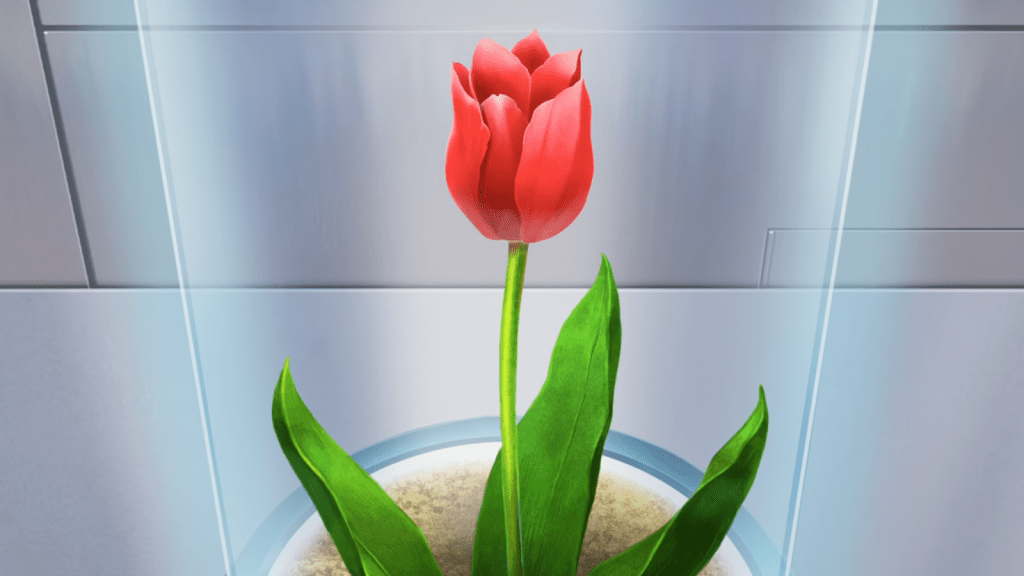
Once upon a time, there was a botanist who always grew the most beautiful flowers and plants. He loved his homeland, but it was a desert. The botanist wanted to see his home filled with fields of flowers. So, he tried to breed a flower that would never wilt and could thus survive the harsh desert conditions.
The botanist managed to create one seemingly immortal tulip, strong and red. But this blossom gathered its lifeforce from the other flowers around it, leaving nothing in its wake but a field of death. That tulip was taken to a lab, where it bloomed for many years. The name given to it was “Pluto,” after the Roman god who ruled the dead.
Welcome to Anime Rants, friends and readers. Today we continue my responses to the episodes of Pluto, Urusawa’s newest psychological anime. Please enjoy.
Episode 5
Each episode of Pluto gets more complex, with more interesting elements to review and discuss. That means you can expect this to be an unusually lengthy episode review. We’ll start by discussing Gesicht’s dark past and the reason why his memories were altered. It seems that Helena and Gesicht had adopted a robot child at some point. The child fell victim to the robot-child-serial-killer, who was Haas’ older brother. Filled with rage, Gesicht abandoned protocol and killed the criminal.
Despite finally remembering his revenge killing, Gesicht maintains emotional control and stays true to his duty. He protects the younger Haas brother and his family, even at the cost of significant injury. As Gesicht is being carted away to receive repairs, Haas speaks with him. He’s in tears, at a loss to understand why Gesicht would save his family after his older brother did so many horrible things to robots. That’s when Gesicht asks an interesting question.
“The hatred humans feel … does it ever disappear? Or does it always stay, no matter how many times you try to erase it? What I am most afraid of is myself – now that I have learned to hate.”
Does hate diminish, and if not, how can we fight it? As for the first question, specific flare-ups of hateful feelings do fade away. For many people, rage is among the briefest of emotions, vanishing quickly. However, the ability to hate never goes away. There may be exceptions, but by and large, hate is an issue that affects the entire human population. Hatred can also turn into a long-term grudge, which is probably even more destructive. Since it causes so many problems, we need a way to overcome our hateful feelings.
For his part, I think Gesicht already proved that he can overcome hatred. That was the point of saving Haas and his family. But the fact remains that he is now capable of hatred. I am also scared of my propensity to be hateful. Unlike Gesicht, I learned to hate very young, and it’s always been scary. Long before I was old enough to be diagnosed with BPD, I experienced negative emotions on a scale that is impossible for me to describe. It isn’t hard for me to understand the desire to harm others when in that state.
Intense emotions, including hate, caused many problems for my mental stability. After many years of therapy, I calmed down a lot. Now, it’s much easier to maintain control. But despite going to great lengths to become a stable and rational thinker, I am still an emotional creature at my core. What I’m trying to say is that you can overcome moments of hatred with enough practice. Even a someone like me can do it! However, we will never be free of the actual ability to hate others. It’s part of being a person.
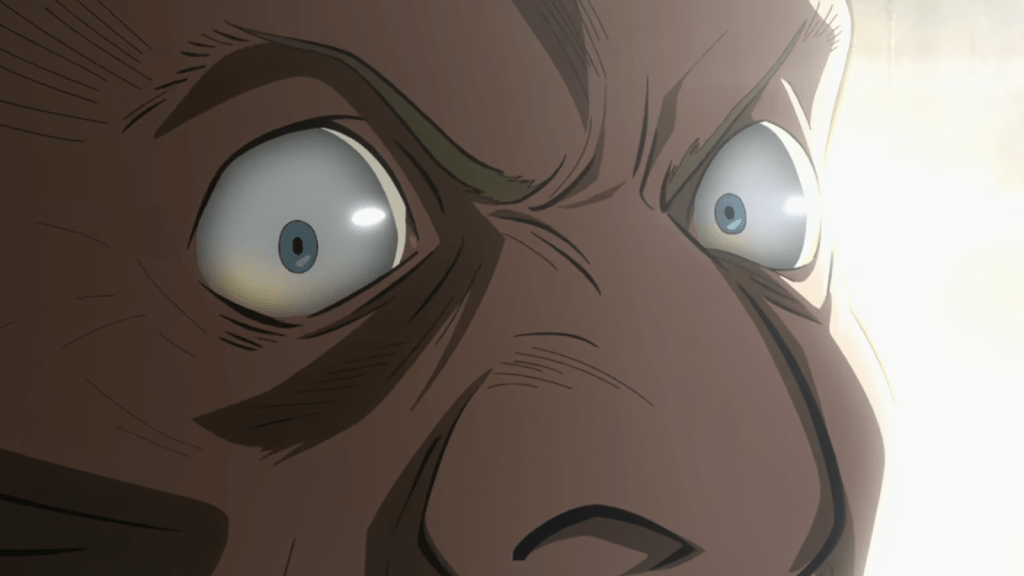
The subject to cover is Uran, who fell into a deep depression after her brother, Atom, was pronounced dead. Despite her intense feelings of sorrow and loss, Uran is still able to be extremely empathetic to others. She uses her power to detect fear and sadness, tracks down the affected person, and tries to help them. For example, Uran rescued an abandoned kitten and helped an old man find his wallet. The most interesting scene to me, however, was when Uran spoke to the bullied kid on the overpass.
That boy planned to jump off the overpass to kill himself. Uran told him there was a cybernetic net that would catch him, so he gave up the attempt for now. Uran’s inability to understand suicidality was interesting, as was her point about the kitten not wanting to die. I like Uran, but in this case, I empathized more with the boy. After all, I struggled with suicidal ideation for several years and made a serious attempt, too.
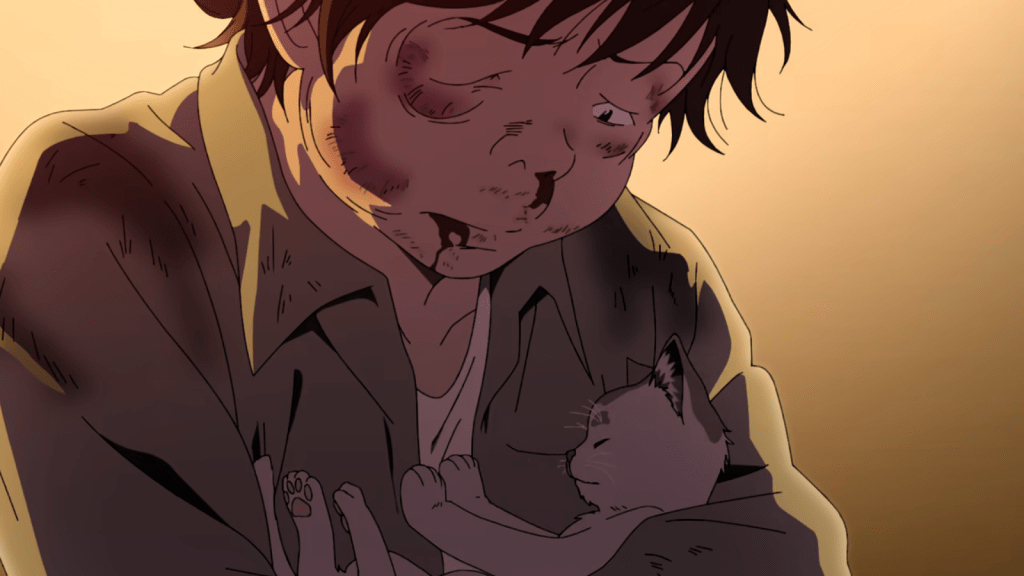
What I loved about this scene was the moment when Uran handed over the cat. Sometimes, we are “saved” by small things, like holding a cute kitten. Now, instead of jumping or planning a future attempt, the boy will be busy feeding and caring for the abandoned animal. Uran is basically doing the same thing with her own grief – rather than wallowing in her own misery all day, she tracks down people who are even sadder than her in order to help them.
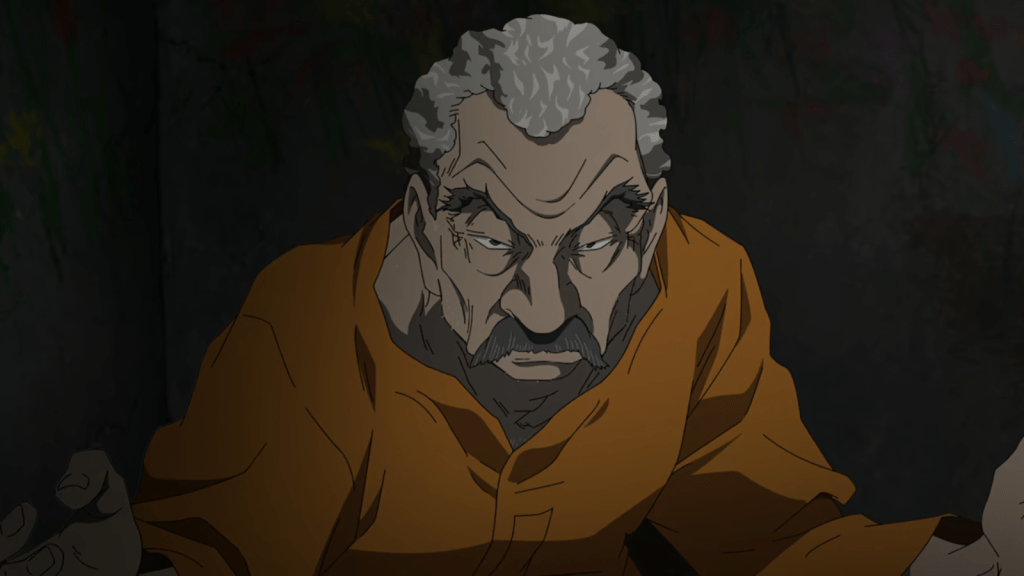
Another important point in this episode was the visit to Darius XIV in prison. The dethroned dictator knows about Pluto and replicated the image of the flower field that Pluto drew in the third episode. During the questioning by Gesicht, Darious attempted suicide by biting through his tongue. However, the medical staff of the prison kept him alive. It was interesting to me that Darius has religious beliefs about robots. He thinks they are destined to take over for humans. Pluto is his messiah, beloved by God, who will lead the way to the new world order.
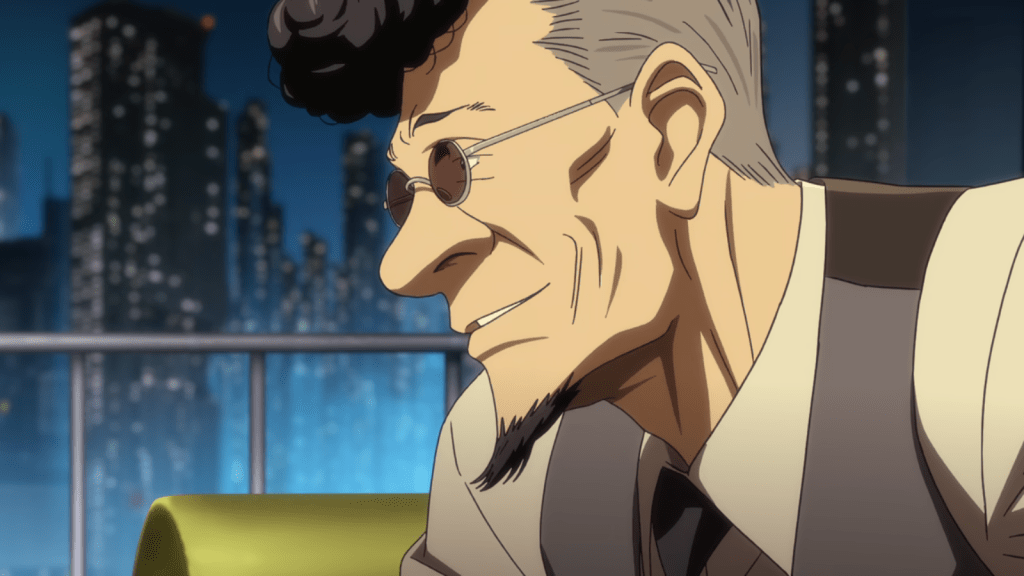
The reappearance of Dr. Tenma was a critical part of the fifth episode. Despite claiming that he only showed up to say goodbye, he tried to repair Atom. Ochanomizu asked about the prognosis after Tenma had worked for 18 hours straight. Tenma explained that Atom’s mechanical brain was now fully repaired – but he still won’t wake up. It’s like he is in a willful coma. Tenma suggests that Atom doesn’t want to wake up due to something he learned that is beyond his ability to process.
In truth, Tenma has seen this happen before. He once built what he called a “perfect robot.” It was supposed to have aspects of 9.9 billion possible personalities. Of course, that robot didn’t want to wake up. Simulating so many personalities was too much to bear. Tenma theorized that the only way to wake the perfect robot would be to expose him to sufficient negative emotion to shake him into consciousness. But it seems that he just sold the robot off in its unconscious state instead. I think this “perfect robot” was forced to wake, and is now known as Pluto.
The last note I have on this episode is just a question. What the hell is that creepy teddy bear robot whose voice we heard in this episode? That is one extremely creepy bear. I have no idea who it could be, unless there’s another robot even more dangerous than Pluto out there. And if there was, why would it be in the body of a freaky teddy bear saying creepy things to a dark, creepy room? It was weird.
Episode 6
They really do pack an incredible amount of content into these episodes, and the sixth installment was no different. Again, you can expect a lengthy response. We definitely need to review Gesicht’s confrontation with Pluto. But before that, I think it’s necessary to recap what we now know about Abullah and Sahad. It’s been obvious for a while that Abullah is the one behind the murders, and it makes sense that his motivation of revenge. And now, for the first time, we learned about Sahad, his gentle robot son.
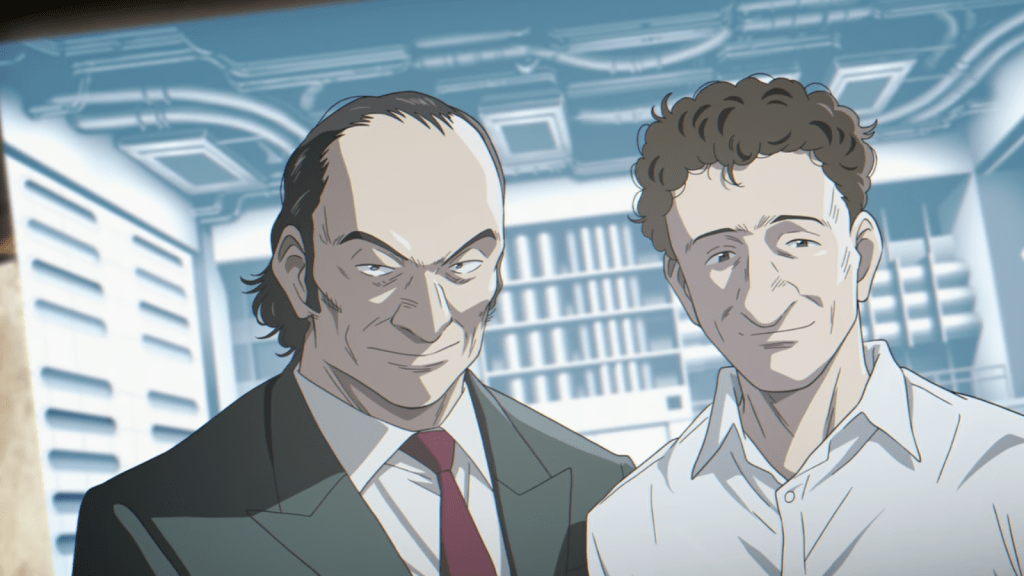
Abullah had a human wife and daughter, plus two robot sons: Sahad and Murat. All of them died in a bombing with the exception of Sahad. This is also when Abullah lost most of his body and became robotic. After his recovery, the cyborg reunited with Sahad and introduced him to Pluto: the most powerful robot body in the world. Sahad’s brain was installed into the body, and he became Pluto. He lived to satisfy his father’s wishes and get revenge against those who attacked Persia so unfairly.
At least for me, this information was unexpected. I thought Pluto was going to be that robot who never woke up until stimulated with negative emotions. That can’t be true because Pluto’s brain has always been that of Sahad. Of course, I suppose it’s still possible that Pluto’s body was the “perfect robot” who never woke up. Rather than trying to awaken its mind, perhaps Abullah and Goji simply decided to make use of the powerful body – which does indeed resemble a god of death.
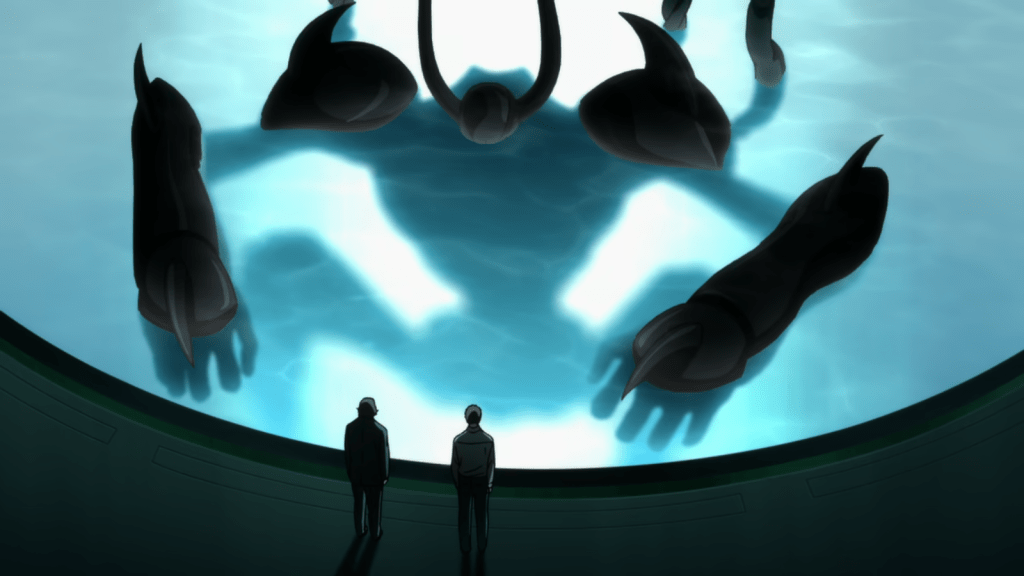
In any case, Sahad is the same person who took over the body of the construction worker in episode 3. His personality is gentle, wise, and creative. He was also intelligent enough to be a good science scholar, though he reportedly says “unscientific things” from time to time. Before the war, Sahad was studying botany, trying to create a flower that would never wilt. That’s the story of the Pluto tulip in in the article introduction. I love that story. It’s so beautiful and eerie at the same time.
There are still a few mysteries related to Pluto. For instance, we don’t know why he would go to such lengths to obey his hateful father. Has he been brainwashed? It’s possible that Abullah tampered with Sahad’s brain to make him more obedient – or perhaps more violent toward enemies. Pluto’s rage and pain was so shocking and disturbing to Atom that he called it “Shinigami,” meaning death god. I want to know exactly why Pluto feels this way, and how aware he is of his own murderous actions.
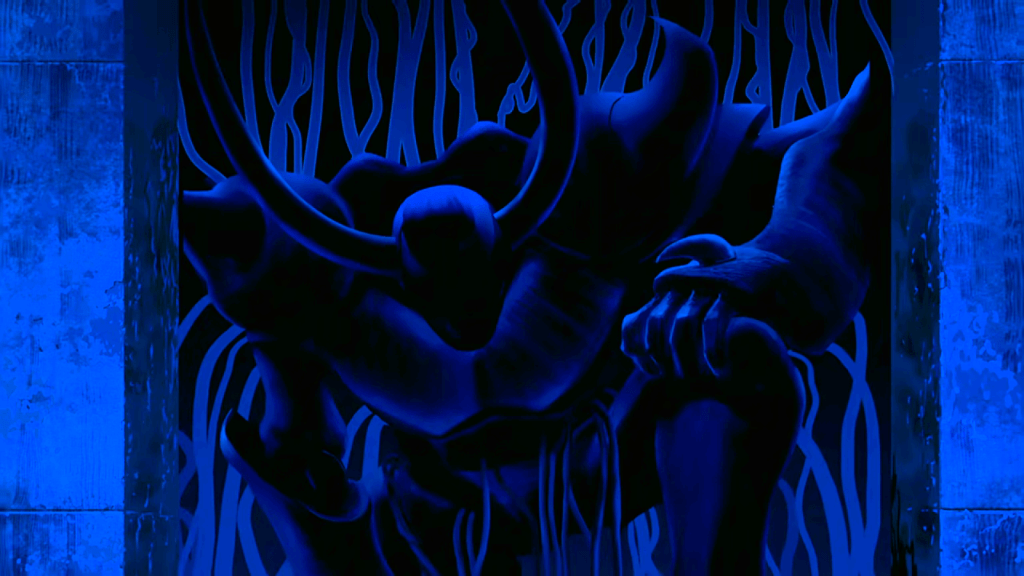
In addition to questions about Pluto, I’m also a bit confused about the identity of Dr. Goji. Whoever he is, he’s working with Abullah, and he’s able to transfer his consciousness to different bodies. I thought Dr. Goji was the guy who used that swarm of robot roaches. (Speaking of which, I absolutely hated them. Roaches are disgusting and they scare me.) But now it seems like that guy was just a throwaway body. We don’t know what Goji’s original body was like or anything about his true backstory.
My favorite part of this episode was when Gesicht refused to kill Pluto. Despite his orders, he decided enough was enough. He decided that killing Pluto would only extend the cycle of violence that already hurt and killed so many people and robots. Furthermore, Sahad’s mind is still inside Pluto, driven insane by emotional pain. It would be heartless to kill him. Even if Gesicht’s actions led to tragedy, I respect his decision. Mercy is a beautiful thing, if impractical.
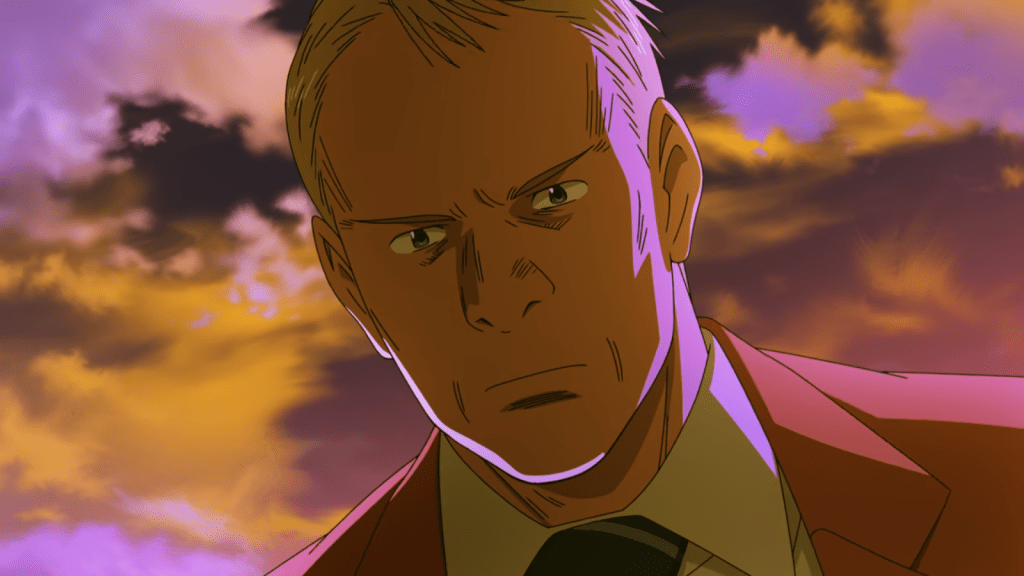
The most shocking part of the sixth episode was the death of Gesicht. I should have been more prepared for it given the clues about his weakened zeronium and the way Urusawa doesn’t shy away from killing characters. Still, this death left me feeling depressed. It was also maddening that it was arranged in such a manipulative manner. The only “easy way” to kill Gesicht was to emotionally disarm him with a robot child. Even after he was shot, the detective was still trying to reach out to the child with love.
I think Gesicht was my favorite of the seven advanced robots. Since I liked him so much and his death was so sudden, it wasn’t difficult to empathize with Helena. During the last few minutes of the episode, we see her visiting Japan and pretending to enjoy herself. When she’s alone with Dr. Tenma, however, she reveals that she has no idea how to process her intense grief. Tenma encourages her to cry, and Helena takes this advice. I felt the tears in my eyes too, while Tenma held the sobbing robot woman in his arms.
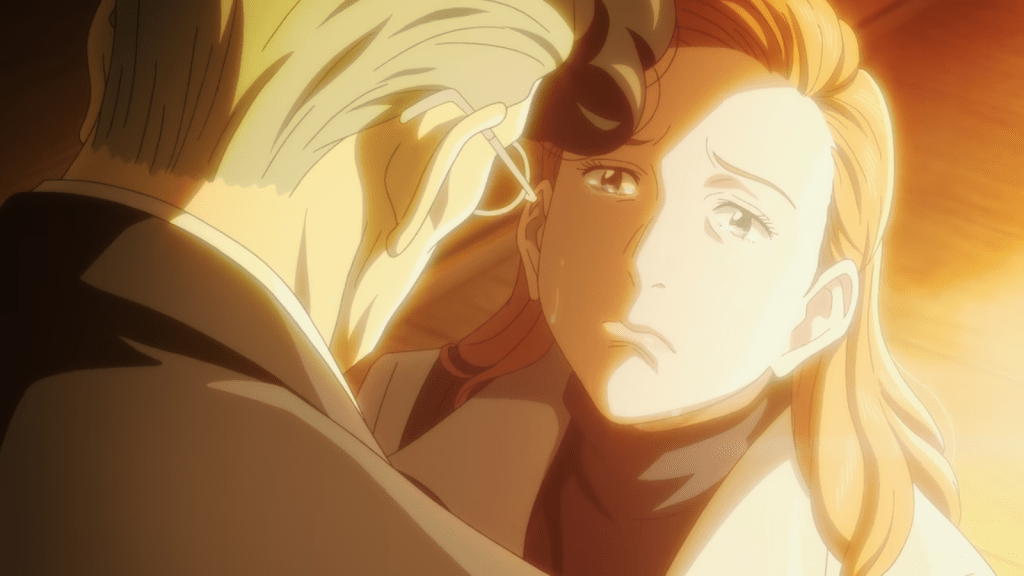
Despite this depressing ending, I’m still extremely excited for the remaining two episodes of Pluto. It seems that Tenma is going to bring Atom back by any means necessary. Until next time, sayonara, and thank you for visiting Anime Rants!
Thanks for reading~
 Anime Rants