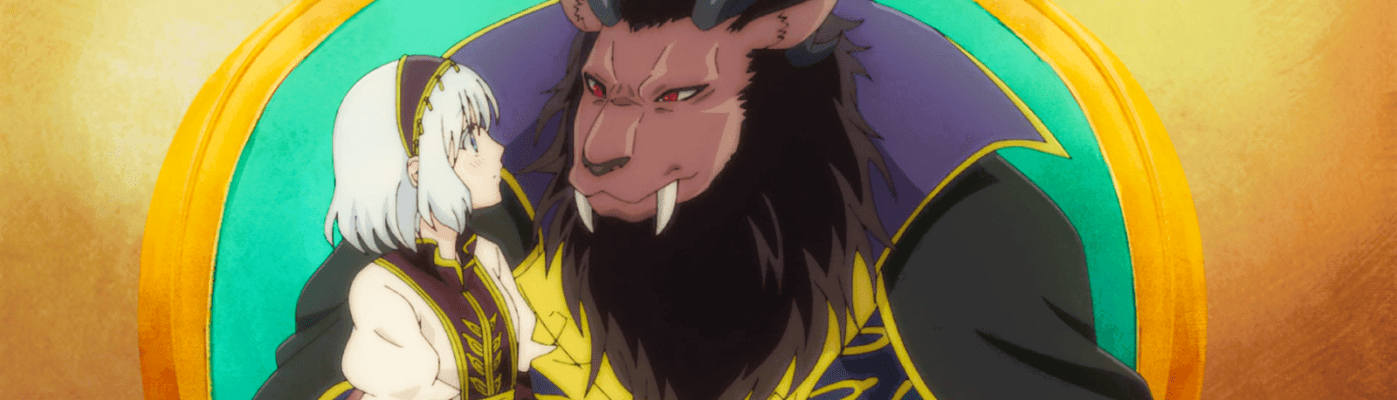
Thank you for stopping by Anime Rants with Mono (7Mononoke). In my recent review of Sacrificial Princess and the King of Beasts, there was a lot of character discussion left out. This post serves as an addition to the review, providing my thoughts on the characters. Obviously, not every character is discussed here – just a selection of them. I may expand this article more after subsequent re-watches of the anime.
In the meantime, please enjoy these thoughts and notes about the wonderful characters from Sacrificial Princess and the King of Beasts.
Article Contents:
- Leonhart and Neurodivergence
- Sariphi’s Self-Worth and Emotional Nature
- Anubis’ Attachment
- Ilya’s Acute Trauma
- Fenrir and Gleipnir’s Bond
- Lanteveldt’s Liberty
Leonhart and Neurodivergence
The King, AKA Leonheart, is an unusual protagonist/love interest. Lead males in shoujo anime tend to be very rough and stubborn – the bad boy type – or else deeply caring and sociable – the good boy type. But Leo is neither. Though kind-hearted, he isn’t very sociable or amiable. He’s a quiet, insecure introvert who must constantly act like a fearsome monarch.

I think Leo is extremely brave and bold for trying to change the kingdom and rejecting the sacrifices. However, he feels chronically inadequate and cowardly. In my opinion, Leo suffers from mental issues like depression and anxiety. This is a positive thing for me, since it makes me feel represented. There are a number of anxious male characters in anime, but they seldom progress as much as Leo. He’s also very self-aware and introspective.
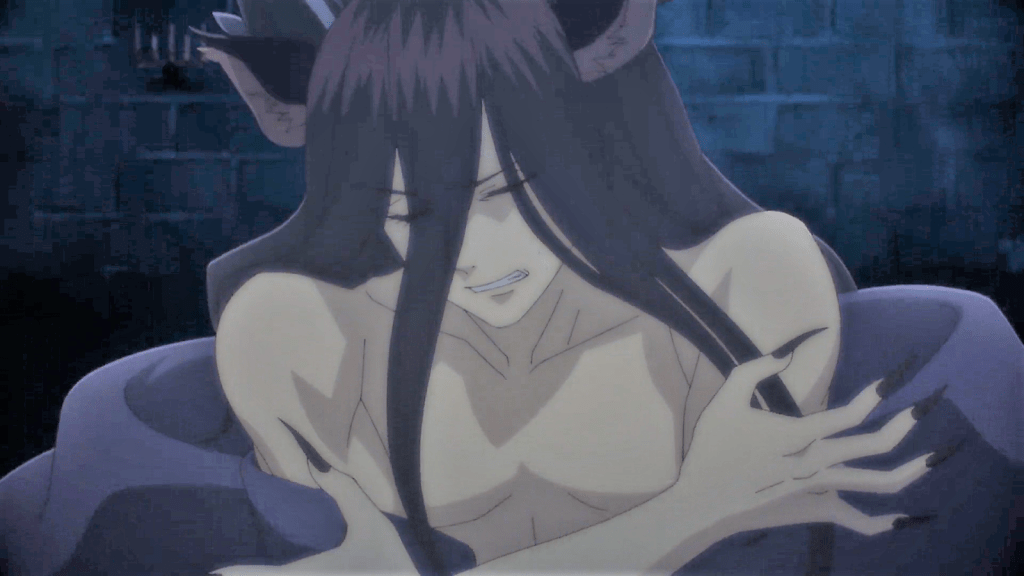
On the topic of Leo as a neurodivergent character, I was extremely interested in the fact that his arms are marked with many scars when he’s in human form. In order to make it look like he had devours the sacrifices, Leo had to spread human blood – his own blood – all over the ritual chamber. It would have been easy for the makers of this anime to make Leo regenerate or something. But his scars are lasting. I believe this is another nod to neurodivergent people like myself. Some of us also have scars from self-injury.

Sariphi’s Self-Worth and Emotional Nature
Sariphi never became as empowered as I had hoped, but even her dependence on Leo was interesting to me from a psychological perspective. She certainly becomes more powerful and confident as the series progresses. However, her confidence and sense of worth are primarily rooted in her attachment to the King. She states this at least once in the anime, when she is being captured by Fenrir: her worth comes from the fact that Leo loves her.

Psychology has taught us that lasting self-worth must come from within. I acknowledge that, but I also know that it’s much easier said than done. It’s easier – and perhaps even more natural – to rely on someone or something else for your sense of worth. There are times when certain people – like myself and Sariphi – have no choice but to find worth and meaning in others over ourselves, at least temporarily. Because we grew up with absolutely no sense of independent worth, it will be harder for us to learn to develop it.
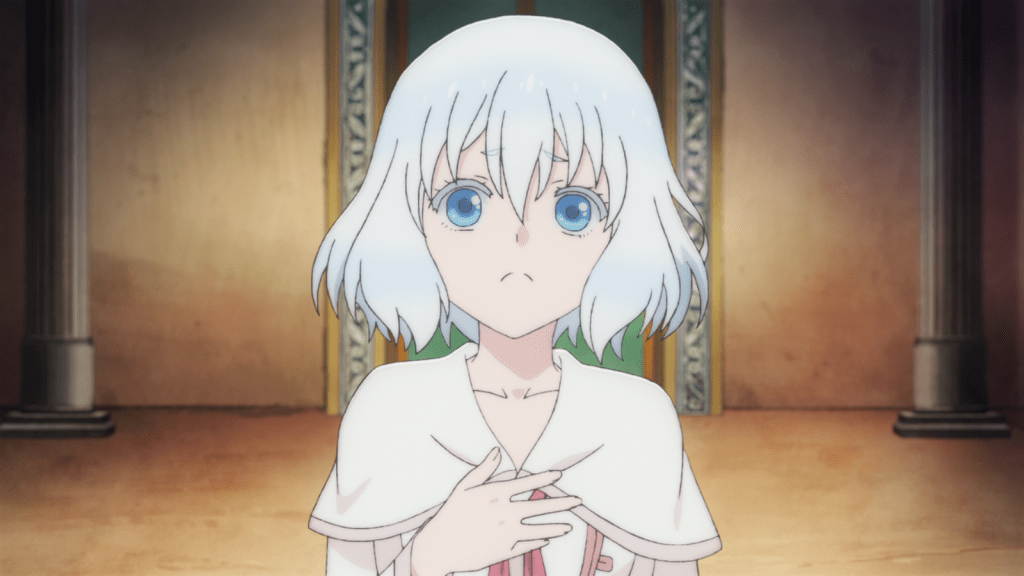
To me, Sariphi is a slightly flawed but extremely sympathetic character. I can empathize with her low self-esteem and her powerful love for her partner. Sari and I also have something else in common, though it manifests in different ways: an intensely emotional nature. Sariphi is highly empathetic and kind, often feeling for others despite not knowing them well. She strives for harmony and mutual understanding in all encounters. I like to think that this is true of me as well, as least when I’m calm.

There’s something interesting about Sariphi and her emotional nature that is very different from my own experience, with my crippling anxiety. Sariphi is courageous. Even if someone yells at her in fury, she remains bold. Importantly, though, she’s not perfectly fearless. The thing that strikes fear into Sariphi is apathy in others. She’s scared of the absence of emotion rather than the exaggeration of it.

This fear response in Sariphi comes from the fact that her parents were so cold to her on the night when they told her she was destined to be a sacrifice. One could argue that, without the emotional trauma of that night, Sariphi would be even more well-equipped to handle callousness and/or lack of emotion. However, I don’t think there’s a world in which Sariphi wouldn’t be alarmed by cold-heartedness. When you’re a deeply emotional person, you have trouble wrapping your head around apathy.
Anubis’ Attachment
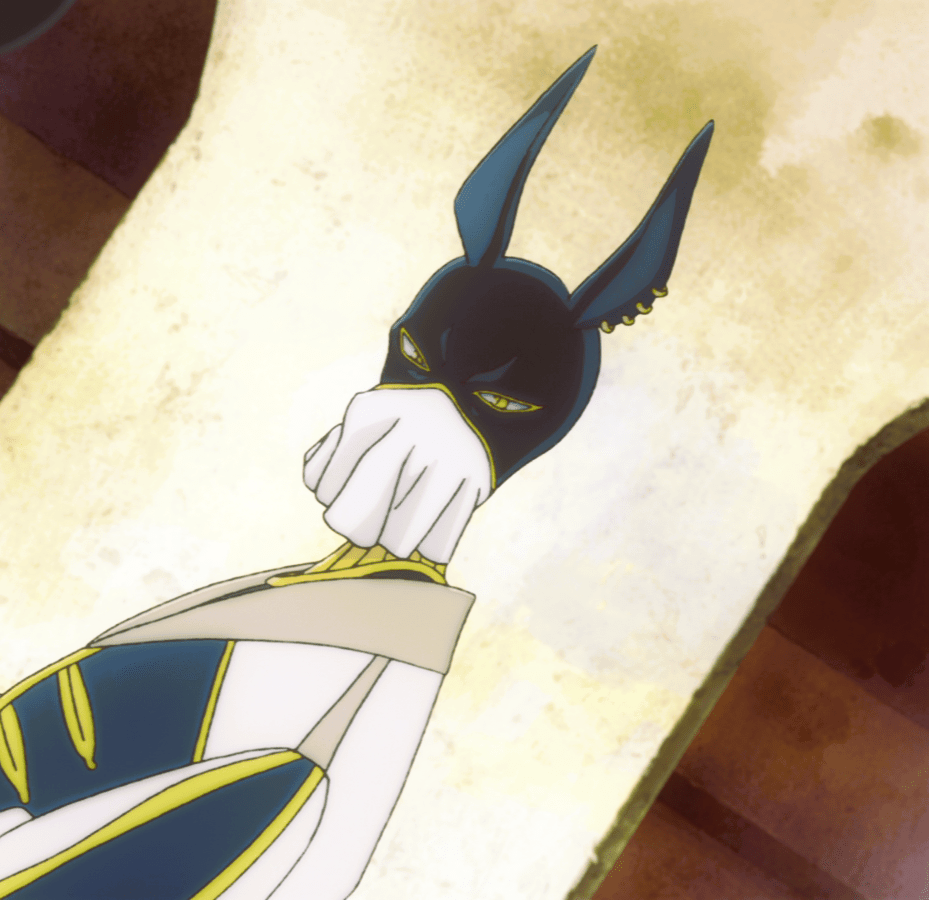
Anubis is one of my favorite characters due to his role as a complex antagonist to Sariphi. His powerful loyalty to the King and his keen intelligence are admirable traits. By the end of the series, Anubis accepts Sariphi and saves her and the King from utter ruin. But for much of the series, he hated Sariphi. He felt justified in insulting, undermining, and even attempting to kill her. This was Anubis’ way of trying protect the King from a bad future. In everything he does, Anubis always thinks of the King.
The origin of Anubis’ attachment to the King was explored in the ninth episode. Bitter about his role as a servant, he vowed he would never, in his true heart, submit himself to the young Prince. But it turned out that the Prince was kind to a fault, risking his own life to save Anubis from kidnappers. This made Anubis love the Prince and decide to pledge his loyalty after all. Never again would that loyalty shake. Anubis made it his purpose in life to serve and protect the Prince as he became the new King.

Anubis is quite unusual. No character archetype is completely original, but this one is fairly rare in the content I consume. The type of character who plans out dark schemes but ultimately has truly good intentions – that’s intriguing. The scheming chancellor is usually the enemy of the noble King, but in this case, nothing could be farther from the truth. Additionally, highly logical and strategic characters tend to be aloof from others, avoiding major emotional attachment. Anubis is the opposite. I love the two opposing traits – emotion and logic – and how they interact in this character.

Ilya’s Acute Trauma
From my perspective, Ilya was a rather unpleasant character, always acting aggressive and sometimes violating Sariphi’s boundaries. However, it’s easy to understand his emotional instability in light of what happened to him as a child. Ilya’s town was attacked by a roving band of outlaw Beast Folk. They destroyed the village, killed many people, and ate the women, including Ilya’s little sister.

Ilya is a great example of a character who deals with the aftermath of acute trauma. We don’t know specifically if he suffers from PTSD symptoms like flashbacks and nightmares, but I wouldn’t be surprised. At any rate, his trauma caused him to hate all Beast Folk and live for the sole purpose of killing them off whenever possible.
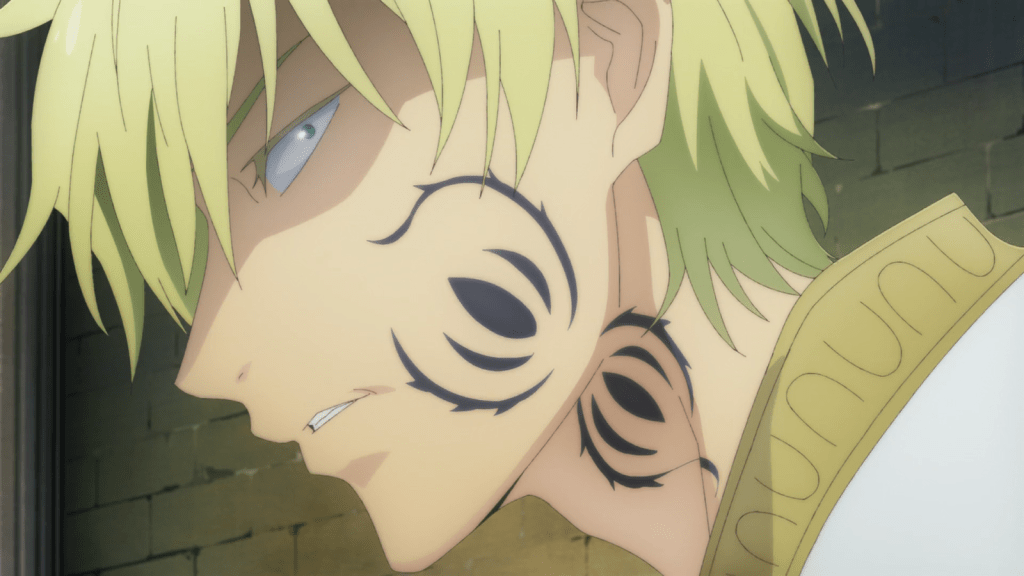
This portrayal of a traumatized and hateful young man was fairly realistic because Ilya never stopped hating Beasts. He kept hunting the bad ones who strayed into human territory. However, Ilya also showcased the theme of progress and personal growth that’s prevalent in this anime. He reluctantly saved a cute child Beast from human slave traders. That’s as close as he ever came to conquering his hatred, and I think that’s all anyone could ask.

Fenrir and Gleipnir’s Bond
Though I was personally disappointed by the overused trope of making a wolf into a villain, I still enjoyed the character of Fenrir. It was especially interesting to learn about his backstory, where he was disowned by his family for losing a magical duel with the Prince. The family also mutilated him by cutting off one of his ears. Fenrir blames everything on the King, who overwhelmingly bested him in magical combat. He is therefore another example of a traumatized and hateful character.
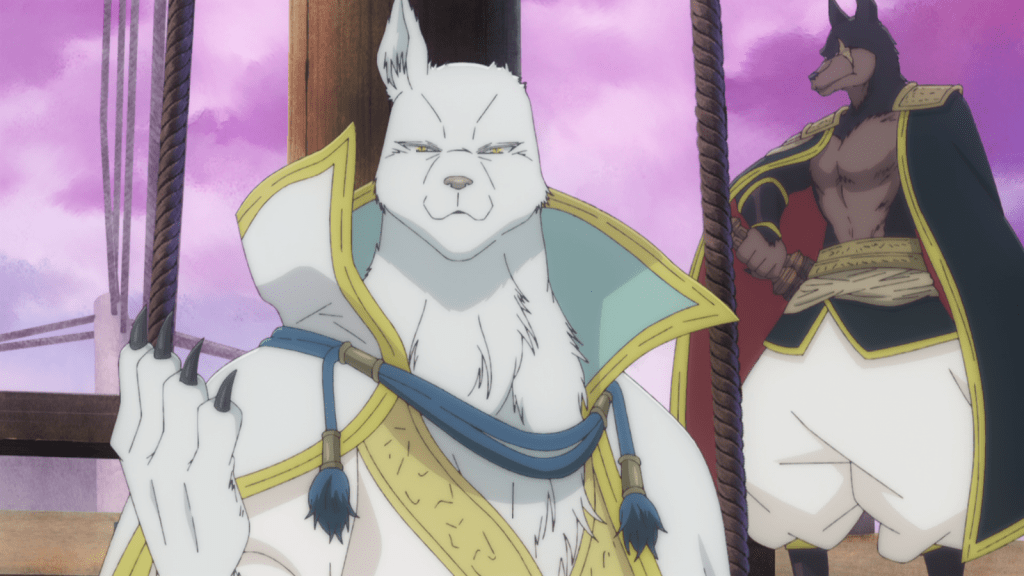
In my opinion, the most interesting thing about Fenrir was his relationship with his trusted servant, Gleipnir. This canine beast-man, known as Nir for short, was born into slavery. His life would have been utterly miserable if Fenrir hadn’t found him, purchased him, and took him into the vassal kingdom’s palace. Though Nir was still a slave, he lived a comfortable life, and formed a deep attachment to Fenrir.

When the wolf’s family mutilated and disowned him, Nir was the only servant who remained loyal to Fenrir. He even injured himself, attempting to give one of his own ears to his master, until Fenrir stopped him. This is a fascinating relationship to me. It’s even more interesting when you consider that in Norse mythology, Gleipnir is the name of the chain that tied down Fenrir the wolf. When he gave his servant this name, young Fenrir said they would be tied together forever. It’s an interesting use of mythology that adds another layer of significance.

It took me a while to wrap my head around the “twist” of Fenrir’s death. After being defeated in a brutal battle with the King, Fenrir was bound to die soon. Gleipnir then completed his final task as instructed in advance by Fenrir: he finished off his master, stabbing him through the heart. Nir took Fenrir’s body and fled. He said his last goodbye that night, burying Fenrir and becoming a free Beast for the first time.

In another kind of story, this sudden death twist would have been a purely vengeful move. And for all I know, maybe there was a sense of closure that came from being able to kill his enslaver. But without a doubt, Gleipnir loved Fenrir. Killing him was a serious duty – not an act of resentment. According to the rules of Beast pride, it also saved Fenrir the dishonor of being killed by the King or dying slowly in pain. In summary, I thoroughly appreciated the complex but loving relationship between Fenrir and Gleipnir.

Lanteveldt’s Liberty
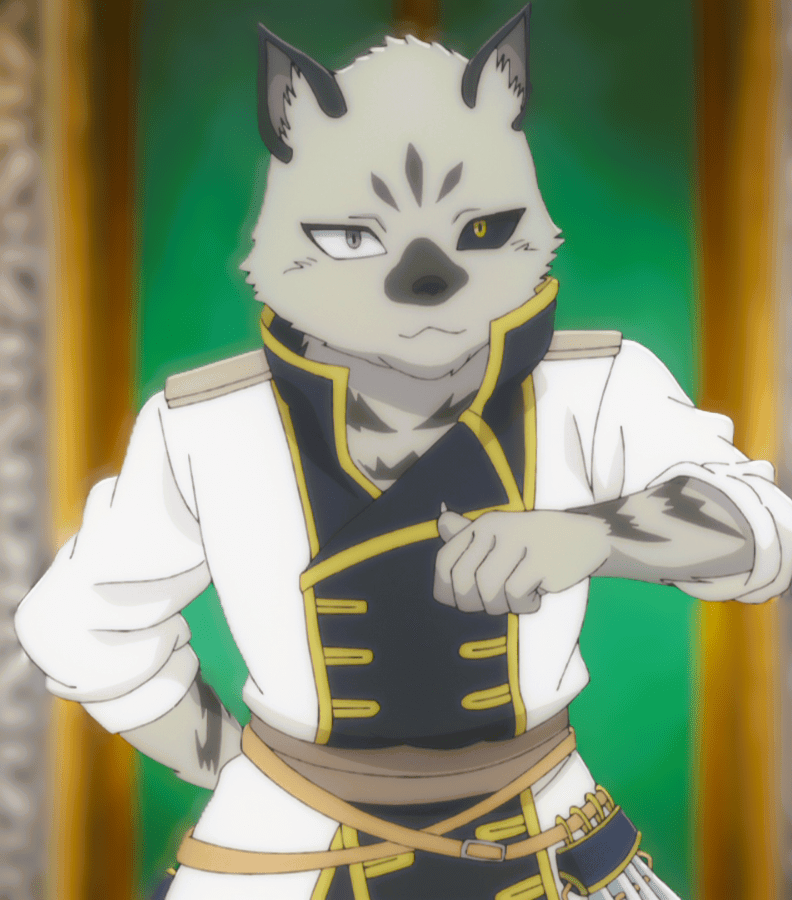
Lanteveldt was a great addition to the cast in the second half of Sacrificial Princess. As a Hyenian Beast, he experienced discrimination and hardship throughout his life. Other Beast Folk despise Hyenas because, in the wars of the past, they betrayed the King of Ozmargo, who was trying to unite everyone. Despite having no connection to any of the old wars, Lanteveldt (AKA Lante) was hated by other Beasts in his village. Their poisonous prejudice even led to the death of his sick mother after the townsfolk refused to provide medicine.
The best thing about Lante is his personality, which sets him apart from other characters in terms of attitude. Anubis and Jormungand are courtly, polite, and traditional. Lante, on the other hand, is a rogue. It’s not just his overly casual mannerisms and general lack of respect. He’s also quite original and independent in the way he chooses to live his life. Though Lante is a warrior in the service of Ozmargo, he mostly does whatever he wants, disliking structure and formality. Lante was breath of fresh air with his distinct personality.
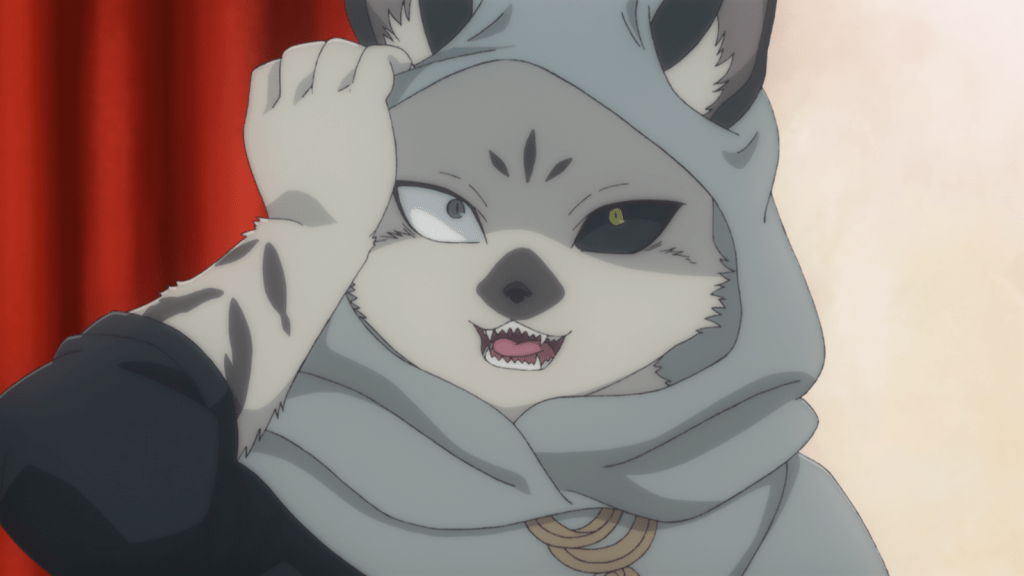
When Sariphi chose him as the captain of her personal guard, Lante initially refused. But unlike most Beasts, he wasn’t refusing because Sariphi was a human. No, he didn’t really care about that. His reason was that the position would be too restrictive for him. However, after getting to know Sariphi, Lante changed his mind and took the position. He loved her bold but selfless personality and he genuinely wanted to keep her safe. Deep down, I think he also loved the fact that he was destroying all sorts of tradition by choosing this path.
Anyway, it’s important that this Hyena made the choice himself. At the end of the day, Lante would never do something that Lante didn’t truly want to do. That’s admirable.

~Thank you for reading~
~
~
~

 Anime Rants