
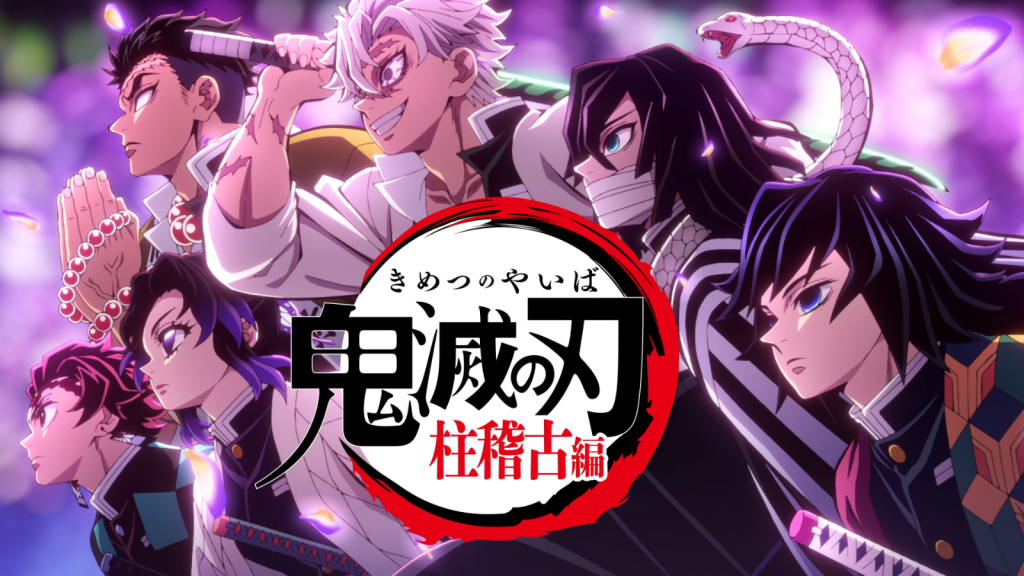
I’m a bit late to the party, but I finally watched Demon Slayer‘s fourth season, the Hashira Training Arc. It took a long time to get me invested in this show, but now that I am, I’m thoroughly enjoying each episode. Most of this season was just training without plot advancement or demon battles. However, for the the majority of the time, I wasn’t bored in the slightest. I like these characters, so seeing glimpses of them is exciting even when they’re not actually slaying demons.
For today’s anime rant, I organized my thoughts into several different sections. Each one is about a character and their emotional development in this season. I didn’t cover every single character. This is just about a few that stuck out to me.
Article Contents
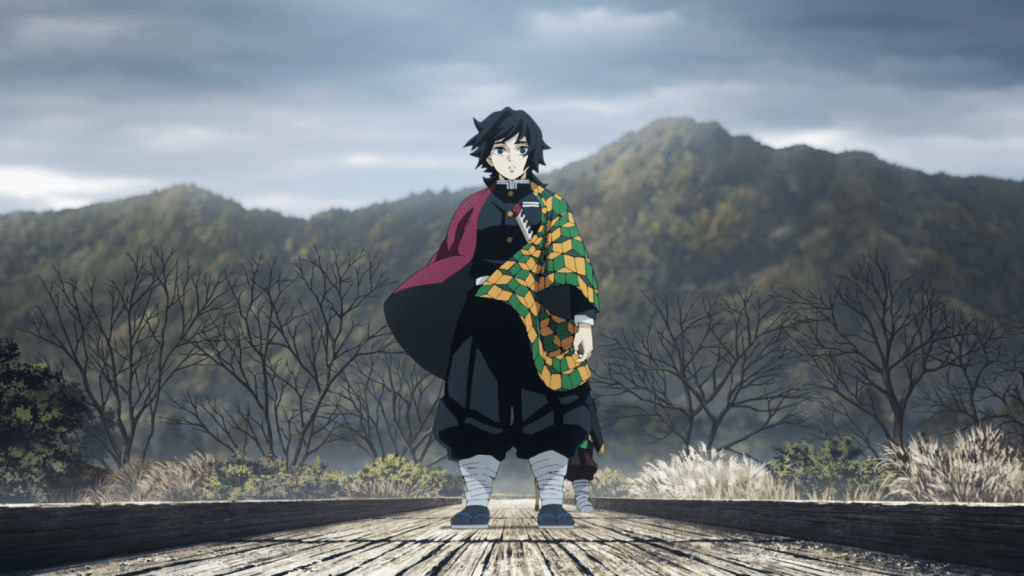
Giyu’s Guilt
I’ve always liked Giyu Tomioka because I love the voice of Takahiro Sakurai, who plays him in the original Japanese version. Even though he wanted to kill Nezuko initially, he was still the first Hashira to accept the demon girl. He was instrumental in the first season for teaching Tanjiro water sword techniques. But despite his helpfulness, Giyu has always been aloof. His eyes make him look dead inside. I’ve frequently wondered why.
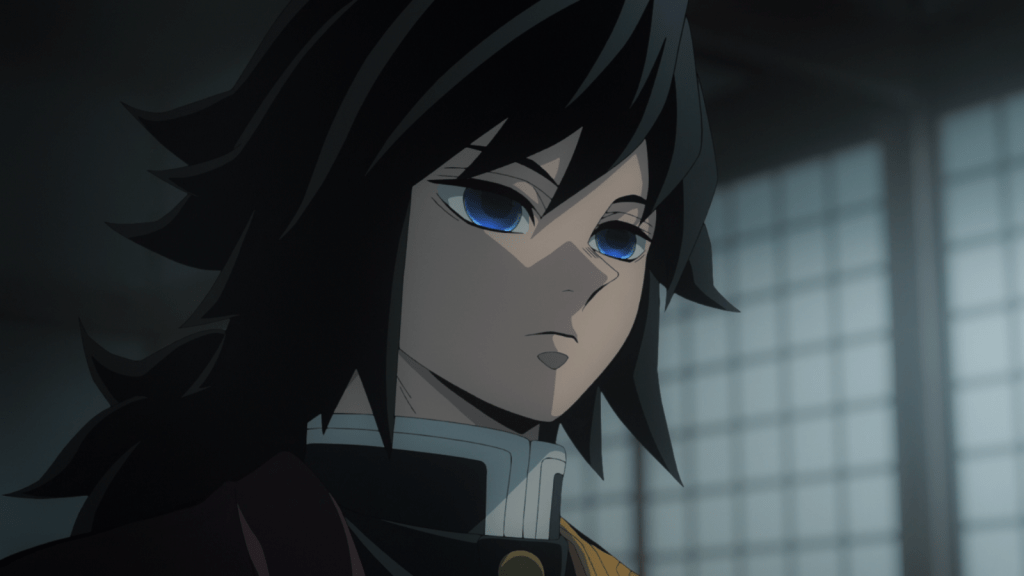
The answer was revealed in seasn 4 episode 2. Giyu only passed the first demon slayer trial because he was rescued by Sabito. But Sabito died that night, leaving Giyu with survivor’s guilt – not to mention the pain of losing someone he loved. By rights, Sabito – the strong and selfless young warrior – should have survived and become a mighty demon slayer. Instead, he was gone forever, and a much weaker boy passed the test in his place.
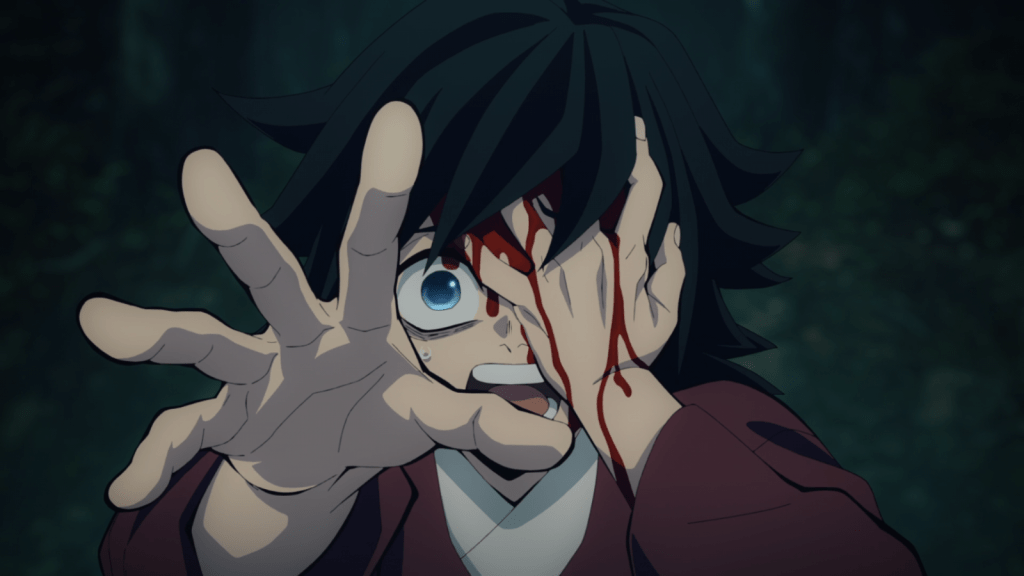
I loved the moment when Tanjiro realized what was going through Giyu’s head. His eyes welled up with tears as he was overwhelmed by empathy. Tanjiro also deals with survivor’s guilt, since only he and Nezuka survived the slaughter of their large family. As he put it, the only thing worse than having a loved one die before you is knowing that a loved one died protecting you. Tanjiro’s depth of feeling for others never ceases to surprise and impress me. I think his empathy is his best virtue.

Tanjiro asked if Giyu was going to pass on what Sabito left him. This question brought back an important memory to Giyu’s mind. He remembered Sabito slapping him after he said he wished he died in his sister’s place. According to Sabito, there isn’t time to waste on wanting to be dead, because you are dutybound to pass on what the dead entrusted to you. In other words, you need to stay alive and help save others with the life you were given. That’s the only way to make sure the lost life has meaning.
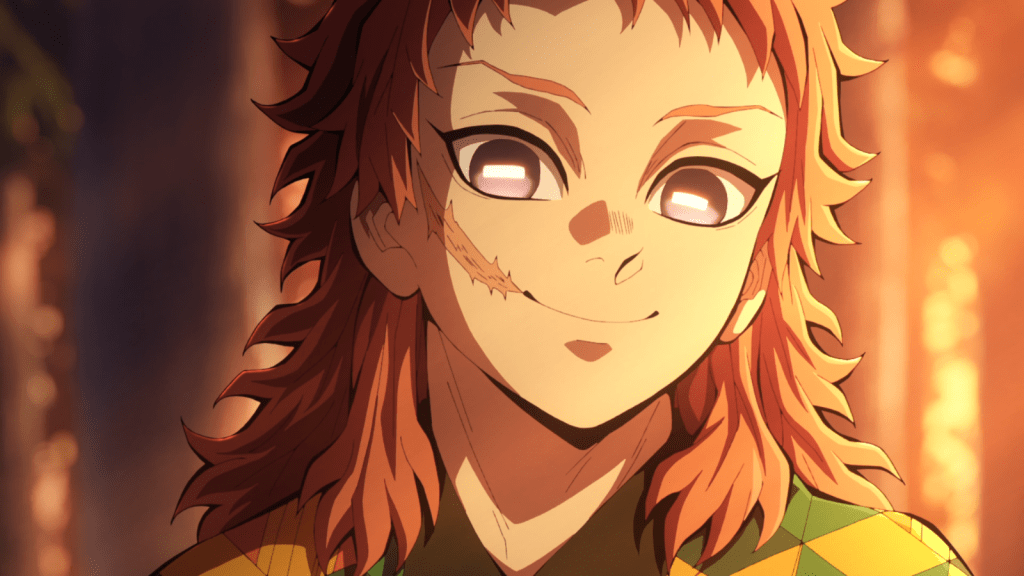
Now that the memory was restored, Giyu wondered why he had forgotten something so important in the first place. He thinks for a moment and then realizes the answer: it would have been too painful for him to dwell on memories of Sabito. Thinking about his dead friend only made the grief stronger. It was only now, years later, that Giyu’s mind could start processing the repressed memories.

This is how psychology works in some cases in real life, too. If you’ve suffered intense grief, loss, or trauma, you may find it difficult to remember for a long time. This could mean that you intentionally try to forget. Or it could mean your mind represses the memories without conscious effort. In either case, trying to force it won’t help. You need time, space, and healing to face those memories. Good character psychology is always interesting to me, so I appreciated this introspective moment with Giyu.
Tokito’s Smile
Mist Hashira Muichiro Tokito was my favorite character of those featured in the Swordsmith Village Arc. I love stories involving twins. Plus, Tokito’s personality is cute and interesting. His default is to be cold, distant, and deadpan. He is harsh with others and shows little emotional expression at first. It was beautiful to see the moments where he started “waking up” and recovering his sweet personality along with his missing memories. By the end of Swordsmith Village, Tokito is much more alive, kind, and passionate than before.

In the Hashira Training Arc, we see that Tokito has come a long way on his own even though it’s only been a few weeks. He is still stern and cold toward most of the students training under him, but the level of harshness has been toned down. In addition, Tokito brightens up immediately when he sees Tanjiro. He’s genuinely joyful. This shows that he can let others into his world and think of them as friends. Tanjiro helped Tokito get back his missing memories, and was otherwise a good influence. Tokito is now full of gratitude.
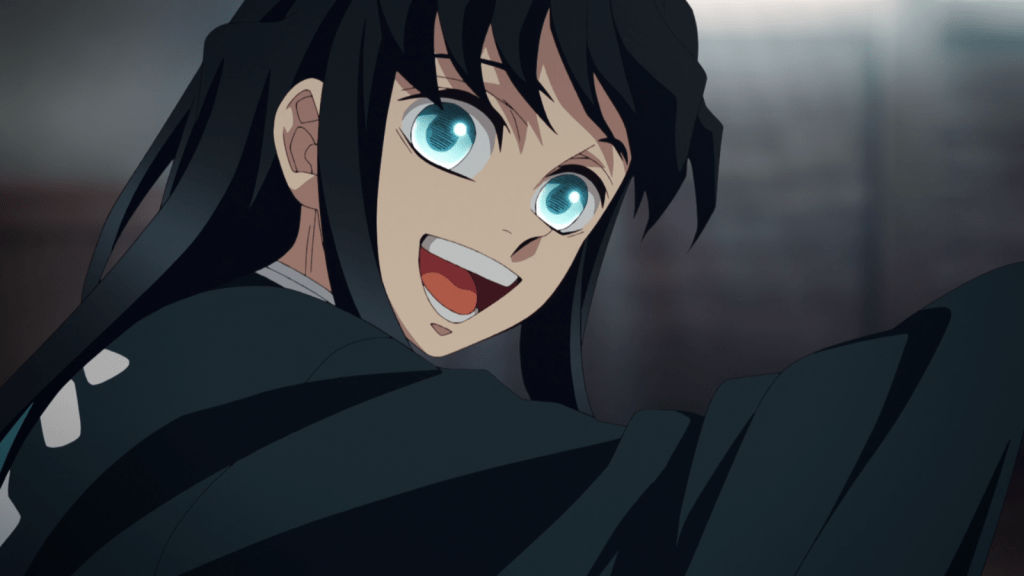
It’s great to see this boy so happy and expressive after all the pain he’s been through. In Hashira Training Arc episode four, Tokito gets to reclaim a little bit of his childhood. Despite spending the majority of each day training, Tokito sometimes has time for the classic, childlike hobby of folding paper airplanes. After hearing about this, Tanjiro suggests a contest with Tokito to see whose plane can fly farther. Tokito happily accepts the challenge.
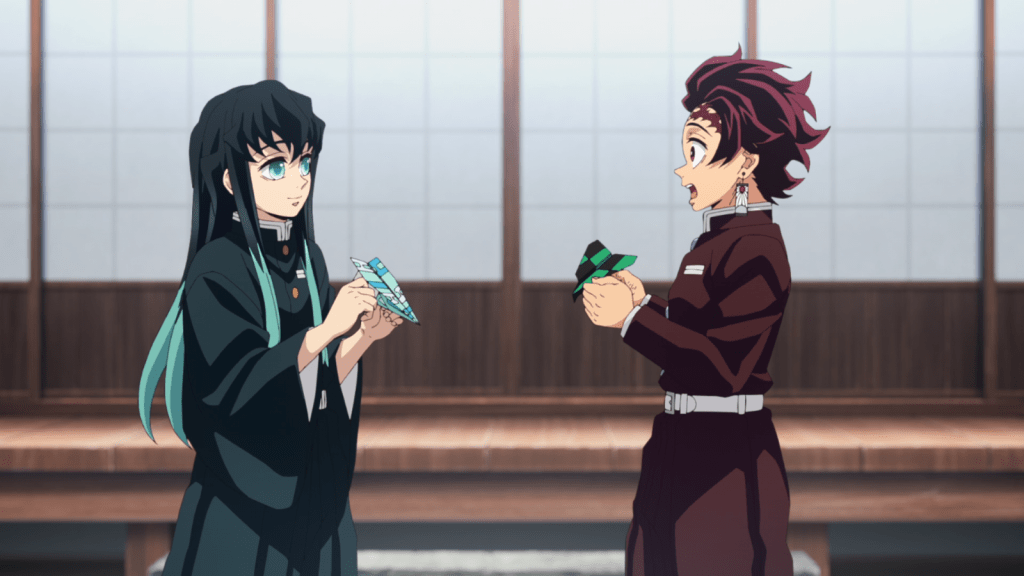
Tanjiro loses the contest, but his goal of humanizing Tokito – for the sake of the other students – was completed. The students all got to see Tokito being a normal, happy boy. As a result, they could relate to him and get through the grueling training easier. Tokito and all the students then spent some time together making paper airplanes. As they launched their planes all at once, everyone felt joyful and connected to each other.
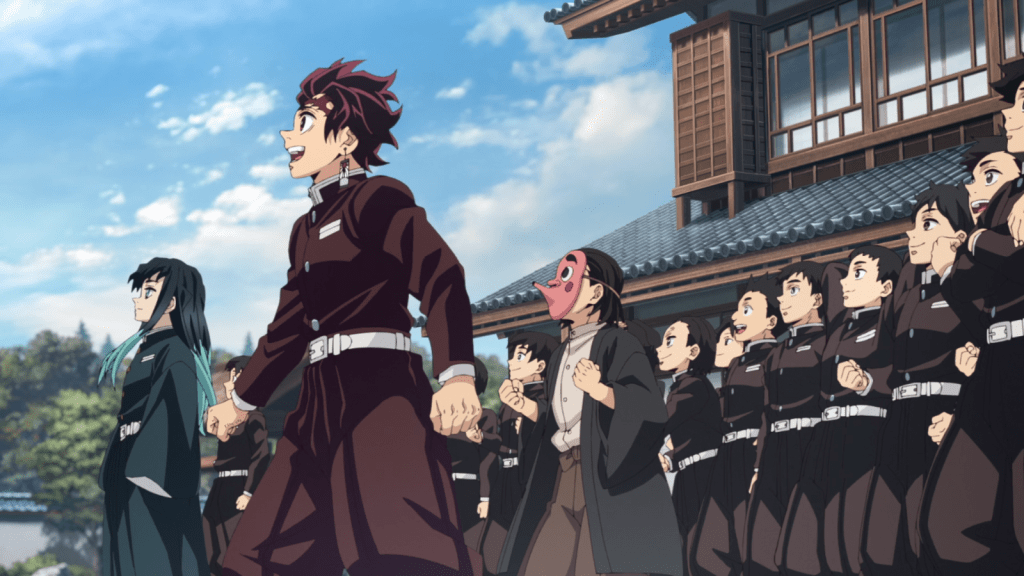
After being closed off to the world for so long, Tokito may always be slower to let people in and learn to express himself appropriately. But for now, this is great progress, and it’s mostly thanks to Tanjiro. This empathetic and honest boy has a powerful effect on those around him, causing them to open up and become more trusting. It’s no wonder Tokito was so overjoyed to see this special friend again.

Shinazugawa’s Insanity
Wind Hashira Sanemi Shinazugawa is real piece of work. He was the one who stabbed Nezuko back in the first season. For a Demon Slayer, that might have been justified. But Shinazugawa shows a strong tendency toward violence and aggression in many other instances, including those where it’s completely irrational. Shinazugawa is always combative in attitude and quick to start infighting. But the best example of his unreasonable violence is the way he treats his younger brother, Genya.
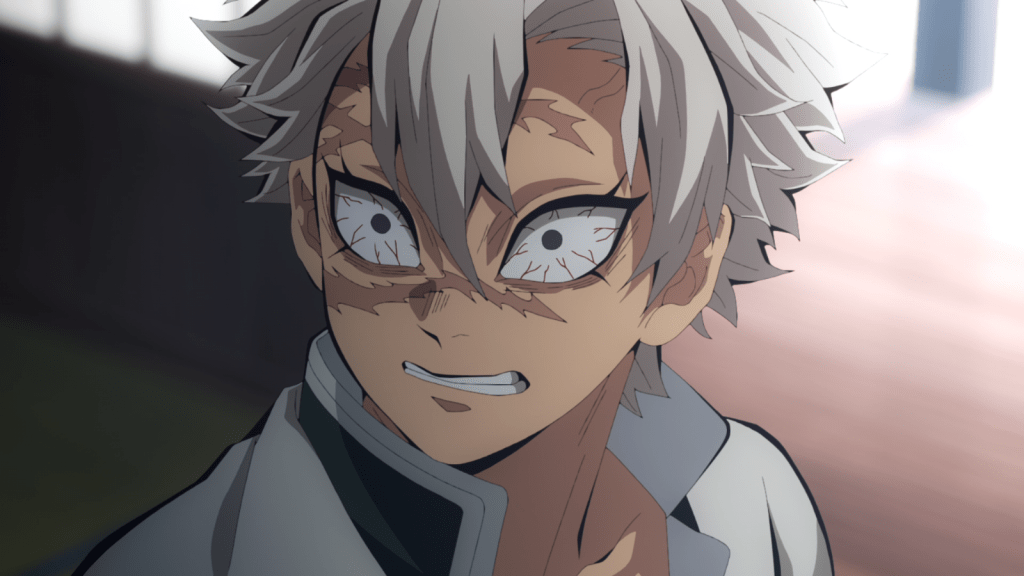
The story of Sanemi and Genya is tragic. When they were both still young children, their mother became a demon. She slaughtered most of the family. Realizing that his mother was no more, the older brother struck her down with a sword. Genya was too shocked and horrified to understand at the time, so he called his brother a murderer.
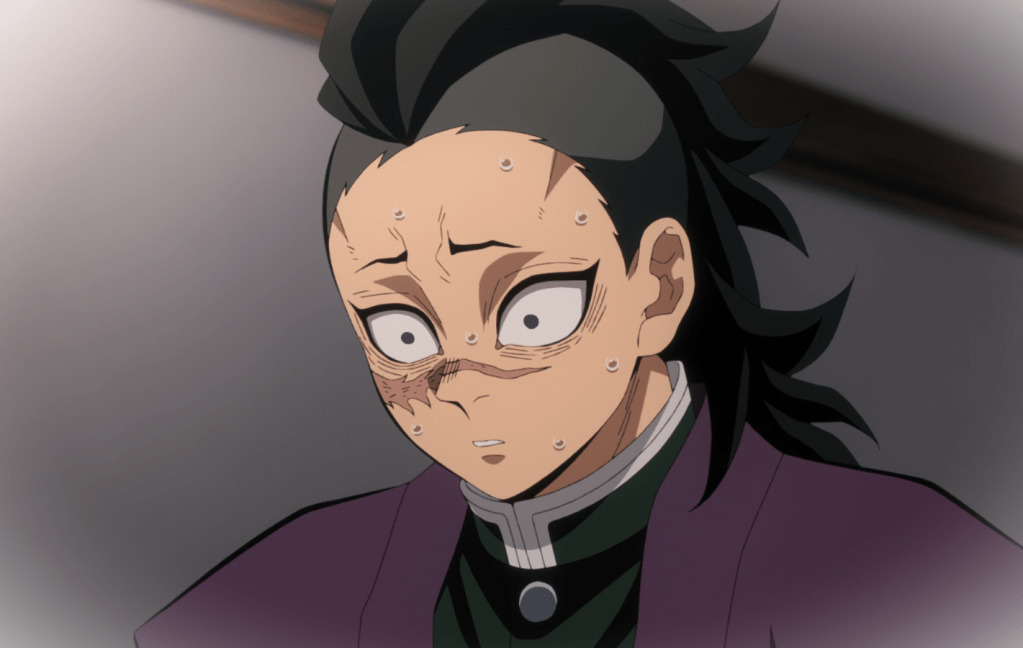
Years later, Genya is trying to apologize for saying such a harsh thing. It would be an understatement to say that Shinazugawa did not extend forgiveness. He insists that he has no brother and that Genya is dead weight in the Demon Slayer Corps. When Genya kept pushing to try to explain himself, Shinazugawa responded by attempting to gouge out both his eyes. Genya would have been blinded if Tanjiro didn’t leap in to save him.

When Tanjiro asked if Shinazugawa was trying to kill his brother, the Wind Hashira said he only wanted to “ruin him beyond repair” to make him quit the Demon Slayer Corps. He also threatened to permanently maim Tanjiro in the same way for interfering. To his credit, Shinazugawa didn’t follow through. He was strong enough to give permanent impairments to the boys, but instead, the fight became a brawl that resulted in no serious injuries. The only real result was that Tanjiro was kicked out of Shinazugawa’s training program.

It’s possible that Shinazugawa says a lot more than what he actually means to do. That would explain why Tanjiro was unhurt aside from normal training bruises. It’s also possible that Shinazugawa has somewhat noble intentions under all the insanity. He probably wants Genya – his last family member – to survive. In order to ensure his survival, Shinazugawa is willing to bully Genya out of the Demon Slayer Corps. Even if he’s thinking about his brother’s life, however, this level of cruelty and violence is not acceptable.

Shinazugawa’s scenes in the Hashira Training Arc made me realize that the Hashira are not necessarily good people in all cases. They’re all weirdos with amazing strength that society cannot govern. It’s surprising that the organization isn’t corrupt. All of the Hashira – including Shinazugawa – are still driven to rescue civilians from demons. If they have one irrationally violent member among them, I think the Hashira are doing okay. They’re not corrupt. Still, it’s frightening to think about what would happen if a Hashira was truly unhinged.

Himejima’s Tears
Stone Hashira Gyomei Himejima is a serious and admirable character. Considered the strongest of the Hashira, this man joined the Demon Slayer Corps at the age of nineteen. His backstory is tragic, something he has in common with all the Hashira. As a teenager, Himejima ran an unofficial orphanage, taking care of eight children on his own. He was raised to be a Buddhist monk, and he was perfect for the job, since his heart was naturally compassionate and gentle.

When one of the children ran into a demon, he bargained for his life by leading the demon straight to the other children where they slept. All the children were slaughtered except the youngest girl, Sayo. Himejima awakened to his power to protect her. He smashed the demon’s head into a bloody pulp. But four-year-old Sayo was confused and traumatized. She told the townspeople that Himejima was the murderer. Since the demon’s corpse vanished in the sunlight, Himejima could not prove his innocence, and was summarily jailed.

Some time later – probably several years after the incident – Ubuyashiki pulled some strings to let Himejima out of jail. He then became a Hashira. But hold on. Think about this for a minute. Himejima probably had a lot of doubts and reservations as he was getting to know “The Master.” I doubt he immediately jumped on board with the idea of being a demon slayer, since he was disillusioned with humanity. In addition, we know he hated the feeling of beating anything – even a demon – to death.

Himejima said he would have been “saved” if Sayo had thanked him. Since she never did this, we can assume Himejima remained in a confused and depressed state, struggling to understand an unjust world. However, I believe Himejima was “saved” in two parts later on. His first and primary “savior” was Ubuyashiki, who restored his faith in human kindness and justice. Kagaya Ubuyashiki was the first person who believed in his innocence. Despite being four years younger, he became a father figure to Himejima, even calling him by his first name (Gyomei) in a flashback.
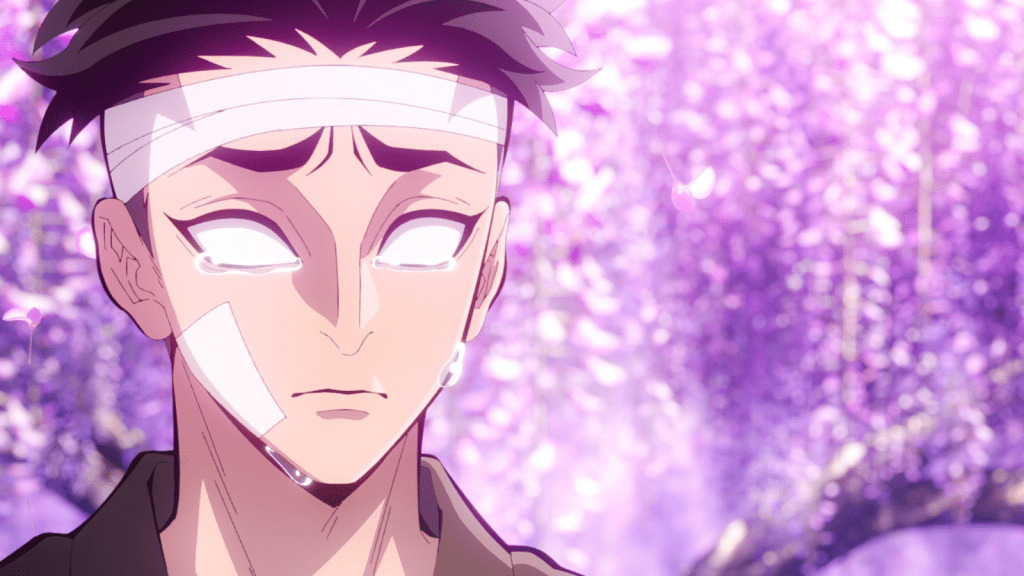
The second emotional savior was Tanjiro, who trained under Himejima eight years after he joined the Hashira. Himejima strongly valued human life, but also believed that humans – and in particular children – were morally rotten. (Remember, Himejima had no way to know what we know today – that children do not yet have the brain development necessary for social understanding and empathy.) Tanjiro proved to Himejima that children are not all evil. Some are capable of good morals and selflessness.

The last thing I’ll say about Himejima is that he is quick to shed tears and that he always carries Buddhist prayer beads with him, suggesting a religious nature. His religion and personality might both be references to a famous statue in reality. It’s called “The Weeping Buddha” and it shows a man with his head in his hands, crying. The legend behind the weeping Buddha is very different from Himejima’s story, so this could be a coincidence. Still, I thought it was worth mentioning.

Ubuyashiki and the Human Will
The final episode of Hashira Training Arc is high-quality in terms of audio and visuals, but also in terms of discussion material. For example, Tamayo’s courage was amazing. But I don’t have time to write a full post analyzing this episode. Instead, we will focus on the character at the center of this epic installment – a character who rapidly became one of my favorites in the series. Of course, I’m talking about Kagaya Ubuyashiki.
Note: I apologize in advance for the length of time I will spend gushing about him.
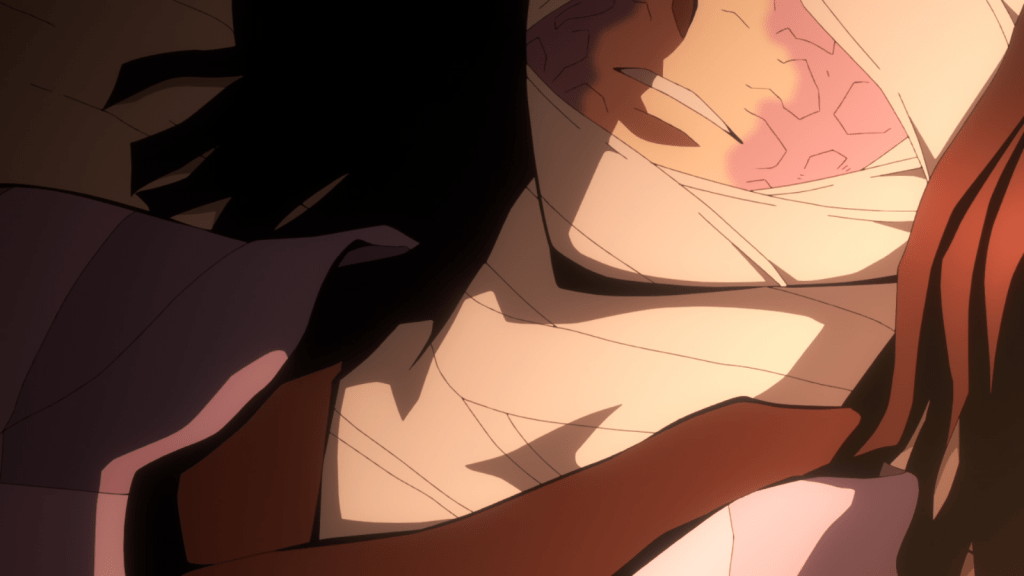
The Ubuyashiki family line was afflicted with a disease that weakened and then killed most babies in infancy. Just as the family was about to die out, the head of the clan consulted a priest, who told him that his family was cursed because it gave rise to the first demon (Muzan). We don’t know exactly how the clan leader and Muzan were related, but they could have been cousins, or they could have been several generations apart. Either way, it happened about a thousand years ago.

The family leader realized he needed to do everything in his power to slay the demon born from his clan. Thus, he started the Demon Slayer Corps. He also started a tradition of marrying into priest families, which somehow or other improved infant survival. However, even with all this effort, people in the direct line of the Ubuyashiki clan could never live far past thirty years of age. Kagaya Ubuyashiki was no different. Now about thirty years old, his body was basically rotten from disease. He could die at any moment.
Kagaya has the vibe of someone gentle, wise, and ancient. I wondered at first if he inherited the consciousness of generations of past family leaders. However, that’s not the case. Well then, what makes him so dignified? Why do the hashira all adore him? Part of the reason is that Kagaya inherited the Ubuyashiki ability of foresight. He can literally see into the future, though to what level of detail or certainty we do not know. In addition, he has the ability to calm others with his voice. His gifts are so effective that even Muzan’s hatred was quelled somewhat during their confrontation.

These abilities alone do not explain everything about Kagaya. The other major part of his character is his incredibly loving and thoughtful personality. This is why I fell in love with Kagaya. I think it’s also why the Hashira each respect him so deeply. At the age of fourteen, Kagaya already spoke and handled himself like a mature adult. He was wise beyond his years and insightful about the true nature of people. And he loved people. He loved humanity.

Despite his unfortunate lot in life, and the knowledge that demons were born from his own family, Kagaya never despaired about humanity. He seems to consider all humans a part of his family or an extension of himself. As for the Hashira and the Demon Slayer Corps, they are his precious children. It doesn’t matter that Himejima is older than him, or that several other Hashiras are close enough in age to be his siblings. Kagaya is their loving, nurturing parent regardless of age. He understands each of them in a special way. That’s beautiful.
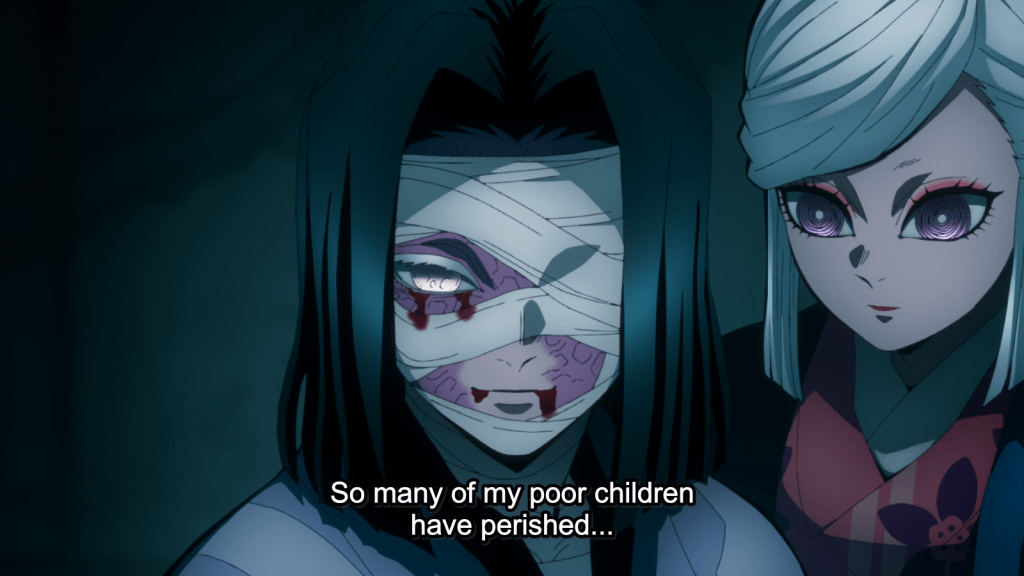
Because Kagaya loves people so much, he also hates the demons who take their lives away. This man isn’t a pacifist Buddha by any stretch of the imagination. That becomes very obvious with his final move against Muzan. Kagaya Ubuyashiki used himself as bait to draw Muzan out into the open. He then blew up his entire mansion, sacrificing not only himself but also his wife and two children. All of this was to weaken Muzan for the final battle. As you can see, Kagaya was clever and full of spite toward demonkind.

(Although this is speculation, I believe Amane Ubuyashiki and the two girls were aware of the plan. I think they wanted to die with Kagaya. They loved him so much that life would not be worth living without him. Although it probably wasn’t Kagaya’s first choice to sacrifice his family, he allowed it for the greater good. The plan wouldn’t have worked nearly as well if the family had evacuated beforehand.)
I could keep analyzing and praising Kagaya for several more paragraphs. (I haven’t even talked about his ability to mask his emotions!) But for brevity, we’ll move on to my last point: Kagaya’s belief about eternity. Obviously, eternity is an important theme in this show. The chief villain, Muzan, wants nothing more than to live forever. So, it must have piqued his interest when Kagaya Ubuyashiki told him, “You see, I happen to already know eternity.”

Kagaya believes that eternity is the human will: the propensity for humans to survive and keep experiencing life as humans – complete with the interpersonal bonds and emotions that demons can never understand. While I disagree that humanity will literally last as long as the universe, I definitely agree with the spirit of what Kagaya is saying. Especially as a secular humanist, I applaud this philosophy.
The dying man explains that humanity’s will has persisted for the last thousand years despite the rise of demons. They’re not dying out any time soon. While demons seek literal immortality, humans have already reached “spiritual” immortality by being part of the greater whole of a resilient and highly social species. When Kagaya dies, humanity will go on. In contrast, if Muzan is killed, all demons are doomed. Kagaya uses this to gloat over Muzan in his final moments. Now that’s a bad-ass move.

Thanks to the character of Kagaya Ubuyashiki in this season, I love Demon Slayer as a whole more than I did before. That concludes my main thoughts on the Hashira Training Arc. What about you? Did you like the newest season? What did you think of the character development? Do you agree with Kagaya’s hope in humanity? Let me know in the comments.
~Thanks for reading~
~

 Anime Rants
I really like your insight about our old veiny purpleface. He really stuck out to me in this arc but in the show in general too
LikeLiked by 2 people
Thanks Nat! ❤ I think I overlooked the character a lot in the earlier seasons, but this arc made me LOVE him!
LikeLiked by 1 person