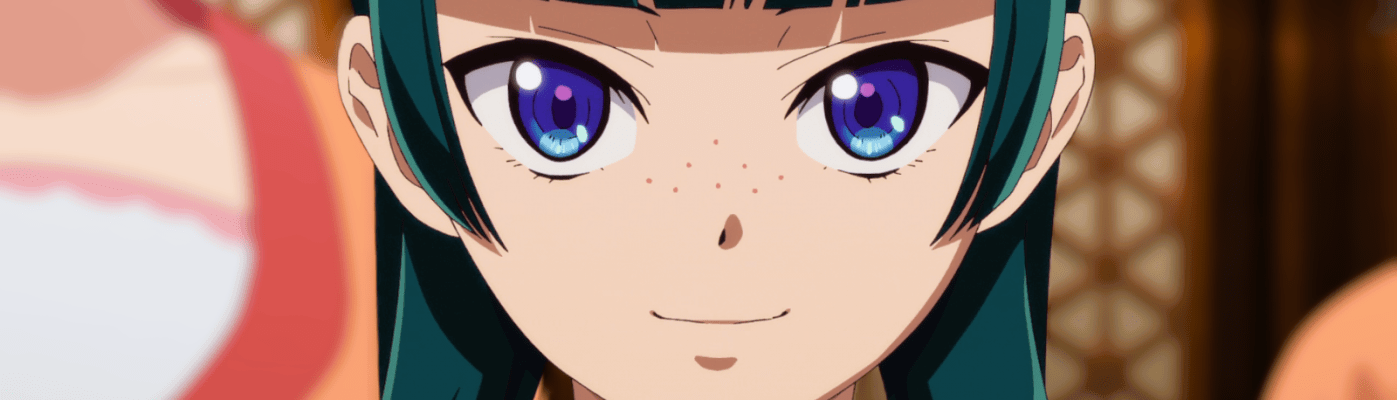
Some anime series are beautiful to experience despite dealing with surprisingly mature subject matter. The Apothecary Diaries is one such show. It looks colorful and flowery, but deals with heavier topics like sexuality, forced servitude, and classist society. It’s a beautiful blend of mature and fun. If this interests you, please join me for a series review of the unique and gorgeous series, The Apothecary Diaries.
Article Contents
Story
Score: 8/10
The Apothecary Diaries follows a girl named Maomao who worked as an apothecary until she was kidnapped and forced to be be a servant in the kingdom’s inner palace. She tries to keep a low profile so she can earn money, pay off the kidnappers, and get back to normal life as an apothecary. But despite her own better judgement, Maomao keeps using her knowledge and sharp intellect to help the nobles in the inner palace. The attention she draws means that she won’t remain a cleaning servant for very long.
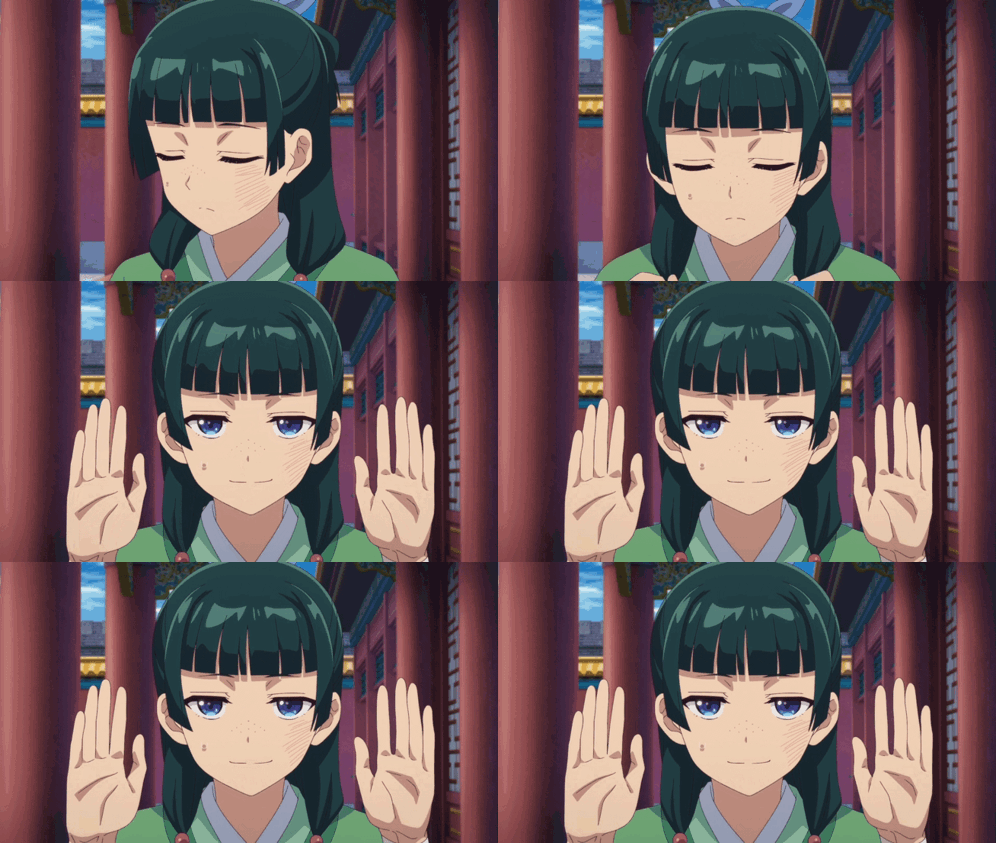
While it’s not as slow as a slice-of-life anime, The Apothecary Diaries is certainly not a thriller. It’s a historical drama and the pacing feels average for a drama anime. There isn’t always a clear direction to the plot, but if you take a bird’s eye view, the story follows the pattern of Maomao solving mysteries and problems in the inner palace one after another. There is also an underlying romantic subplot as Jinshi slowly falls for Maomao.
Despite the generally relaxed pacing and atmosphere, there are occasionally entertaining plot twists and suspenseful events. It’s more than enough to keep most viewers satisfied. The Apothecary Diaries usually does exposition well, often showing instead of just telling. This series is also proficient with content balance, providing a good mix of humor and serious developments. It is, indeed, a beautiful blend.

Themes and messaging are important parts of the story category. The Apothecary Diaries is not a preachy anime. If it is trying to push any messages, then they are subtle. This isn’t a moralistic story, but rather, an objective exploration of the world these characters experience. There were a few over-arching story themes that I enjoyed. One solid example is the idea that “Things aren’t always what they seem.” There’s more to each major character than is immediately apparent. It’s a fun theme to play with.
Though it’s not some epic tale with profound messaging, The Apothecary Diaries still deserves a high score for its narrative excellence.
Visuals
Score: 10/10
I rarely give 10s in my reviews. Some people describe their idea of 10/10 as literally perfect. I don’t go quite that far anymore, because improvements can always be imagined. So, for me, I guess 10/10 means it’s the closest to perfection that I could reasonably hope for. Sure, improvements might be possible, but they are not needed. That’s a 10/10 score. I’m happy to give this score for the visuals in The Apothecary Diaries.
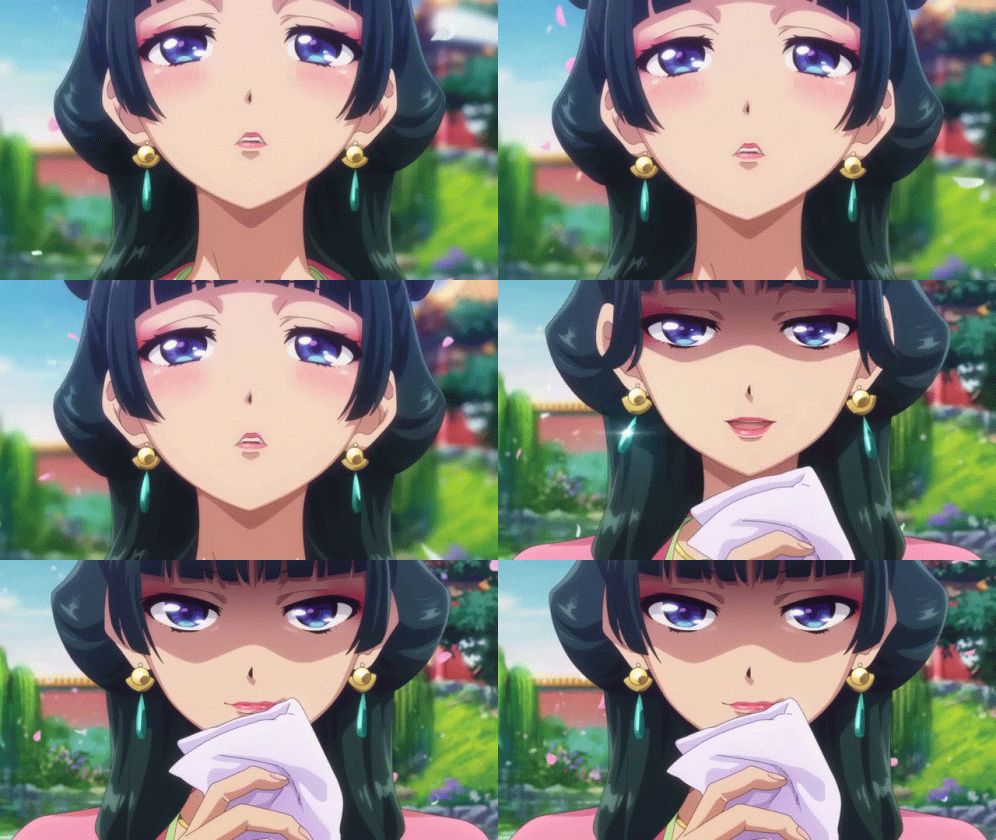
The sets are always detailed and gorgeous. The oriental décor is exquisite in almost every scene. Maomao, Jinshi, and others were given memorable character designs. If you’re the type (like myself) who is attracted to 2D characters, you’ll doubtlessly love admiring the women in the palace. The amount of pretty kimonos, hairpins, and flowers in this anime is insane. It’s enough to make anyone drool who has even the slightest appreciation of the traditional East Asian aesthetic.
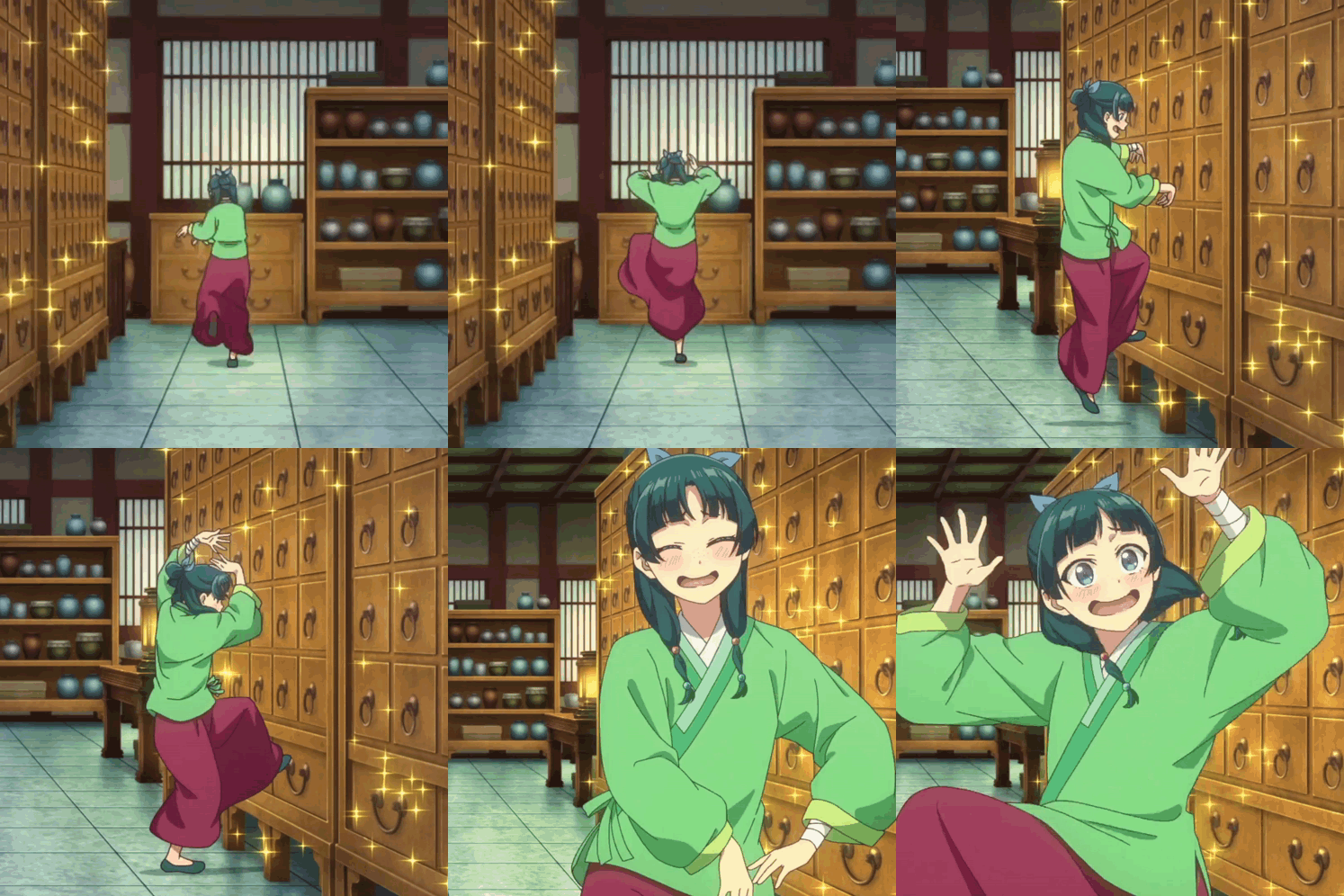
What I love most about these visuals are the vibrant colors being used. Look at Maomao’s design. Her hair is dark pine green and black, her top kimono is light mint green, and the bottom half of her garments is a mild but pretty shade of magenta. Her eyes are rich, deep blue with detailed highlights. These colors are absolutely perfect for Maomao. It’s the same for Jinshi and his royal indigo hair. It goes without saying that the colors for the décor and the outside scenery are also amazing to behold.
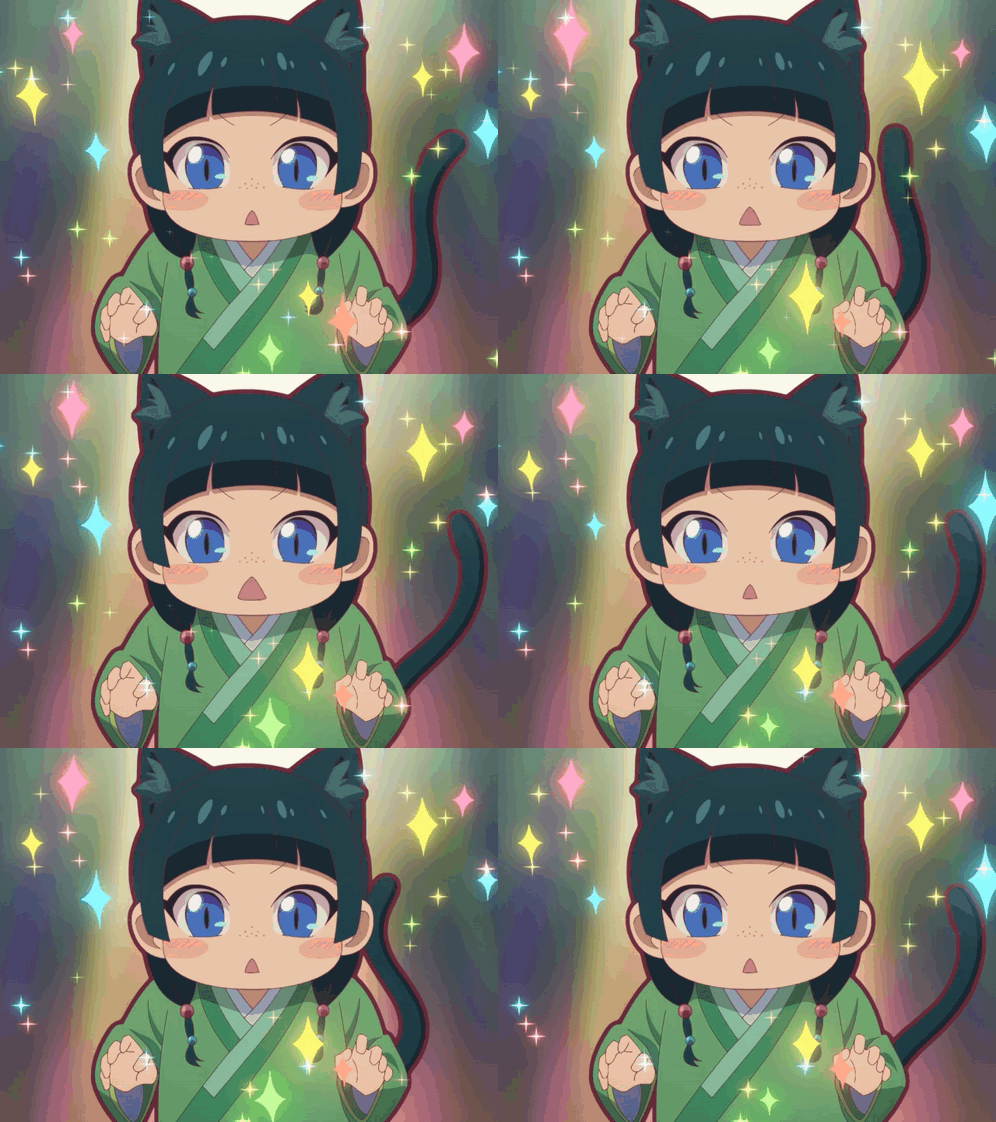
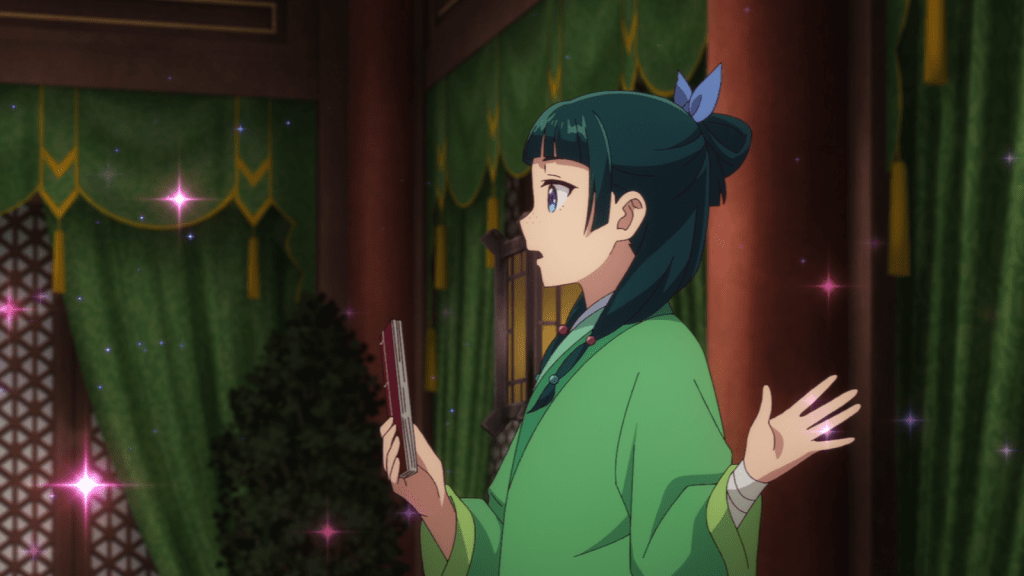
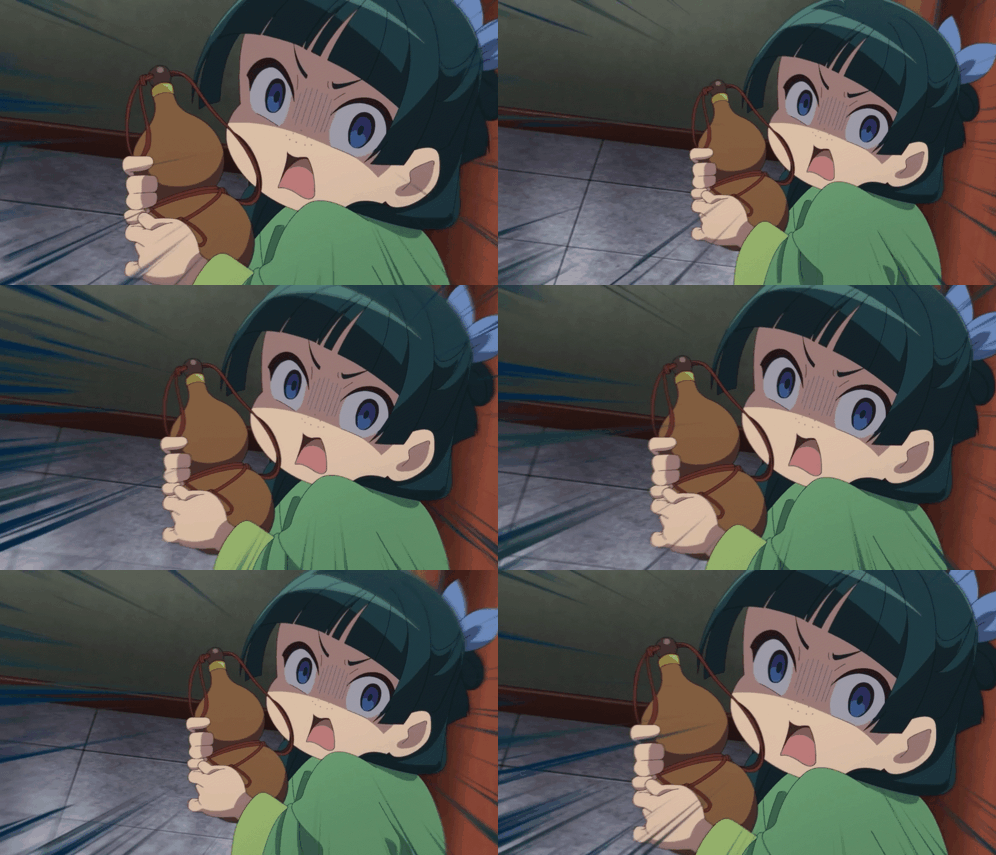
There were some brilliant directing choices made for the visuals in this anime. For example, to show humor or an exaggerated expression, the art sometimes briefly switches to a chibi style wherein Maomao has cat ears (and sometimes a tail). These scenes Maomao’s humorous expressions in general are delightful. I also like the sparkly shoujo backgrounds used in many shots. As you can see, the art in Apothecary Diaries is S-Tier all around.
Audio
Score: 10/10
The Apothecary Diaries did an outstanding job on all fronts regarding audio. First, let’s go over the songs. The opening song for the first cour is “Hana ni Natte” (meaning “Becoming a Flower”) by Ryokuoushoku Shakai. It’s an awesome rock song with heavy percussion and strong female vocals. The first ending song is “Aikotoba” by Aina The End. It’s a much more laidback and chill sort of song, also with female vocals. It reminds me almost of an old Meredith Brooks song, but Japanese.
For the second cour of the series, new songs were used. “Ambivalent” by Uru is the upbeat and wholesome opening song. The vocalist really knows what’s she’s doing. As for the ending song, it’s called “Ai wa Kusuri” (meaning “Love is Medicine”) by Wacci. I don’t know how quite to describe the style, but I enjoy it a lot. It has interesting male vocals and a soft but upbeat sound like something you’d hear on the light rock radio station in the early 2000s.
The music for The Apothecary Diaries was made by three different composers: Arisa Okehazama, Satoru Kousaki, and Kevin Penkin. All of these composers are talented and have a great record behind them. For example, Arisa Okehazama worked on Jujutsu Kaisen and wrote the musical piece, “Self-Embodiment of Perfection.” For another example, Kevin Penkin was the composer for Made in Abyss. These composers know their stuff, and it shows in the beautiful music they create.
Also Note: The insert songs, such as “Toward the Light” and “Blaze of Clear Sky” are also definitely worth listening to again and saving.
As expected, the voice-acting is also basically perfect. Yuuki Aoi plays the protagonist, Maomao. I’ve been a fan of this seiyuu for years, enjoying so many of her roles from the early 2000s to today. She has an amazing range of voices, from soft and timid like Madoka Kaname to insane and shrill like Tanya Degurechaff. The voice she uses for Maomao is more masculine and laidback than what I normally hear, so it’s similar to when she played Kino in the 2016 version of Kino’s Journey.

That’s more than enough gushing about Yuuki Aoi. The other voice actors did excellently in their roles as well. Takeo Ohtsuka is the voice of Jinshi. He’s had relatively few roles and is still settling into the world of anime acting, but he did a great job with this role. Atsumi Tanezaki appeared as Lady Gyokuya and blew away the role with her usual mind-boggling talent. (Tanezaki is probably best known for being the voice of Anya in Spy x Family). I have a few others to mention as well.
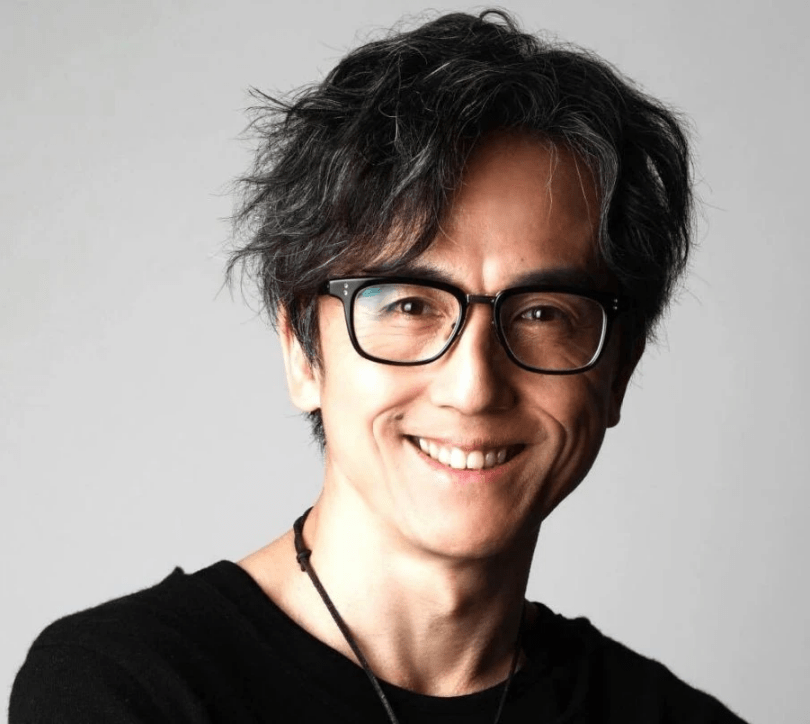
Yui Ishikawa played Lady Lihua; it was nice to hear her voice, though she only had a few lines. In addition to being drop-dead gorgeous, Yui Ishikawa has the most adorable voice and is best known for playing Mikasa in Attack on Titan. Finally, I was impressed with the voice actors for Gaoshun (Katsuyuki Konishi) and Lakan (Takuya Kirimoto). It was my first time hearing and processing the latter voice actor, at least that I’m aware of. Anyway, as you can see, the voice-acting is top quality from the protagonist down to the supporting cast.
Characters
Score: 9/10
The character category shines brightly in The Apothecary Diaries. The cast members have fairly creative and original concepts. They’re a little less cookie-cutter than what you tend to see in anime. It’s a simple example, but there are only a handful of other series with main characters who are apothecaries or herbalists. That makes Maomao sound unique and interesting before we know anything else about her. And don’t worry, because the rest of her character – her personality and history – is also intriguing.

Maomao is an unusual protagonist, especially among other drama and shoujo leads. Shoujo anime is varied and has some truly memorable and profound leads; but the common stereotype of a shoujo heroine is overtly feminine, soft-hearted to a fault, and often impulsive or careless. Many are also obsessed with romance. For Maomao, none of this is true. She’s a bit of a tomboy in the way she speaks, and she seems to see her femininity as a tool that can be used and nothing more.
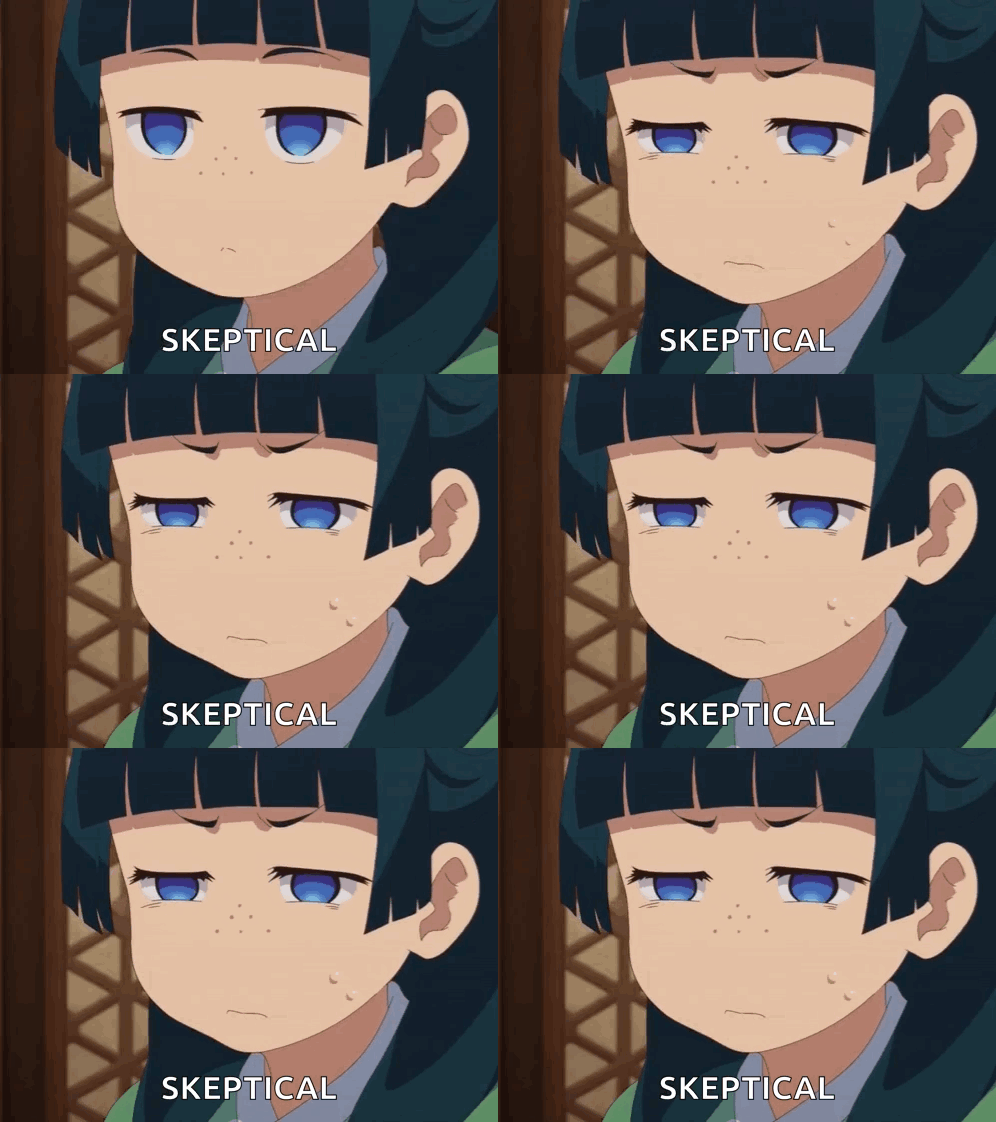
In addition to her less “girly” gender presentation, Maomao is highly intelligent. She isn’t an academic genius, but a sharp and rational thinker. Though she is capable of great selflessness under the right circumstances, Maomao generally doesn’t waste energy trying to “save” everyone. Moreover, she is is uninterested in a romance. On the rare occasion when she mentions something about a husband, it’s a purely pragmatic calculation, not remotely based on romantic interest. Maomao is far from typical.
Since this isn’t an analysis of Maomao, I’ll stop gushing there – but I do want to make something clear. I have no problem with the stereotypical shoujo heroine, nor female characters in general with very traditionally feminine personalities. There’s nothing wrong with being a complete “girly girl.” I just wanted to appreciate the variety offered by characters like Maomao, since the girly lead is a bit more common. Now let’s talk about the characters more broadly.
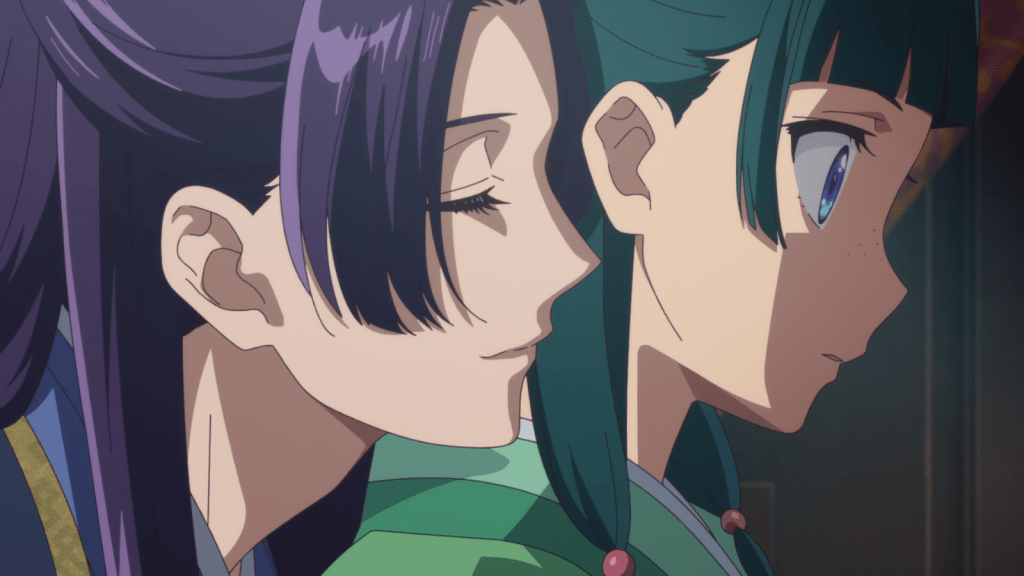
The secondary protagonist, Jinshi, is an endearing and relatable character despite being rather obnoxious at surface level. This young man is vain and spoiled. However, Jinshi’s slow progress toward improvement is fun to watch. He gradually starts to understand Maomao and empathize more with common problems. In addition, Jinshi’s admirable qualities include emotional resilience, good organizational and problem-solving skills, and a high degree of social charm.
It’s not just Jinshi who is excellently developed as a character. Maomao also sees true growth, though it’s more subtle. Most of the supporting cast, too, experienced significant moments of character development. Speaking of the supporting cast, it is diverse and colorful, with surprisingly relatable characters sometimes. The four concubines were great. I loved Gyokuyo’s moments especially. Even one-episode characters like Fuyou leave an impact.
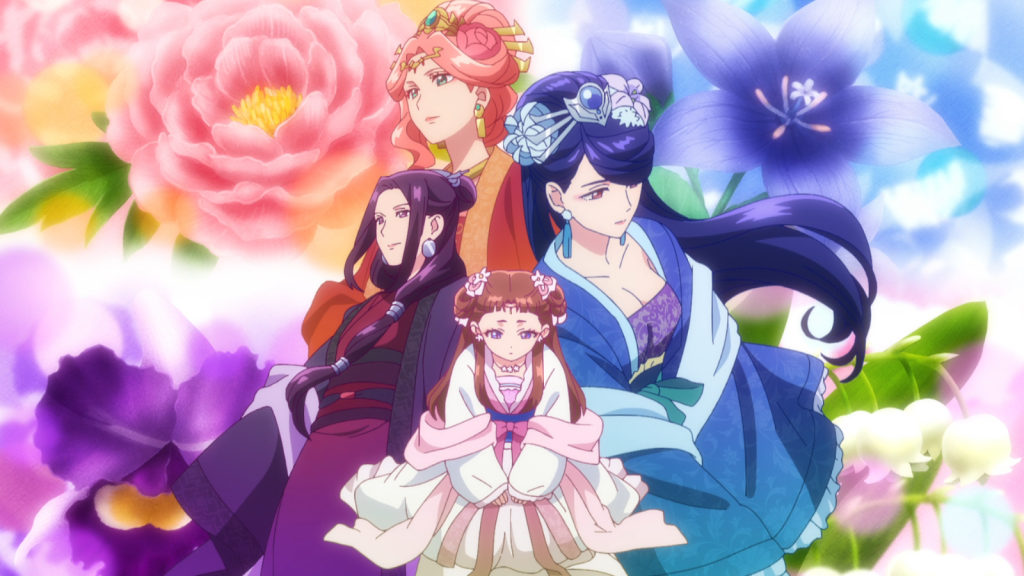
On a final note for the character category, The Apothecary Diary knows how to masterfully build characters over time instead of revealing everything at once. This is clear when you take Lakan for an example. Don’t underestimate the ability of this show to impress you with proficient character writing.
Personal Enjoyment
Score: 8/10
There was so much to enjoy in this beautiful anime. As I explained in the opening, I appreciate the way this anime looks and feels so gorgeous and colorful while also tackling some heavier subject matter. For example, sexuality is a big part of the story, as courtesans often use their bodies as goods and services. There’s also the weighty presence of classism and forced servitude. Maomao was “stolen” and “sold” as if she were property. There’s clearly some darker discussions to be had in this anime.
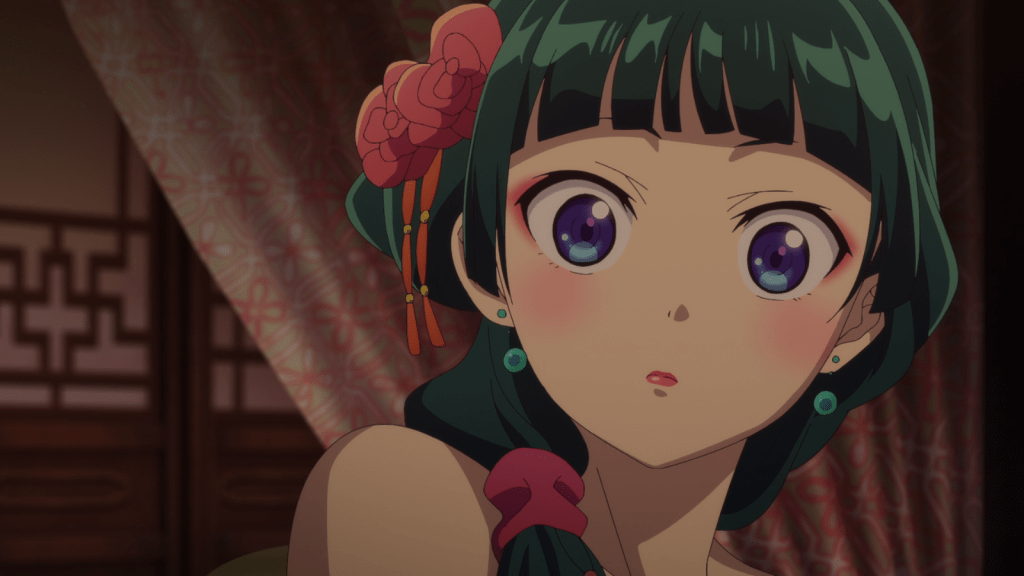
Let me give you some rapid-fire reasons for why I enjoyed The Apothecary Diaries so much. Firstly, Maomao’s intelligence and general attitude is bad-ass. The music and animation are to die for. I also love the setting, which is based on the Ming Era of China, and learning about courtesans. Speaking of learning, this series also teaches you trivia about some types of plants and flowers. The characters Ah-Duo and Lakan were extremely compelling to me. Last of all, the humor in this anime makes me smile.
There weren’t a lot of problematic elements to complain about. A lot of unethical things happen in the story, but they are never really branded as good things. Ideally, I would enjoy a series most when it delves deeply into themes of psychology and philosophy. The Apothecary Diaries isn’t exactly that kind of anime, but that’s okay. It’s still a masterpiece of Japanese animation.
Overall Score
Score: 9.0 / 10.0
The overall score is calculated by taking the average (or mean) of the five numbers from the categories above. A solidly good anime will land somewhere in the 7s range, while a truly great anime reaches the 8s. It’s a rare anime that achieves a 9 or higher in my personal system. That should tell you I’m not kidding around when I say The Apothecary Diaries is a masterpiece. I’m not the only one who thinks so, either. This anime is sitting with a score of 8.89 taken from a quarter of a million voters (as of Nov 1st 2024). It’s definitely well-made, so I’m happy it was fairly popular, too.
There are a plethora of sound reasons why you should watch The Apothecary Diaries. Do you like drama? Settings based on real ancient history? What about romance, mystery, or political intrigue? And who doesn’t like some goofy comedy? Just stop what you’re doing and add this anime to your watch list if you haven’t done so already.

~Thanks for reading~
~

 Anime Rants
Its called Kusuriya no Hitorigoto. If you are watching your Animes in dubbed form I tell you that you are missing out big by not watching it in japanese in subbed form.
LikeLike
Hi thanks for commenting. I do watch Japanese with subs 90% of the time, including for this anime. I just use the English titles for convenience. 🙂
LikeLike