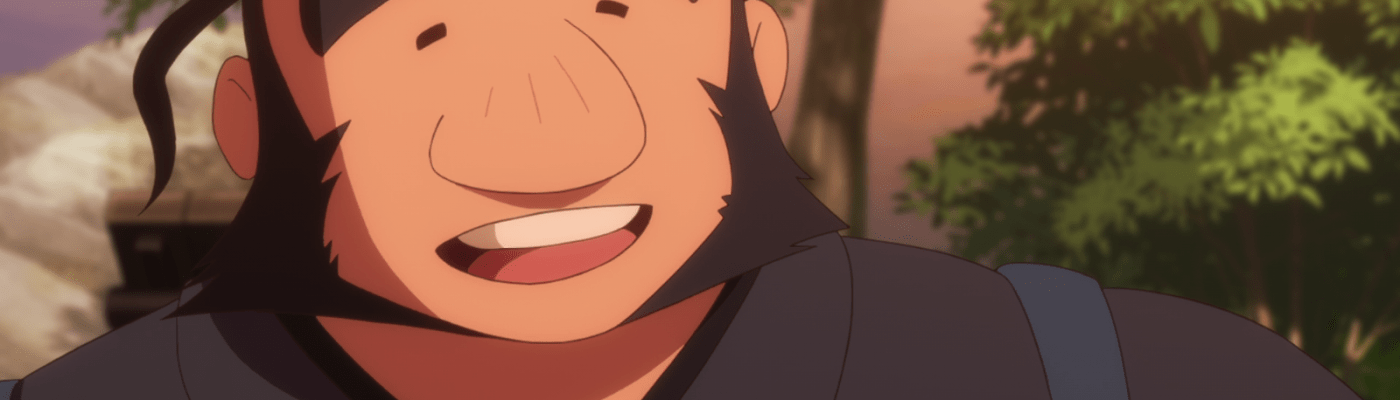
Anime showcases many samurai characters who are cool and bad-ass. There’s nothing wrong with that – I enjoy it, too. But from time to time, I would prefer a different take on the samurai character. Tauemon from Sakuna: Of Rice and Ruin provides exactly that: an unusual version of the “rogue samurai.” He’s not brave, nor particularly skilled. He never wanted to use swords in the first place. He’s an emotional wreck half the time. Still, Tauemon finds the inner strength to help others.
If you casually watched Sakuna: Of Rice and Ruin without paying much attention, you may think Tauemon is just a big, stupid oaf and a useless character. I’m here to say otherwise. Tauemon was one of my favorite characters in the series because he’s so sweet and because he helps bring important story themes to the forefront. Even if you don’t like Tauemon personally, I hope this article helps you understand his character and its significance.
Article Contents
Background
Although his legal name is Katsura Takamori, I will refer to this character as Tauemon, since that’s how he introduced himself to Sakuna. He seems to prefer this chosen name over his birthname. Let’s start our analysis with the meaning of that name. The Japanese word taue means rice paddy, and though I don’t know its exact meaning, –mon is a fragment that occurs at the end of antiquated masculine names. So, Tauemon means, “Man of the rice paddy.” Why would a samurai identify with such a name?
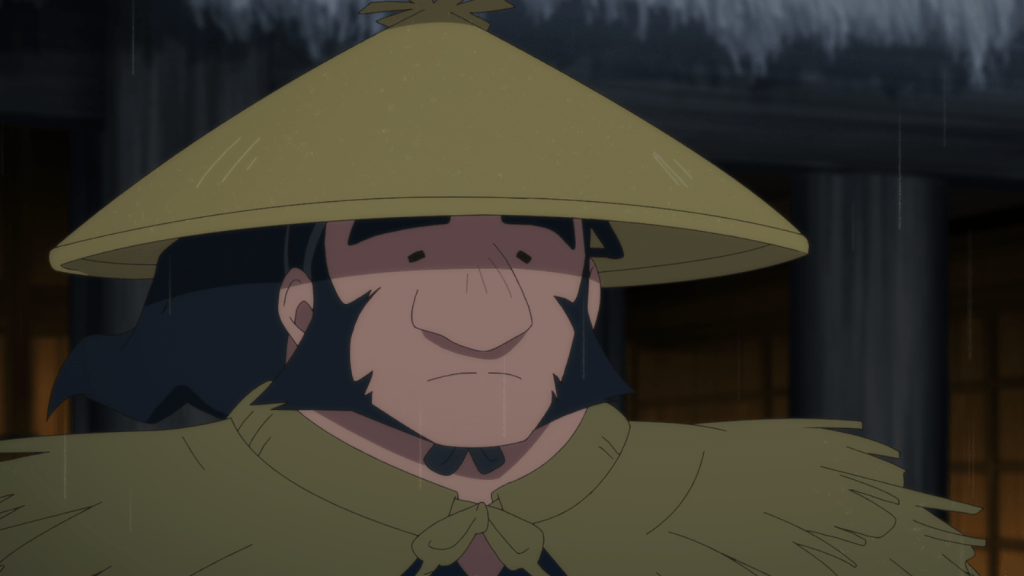
Well, Tauemon never wanted to be a samurai. It was something he was forced into, presumably by his family and the surrounding society. What Tauemon wanted to do was become a farmer. He loved plants and living things in general. Although he was recognized as a samurai for some time, Tauemon was not a skilled fighter, and detested conflict. Regardless, he eventually ran into a situation where he was supposed to kill someone. We don’t know the details, but Tauemon ran away from his duty.
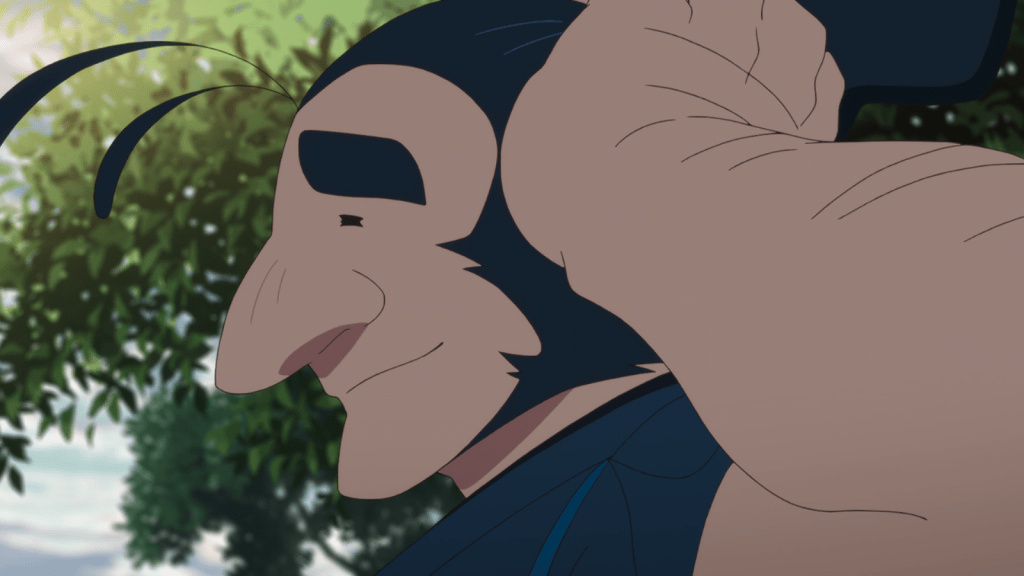
Leaving his old life behind, Tauemon joined a small group of roaming bandits. This was probably his only realistic option, since samurai deserters would be executed. The group of bandits swore they would not steal from women and children, but that was a difficult value to maintain and still have enough food to go around. One day, an especially cruel bandit named Ishimaru captured two children and a woman. He planned to sell them as slaves. The bandit leader refused to allow this. Thus, Ishimaru slew the leader right in front of his toddler son (Kaimaru).
Tauemon couldn’t sit back and watch any more. He took Kaimaru and the three captives and left the group. But Ishimaru was not about to let that slide. He kept pursuing Tauemon and his new family with the intent to destroy them. This is where the anime/game actually begins. Tauemon and his companions happen to wander across the Celestial Bridge that leads into the Lofty Realm of the Gods. From there, they meet Sakuna and begin a new life farming rice on a demon-infested island.
Personality
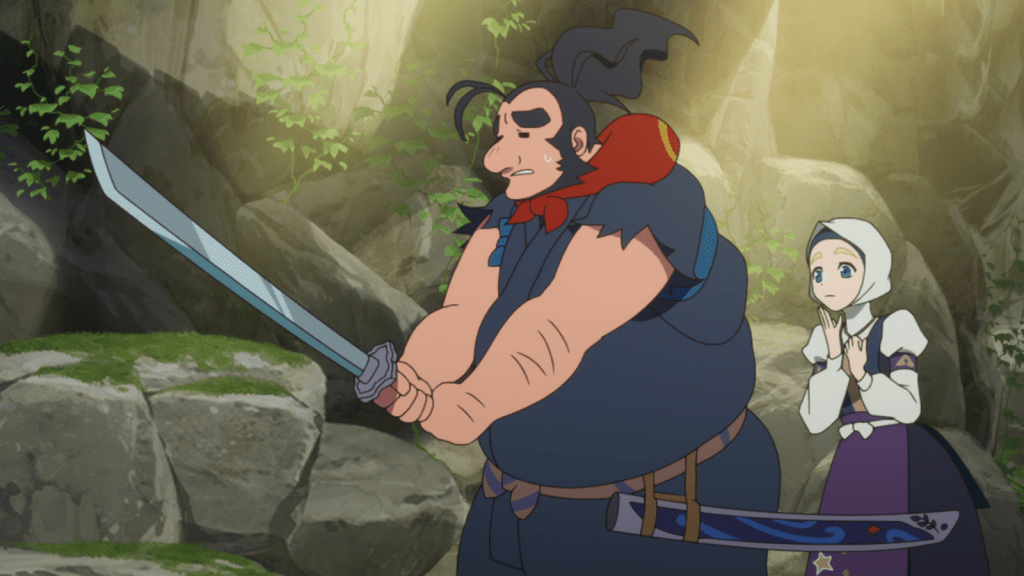
Tauemon is a very loveable person with an intensely emotional nature. Whenever things are going well, he is cheerful and energetic, quick to laugh even when things are not funny. Though he gets sad like any normal person, Tauemon is generally optimistic. Despite being very clumsy and a little unsure of himself, he always tries to be helpful. Tauemon isn’t especially clever, but he’s a surprisingly capable learner. He’s also highly knowledgeable about rice and farming.
It’s impossible to talk about Tauemon without talking about his fearfulness. Nobody wants to die, but samurai are expected to throw away their fear of death when they duel others. That, or they are skilled enough to be confident that they will win any fight. Tauemon is not a particularly skilled swordsman and cannot simply throw his fear away. As a result, he reacts to conflict with a strong fear response. When there’s nothing at stake, Tauemon will run. When there are others to protect, he stands his ground, but trembles visibly. It’s a good thing Sakuna is around.
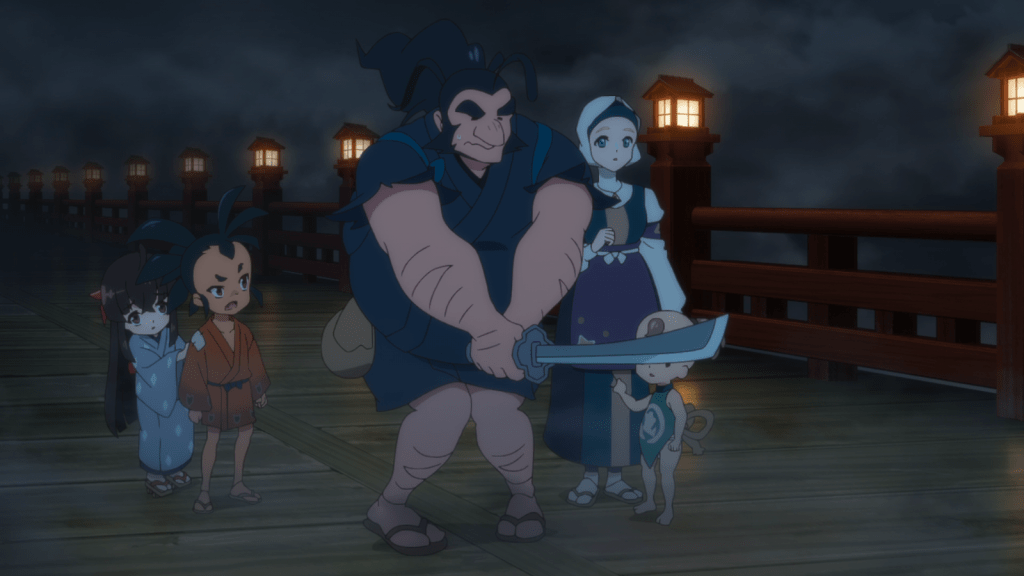
Importantly, I don’t think Tauemon’s fearfulness is a character flaw. If he sought to be a warrior, then his anxiety about fighting would be a defect; but Tauemon only ever wanted to be a farmer. If he was allowed to live like he wanted, there would be no need for violent fights. That’s why I don’t think it’s fair to expect him to throw away his rational fears of harm and death.
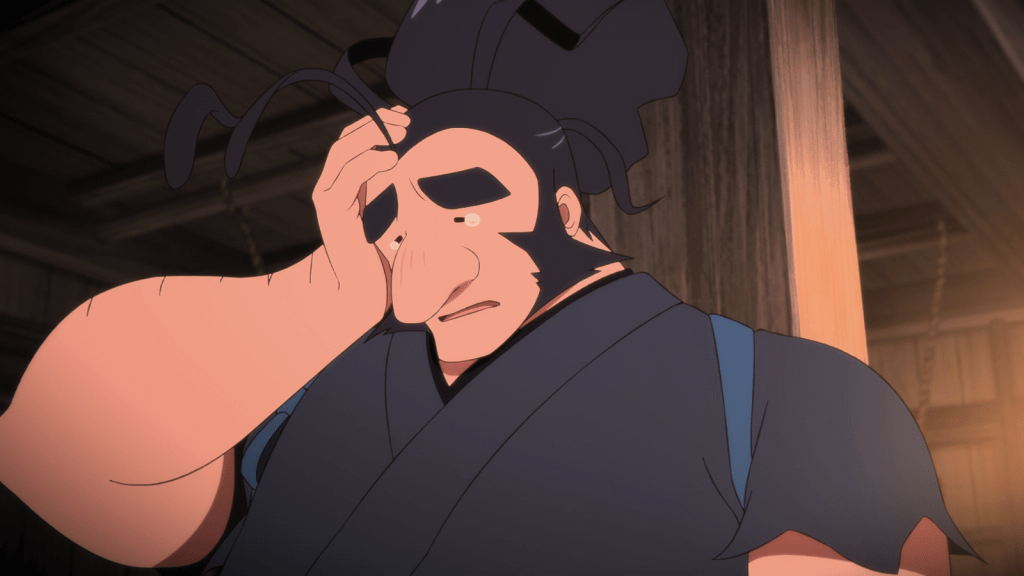
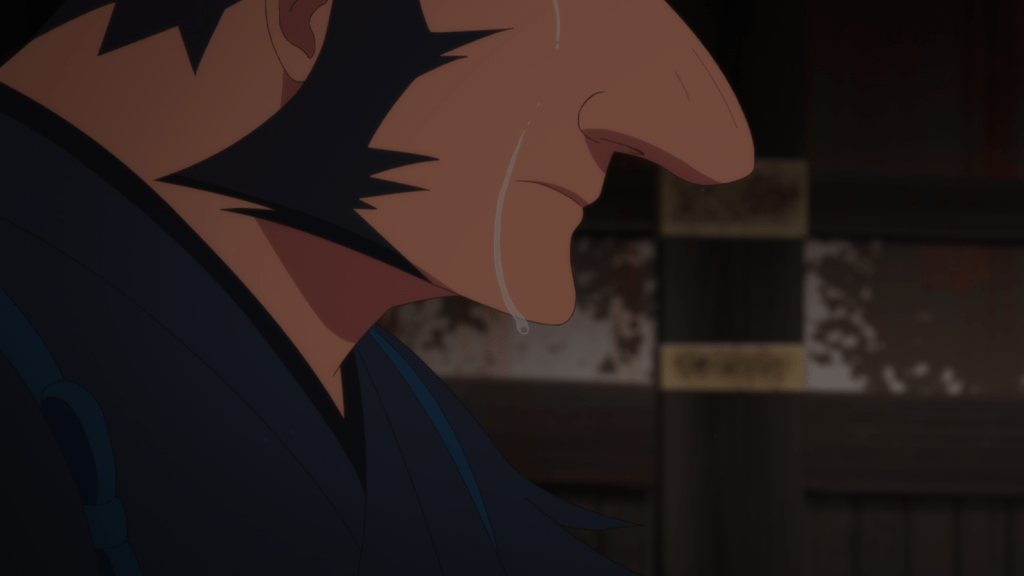
As I mentioned, Tauemon is an intensely emotional person. He’s kind-hearted, warm, and hospitable. When he feels empathy for others, he weeps. In fact, he cries almost at the drop of a hat. This is a bit comical, and also rather annoying for Sakuna at times. However, I think it’s good for a man to be able to shed tears. Taeumon just takes it a little too far sometimes. It shows how caring and gentle he is, wearing his heart on his sleeve.
In terms of the MBTI model, Tauemon is best described as an ENFJ type. He’s extraverted (outgoing and people-oriented), intuitive (abstract and impressionistic thinker), feeling (makes decisions based on personal values and emotions) and judging (future-oriented and conscientious). The cognitive functions for an ENFJ are Fe, Ni, Se, Ti. With a dominant function of extraverted feeling (Fe), Tauemon is happiest when helping others. That’s also why the ENFJ type is sometimes called “The Giver.”
Significance In the Story
Tauemon is a hugely important character in Sakuna: Of Rice and Ruin. In a literal sense, this man is the one who led the other humans into the Lofty Realm, where they encountered Sakuna. He serves as the father-figure to Kaimaru, Yui, and Kinta. He has a close and respectful relationship with Myrthe as well. Finally, Tauemon’s knowledge of farming was critical for Sakuna to become a successful Harvest Goddess.
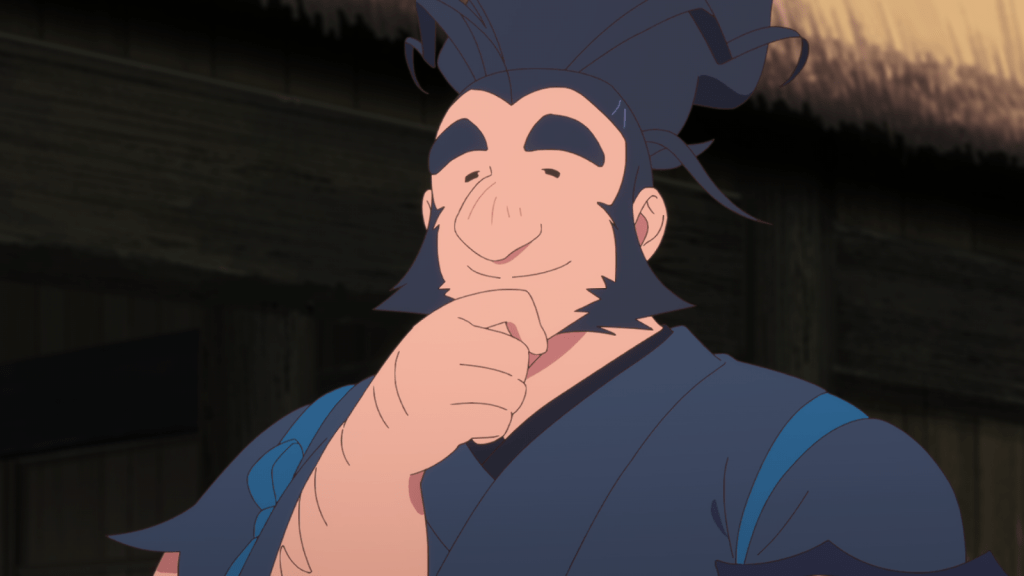
In a more abstract sense, Tauemon is important because he promotes a central theme: that peace and acceptance are desirable over hatred and vengeance. The narrative doesn’t condemn him for giving up the sword, or even for running away in fear. It quietly praises his ability to live a peaceful life helping his newfound family on the farm. Although this goes for all the main human characters, Tauemon is also a symbol of the goodness in humanity that Sakuna wants to protect.
There is one final way in which Tauemon’s character in particular is important: he serves as contrast for Ishimaru. Both men had a less than ideal life and ended up as bandits that were unhappy with their lot. But while Tauemon is peaceable, patient, and self-doubting, Ishimaru is arrogant, violent, and rash. Ishimaru and his demise are lessons in human toxicity. Tauemon is the opposite, as he learns to forgive and accept himself and the world.
Character Arc Conclusion
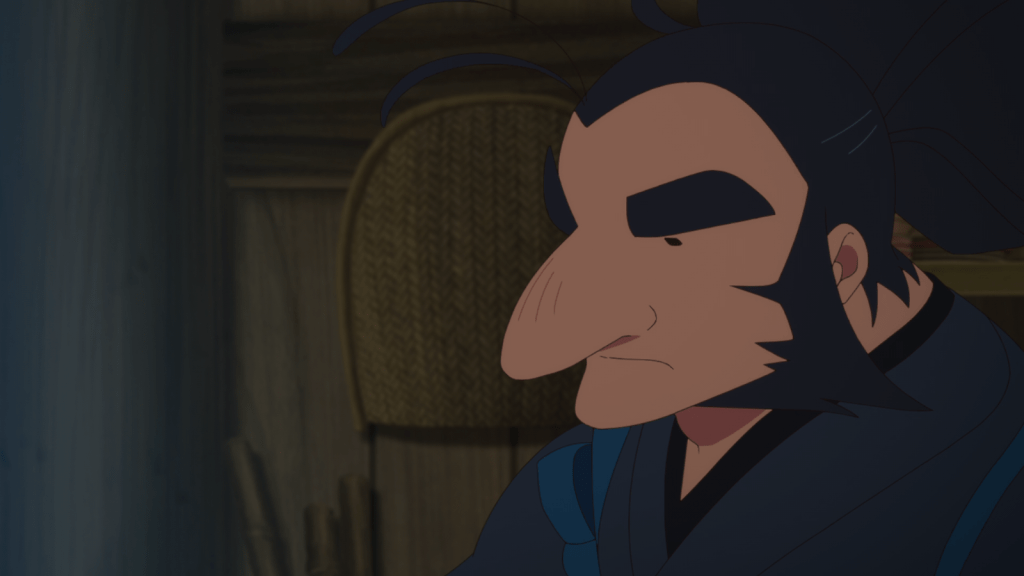
In episode 11, there’s a flashback showing Ishimaru and Tauemon taking shelter after a fight. Tauemon is arguing that running away was the correct choice, while Ishimaru wishes he could kill the enemies. During this conversation, Taeumon reveals that he considered committing suicide. After deserting his duty as a samurai, he questioned if he was worthy to keep living. At that time, he probably believed he was completely worthless and dishonorable, but he was too scared of death to actually kill himself.
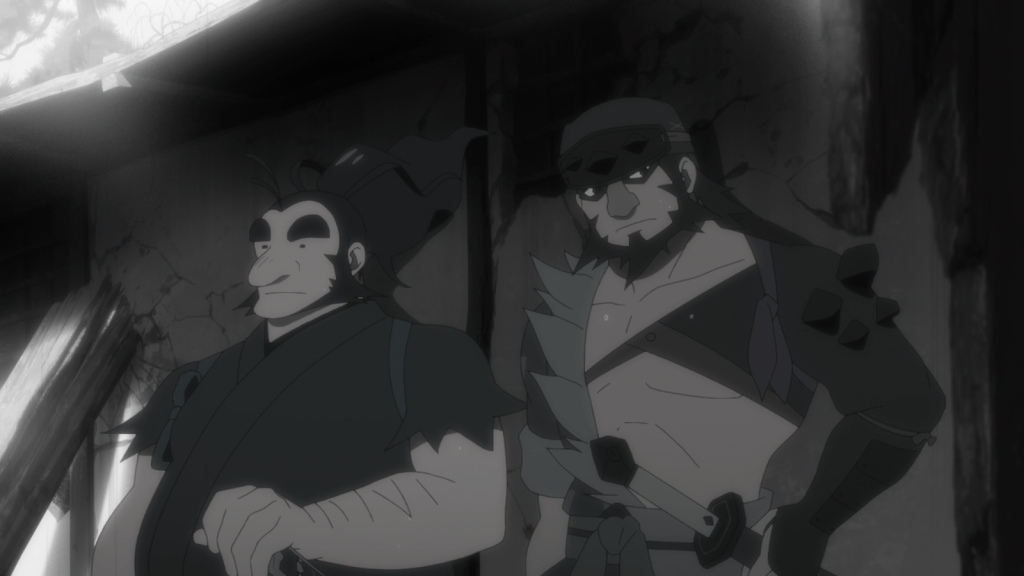
Years later, in the present time of the anime, Tauemon is living a fulfilling life with Sakuna, Myrthe, Yui, and Kinta on Hinoe Island. He was finally able to be a rice farmer. However, Ishimaru also came to the magical island. He made a deal with Omizuchi, the demon god, for power. Leading armies of small demons and acquiring a tough demon fighting form, he became obsessed with hatred and the desire to rule over others. He also had no sense of caution or self-preservation.
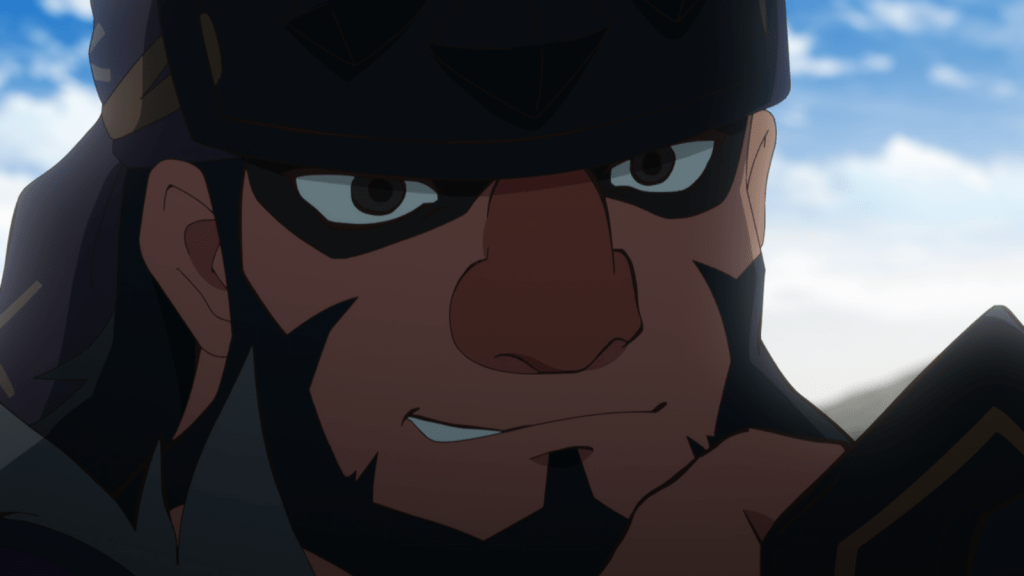
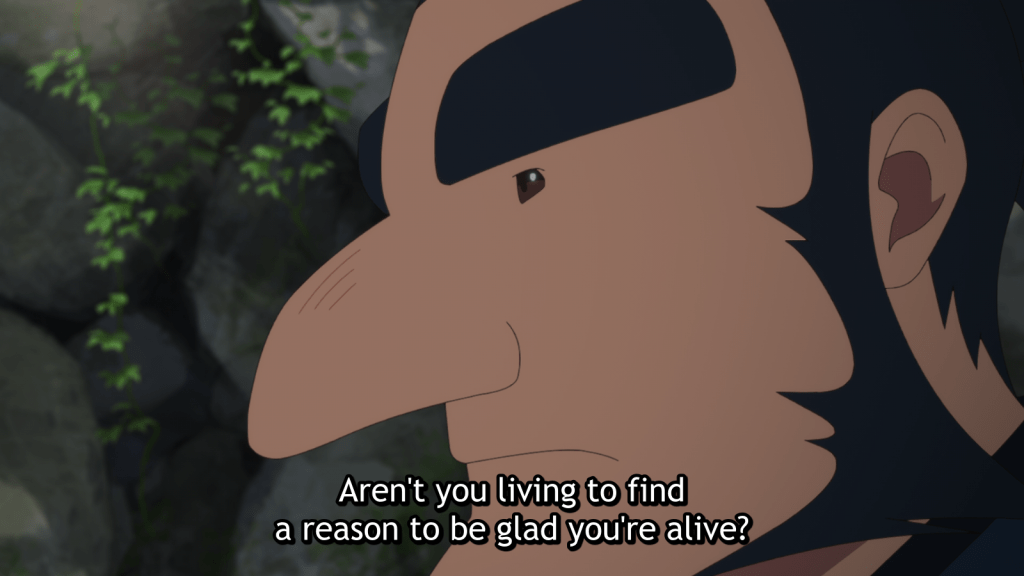
During one conflict with Ishimaru, Tauemon tried to reason with his old companion. He asked, “Aren’t you living to find a reason to be glad you’re alive?” This shows the enormous shift in Tauemon’s thinking. He once wanted to die, but he kept looking for reasons to keep going. Because of his resilience, hope, and love for others around him, Tauemon found happiness. He wants Ishimaru to do the same before he’s completely consumed by the demon of hate.
Ishimaru’s pattern was always to rashly charge forward, not caring about te danger to himself. Perhaps, in a more abstract way, Ishimaru also wished to die. We know he hated the unfair world with a fiery passion. He charged on so hatefully that he didn’t actually notice the moment he died as a human. The smaller demons ganged up Ishimaru after he was seriously wounded in a fight. They finished him off, and Ishimaru become a rampaging demon ghost.
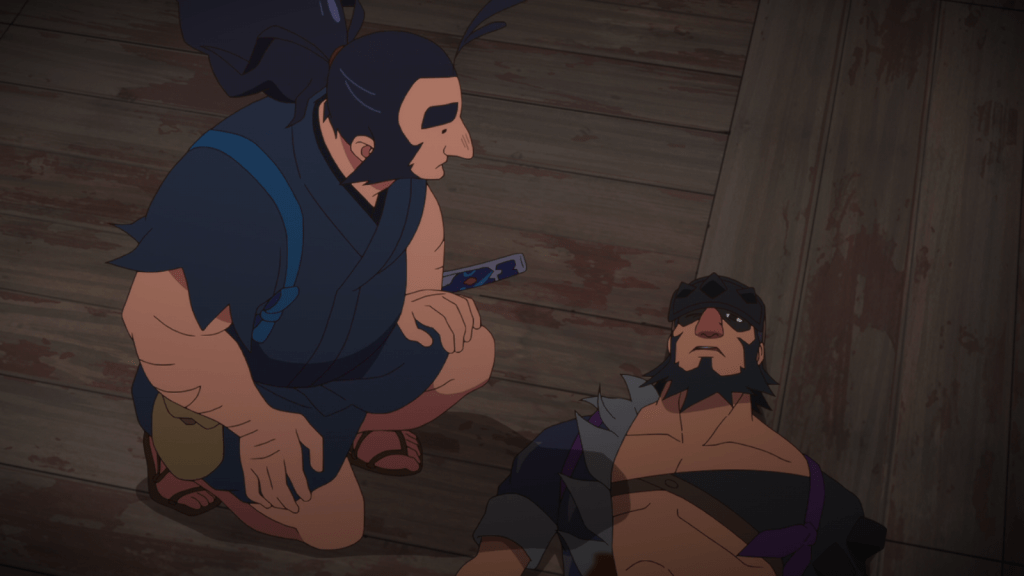
Sakuna fought and weakened Ishimaru in this form, but appropriately, it was Tauemon who laid him to rest for good. He drew his sword, cut down his old companion, and told him he was already dead. Ishimaru insulted Tauemon with his last breath, saying “You disgust me.” Nevertheless, the soft-hearted samurai shed a tear for the life that was lost. This is the most fitting conclusion for both Ishimaru and Tauemon. I hope you’ve appreciated this analysis of Tauemon and his role in Sakuna: of Rice and Ruin.
~Thanks for Reading~
 Anime Rants