
Did you know that Blue Exorcist was created by a woman? Her name is Kazue Kato and she started writing Blue Exorcist in 2009. Female authors are not as common as male authors in the manga world, especially when it comes to the shounen genre. This is part of the reason why shounen suffers from a lack of convincing, relatable female characters (I say this as an AFAB anime fan).
If you’re interested in enjoying a shounen fantasy work with well-written women, then it’s hard to go wrong with Blue Exorcist. In particular, the Shimane Illuminati Saga is largely focused on a female character named Izumo Kamiki. She is a great example of a believable and realistic teenage girl who suffered severe trauma. With that in mind, let’s review Blue Exorcist: Shimane Illuminati Saga.
Article Contents
Story
Score: 8/10 (Excellent)
In case anyone is unaware, this is roughly the equivalent of Season 3 of Blue Exorcist. I say “roughly” because the series is a bit confusing in the way it came out. Way back in 2011, the first season ran faster than the manga, and therefore showed an anime-original ending spanning over the last 7 episodes. In other words, Season 1 episodes 18-25 are not manga-canon. So, if you want to follow the story as it goes in the manga, just don’t watch the last few episodes. “Season 2” (Impure King Saga) starts after episode 17 of the first season. And “Season 3” (Shimane Illuminati Saga) starts right after the second season’s ending.

Hopefully, that told you the chronological placement of this season. Now, what is this arc actually about? Well, the attention turns slightly away from Rin and over to one of the supporting characters: Izumo Kamiki. She was one of my favorite characters in the first season because, despite her aggressive attitude, she was clearly determined, talented, and mysterious. For those wondering about her background and her connection to demons, this arc is a wish come true.
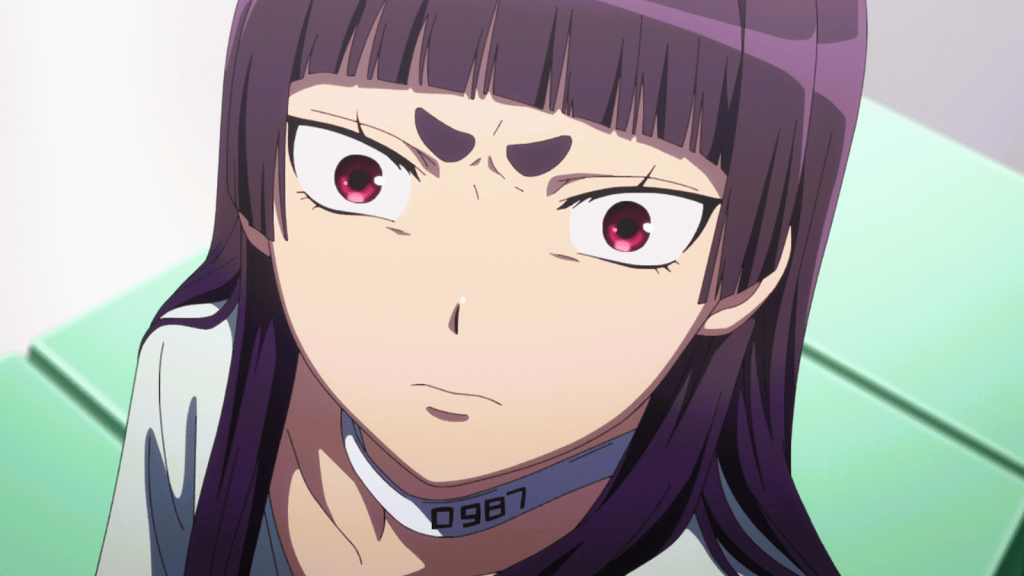
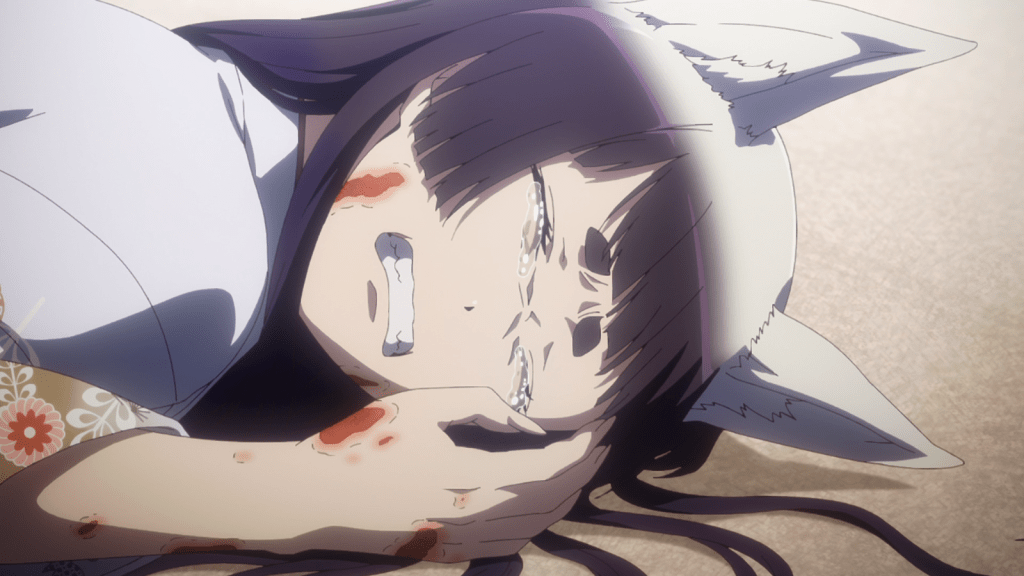
I will avoid major spoilers, but the story is about Izumo and her family’s history with the Kyuubi demon (AKA the Nine-Tailed Fox). Izumo goes through an intense amount of character growth in this season. The storytelling is excellent. I like the style of the narrative and the way it incorporates a lot of important flashbacks. Occasionally, like early in the season, there are fun mystery vibes as you try to figure out the identity of the traitor. The handful of plot twists were set up well and also executed effectively.

I have very few complaints about the storytelling in Blue Exorcist. The main thing which was not ideal was the structure. It took four episodes to get to where we truly get hooked by the action; perhaps the first few slice-of-life episodes were not needed or were just poorly written so as to be less exciting. The last episode in the season felt like a filler or a fluffy, empty episode after the danger has passed. It didn’t fit in smoothly. Structure was the story’s weak point – perhaps because it’s difficult to make a short manga arc stretch across 12 episodes.

In my personal evaluation, themes are extremely important to succeeding in the story category. I will always prefer a story with strong and salient themes over anything shallow that might be fun on the surface. I think Shimane Illuminati Saga did excellently with presenting and developing its story themes. These themes include betrayal, change, family relationships, and coping with severe trauma. Blue Exorcist isn’t mind-boggling in depth or anything, but it does handle heavier topics more than adequately. The story category score overall is bound to be high for this season.
Visuals
Score: 7/10 (Good)
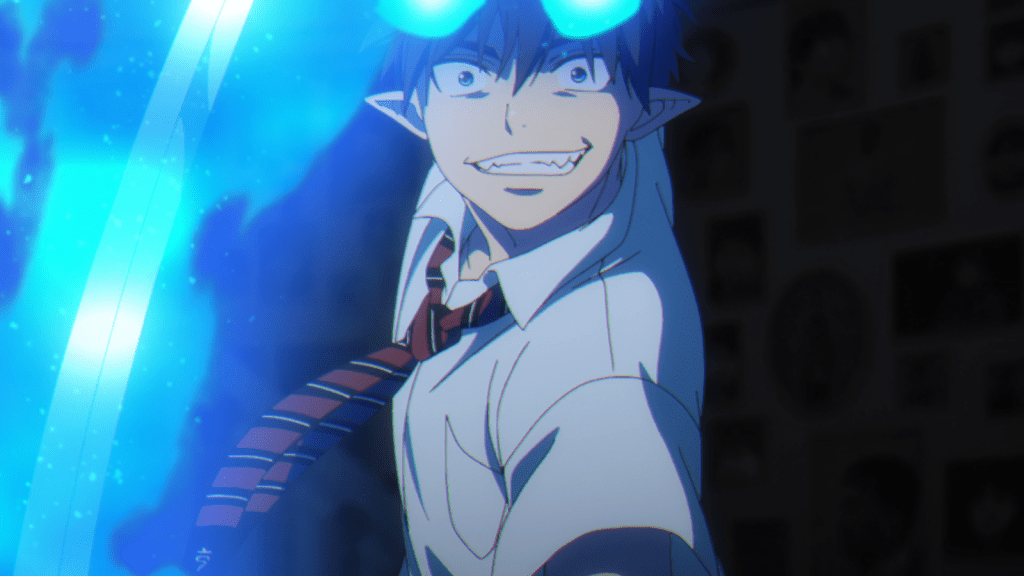
A-1 Pictures was the studio that produced Blue Exorcist‘s first season as well as the Impure King Saga. However, that studio eventually dropped the anime, since the Impure King Saga was not very commercially successful. Studio VOLN stepped in to handle the Shimane Illuminati Saga, and the difference in art style and quality was jarring for many people. As for me, I don’t think the new art looks bad at all – it’s just different and more stylized. That being said, the smoothness of the animation did drop, and there were a few other issues, too.
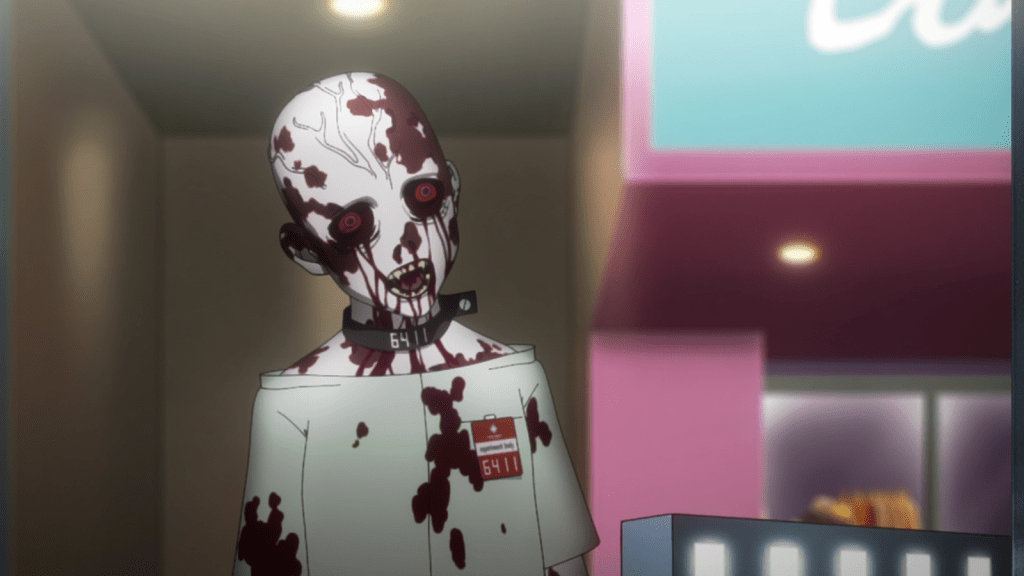
In my opinion, the demons in the first few episodes of the season looked impressive and creatively designed. However, the quality definitely drops as the season continues. The zombies inside the Illuminati facility are animated with distinctly low-quality 3D animation. Frankly, they look like shit and are impossible to take seriously. It’s always disappointing to me when a studio that’s capable of good art defaults to cheap, disgusting CG.
In addition to that problem, there isn’t much in the way of smooth or dynamic animation. Action sequences are mostly still-shots, and although they are usually detailed and use creative camera angles, the lack of motion can be off-putting. Action scenes aside, I enjoyed most of the still-shots in this season. They are colorful and detailed, usually with excellent lighting and pretty effects. One especially beautiful example is below.
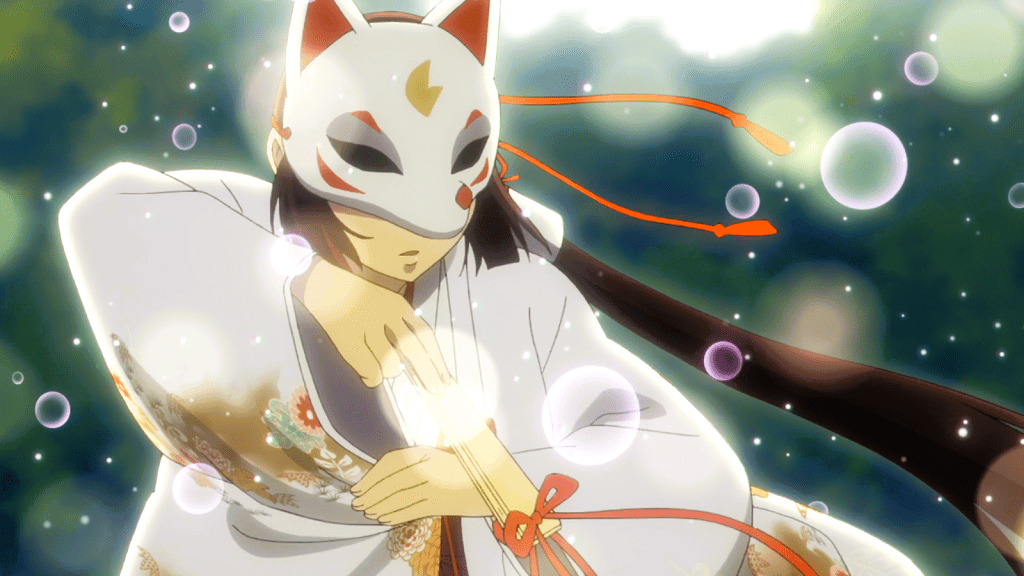
There were several scenes where I was impressed with the visuals, mostly for the detail, good lighting, and rich colors. In addition, Blue Exorcist features face expressions that are fun to look at. I might be a little weird this way, but I like seeing characters’ face various expressions in different styles of anime. I’m always impressed with the ones I see in this anime. Last of all, the character designs in this series are memorable and almost iconic. Clearly, the visual experience is more positive than negative.

Audio
Score: 8/10 (Excellent)
The audio category was excellent on every front. Let’s discuss the songs first. The intro is called “Eye’s Sentry” by UVERworld, a band with a unique sound combining hard rock, punk-like vocals, and jazzy saxophone. I love UVERworld songs in general, but this one has a melody that appeals to me more than most. The ending song is “Gakkyuu Nisshi” by Ima Mulasaki. It’s a slow, soft song with female vocals. I don’t think it’s nearly as catchy or memorable as the opening, but to each their own.
The instrumental music was as enjoyable as the songs for me. There were technically two composers: Kohta Yamamoto and Hiroyuki Sawano. Yamamoto composed the new music for seasons 2 and 3, while Hiroyuki Sawano wrote the music for the first season. Since Sawano’s music is so iconic and amazing, it’s only natural that the anime makers continue using and recycling it into the subsequent seasons. For the record, while it’s hard to compare to Hiroyuki Sawano, I also love Yamamoto’s music.
I haven’t seen the English Dub, but the original Japanese voice-acting for this series is top-notch. Nobuhiko Okamoto plays main character Rin Okumura, while Jun Fukuyama plays his brother Yukio Okumura. Both are talented seiyuu with impressive histories. In this season, the voice actor who stood out the most was probably Eri Kitamura, voice of Izumo Kamiki. I’ve always loved this seiyuu since I heard her play Sayaka in Madoka Magica. Kitamura always leaves a strong impression with her voice.

There are two other voice-actors to mention quickly. Firstly, I can’t live with myself unless I have a moment of obligatory fan worship of Hiroshi Kamiya, voice of Mephisto. He is one of the most talented seiyuu in existence, and beloved for many different roles across diverse fandoms. Secondly, Kouji Yusa did an excellent job in this season playing Renzo Shima. I know Yusa from his roles as Lau (Black Butler) and Vincent Law (Ergo Proxy). He brought the character of Shima to life.

Characters
Score: 8/10 (Excellent)
Characters have always been a strong suit and a major appeal of the Blue Exorcist franchise. The development of the characters may not be the most profound, but it’s usually more than adequate. The characters are also a lot of fun in concept and design. Rin is a terrific protagonist and easy to love for his goofiness. In this season, Blue Exorcist began taking its supportive cast very seriously, developing the side characters as much as possible. Thus, the star of season 3 is Izumo Kamiki, one of Rin’s female classmates.

Izumo wasn’t the most likeable character in the first and second seasons. I happen to have always liked her, mostly due to her voice and character design. I also think her bad attitude is a bit refreshing in comparison to the oceans of cutesy, polite girls in anime. Regardless, in this season, Izumo goes through a lot of growth and change, becoming a better person by the end. By showing us her suffering from past and present, the narrative also makes her into a very sympathetic character. It explains why she acts the way she does.
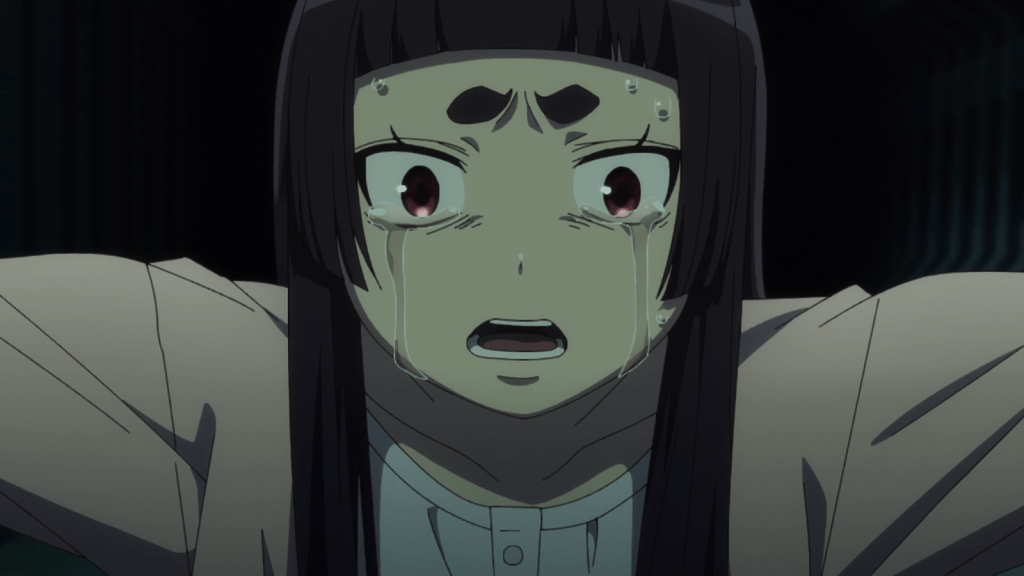
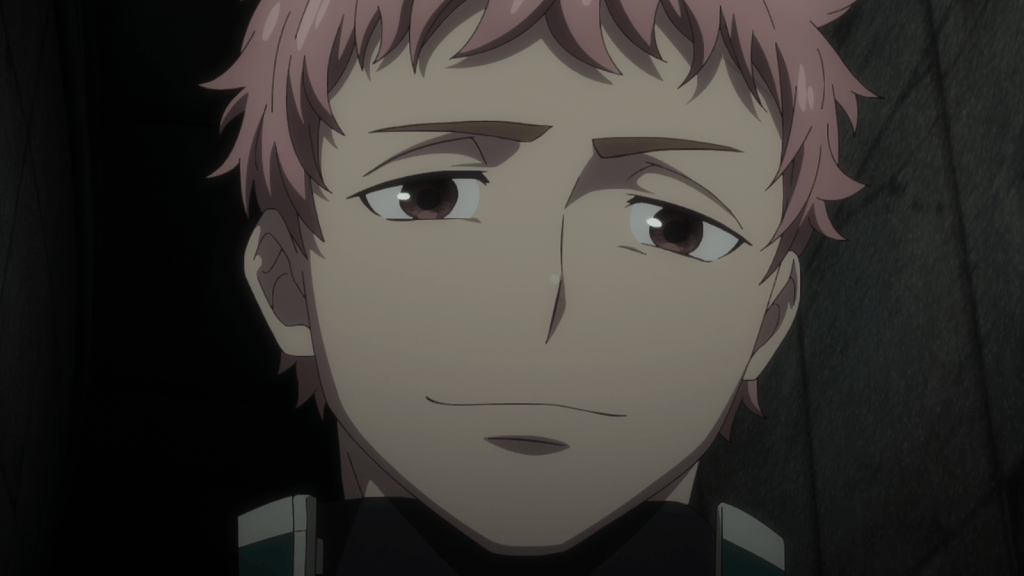
Some of the other characters had important moments and experiences as well. This includes Renzo Shima and Nemu Takara. I won’t spoil exactly what we learn about them, but it came as a major surprise to me. Yukio keeps emotionally struggling, wondering if he possesses demon powers and what will become of him if so. Mephisto also continues his shenanigans in this season. It’s never clear whether we can trust him or not.
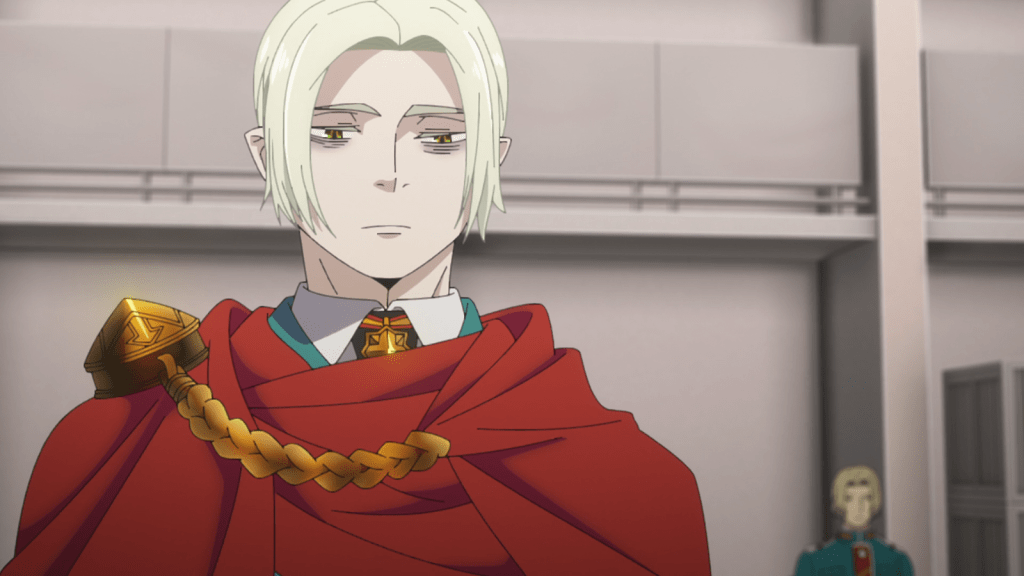
Shimane Illuminati Saga introduced two new antagonists: Lucifer and Dr. Gedoin. The two couldn’t be more different. Lucifer is dignified and beautiful, while Gedoin is grotesque and annoying. However, both of them prove to be worthy villains. You could also say that Kyuubi the Nine-Tailed Fox is an antagonist in this season, but it seems to be more like a wild animal than a person. As you can see, the character category was excellent.
Personal Enjoyment
Score: 8/10 (Good)
I thoroughly enjoyed Blue Exorcist: Shimane Illuminati Saga. There were only a few things that could have made it better. These include smoother plot structure, improved visuals, and the inclusion of some “deeper” themes. Although I was constantly disgusted with Geodin, that was actually the point of his character, so I think he was still a well-written character who served his purpose in the story. With that out of the way, let’s go through some positives.

First of all, having Blue Exorcist back after seven years is by itself cause to celebrate. I don’t read very much manga, and have trouble paying attention to it at all. That means I can only enjoy the continued story if people keep adapting it into anime. I’m very grateful to studio VOLN. Moving on to more specific areas of enjoyment, the character writing was excellent, especially for Izumo and Shima in this season.
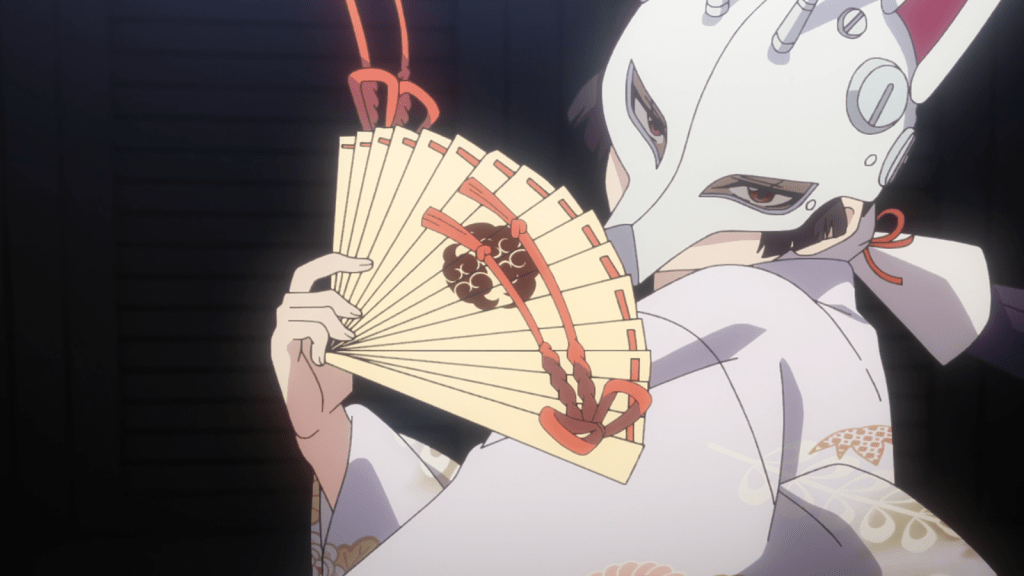
I have always loved the fantasy lore and powers used in exorcism battles. Some of the spirits – like the two Kitsune warriors – are amazingly cool. Lucifer is incredibly hot, both in design and in voice, so I loved everything about him. He was voiced by Kouki Uchiyama, one of my favorite male seiyuu in the industry. Finally, I enjoyed the idea of the Illuminati and their search for immortality. I had a lot of fun with this anime.

Overall Score
Score: 7.8 / 10.0 (Good)
I calculate the overall score by taking the average or mean of the five scores for the categories we discussed. A score in the 7s range is fairly good, while a score in the 8s is excellent. As you can see, Blue Exorcist Season 3 is right on the border of those ranges, according to my personal metric.

Despite my high praise, this season wasn’t very well-received by the wider base of viewers. It currently has a score of 7.04 on MyAnimeList.net. I suspect the studio change and the long break between seasons made some people lose interest. It’s rather sad.
I still think everyone should watch this anime if they enjoyed Blue Exorcist‘s earlier seasons. It’s rewarding to see these beloved characters changing and growing with time. I don’t think the visuals are so bad as to make the show intolerable, so buck up and watch it! And if you do watch it, remember that you’re supporting a relatively rare work created by a female manga author. That’s just another reason to appreciate Blue Exorcist.

~Thanks for reading~
~

Written by 7Mononoke
 Anime Rants