
Welcome back to Anime Rants. Now that Regulus was finally dead, it was time to switch perspectives to other characters and their battles. Episode 63 mostly follows Garfiel and his battle with the eight-armed swordsman. Episode 64 focuses on the epic duel between Wilhelm and Theresia. We also saw some interesting moments for Aldebaran as he fought with Capella.
Both episodes are top-quality in terms of audio and visuals; but in terms of personal enjoyment, it was a mixed bag. I loved episode 63 but couldn’t for the life of me appeciate the narrative or the emotions of the main characters in episode 64. I’ve always had a hard time enjoying the poorly aged “romance” of Wilhelm and Theresia. But I’ll discuss that later on. For now, let’s go over episode 63 and why it was awesome.
Reminder:
Episode 63 is equal to season 3 episode 13
Episode 64 is equal to season 3 episode 14
Episode 63: The Warrior’s Commendation
Episode Rating: 9/10
Garfiel was locked in battle with the eight-armed swordsman, Kurgan. Meanwhile, Otto’s group was facing off with Lye Batenkaitos. Otto sent Felt to get the powerful metia hidden at her place. The talented merchant temporarily held off Lye by summoning water dragons to attack him. However, before long, Lye made sushi out of those dragons. Otto and company were in trouble.

Elsewhere, Aldebaran continued fighting Capella. In true anime fashion, they talked while battling. Capella surmised that Aldebaran was the one who released the miniature flood in the city a few episodes ago. This move seriously upset the plans of the Witch’s Cult. In addition, it seems Aldebaran knows something about the Witch’s remains. He’s been systematically killing anyone who could help Capella acquire them.
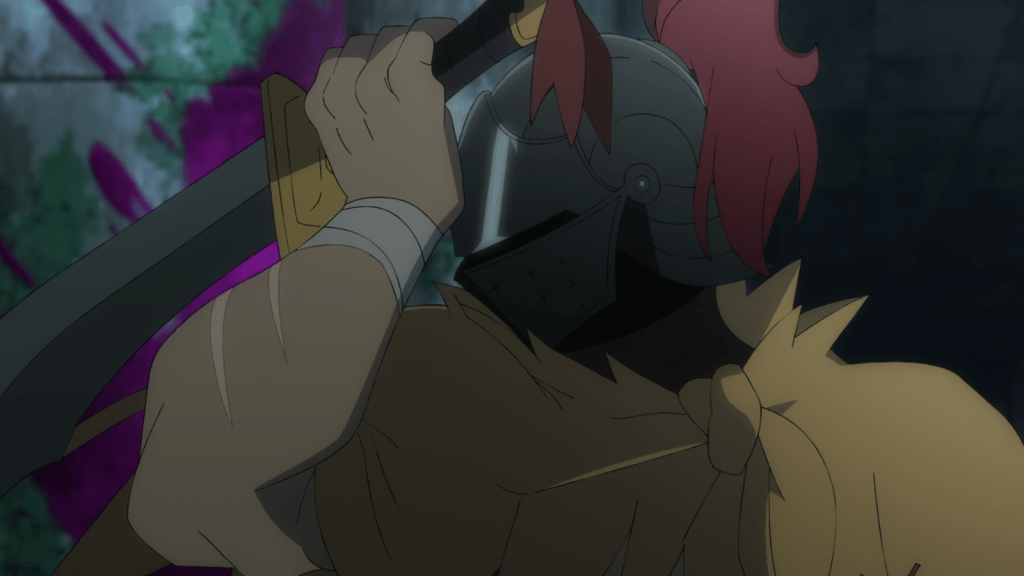
Being the Arch-Bishop of Lust, Capella naturally tried to seduce Aldebaran. After he shot her down, the dragon girl morphed into a form that looked nearly identical to Priscilla. This also didn’t work on Aldebaran. The knight cut off her head and exploded her body. Unfortunately, Capella regenerated from her head downward. The fight thus continued.

This is a bit of a tangent, but I am highly impressed with Capella as a villain. She’s easy to hate, which is one sign of a good antagonist. I love the idea of making the “sin of lust” physically repulsive and gross. I don’t believe in sin, nor I do think lust by itself is a bad thing – but if you’re going to demonize a natural part of humanity, this is the way to do it. Make it disgusting and offensive. In my opinion, Capella is the most evil and creatively designed villain in season 3.

In a flashback, we learned a little bit about the history of Kurgan. He was part of the many-armed race of blue-skinned humanoids. Even in the kingdom of demi-humans, the many-armed race was seen as bizarre and inferior. Kurgan in particular suffered discrimination for having eight arms when four was more common for his species. Despite his hardships, Kurgan fought for his people and won them much respect and fame. He became known as a great warrior.

Back to the fight, Garfiel had already been defeated in his big beast form. He found himself inside the shelter where his little siblings – I forgot their names – were taking refuge. There were dozens of other refugees, too. Garfiel knew he had to protect them. So, when Elsa started haunting him again, the brave beast-boy finally killed the vampiric apparition. Elsa had been feeding him so much self-doubt, but it all disappeared now that Garf had people to protect.

The people in the shelter began to cheer for “Gorgeous Tiger.” With his newfound motivation and strength, Garf once again fought with Kurgan. This time, the swordsman drew all his swords, showing that he took his opponent seriously. The animation and music for this fight scene was insane. This was easily one of the best fights in anime in Winter 2025. After Garfiel delivered the final blow, Kurgan told him he did well. The eight-armed swordsman then crumbled, defeated. What an impressive episode!

Episode 64: Theresia Van Astrea
Episode Rating: 7/10
During the fierce duel with the reanimated corpse of Theresia, Wilhelm was doing surprisingly well. However, when his son Heinkel wandered onto the scene, the old man’s momentary distraction cost him. Theresia stabbed him through the leg, rendering him immobile. She then approached Heinkel to kill him. Wilhelm begged Theresia to stop, but she was unresponsive.
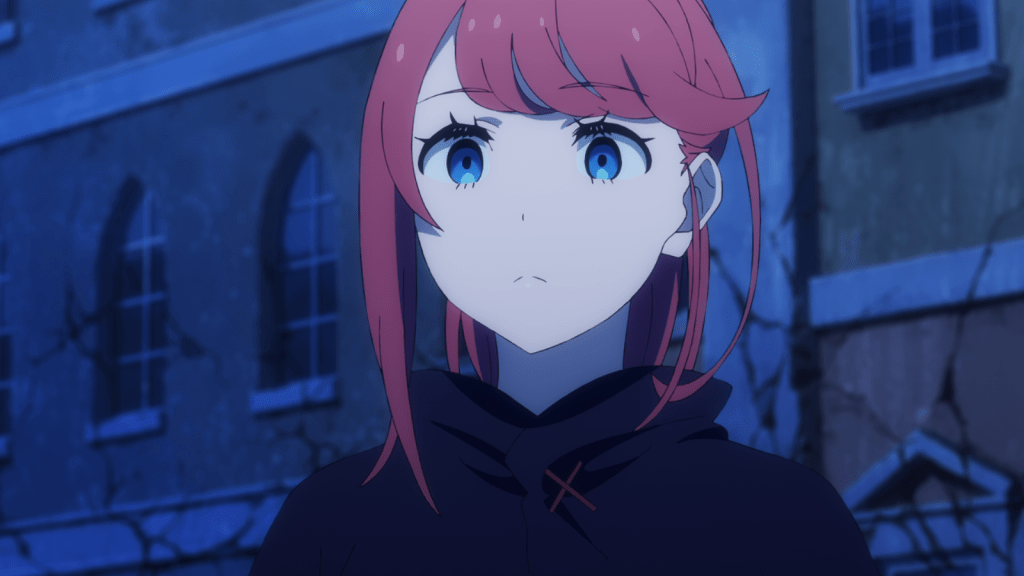
Just then, Reinhard arrived. Despite the desperate cries of his grandfather not to kill “my Theresia,” the Sword Saint attacked. He quickly struck down Theresia, who seemed to regain conscious awareness as she fell to the ground. Fatally wounded, Theresia began to remember her own life. This is where we finally see the full story of the previous Sword Saint.
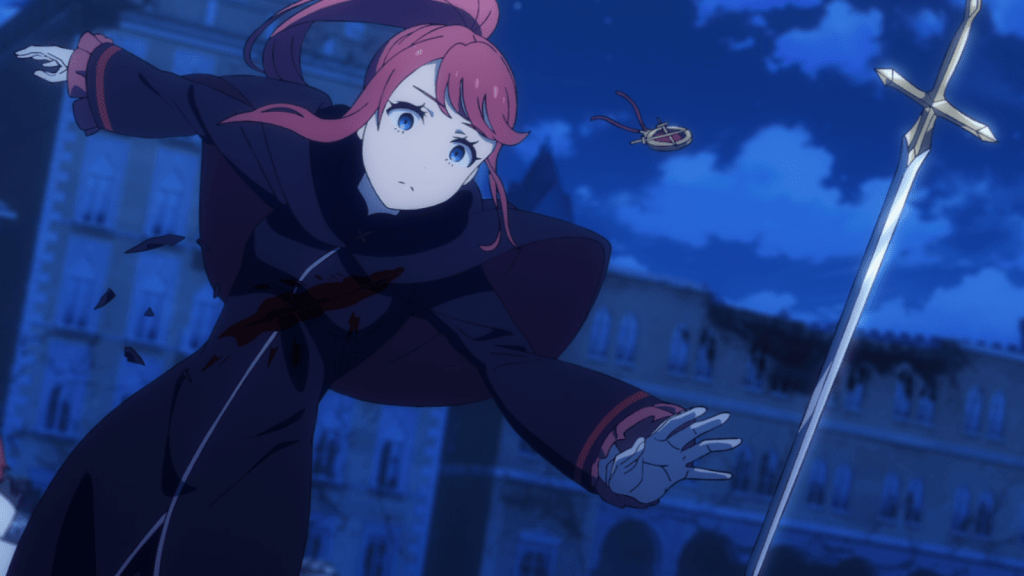
Theresia had three brothers who all loved the sword. The eldest brother in particular was a hard worker who trained each day. But strangely, the one who inherited the Divine Protection of the Sword Saint was twelve-year-old Theresia. She felt terrible for surpassing her brother. Though initially frustrated, her oldest brother loved her enough to join her in battle as she was sent off to fight in the Demi-Human War. Unfortunately, he died on the battlefield, along with Theresia’s other brothers and her uncle. The young girl was all alone.
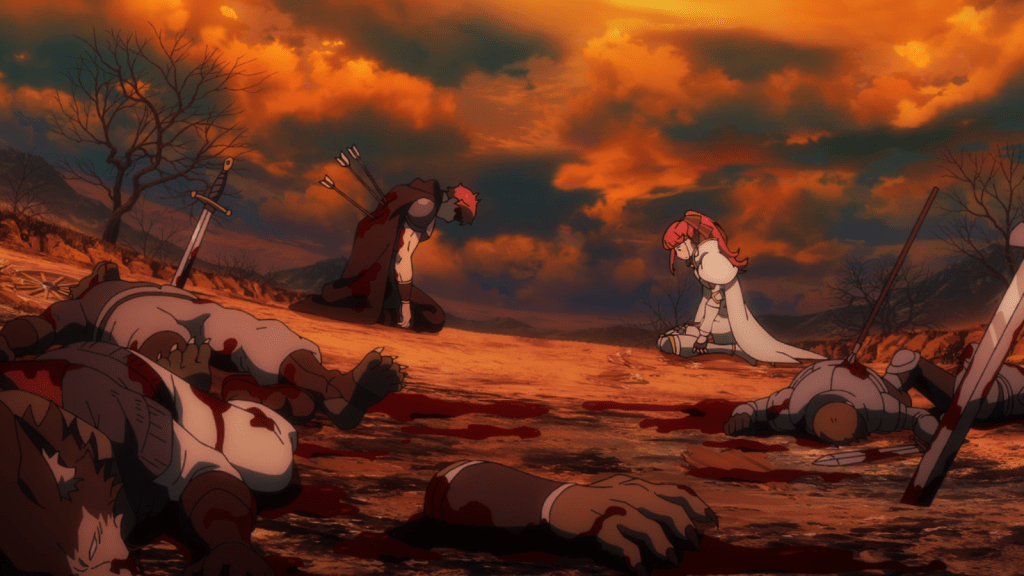
This background story made it clear that Theresia never wanted the duty of the Sword Saint and longed for someone to take it from her. By all accounts, she was a gentle girl who loved flowers and never got used to battlefields. So, when Wilhelm was able to beat her several years later, it was like a miracle for Theresia. I never understood before why anyone would find Wilhelm’s prideful actions romantic, but with the added context from this episode, I at least understand on a theoretical level.

After marrying Wilhelm, Theresia lived a happy life for twenty years. However, she could never get Wilhelm to say that he loved her. When it was time to fight the White Whale, Wilhelm tried to stop Theresia, but she wounded him with magic so he couldn’t easily follow her. At that point, Theresia was nearly fifty, and a grandmother to Reinhard. But whenever she took up the sword, apparently, she reverted to a youthful form. How very “anime.”

Interestingly, it wasn’t the White Whale that killed Theresia. After her Divine Protection passed to Reinhard, she was killed by Pandora, that mysterious little girl who attacked the elven forest a hundred years ago. She is definitely with the Witch’s Cult, but that’s all I know for now. I haven’t read any of the source material and don’t plan to any time soon.

The narrative returned to the present, where Theresia lay dying in Wilhelm’s arms. Before she passed away, Wilhelm finally told her he loved her – sort of. The two of them said they loved each other at the same time. It felt like a cop-out. I don’t remotely understand the fragile masculinity required to avoid telling one’s partner you love them. Regardless, Theresia died satisfied, fading away into golden sparkles and petals.

With Theresia dead for the second time, the three men left behind parted ways – but not without family drama. Heinkel was incredibly insulting and hostile to Reinhard, saying he killed his own grandmother. Wilhelm took his wife’s ashes and walked away after bidding farewell to his son and grandson. Reinhard set off to help defeat the other Cultists, leaving Heinkel alone and furious. In fact, I don’t think he was mentally stable at all.

That’s where the episode ends, but I’d like to take a minute and explain my problems with this installment. It ties into the broader problems with Re: Zero as a whole. I’m not going to spend too long on this, since I can probably flush it out into a separate analysis post at a later time. Long story short, these are the two issues: 1) I have difficulty empathizing with Theresia and 2) I feel a bit uncomfortable with the narrative’s bias toward gender roles.
There’s nothing objectively wrong with a mentally weak female character. It’s not even that I can’t relate, since I have two anxiety-related disorders. But I’m not inspired by nor interested in the kind of female character who never becomes the hero of her own story. She is always just a victim without agency. I especially don’t understand feeling guilty about one’s own success as a woman when women are usually disadvantaged to begin with.

Anime is already flooded with weak, swooning women written by men. Since I’m tired of anime with traditional gender roles, I often want to find something different and refreshing – you know, like a well-written woman who takes courage and pride from the duty of protecting others using her own strength. Theresia’s story didn’t have to be a tragedy, but it turned out that way because she was written to be a victim.
This is where the issue ties into the broader problems with Re: Zero. As I’ve written before, I enjoy many aspects of Re: Zero and I doubt I could ever completely hate it. But, for my own integrity, I must admit and point out the problems with this series. One of several main issues is that there’s a narrative bias toward strong traditional gender roles. It’s inherently misogynistic, as it implies that the temperaments and roles of women are fundamentally different and/or inferior to those of men. It shows a deeply ingrained prejudice about what women should and should not do.
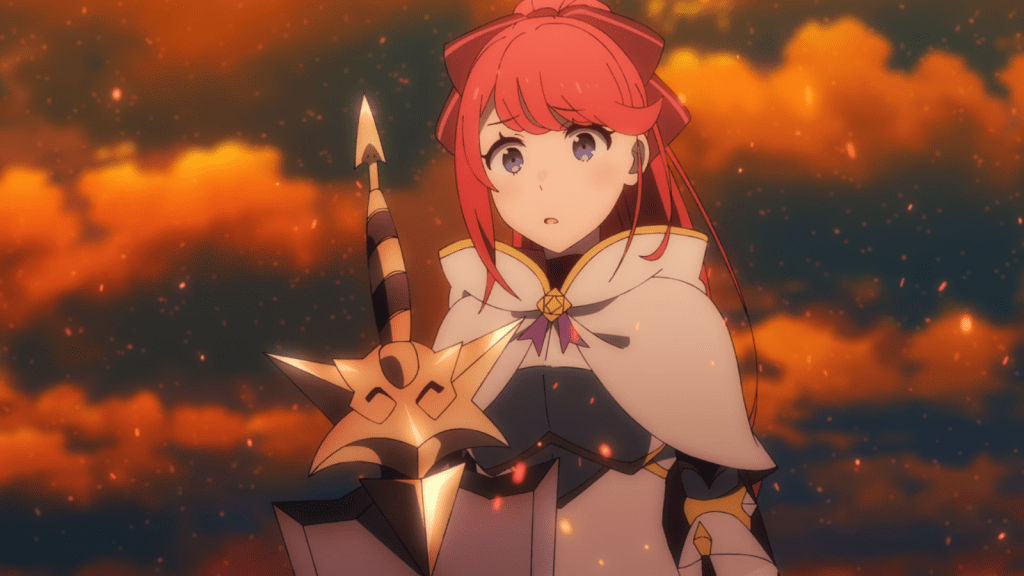
There are numerous examples littered throughout the three seasons that currently exist. For the sake of brevity, though, let’s stick to the story of Theresia. Why was it necessary to frame her as a victim who never wanted the warrior’s role? Because according to many men, no good woman would ever choose to be a warrior. Women are not meant for combat. Women should always be gentle, humble, and weak. That’s the attitude of Re: Zero more often than not. Yikes.
It’s not my job to fix Japan’s societal problems, especially when my own country is happily marching back to the 1950s, burning everything in their wake. However, as a consumer of Japanese media, I can at least offer feedback on what I watch. That’s why I point out ethical issues like misogyny. As society becomes more progressive, more will agree with me, and our opinions will influence the media market. The hope is that anime will improve over time.
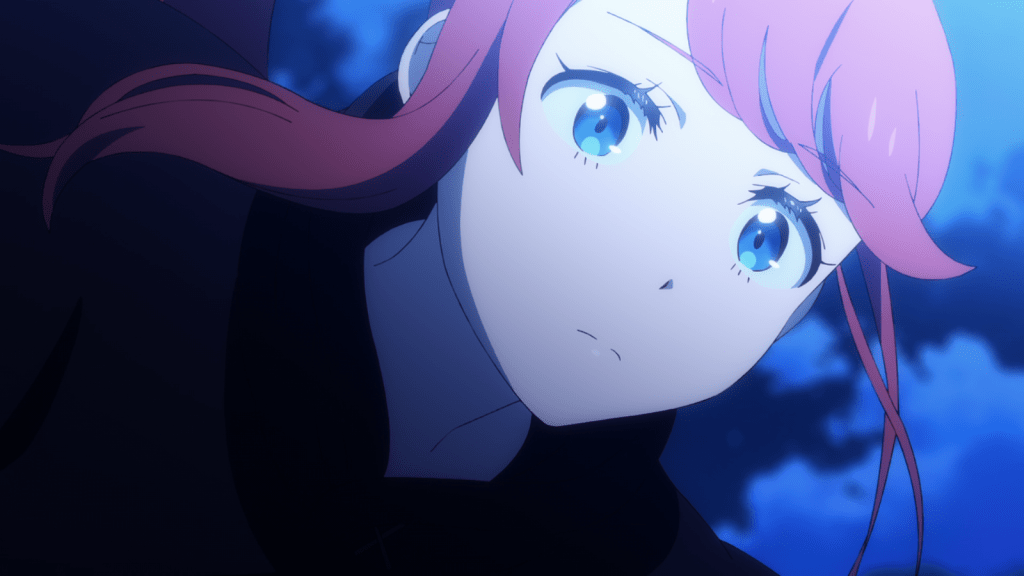
Anyway, this was probably my least favorite episode of the season, but I’m still excited for the remaining two episodes. I’m especially looking forward to seeing Capella’s defeat.
~Thanks for reading~
Writtem by 7Mononoke at Anime Rants
See more posts about Re: Zero Season 3
 Anime Rants