
Contents
Introduction: Omegaverse
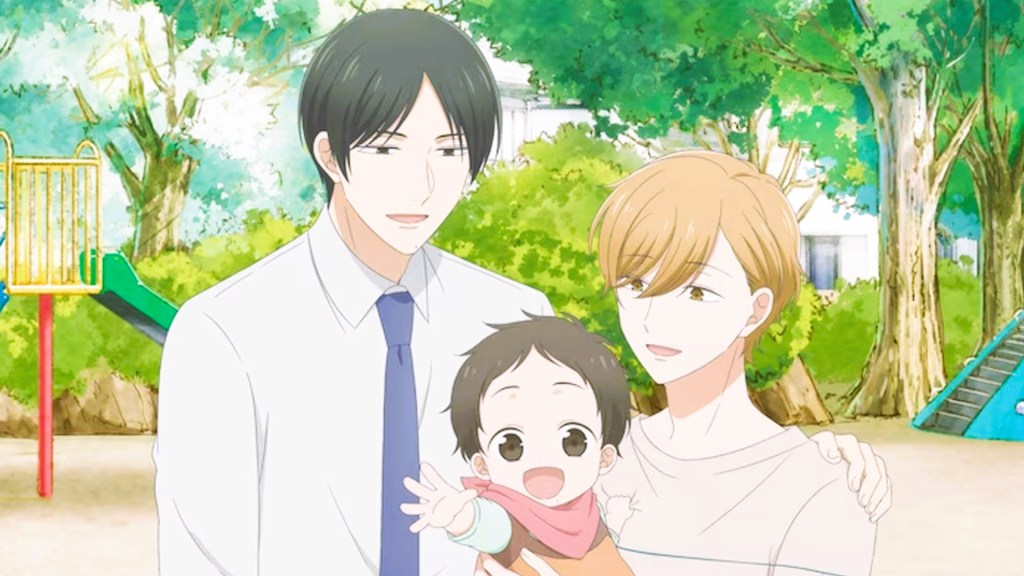
Tadaima, Okaeri is a 2024 anime directed by Shinji Ishihira and animated by Studio Deen. It was based on the manga of the same title by Ichi Ichikawa. The title basically means “Welcome Home.” This anime follows the home life of househusband Masaki and his spouse, Hiromu, as they raise their children together. Since both characters are male, this anime is delightfully gay, and can be classified as yaoi.
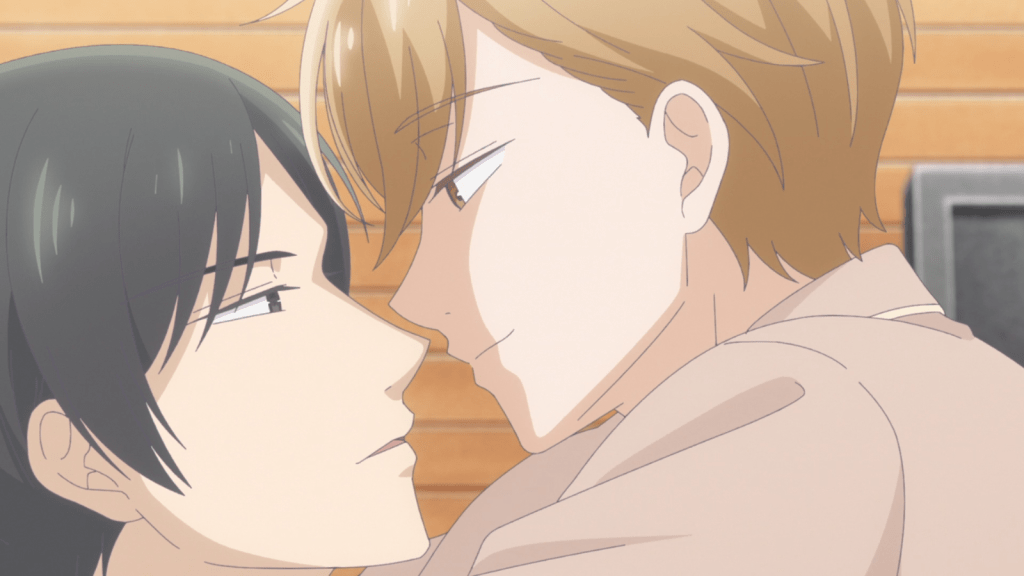
Importantly, Tadaima, Okaeri takes place in the Omegaverse. In case you don’t know what this is, I’ll give a quick rundown. It’s a fictional world used many fanfiction writers and some original story writers as well. In the Omegaverse, people have different reproductive and sexual biology than in typical reality. For example, some males can give birth and some females can impregnate others. The sexes are defined into Alpha, Beta and Omega. Some versions have other sexes and roles, too.
There’s a complex system for sex and sexual characteristics depending on one’s type. Each type also has specific made-up pheromones and sometimes additional sexual features like knots. But to put it simply, Alphas are those who impregnate others and cannot give birth, even if they are otherwise anatomically female. (These females have an additional sex organ for impregnation). Omegas are those who can bear children, even if they look otherwise male. Betas are basically normal humans.
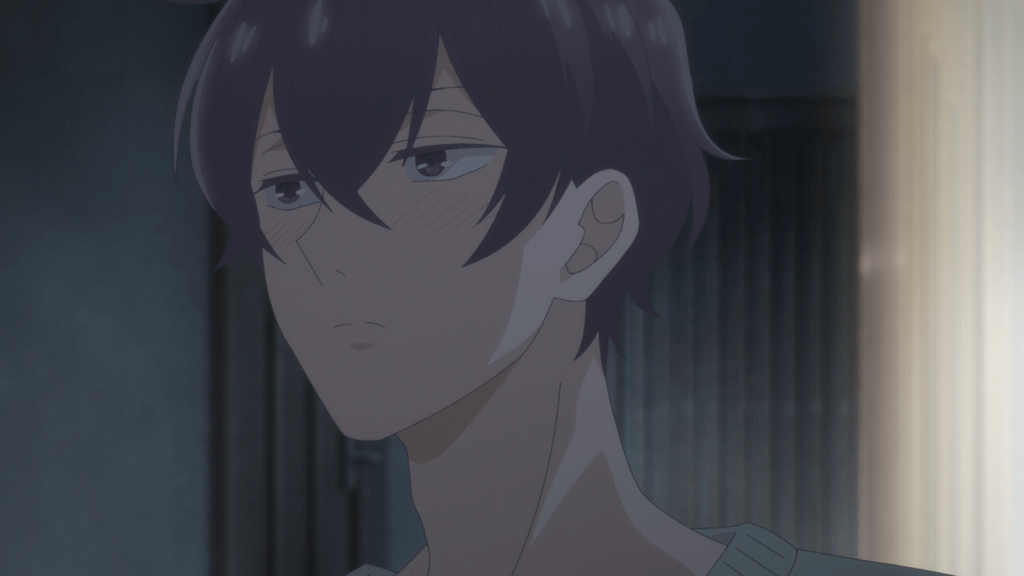
One other thing to keep in mind is that although homophobia can still exist in this world, it typically does not. The main prejudice in Omegaverse stories is against Omegas. In numerous Omegaverse stories, the Omegas suffer discrimination, violence, or sexual violence due to their type. Still, the society and its specific prejudices depend on the author. Now, let’s review this unusual Omegaverse anime, Tadaima, Okaeri.
Story
Score: 8/10
Masaki is an Omega who married an Alpha named Hiromu. They now raise their young children together, with Masaki as the househusband and Hiromu as the breadwinner. They start with one son named Hikari. The plot is extremely simple, but since this is a slice-of-life type anime, a complex story is not needed. There’s a lot of serious drama as well as cute fluff. The mix of substance and sweetness was excellent. In addition, the story themes were hopeful and wholesome.

There’s something strange about the world of Tadaima, Okaeri. In the Omegaverse, it’s typical for Omegas and Alphas to be together, since they’re each other’s natural biological counterparts. But in this anime, society has reversed that standard. Most people now marry within their type. Mixed-type couples – especially one with an Omega – are heavily frowned on. That’s certainly an uprooting of typical Omegaverse lore, but it works because it gives Masaki and Hiro a hardship to overcome.

The prejudice Masaki and Hiro encounter make their bonds to each other stronger. Masaki slowly heals from being treated badly most of his life as an Omega, and Hiro’s father has a whole mini plot-line about accepting his son’s unusual marriage. Without this strange subversion of the Omegaverse, I might not have liked the anime as much. As it stands, I consider the story category deserving of a high score.

Visuals
Score: 7/10
Studio Deen animated Tadaima, Okaeri. I liked Masaki’s design as well as some of the supporting characters, but truthfully, the character designs were a bit boring. There were also many still-shots and very little animated movement. I would normally give visuals like this 6/10, but the babies and children in this anime are absolutely adorable. I loved watching Hikari, Michiru, and Hinata. That bumps up the score to a solid 7.

In addition to cute anime kids, the visuals have a pleasant, soft feel to them. The face expressions are sometimes priceless. The color pallet was mild and peaceful. There were numerous happy moments where colorful backgrounds, sparkles, and bubbles were used. I like these effects as long as they help with the mood of the scene. All in all, the visuals were fairly good.

Audio
Score: 7/10
The composer for Tadaima, Okaeri was Megumi Oohashi. The instrumental music wasn’t super memorable to me, but that’s fine. It certainly wasn’t bad. The songs were also pretty decent. I enjoyed listening to the opening song, “Futatsu no Kotoba” by MADKID. It’s an upbeat song with male vocals and a catchy chorus. I didn’t like the ending theme quite as much. It’s “Tsunagiai” by Takayoshi Tanimoto. It’s similar to the opening but more gently emotional.
Next we’ll look at the voice-acting. The amazingly talented seiyuu Atsumi Tanezaki played Hikari, the baby son of Hiromu and Masaki. These days, Tanezaki is best known for voicing Anya in Spy x Family. Hiromu was voiced by Toshiyuki Morikawa, who also played Edgar Allen Poe in Bungo Stray Dogs and Kagaya Ubayashiki from Demon Slayer. Masaki was played by Atsushi Tamaru. He hasn’t had that many roles yet but I enjoyed his work. The audio was good overall.

Characters
Score: 6/10
The characters were honestly not quite as memorable as one would hope. That being said, I still think the character category deserves a score slightly above average, so 6/10 seems fair. Hiromu had a few interesting moments and was arguably my favorite character, but he was a bit boring compared to Masaki, who saw more consistent character growth throughout the show. Masaki learns and changes as he finds love and acceptance in his new family, far from the hopelessness he once lived in.

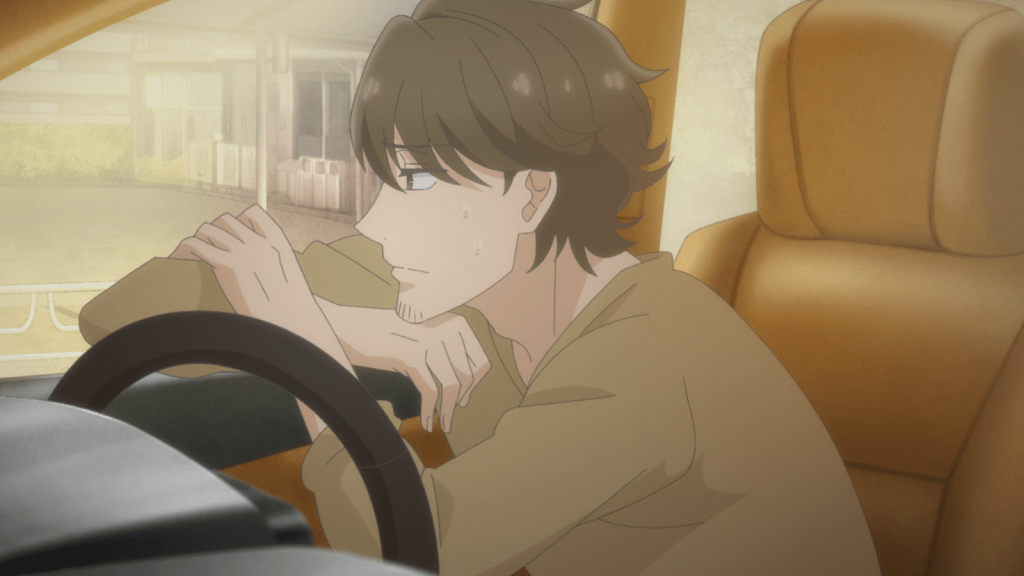
The show does a good job framing things from a child’s view so it’s easy to empathize with Hikari. For example, I legitimately felt upset for Hikari when he broke the Christmas tree star. As for the side characters, some were good, and others useless. Yuki and Matsuo were great characters who had natural chemistry. The twins, on the other hand, didn’t need to be there. They existed to fulfill the BL trope of mischievous male twins. The character category was a mixed bag.
Personal Enjoyment
Score: 8/10
My personal enjoyment for this series was quite high. For starters, it enabled me to learn about the Omegaverse, which I find rather interesting. I also adore queer romance, so the gay relationship of these two men was a treasure. Some people wanted there to be more overtly sexual scenes, but I don’t think those were really needed. I was happy enough with kissing and cuddles. I wasn’t looking for anything spicy.

Tadaima, Okaeri is quite wholesome and family-friendly in most episodes. I loved the light-hearted and wholesome fluff. Hikari and Hinata were both so cute! Watching the romance of the parents and the growing of the babies was highly enjoyable. On the more dramatic side of the series, I appreciated seeing Masaki heal and grow emotionally. Clearly, there was a lot to enjoy in this anime.

Overall Score
Score: 7.2 / 10.0
The overall score is the average of the scores for each of the five other categories. So far, Tadaima, Okaeri has been well-received, albiet by a small base of viewers. The show sits with a score of 7.74 on MyAnimeList (as of June 2025). Though my personal enjoyment would lead me to give this series 8/10, I think 7/10 is more fair as it includes a few legitimate criticisms. If you’re looking for a solidly gay anime to watch, or you’re interested in unusual online fandoms, consider watching Tadaima, Okaeri.
~Thanks for reading~
Written by 7Mononoke at Anime Rants
 Anime Rants
To note, Tadaima, Okaeri was created at a time where the genre was still new in Japan, so authors explored around it. Hence why TadaOka’s world is a little different from the usual ABO universe in that same second-gender marriages are okay but mixed genders are not. It’s also a world where betas can get pregnant too.
Basically, TakaOka is one of the pioneers of the genre in Japan and the kickstarter of its growing popularity.
LikeLiked by 1 person