Introduction
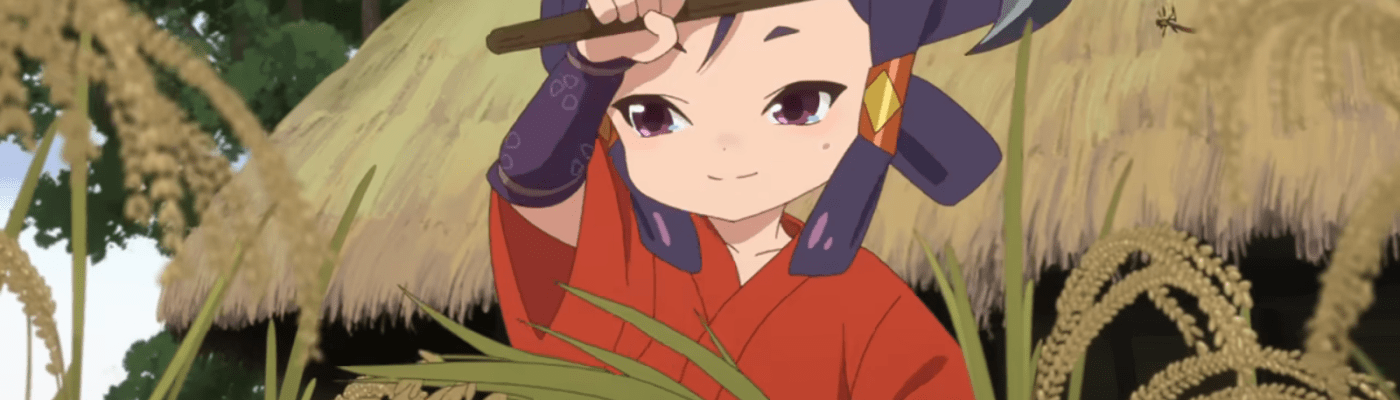
Tensui no Sakuna-hime (meaning “Princess Sakuna of the Divine Rice”) is a 2024 anime based on the 2020 console game Sakuna: Of Rice and Ruin. Just like with Danganronpa and Persona 4, I never played the Sakuna game, but I still liked the anime adaptation. For me, it was a refreshing blend of feelings, fantasy, farming, and fighting.
The series is about a harvest god – Sakuna – who starts out living a lazy life as a princess in the divine palace. Things are about to change drastically for her, as she will soon be banished to grow rice on an island full of demons. Adventures, magic, and drama await! So, if you have a minute, grab a bowl of warm white rice and enjoy this review of Tensui no Sakuna-hime.
Note: the series will be abbreviated as just Sakuna herein
Warning: Spoilers for the anime may be present
Story
Score: 7/10 Good
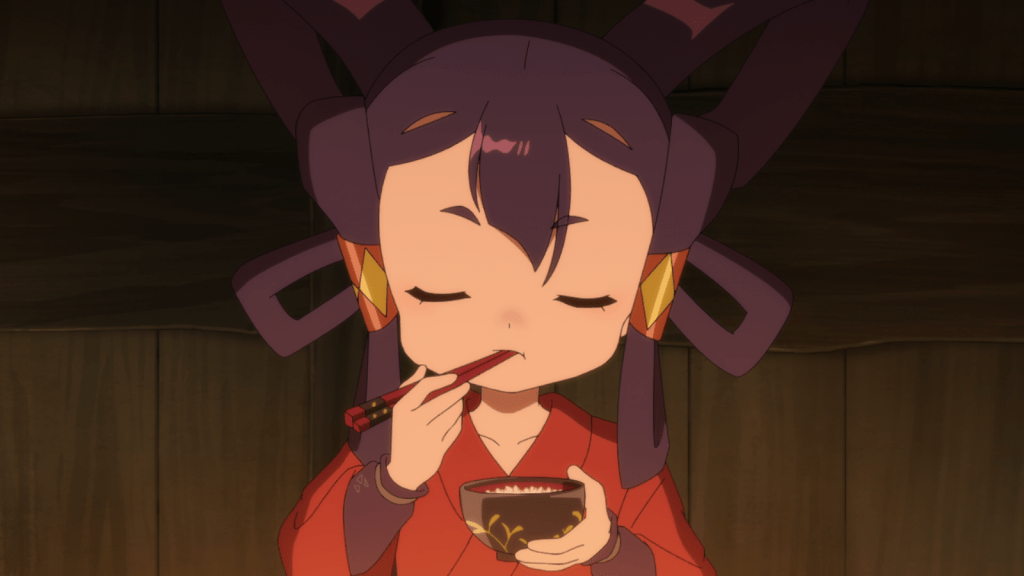
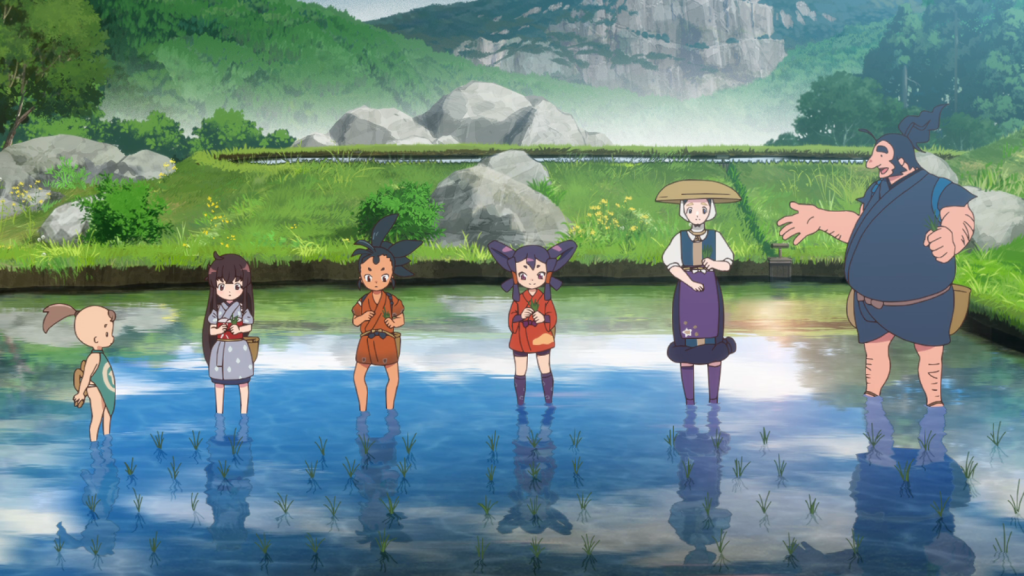
In the land of Yanato, there are two realms: the Lowly Realm of the humans and the Lofty Realm of the gods. After a small group of humans got into the Lofty Realm, they found Sakuna’s store of heavenly rice and began eating it immediately. Furious, Sakuna knocked over a torch and accidentally caused the entire storehouse to explode. The head goddess, Kamuhitsuki, was not pleased. As punishment, Sakuna and the humans were sent on a mission to Hinoe Island, a place overrun with demons.

Sakuna must now fulfill her duties as a harvest goddess, growing rice and living frugally. In addition, she must investigate why demons are being born and look for clues about her missing parents, who were also powerful gods. On top of everything, Sakuna needs to cooperate with and protect the small group of humans who started everything. Though Sakuna begins as a pampered princess, she changes over time, getting closer to being a wise, peaceful harvest goddess like her mother. By fighting demons on the island, Sakuna also takes after her father, who was a god of war.

The first six episodes are mostly about surviving and farming rice on Hinoe island. The show feels like a relaxing slice-of-life with a bit of fantasy adventure mixed in. Then, in the second half of the series, the focus turns to defeating the demons on the island, who are being led by a hateful human named Ishimaru and an ancient demon lord named Omizuchi. I didn’t find the content shift too jarring. The final battle and conclusion were rough around the edges, but I was still mostly satisfied at the end. In addition, the lore and world-building throughout was decent.
Themes and messages are an important part of the story category. Some say that Sakuna’s main themes are overused and cliché, and they may be correct. Is Sakuna super deep? No. But are the themes classic, and still powerful and touching in execution? For me, the answer is yes. Themes include self-improvement, appreciation of the simple things, developing courage, and learning to cooperate. The most important recurring idea in the series is that peace is desirable and worth protecting, while the cycle of hatred is damaging to everyone. The story of Sakuna is simple but salient.
Note: I always have more to say about the story compared to other categories. That’s because it’s one of the most important aspects to me in an anime, as well as the one I can discuss most articulately. Anyway, the rest of this review will be shorter.
Visuals
Score: 7/10 Good
Sakuna was animated by the artists at P.A. Works, a well-established, well-respected studio in the world of anime. They animated beautiful shows like Angel Beats, A Lull in the Sea (Nagi no Asu kara), and Shirobako. In summer 2024, P.A. Works released three different short anime series, one of which was Sakuna. Probably as a result of spreading the budget between three productions, Sakuna didn’t have stunning visuals. However, the art and animation were still adequate enough for me.
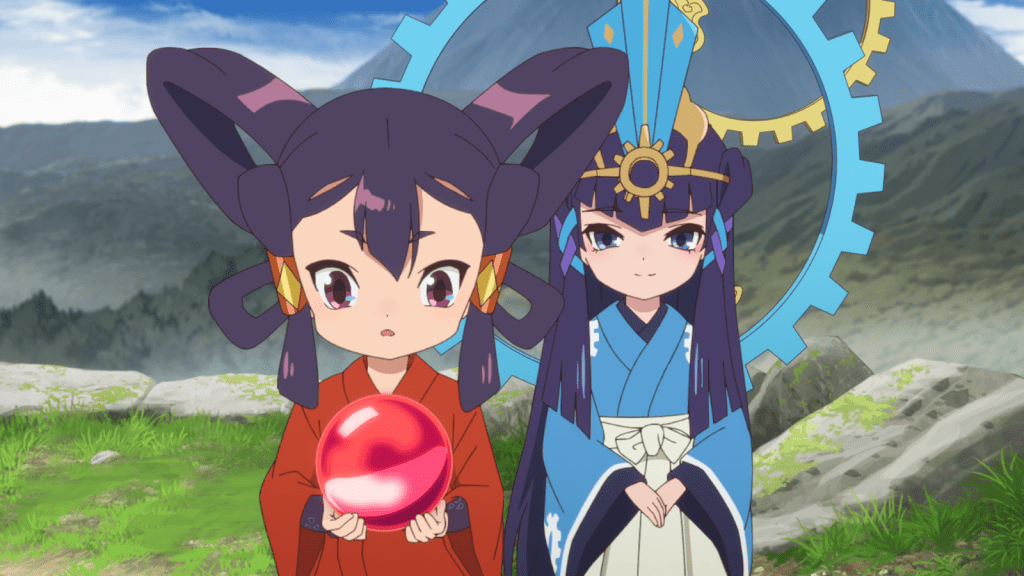
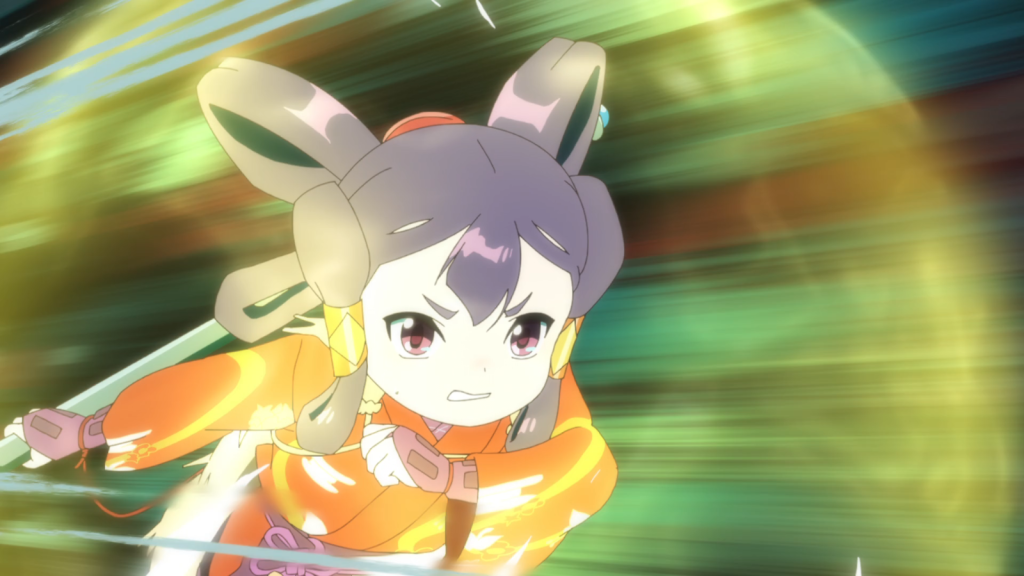
Since I enjoy highly stylized animation, Sakuna is right up my alley. I especially liked the peaceful visuals of the rice farm as well as the demon and creature designs. (The little kappas are adorable and Ashigumo looks so fucking cool!) The bright, rich colors are lovely. I didn’t like that the fields of rice were usually animated in 3D. But at least most of the animation is normal 2D. The action sequences are not very exciting or creative, but the settings and backgrounds are beautiful, and the character designs are charming. Sakuna deserves a solid score for visuals.

Audio
Score: 8/10 Excellent
The audio category was fantastic in Sakuna. Yoshiaki Fujisawa was the composer for the beautiful instrumental soundtrack. With Fujisawa’s talent and experience, no wonder the music is such a treat. The opening song (“Harebare!” by Ikimonogakari) is an inspiring, upbeat rock song with female vocals, gorgeous strings, and a great beat. It’s fun to sing. Compared to the opening, I didn’t like the ending song quite as much, but it was still a good song with a peaceful, soothing melody. It’s called “Origami” by Little Glee Monster. Sakuna definitely delivered on the music and songs front.
The Japanese voice-acting was also excellent and highly enjoyable. The star of the show was Naomi Oozora, voice of Princess Sakuna. Oozora has been actively voice-acting since around 2012 with several well-known roles in famous anime. However, I know her best as the voice of Satania from the obscure comedy anime, Gabriel Dropout. In addition to Oozora’s memorable acting, several other seiyuus in Sakuna also impressed me. For instance, I loved the voice of Rika Kinugawa, who played Kokorowa. As you can see, from music to voice-acting, the audio in Sakuna is high quality.
Characters
Score: 7/10 Good
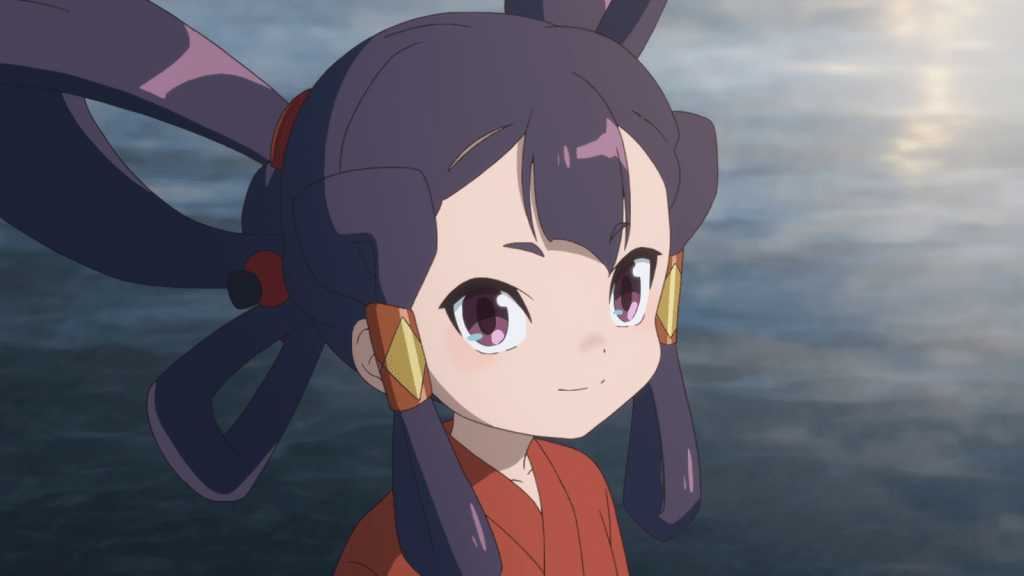
Though not outstanding, the character category in Sakuna was certainly still satisfactory. Generally, the character concepts are fairly interesting and the characters themselves – though not always super likeable at first – change for the better and become dear over time. (That’s how I thought of most of the humans.) The character development for protagonist Sakuna was especially good. As for villains, Ishimaru was not developed enough despite his potential. He came across as one-dimensional.

Due to the weaknesses, I would normally give this category 6/10. However, because I enjoyed the characters so much on a personal level, 7/10 seems better. I liked all the characters, but my favorites were Sakuna, Kokorowa, Kinta, and Tauemon. These four saw a lot of individual growth and sometimes had interesting interactions with each other. Tauemon and his love for peace makes me smile even a year after watching Sakuna. Kokorowa’s envy was so relatable, but I was also so happy that she restored her friendship with Sakuna. I won’t easily forget these characters.

Personal Enjoyment
Score: 8/10 Excellent
My personal enjoyment of this anime was high for several reasons. For one example, Sakuna spoke to my own inner harvest spirit – that is, the part of me that still loves gardening, growing, and being close with the earth. (I haven’t had a garden since I was in college, and I really miss it sometimes.) Sakuna also charmed me with its vibrant visuals (including very cute and cool creatures) and relaxing music.

The memorable characters were also significant factors in my enjoyment. I liked the backstories and interactions of Tauemon and Ishimaru. Yui’s secret identity was fascinating and extremely poetic. Myrtle was adorable, though she was underdeveloped as a character. Additionally, I admired the intelligence and understanding of Kokorowa, Goddess of Inventions. And of course, Sakuna herself was relatable, cute, and funny. Clearly, this unusual anime was fun for me to watch.

Overall Score
Score: 7.4 out of 10.0 Bowls of Rice
The overall score is the average of the five category scores explored above. An anime in the 7s range is considered “good” by my metric but not quite “excellent.” Though I had fun watching Sakuna, I admit it won’t be everyone’s cup of tea. Maybe that’s why it has a low score on MAL (6.74 as of Sep 2025). If you’re not interested in cute, wholesome stories with classic themes and a focus on farming, you shouldn’t try Sakuna. However, if you love growing and harvesting, good character growth, sassy goddesses and some unusual fantasy, give this anime a watch!
~Thanks for reading~
Written by 7Mononoke at Anime Rants
 Anime Rants
One thought on “Sakuna: Of Rice and Ruin Anime Review”