Contents
- Introduction: Otokonoko
- Story and Themes
- Art and Animation
- Music and Sound
- Character Writing
- Personal Enjoyment
- Overall Score
Introduction: Otokonoko
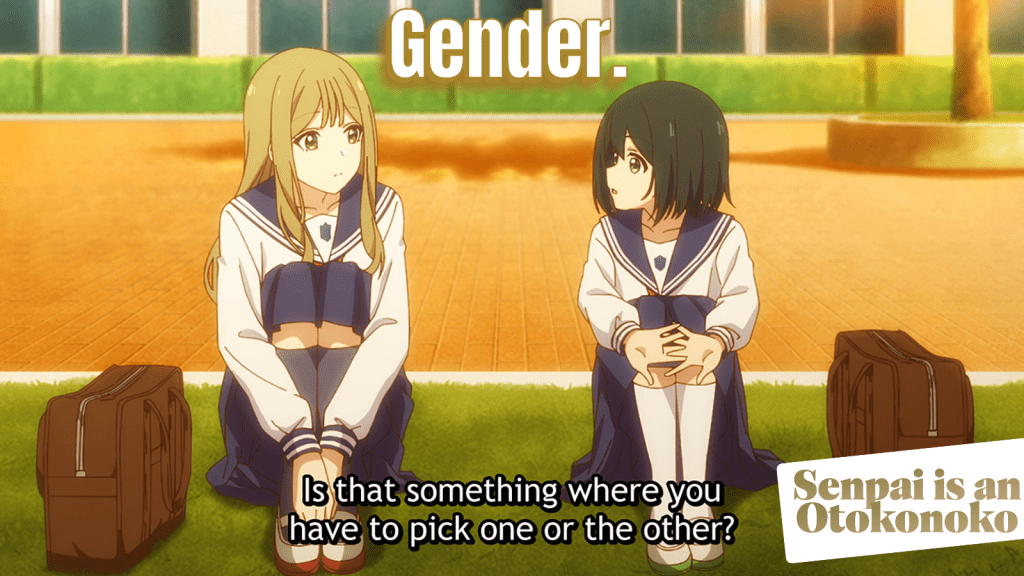
Senpai is an Otokonoko is a 2024 LBGT+ anime that’s also sometimes known as My Cross-dressing Senpai. While that title is sufficient for a surface-level understanding, I think it’s worth looking into the meaning a bit more. Most readers probably know already that Senpai means “upperclassman.” But what exactly is an otokonoko?
Strictly speaking, Otokonoko means male child or young male. It can be broken down in the following way. Otoko means “male.” The possessive particle, no, can be read as “of” and the word ko means “child.” Thus, the literal and traditional definition is “male child.” However, in recent years, the term has come to have a second meaning in a particular context. When a young AMAB person dresses and presents femininely, they may claim the term Otokonoko for themselves. A broad definition would be “crossdresser,” but I think that term has some problems. Otokonoko could include a variety of different gender experiences, including drag queens, genderfluid people, and transgender women.
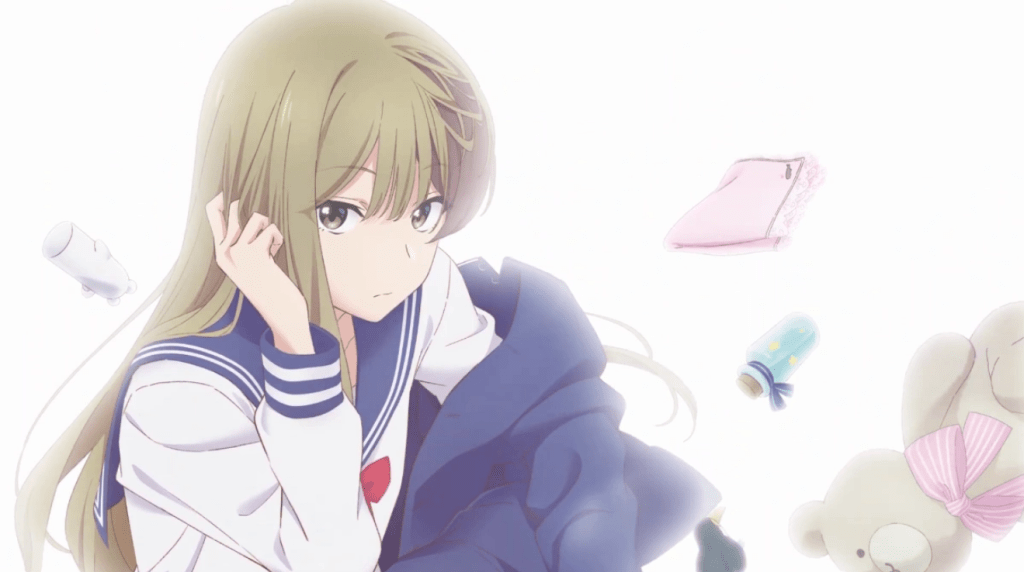
Now we know that Otokonoko can basically mean “AMAB presenting femininely.” The main character of Senpai is an Otokonoko is Makoto, an individual who was assigned male but who prefers to present femininely at school. But you may be wondering why this title was chosen. What does it truly mean? In the worst reading, the author could have been going out of their way to emphasize that Makoto was AMAB, thus drawing attention to their “biological sex” instead of their gender. However, since the anime is so gender-affirming and the characters are so genuinely written, I have a hard time believing the author was transphobic in this way. Most likely, the author chose this title with the intent of appealing to those who have claimed the term Otokonoko for themselves in its second meaning.
Although I didn’t always understand, I’m now glad that the English version on the market kept the title Senpai is an Otokonoko. It’s more nuanced than My Cross-dressing Senpai and it’s way better than the very literal reading of My Young Male Senpai. I don’t know much about queer culture in Japan, but I enjoyed learning about this term and I’m happy to share the knowledge. Hopefully, it was helpful. Now, it’s time to review five key aspects of the excellent LGBT+ anime, Senpai is an Otokonoko.
Note #1: Makoto’s pronouns. I will be using they/them pronouns for Makoto, but the English subbed translation uses he/him, so I may accidentally revert to that at times.
Note #2: Spoilers may be discussed in some sections of this post
Story and Themes
Score: 8/10
Makoto Hanaoka was a male child who had always leaned feminine in terms of gender. They adored women’s clothes, collected cute things, and favored feminine mannerisms. But due to their queerphobic and mentally unwell mother, Makoto was forced to hide this truth and feel shame over it for the majority of their childhood. Sometime before starting highschool, Makoto was discovered by their parents wearing a skirt.
Makoto’s father tried to be supportive and told Makoto to spend their highschool years deciding whether or not they wanted to live as a girl. He arranged for Makoto to be enrolled in a highschool as a female student. Although the other students soon exposed Makoto as “a boy” or “a crossdresser,” the quiet and determined teenager kept dressing as a girl at school. This is the story of Makoto and their journey to becoming a nonbinary genderfluid youth.
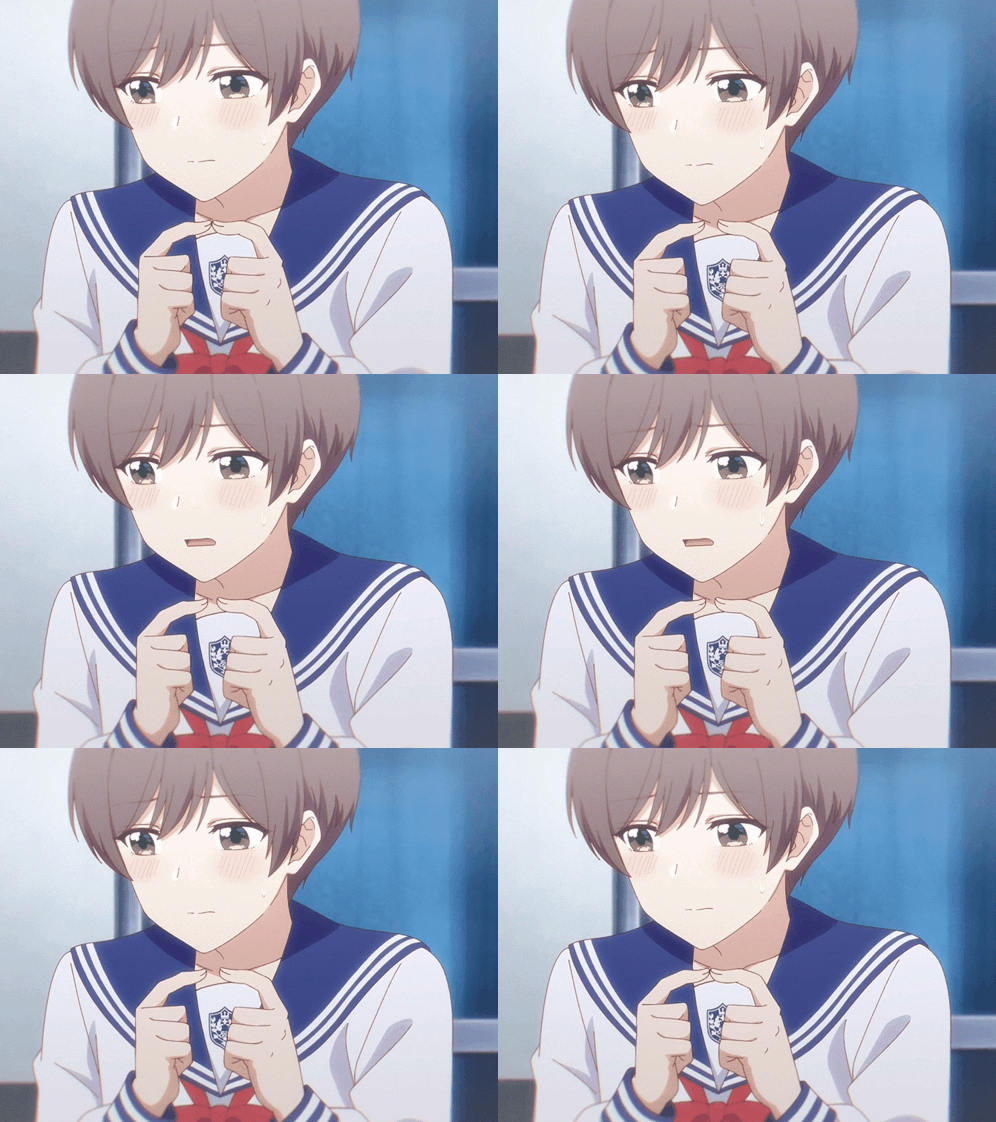
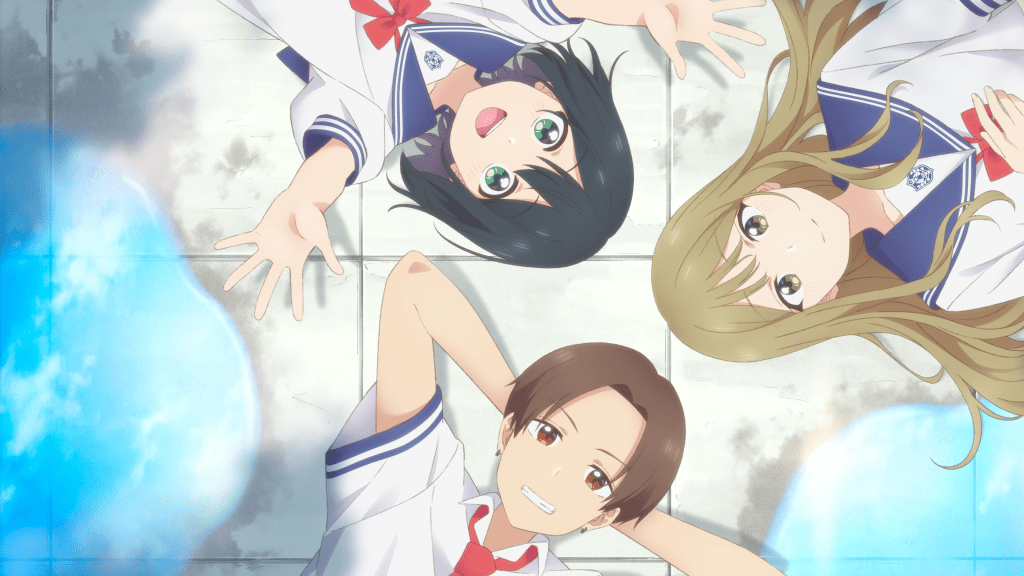
Though the anime is mostly Makoto’s story, it is also about the other two protagonists, a boy named Ryuji Taiga and a girl named Saki Aoi. If it wasn’t already obvious, this anime is a character-driven story. Because it’s so character-centered and because it’s a school drama, there is no thrilling plot, and the storytelling isn’t in any way epic like in a fantasy or an action anime. So instead of judging the story category like I would for that kind of anime, I judge it on the quality of the drama, themes, and content balance. So how did this anime perform?
Senpai is an Otokonoko delivers top-notch emotional drama mixed with refreshing comedic moments and powerful, unifying central ideas. These include coming of age, exploring gender identity, experiencing romance, and rejecting binary thinking. Without going into too much detail, I felt that the ending was a bit weak. I found myself wanting a slightly more dramatic conclusion. However, the strengths of the story category still outweigh the weaknesses easily. Put simply, Senpai is an Otokonoko has a classic and well-executed story with important messages and themes.
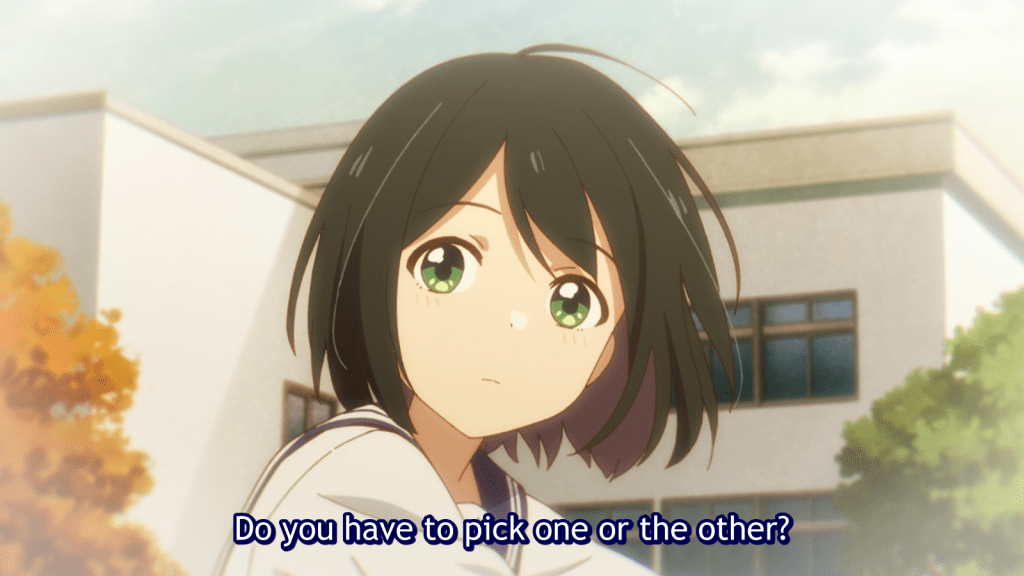
Before we go on, let me make a few things clear related to the story of Senpai is an Otokonoko. It is an anime about a nonbinary genderfluid person. It is not an anime about a transgender girl per se. In addition, this anime doesn’t let you forget that it’s set in Japan: a highly queerphobic setting. Some main characters exhibit internalized queerphobia, especially early in the story. Other minor characters can be outright hateful, and there is a general atmosphere that being openly queer is “causing trouble” for normal people. Long story short, don’t expect this anime to avoid the topic of queerphobia. While the narrative itself is not transphobic, the country it hails from has a long way to go in terms of LGBT+ rights and acceptance. That’s worth keeping in mind when you watch.
Art and Animation
Score: 5/10
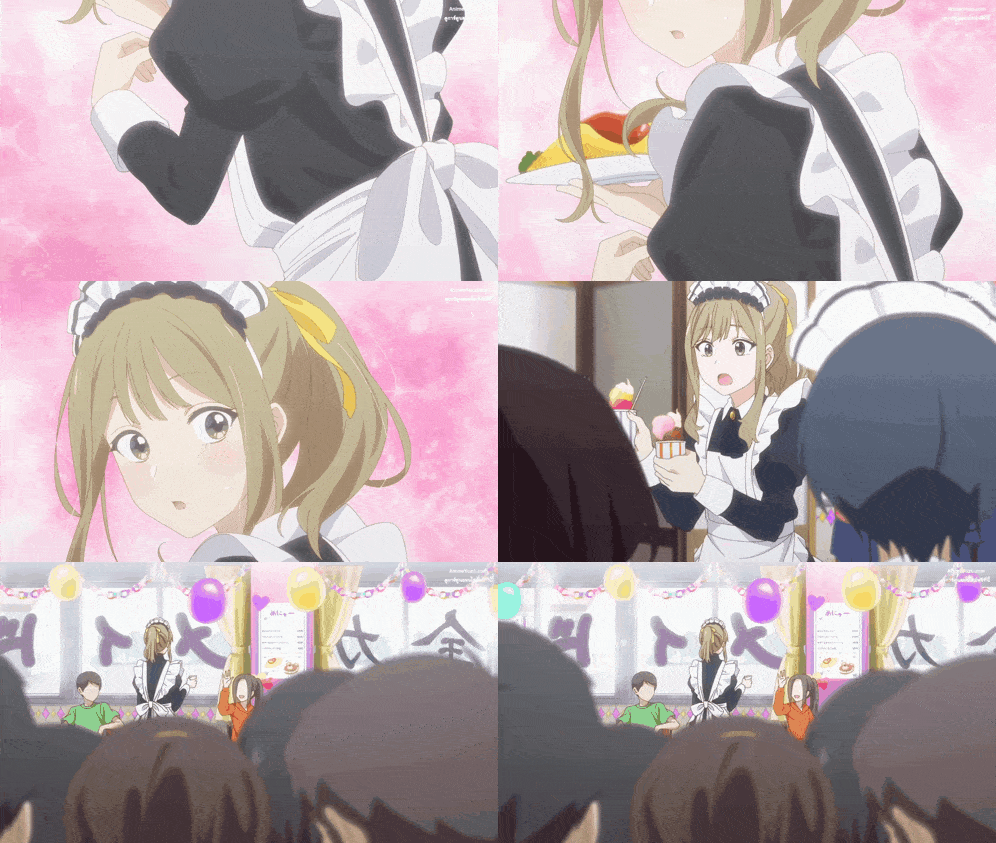
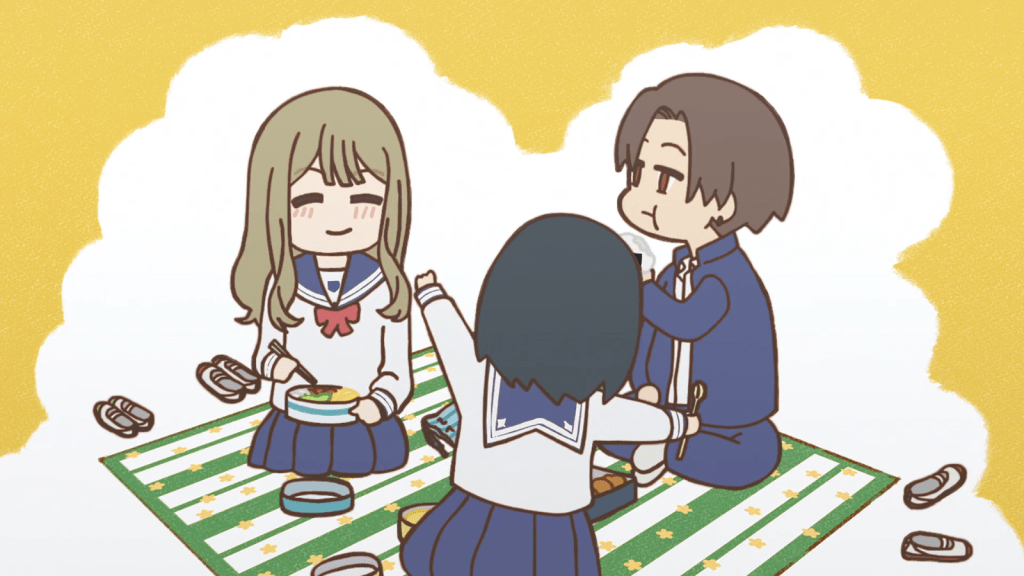
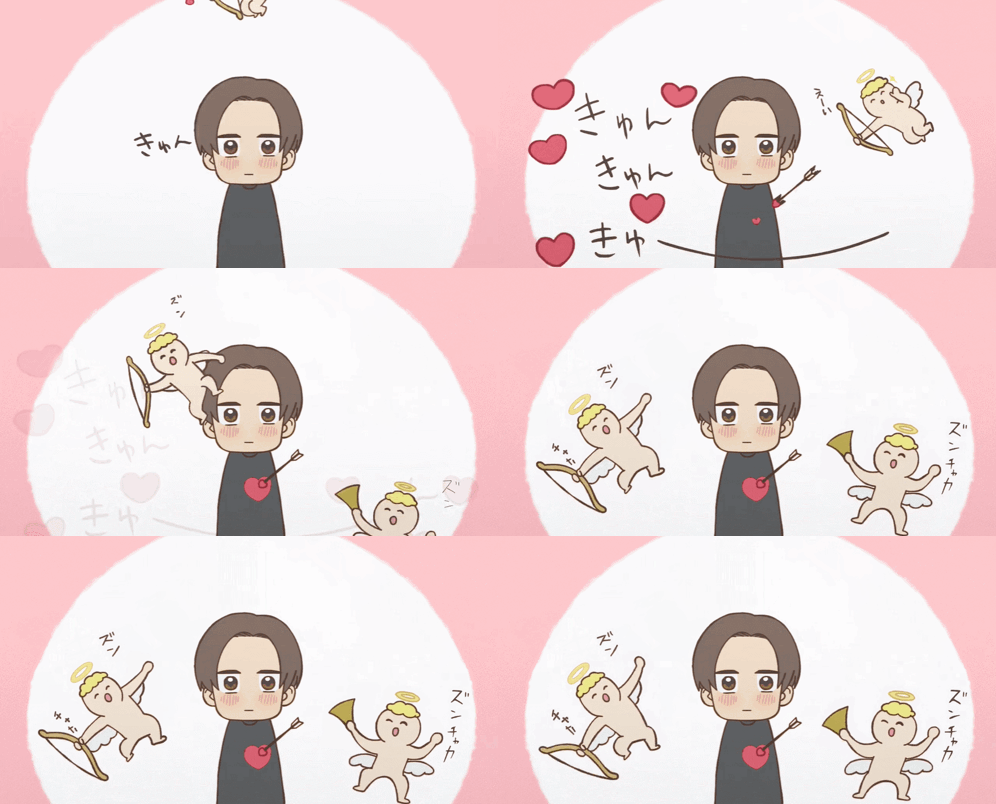
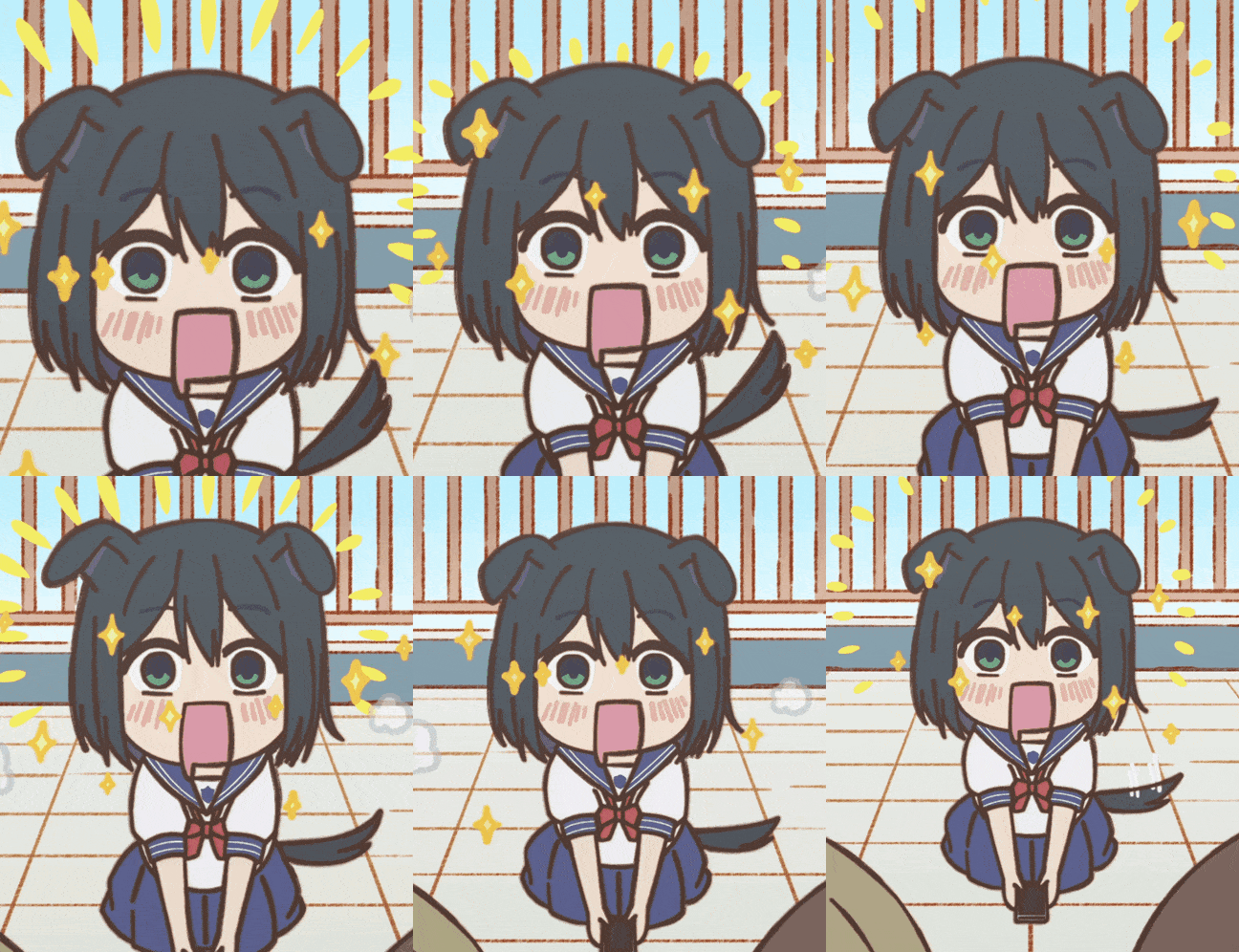
It is with a heavy heart that I give such a low score to one of my favorite anime series of the decade. I wish I was overreacting, but there’s no nice way to state the truth: the visuals are below average. They were so bad that I didn’t feel like I was watching a fully complete anime. Some of it just looks like a loosely colored storyboard. Though I enjoy the general art-style and some of the cleaner-looking shots, these “good” moments are always interspersed with dreadful chibi-fied art that communicates the absolute bare minimum. Moments using the comical, cutesy style were far too frequent and lacking in detail to be charming. Below is an example of the cheap visuals.
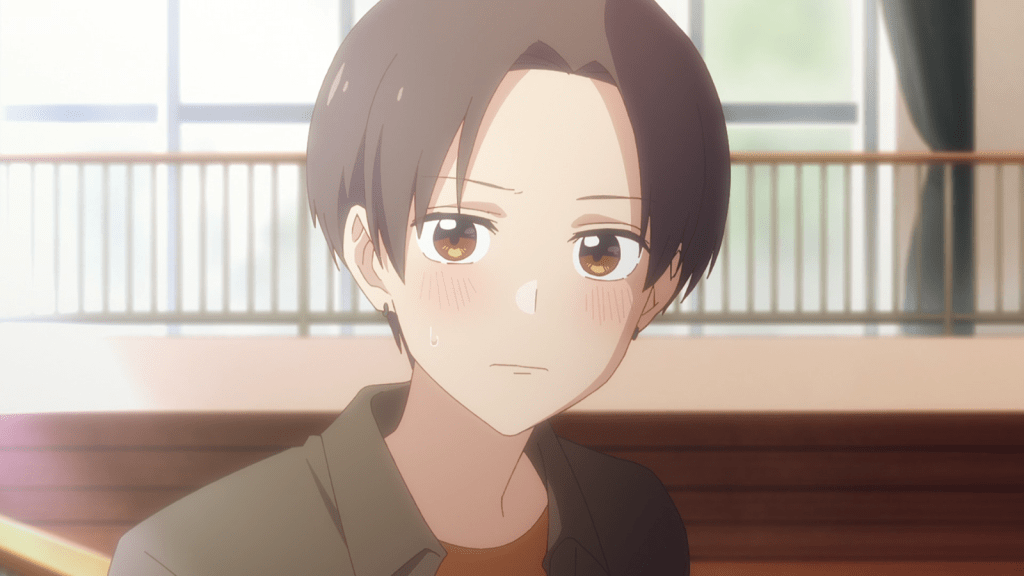
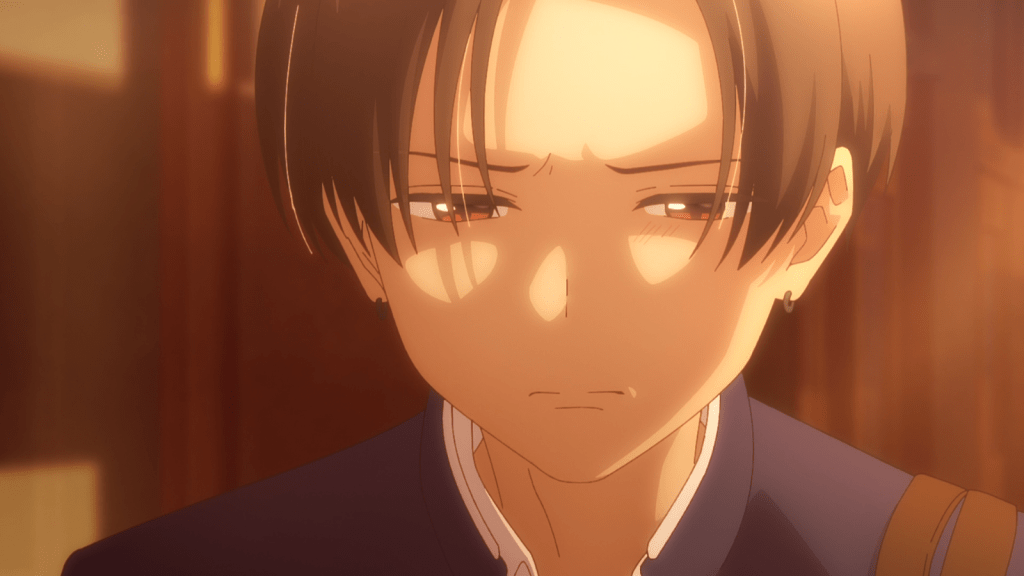
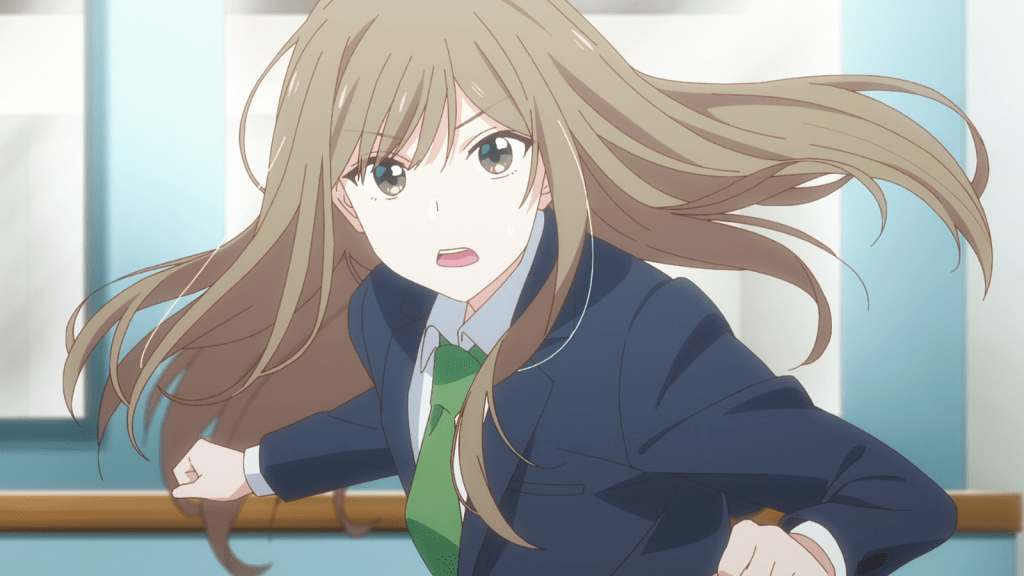
Though I’d still say the visuals are bad overall, it’s not as if every single shot sucked. There were also at least a few detailed, well-lit shots with the most captivating face expressions. My favorite example is the shot of Ryuji below, in which he is experiencing complex and intense emotions. His expression is *chef’s kiss* perfection. If only this anime had a bigger budget and more time in production. Then, maybe the whole anime would have looked as excellent as this screenshot. Sadly, no anime is perfect, and Senpai is an Otokonoko failed to deliver in terms of art and animation.
Music and Sound
Score: 9/10
The music for Senpai is an Otokonoko was composed by Yukari Hashimoto. She is a well-known composer who has written music for many different anime titles, including Mawaru Penguindrum, Osomatsu-san and Toradora. I only just started listening to Yukari Hashimoto music, but I love it already. There are some truly beautiful, emotional, and inspiring tracks in the original soundtrack, which can be found on YouTube.
Besides the instrumental music, the opening and ending songs are also absolute bangers. Both songs were made by Kujira, though the main vocalist is different – a male singer for the opening and a female singer for the ending. The opening is “Wagamama” (“Selfish”) and the main chorus is incredibly catchy. It’s not my usual style of music, but I grew to love the song for its lyrics and acoustic, almost folksy sound. As for the ending song, it’s called “Are ga Koi Datta no ka na” and is sometimes translated to “Shape of Love” (though it really means “I wonder if that was love.”) It’s a fast-paced alternative rock song with electric guitar and bewitching female vocals. I love this ED even more than the opening and keep it in all my best music playlists.
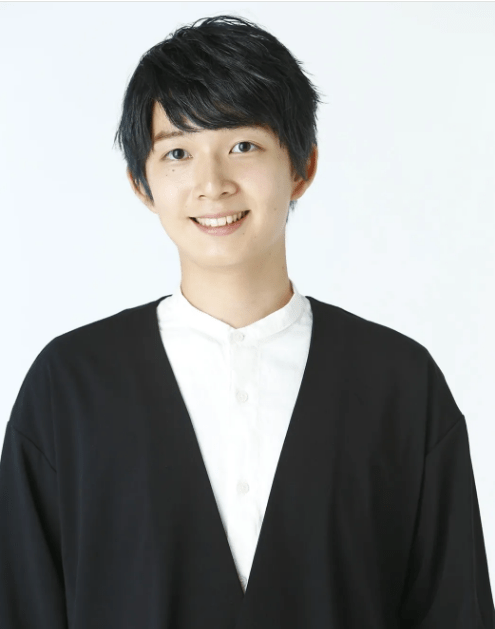
The voice-acting for Senpai is an Otokonoko was enjoyable despite the fact that I wasn’t too familiar with the cast yet. I enjoyed beginning to learn their voices. I could rant about voice-acting forever, but for today, I will just mention the main three seiyuus from the show. First of all, Shuuichirou Umeda is the talented seiyuu who voiced Makoto. He is relatively new to the scene of voice-acting, but he already made a name for himself playing Akira Tendou in Zom 100 (2023). Since then, Umeda also found popularity playing Hikaru in The Summer Hikaru Died (2025). As Makoto, he did a great job using a softer, more feminine voice.
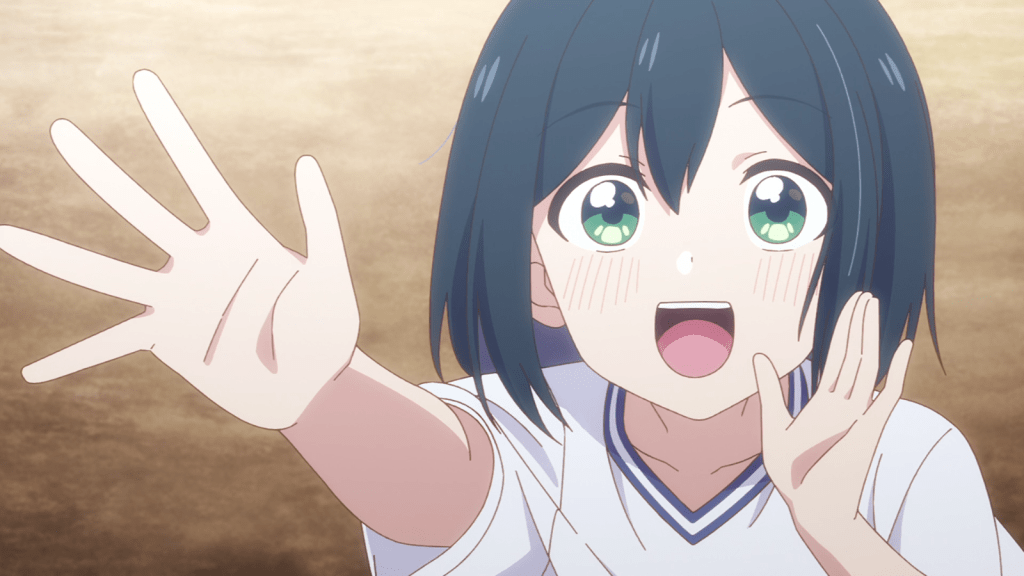
Next, Yuuma Uchida voiced Ryuji and performed impressively as usual. Uchida has enjoyed several big roles since 2014, including Kyo Sohma from Fruits Basket (2019), Ritsuka Uenoyama from Given (2019), and Megumi Fushiguro in Jujutsu Kaisen (2020). Saki Aoi was played by another young seiyuu named Akira Sekine. She’s had a fair number of roles since 2011, but the only one I recognize so far is Luna Wright from Dr. Stone: Science Future (2025). Of the three main VAs, I felt that Sekine was the weakest in terms of acting ability. However, she was never outright bad. I believe she’ll also improve with time and better direction as she gets more significant roles in anime.
Character Writing
Score: 8/10
Warning: This section contains character spoilers
The characters in Senpai is an Otokonoko have very simple, natural-colored designs that I enjoy, but this section is about character writing – not character design. In my opinion, the writing for this anime was top-notch. With only three main characters, there was enough time to flush out each one and still have a handful of supporting characters without making the audience feel overwhelmed. Makoto, Ryuji, and Saki are all great characters with charming or cute aspects and realistic flaws or shortcomings. They are each believable as highschool students and their interactions make for many funny moments as well as serious drama.
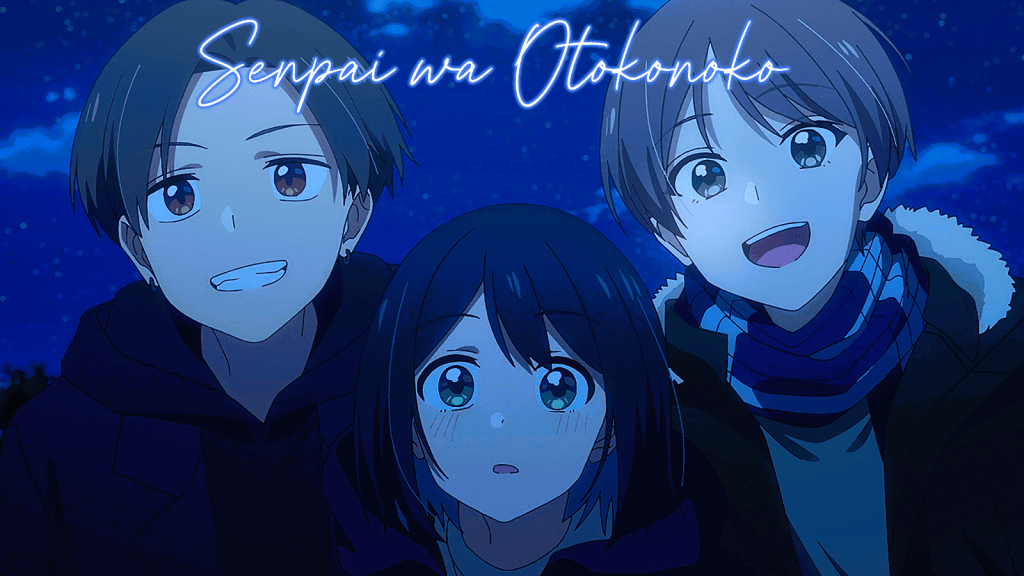
There’s a lot to say about these main characters, but I’ll try restrain myself to a few remarks about each. Makoto is an incredibly sweet and empathetic person who deeply internalized the idea that their existence was troublesome. I’m quite different from Makoto in terms of personality, but we share this trait, which made it easy for me to empathize with them. For Makoto and for me, it’s always a struggle to give ourselves permission to exist authentically and thus potentially “trouble” others. A lot of other trans and non-binary people probably feel this way, too. Even outside of gender issues, I think this harmful, deeply ingrained belief effects many.
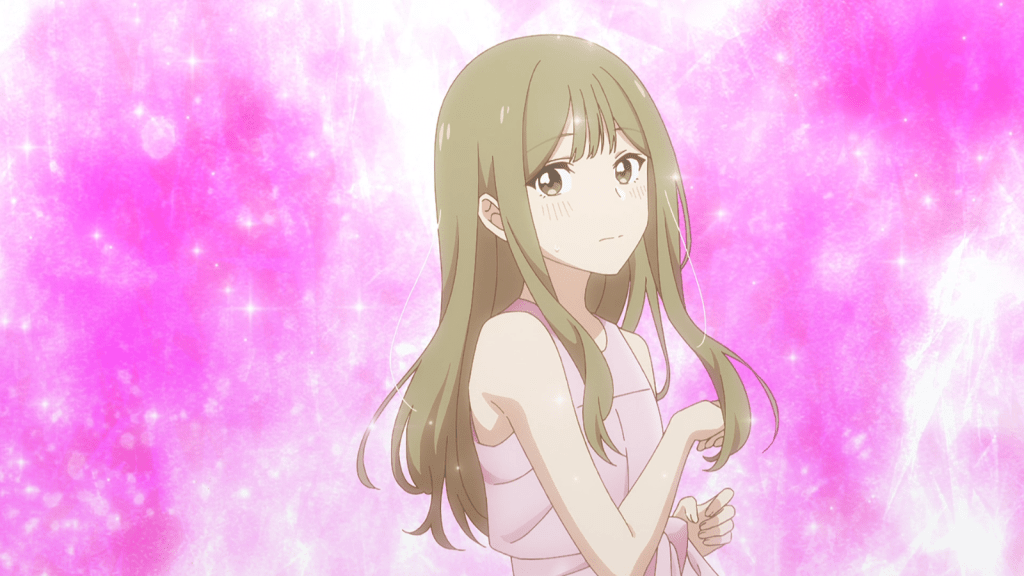
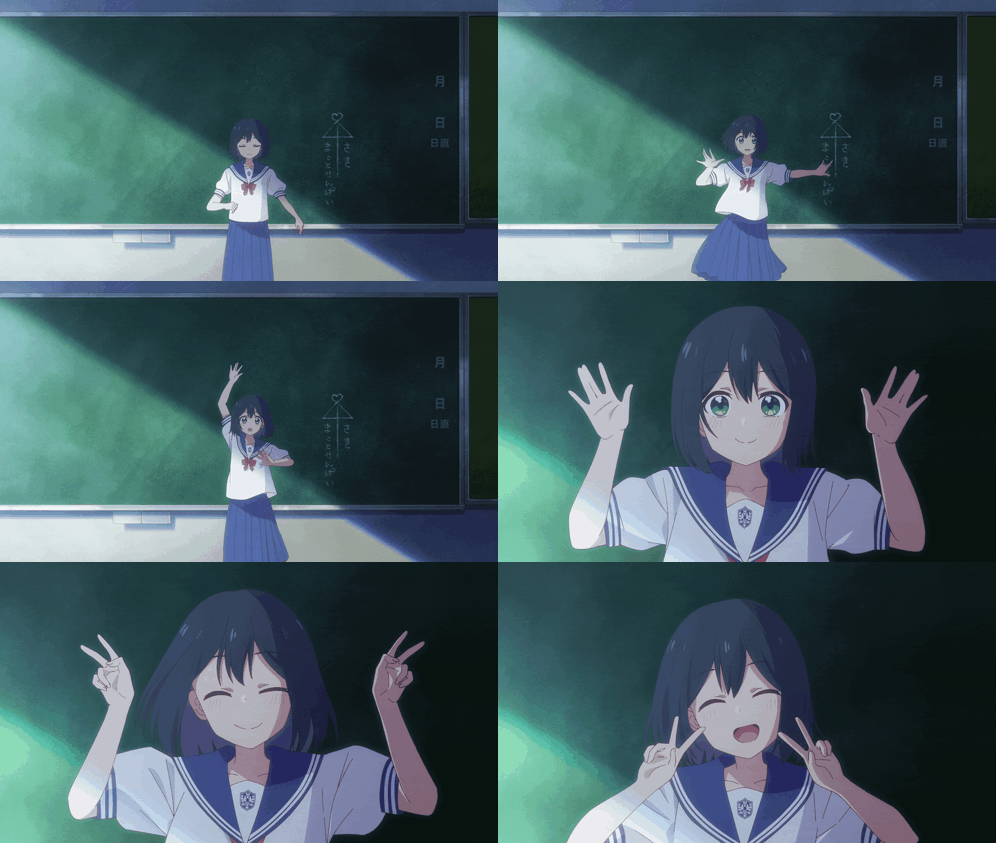
In stark contrast to the quiet, thoughtful, and soft-spoken Makoto, we have Saki: a girl who is highly extraverted, cheerful, and impulsive. Her open-minded, bold personality is refreshing and much-needed, as she’s the least judgmental of any of the characters. Saki’s character arc was slightly confusing and very open to interpretation. That was one weakness of the character category. I interpret it to mean that Saki wasn’t ready for romance and actually needed familial support. Some fans also interpret Saki as an aromantic character, which is interesting and un-intuitive when combined with her strong and obvious bisexuality. It just goes to show that sexual and romantic preferences are not always the same. I adore Saki and her enthusiasm for life!
Last but not least, there’s Ryuji. I didn’t think I would like him much at first due to his rougher personality and his intense internalized homophobia. However, the show did an excellent job of showing his softer sides with time, as well as making him confront his bigotry and grow past it. I now love Ryuji due to his excellent characterization. As a bisexual person who has fallen for friends of the same sex before, I deeply empathize with Ryuji’s struggles. I also used to be very homophobic due to the brainwashing forced on me as a child. Despitealways wanting to be normal and frowning on queer people, Ryuji falls in love with Makoto. This means he is bisexual at the very least, if not technically gay. His romantic and sexual feelings for his childhood friend weigh on him, and are further complicated when his crush is exposed. Ryuji ended up being just as engaging and well-written as the other two main characters.
Personal Enjoyment
Score: 10/10
It would be a lie to say Senpai is an Otokonoko changed my life in a drastic way. However, it was still meaningful enough for me to give it the maximum score for enjoyment level. I think LGBT-affirming anime are rare treats and should be celebrated with high scores. Beyond that, I loved the music, voice-acting, characters, drama, and story themes. I confess I even liked the cheap visuals, finding them charming after all.
In addition, this anime genuinely helped me come to terms with the possibilities of my own gender. I’ve known for a couple years now that I am nonbinary, but I never seriously considered the “genderfluid” label until recently, largely thanks to this anime and a new friend I made who is also genderfluid. Someday, I want to fully explore my gender like Makoto did. For now, I’m stuck in an unsafe position for that kind of thing. But someday, I’ll experiment with presenting masculine, something I’ve never fully committed to. I prefer men’s clothes and mannerisms anyway, so I’d love to try. Thanks to this anime, I am more hopeful and understanding about my own gender expression.
Overall Score
Score: 8.0 out of 10
The overall score is the mean or average of the five scores explored previously. Despite weak visuals, this anime still performed excellently overall – at least according to my personal metrics. On MyAnimeList.net, Senpai is an Otokonoko sits with a low score of 7.29 (as of Feb 2026). I am not surprised that it wasn’t amazingly well-recieved due to the largely queerphobic culture of Japan. However, commercially, it must have done well enough to warrant the sequel movie, which I have yet to see because it’s difficult to find online. I’m also afraid the movie will betray the themes of the series, but that could be an unwarranted fear. Anyway, I will check it out eventually.
You should check out Senpai is an Otokonoko if you like good drama, LGBT+ themes, and want to see an example of a school rom-com featuring queer kids. I’m truly glad this anime exists. It was one of my favorite titles of 2024.
~Thanks for reading~
Written by 7Mononoke at Anime Rants
 Anime Rants
Senpai is an Otokonoko is one of those 2024 titles that deserves a lot more atention than it got. The way it blends comedy with genuine moments of identity exploration makes it stand out in a season that had a lot of competition. Your breakdown really captures what makes the show work and why it resonates with audiences beyond just the obvious appeal. Solid review.
LikeLike
I’ve never heard of this one. I’m going to have to check it out!
LikeLiked by 1 person
Yeah it flew under the radar for a lot of people but I really like it!
LikeLiked by 1 person