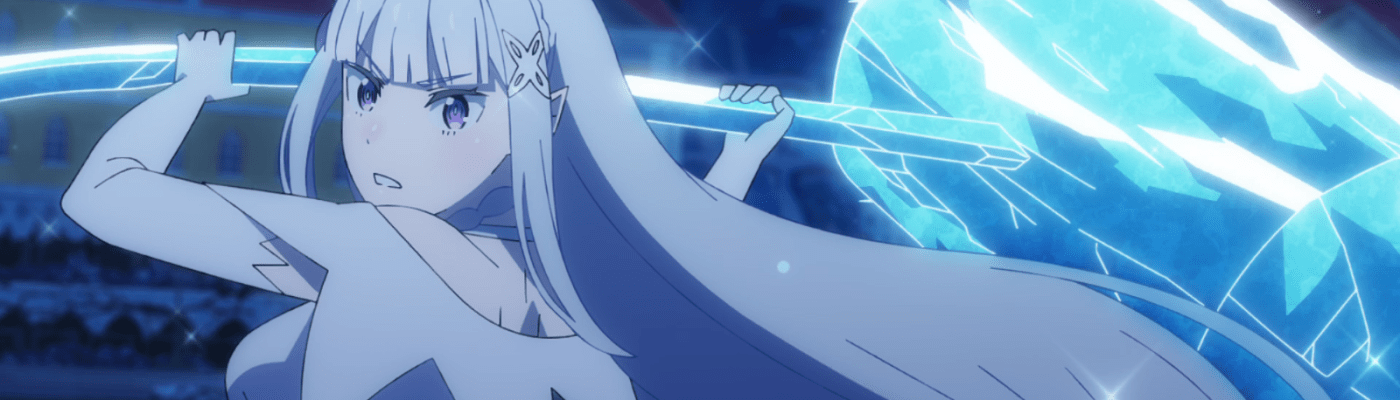
I have a long history with Re: Zero, since I initially hated it, but started to appreciate it more over time. The second season then impressed me with its themes and character writing, leading me to actually enjoy the series as a whole. As I watched the third season, I tried to be as tolerant as possible with the knowledge that the series has problems like baked-in misogyny.
Though I felt annoyed by parts of it, I was impressed with Re: Zero‘s third season overall. For me, it’s like eating unhealthy food now and then (I love candy and chocolate more than ever since quitting drinking). Even if I have issues with the narrative, this season was audio-visually gorgeous. In particular, the music and voice-acting were marvelous. However, I’m disappointed in some of the writing choices and also rather disillusioned with the story and its style as a whole. Mostly I am referring to the sexism in the narrative as well as the way the show continues to heavily feature and sometimes sexualize characters with childlike bodies.
Personal enjoyment plays a huge role in how I rate a series on this blog. Because I experienced such a mix of annoyance, disappointment, boredom, and genuine enjoyment when watching this season, my personal enjoyment score wasn’t very high. Nevertheless, I tried to be fair by giving high scores for elements such as audio and visuals. Despite its issues, I still enjoy this anime like a guilty pleasure. The character writing can be excellent as well. Also, this series’ focus on horror and violence makes for a compelling dark fantasy. If you want to know more of my thoughts on Re: Zero season 3, check out the sections below.
Contents
Story Category
Score: 7/10
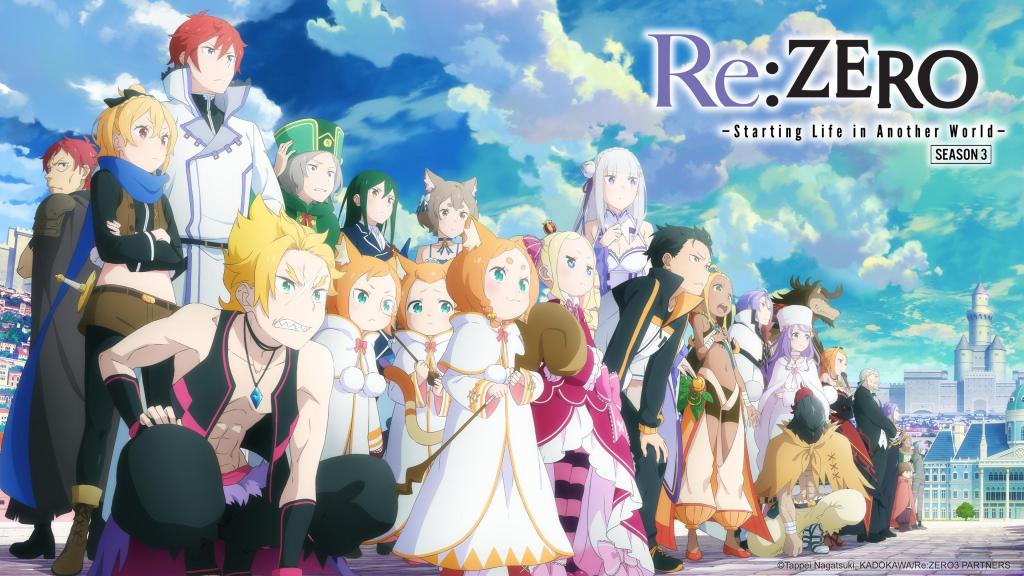
A year had passed since the events of the second season and the royal selection for the new ruler of Lugnica was still ongoing. Subaru and Emilia visited the watery city of Priestella, where the royal candidates were currently gathered. While they were there, the Witch’s Cult launched a full scale attack on Priestella, taking over the city. It was now up to Subaru and his friends to save the metropolis from the insane cult members. The story, though simple, was good overall. Note that Re: Zero‘s third season had a number of delays and issues with production and release, but I don’t think that’s fair to factor into the score. It’s not the narrative’s fault that the scheduling was wacky.
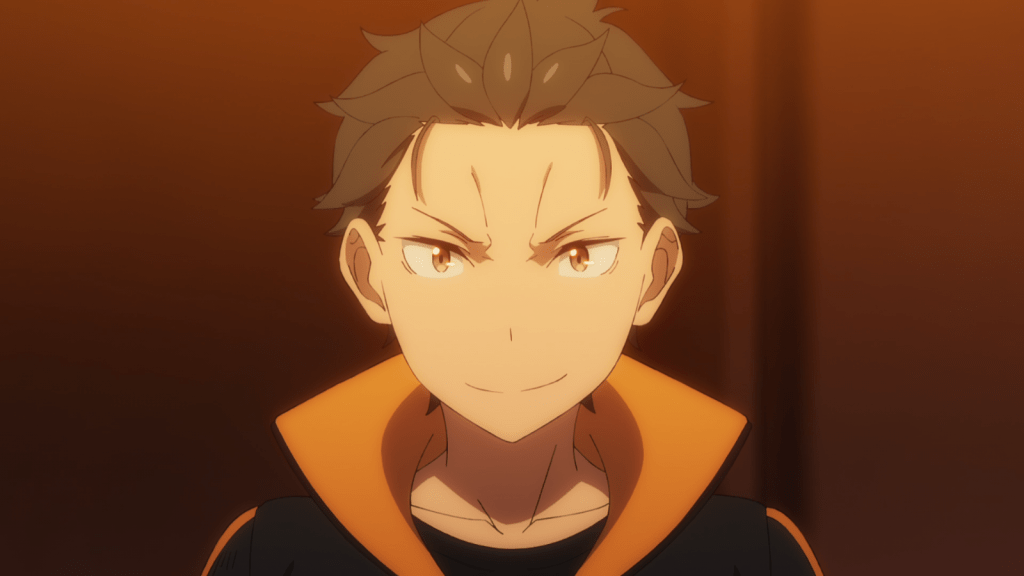
The story is divided into two arcs: the attack and the counterattack, each having eight episodes. The structure and pacing of this season were commendable, so it was fairly easy to stay focused and excited about the events. There was more action compared to season 2. In addition, some of the themes in the story were interesting and/or inspiring. For example, Subaru’s speech in episode 57 (Season 3 episode 7) highlighted the themes of hope and perseverance. There were many new characters, exciting battles, and moments of sheer horror. Compared to the previous season, we didn’t learn much about the Witches or the Cult, which was a let-down for some. The world-building was somewhat lacking in this season. Nevertheless, the story was mostly satisfactory.
Unfortunately, this season of Re: Zero was much the same as the others in that the narrative often leans sexist. Subaru himself is less misogynistic than he used to be, but he’s still unable to accept Emilia protecting him because she is a woman. Another example was the way the narrative treated Crusch this season. When she was wounded and defeated in battle, the thing everyone seemed to grieve most was that her pretty skin was disfigured by the dragon blood patterns. For the men who write Re: Zero, few things are as tragic as a standardly attractive woman getting scars or different skin. Female characters in Re: Zero are usually sweeter, dumber, and less capable than the males, as well as having highly sexualized designs in most cases. Sadly, casual misogyny is a part of many mainstream anime series, and I hope that if more people point it out, it will eventually bcome less common.
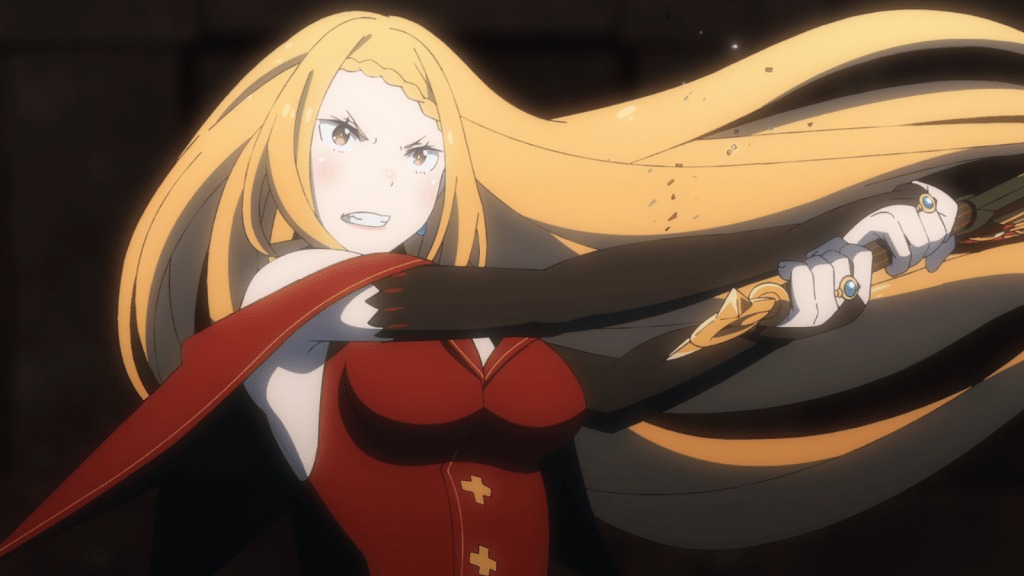
(When it comes to misogyny in Re: Zero, a strong example I come back to repeatedly is the story of Theresia. If you’re interested in my viewpoint, it’s discussed in the personal enjoyment category. For now, let’s move on to the next section.)
Visuals Category
Score: 8/10
In general, I enjoy the character designs, color choices, and face expressions in this series. People seem to have mixed opinions on the visuals in season 3, with some feeling disappointed and others praising it highly. As for myself, I lean toward enjoying the art and animation in this and every season of Re: Zero. Compared to previous seasons, there were slight art-style changes, but I didn’t even notice the differences until someone pointed them out. The changes were not significant enough to complain about for me. This season also featured several high-quality action sequences, including the epic battle between Garfiel and Kurgan in episode 63 (AKA season 3 episode 13). Of course, I acknowledge that there were fights of varying quality and other issues that were pointed out to me. However, overall, I think the visuals were excellent in Re: Zero Season 3.
Audio Category
Score: 9/10
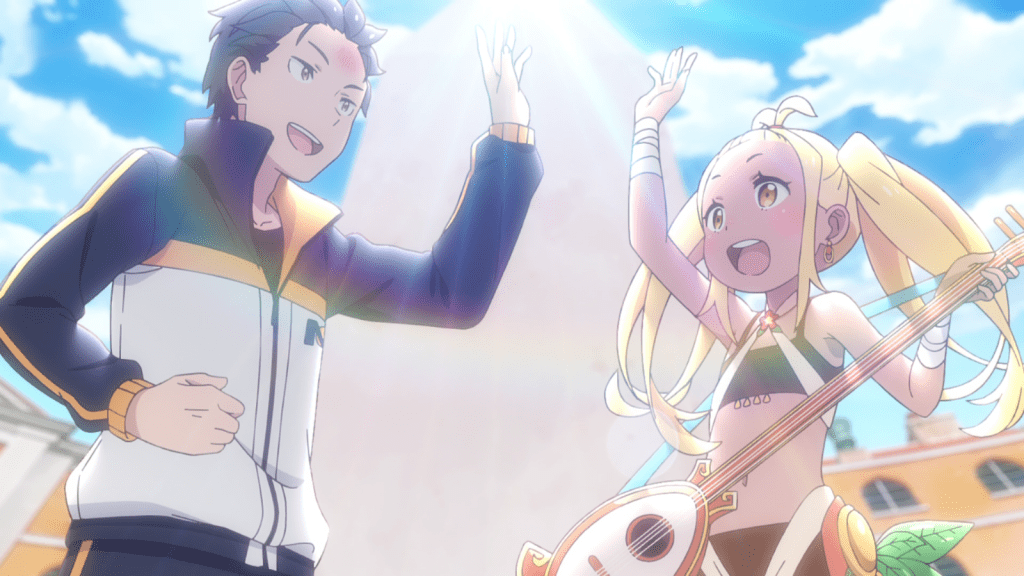
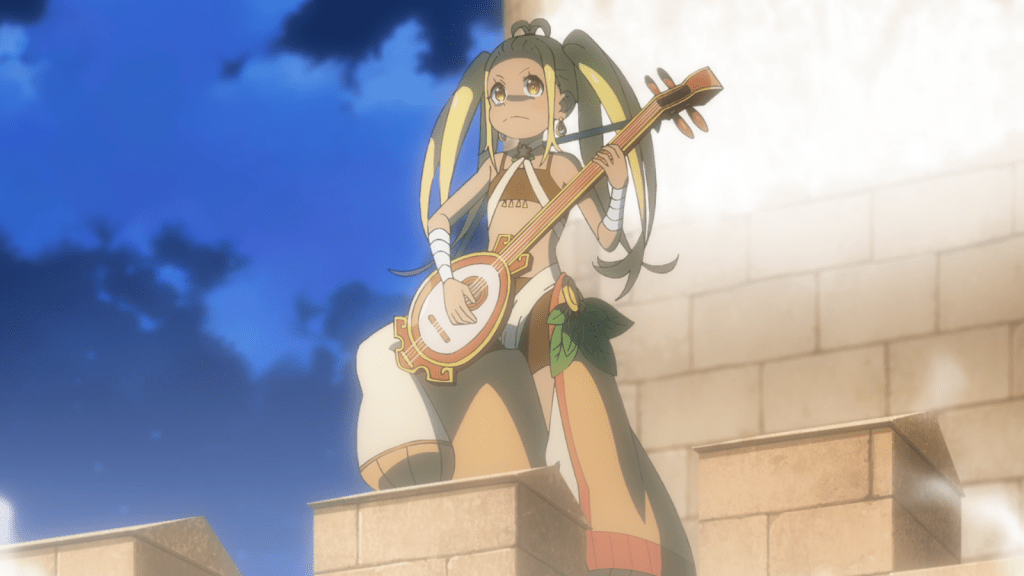
The music, songs, and voice-acting were all entertaining and high-quality. First let’s go over the songs. The opening song was “Reweave” by Konomi Suzuki, who is known for her strong, beautiful voice, stirring piano melodies, and awesome guitar solos. “Reweave” is upbeat, inspiring, and perfect for an opening song. “Nox Lux” by Myth and Roid was the main ending song. Like Konomi Suzuki, Myth and Roid has worked on Re: Zero before, and listening to their music feels like part of the essential Re: Zero experience. The mixing of (often mispronounced) English and Japanese lyrics is a bother to some people, but I enjoy the sound of Myth and Roid regardless.
There were also two insert ED songs. The first was “I Trust You” by Rie Takahashi. This was Emilia’s song in episode 57 (AKA season 3 ep 7). The second was “Ye of Priestella” by Aya Yamane. This was Liliana’s song at the end of episode 66 (AKA season 3 episode 16). All of the songs I’ve mentioned were enjoyable for me. So was the instrumental music. The OST was composed by Kenichiro Suehiro, the same person who has always composed for this series. Some of my favorite tracks include, “Howl of Counterattack,” “Liliana Masquerade,” “Knight’s Oath,” and of course, “Theatrical Malice.”
The voice-actors we know and love from previous seasons are all back. That includes the star, Yusuke Kobayashi, voice of Subaru Natsuki. He hasn’t lost any of his vocal power or ability to put genuine-sounding pain into his screams. Kobayashi is also known as the voice of Senku from Dr. Stone. Rie Takahashi, voice of Emilia, always impresses me with her work. I recently enjoyed hearing her play Yuzuriha in Hell’s Paradise. There were also new seiyuus, like Aya Yamane, who played Liliana Masquerade. It was my first time hearing her that I am aware of, and I enjoyed her performance immensely.
Now I’ll briefly run through four other VAs. Kengo Kawanishi played the twin Arch Bishops of Gluttony, Rye Batenkaitos and Roy Alphard. This VA is known for his roles in Kaiju No. 8, Dr. Stone, and Gundam-Tekketsu. Akira Ashida, voice of Regulus Corneas, has been voice-acting since the 90s and is a favorite of mine. He did a great job bringing the pathetic villain Regulus to life. Chika Anzai gave a stunning performance as Sirius. The last name I’ll mention today is Aoi Yuki, who is one of my top five favorite female seiyuus, and who played Capella. As usual, she did an amazing job. It’s hard to believe that Capella is voiced by the same woman who played Maomao in The Apothecary Diaries. What an impressive range of talent! As you can see, the audio category was awesome.
Characters Category
Score: 7/10
The character writing is the reason I keep coming back to Re: Zero. The writers may not have a good grasp on how to be an ally to women, but they have a surprisingly strong understanding of human nature and certain psychological struggles (most of which they would probably consider “men problems” despite their nearly universal nature). Subaru and Emilia are both well-written characters (Subaru more so), leading me to believe the writers also keenly know the perspective of immature people with low self-esteem. Watching these characters suffer and grow speaks to a lot of people, including myself. Anyway, that ramble aside, the character writing continued to be good overall in the third season, even though I disagreed about some of it (Theresia, cough).
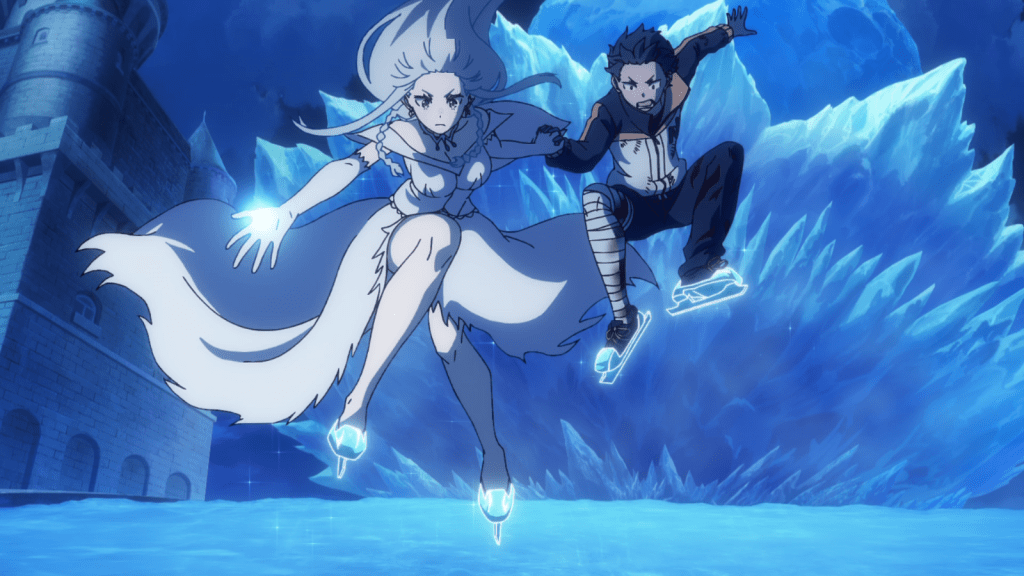
Compared to the psychologically explorative second season, there was less character development for Subaru and Emilia in this third season. That’s one reason why the score isn’t higher. However, I think this season made up for it by focusing on other characters. Liliana the songstress was introduced in this season. Despite finding her visual character design off-putting, I loved her personality and behavior throughout the season. She is a loveable, sometimes cool, and sometimes relatable character. In addition, the writing and development for Garfiel was stellar. Priscilla, Reinhard, Wilhelm, and others also saw significant growth in this season and/or had cool moments for their characters to shine.
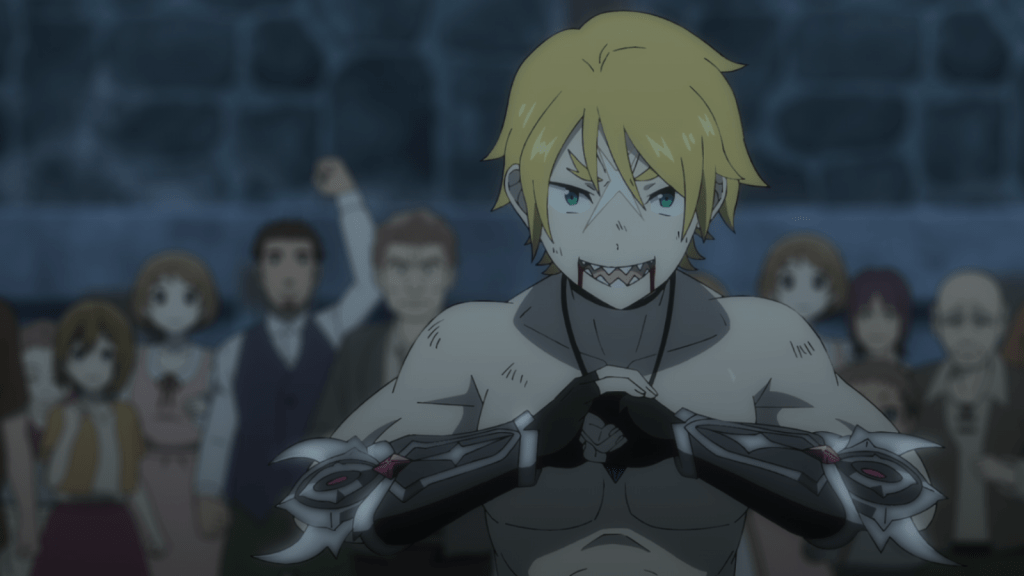
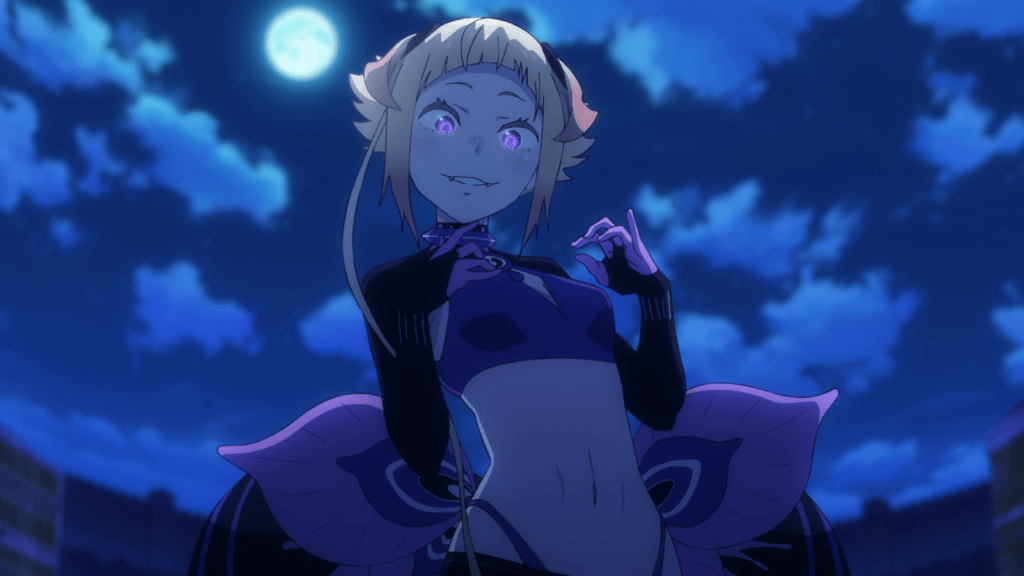
There wasn’t necessarily any great character development for the villains, but these antagonists were colorful enough to command attention without needing it in this season. I really love the crazy, over-the-top villains of Re: Zero. Sirius has a fascinating and sickening personality that I can’t help but be interested in psychologically. Even though I hate Capella, there’s no denying she is well-written as a flirtatious psychopath. The twins of Gluttony have interesting designs and magical abilities even if they didn’t seem like the most fascinating characters at surface level. Sadly, there wasn’t more than one quick shot of Satella in this entire season, but I was still delighted with the other villains.
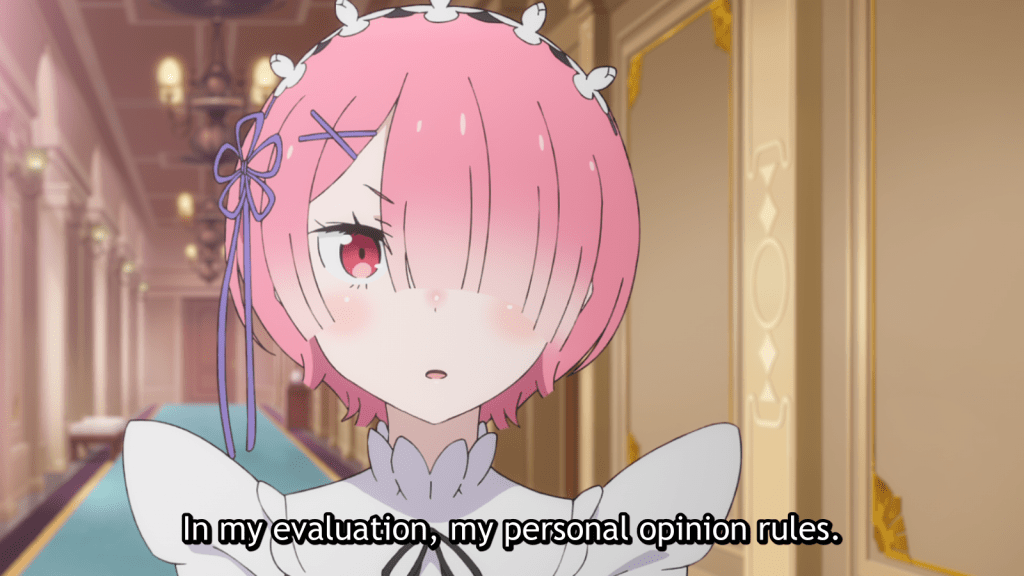
Any time there’s an anime with a large cast of characters, some will always be overlooked. There’s a risk that a season won’t satisfy the audience because it had to focus on other characters. This does happen with Re: Zero. For example, in season 3, I was disappointed that there was so little about Ram and Roswaal, who are my favorite characters. But I try not to let this issue ruin my enjoyment because I was also happy with the other characters, such as Liliana. The main thing that reduced my enjoyment in the character category was the story of Theresia. I’ll explain why I didn’t like it and how it lends to a misogynist narrative in the section below, Personal Enjoyment.
Personal Enjoyment
Score: 5/10
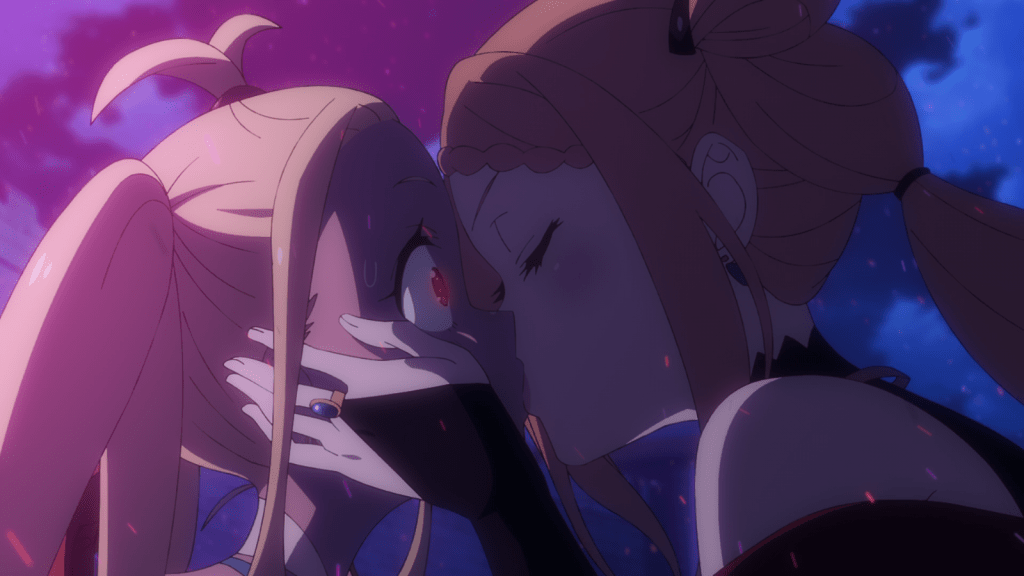
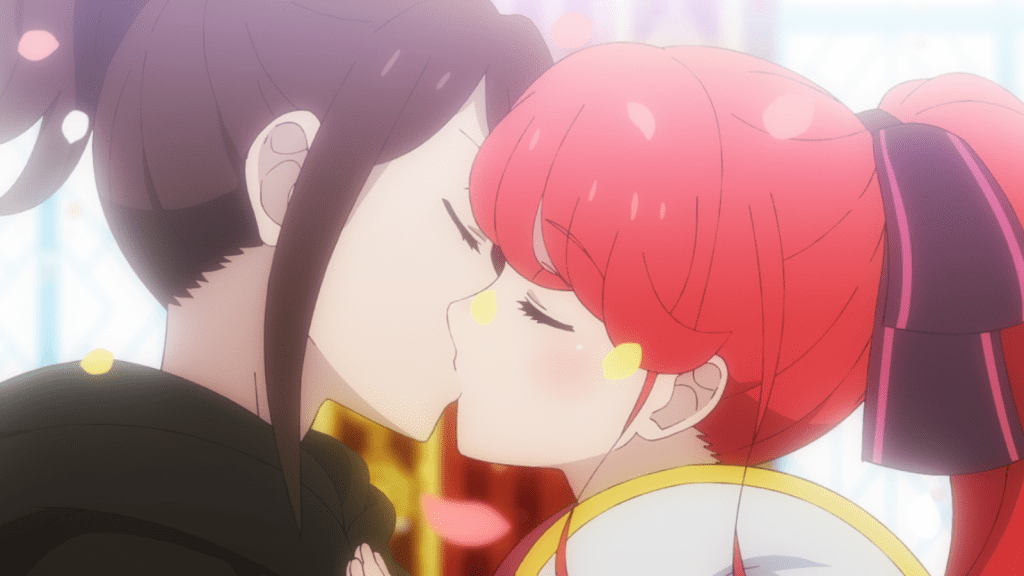
Before anyone points this finger, I will clearly state that I don’t hate Re: Zero. If I hated it, I wouldn’t spend this much time on it, writing reviews and beginning to watch the fourth season. I do hate misogyny and sexism, so of course I don’t like it when it shows up in stories in a way that isn’t frowned upon. But that doesn’t mean that I regret watching Re: Zero nor think it has nothing to offer. On a related note, there was a lot that I enjoyed in this season, such as the moment when Priscilla kissed Liliana. But because I also felt so annoyed and disappointed at different points, I picked a score that reflected this. One of my biggest annoyances was the story of Theresia. Let’s discuss that.
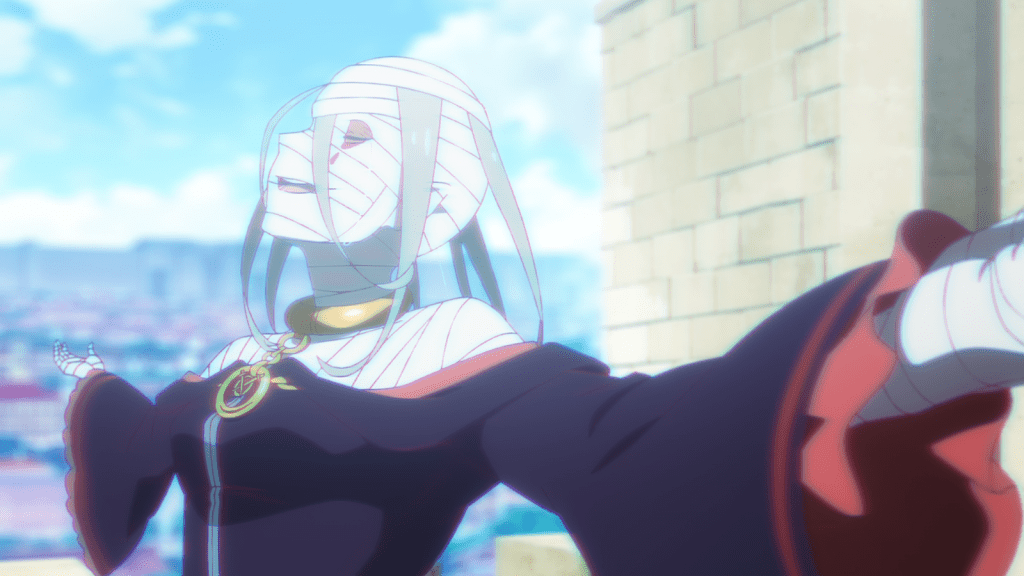
Technically, we learned the story of Theresia in season one, and it was my least favorite part of the season. I didn’t understand how we were supposed to like Wilhelm when he was so arrogant and sexist he couldn’t stomach a woman being superior to him in swordsmanship. Unable to swallow his pride, Wilhelm trained for years and was finally able to disarm Theresia, who was the Sword Saint and supposedly the strongest with the sword. This part of the story never made sense, either, since it implies that even Holy Magic can just be overcome by a cocky mortal man. Regardless, Theresia fell hopelessly in love with the man who “took away her sword.” This never made sense to me either, since it is obviously preferable to have a way to defend oneself and others in that world.
The third season provided further detail on Theresia’s story. We were supposed to appreciate Wilhelm because Theresia never once wanted to be the Sword Saint. She only ever saw it as a difficult and painful duty. The flashbacks in the third season showed the tragedy of Theresia and her role, particularly harping on the fact that it was so cruel and unusual for the Sword Saint power to pass to a girl rather than to her elder brother. This story brings into focus Re: Zero‘s general stance that it’s tragic for women to fight. I usually have a lot of mercy for gentle characters that some see as cowards, even coming to love Madoka from Madoka Magica and Shinji from Evangelion. But it seems like a stretch that someone in Theresia’s shoes never conquered her fear and misery, but kept loathing everything about her job – which was often to protect others. Surely, someone as caring as Theresia would take pride in such an important duty.
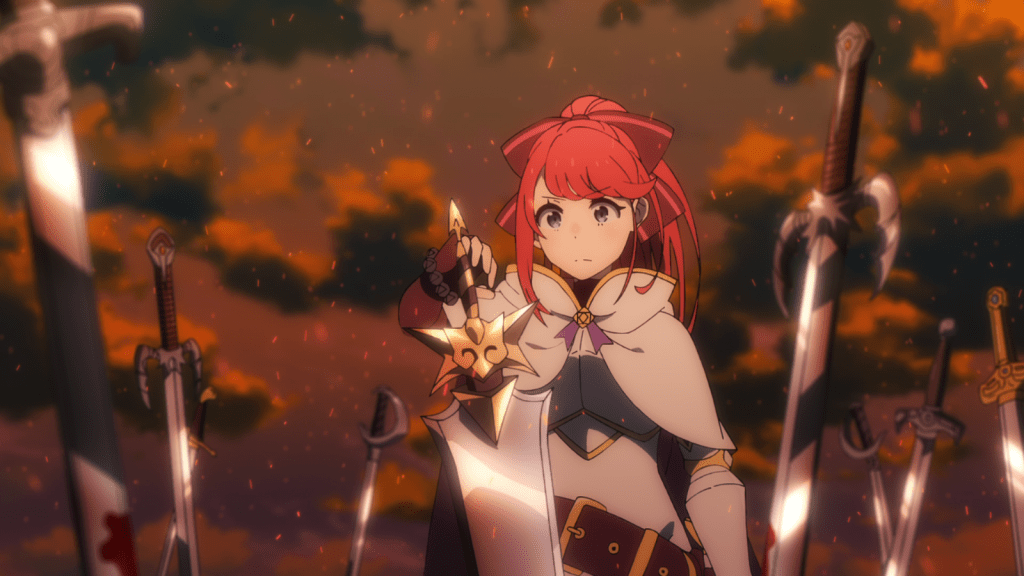
Assuming that Re: Zero‘s world is similar to ours in terms of societal roadblocks, we have a world where women are forbidden from fighting. Some, historically, have been executed for taking up arms. It’s possible that Lugnica allows female fighters, because we have Crusch Karsten. But as she is the exception, in all likelihood, the society frowns upon women who wield the sword. In such a world, as someone who was raised as a woman IRL, it would be empowering to receive fighting magic and a sword. But instead of celebrating and taking pride in her ability to protect others and influence the world for the better, Theresia was miserable. In other words, the story of Theresia is the story of a sad, helpless victim.
It’s not impossible to imagine someone disliking the act of hurting or killing. That’s fine. But writing a woman who doesn’t see this power as an opportunity is like writing a character who was a freed slave and who actually preferred being enslaved. I would feel bad for that character and think it was a shitty story. Similarly, the story of Theresia just reeks of a man who cannot fathom that a woman would ever willingly take up a sword. That would explain the whole thing. After the first season, I wanted to forget this terrible story and all its problems. But the third season brought it back with further impact and clarification. And that is why I feel lowkey disillusioned with the series right now. Subverting expectations as an anime is normally a good thing, but when it lends itself so cozily to such a shitty, sexist worldview, I absolutely refuse to appreciate it.
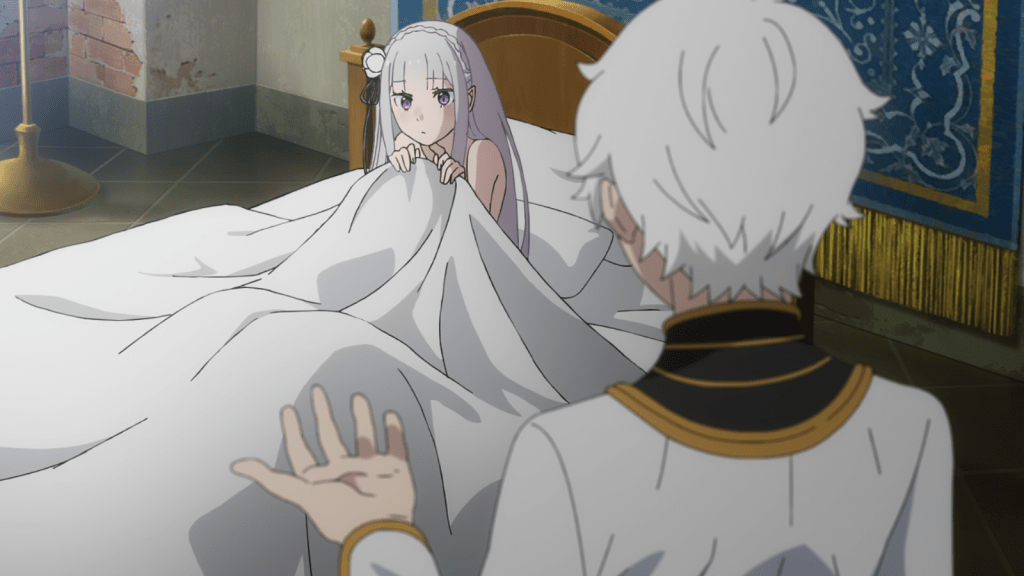
I’ve ranted enough about the Theresia situation. But I also have another less significant complaint. It pissed me off, but not to same degree. I was extremely annoyed about Emilia’s lack of basic life education, including sex education. She didn’t know the meaning of the word “‘virgin.” If anyone actually cared about Emilia’s wellbeing, they would put her through some schooling. I’m surprised she can even read if she’s this clueless. Though this scene was frustrating, it at least served to demonstrate what the data in reality shows – that not having good sex education makes it easier on sexual abusers. At the very least, it doesn’t do the victim any favors to not be able to name and call it out when things are inappropriate. On that grim note, I’m finally done ranting for this section.
Overall Score
Score: 7.2 / 10.0 “Good”
Re: Zero Season 3 was a mixed bag for me, but I would still grant it a score of “Good” or 7/10 overall. This is about how I rated the other seasons as well. (Actually, the first season might have even been in the upper 6s range). The score I arrived at is significantly lower than the scores it received on other sites, based on a quick search. My Anime List currently lists Re: Zero Season 3 with a score of 8.43 (as of April 2026). In addition, this season has a median rating of “Very Good” on Anime News Network. Clearly, most of the reception was positive.
I’m happy to see Re: Zero doing well, but I do wish that the more immature, ignorant, and loud fans would acknowledge its flaws and expect better. If we all refuse to accept cases of baked-in sexism or other issues, the Overton window will eventually shift towards better, more humanistic and inclusive anime. To restate, Re: Zero Season 3 was an audio-visual success and a worthwhile watch overall despite issues with the narrative. As someone who isn’t the typical isekai/fantasy enthusiast, I view Re: Zero as an exception – a guilty pleasure like junk food. I will definitely be coming back for more yummies.
~Thanks for Reading~
Written by 7Mononoke at Anime Rants
 Anime Rants