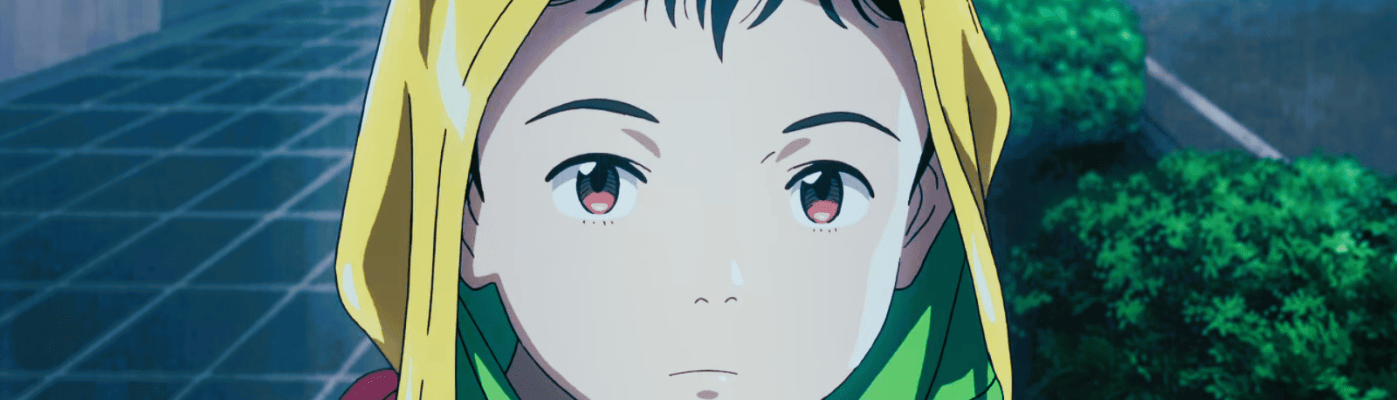
Welcome, readers and friends! I’m thrilled to start watching Pluto, the new retelling of Astro Boy created by Naoki Urusawa. Despite my respect for the concept of Astro Boy – the first popularized anime – I’ve never found it interesting. However, I’m extremely excited about what Urusawa can bring to the table to retell this story. Urusawa is the original creator of the manga/anime Monster, which is god-tier for those who appreciate heavier and more psychological content. Pluto is Urusawa’s work, so I’m probably going to love it.
As a Netflix production, Pluto is set up more like a miniseries than a standard anime. All eight episodes, which came out on October 26th, vary in run-time length from 50 to 70 minutes, roughly. As for how I’ll cover this anime, there will be four posts over the course of the next 2-3 months, each containing my thoughts and notes on 2 episodes. I’ll eventually write an overall series review, too. With all that out of the way, let’s begin!
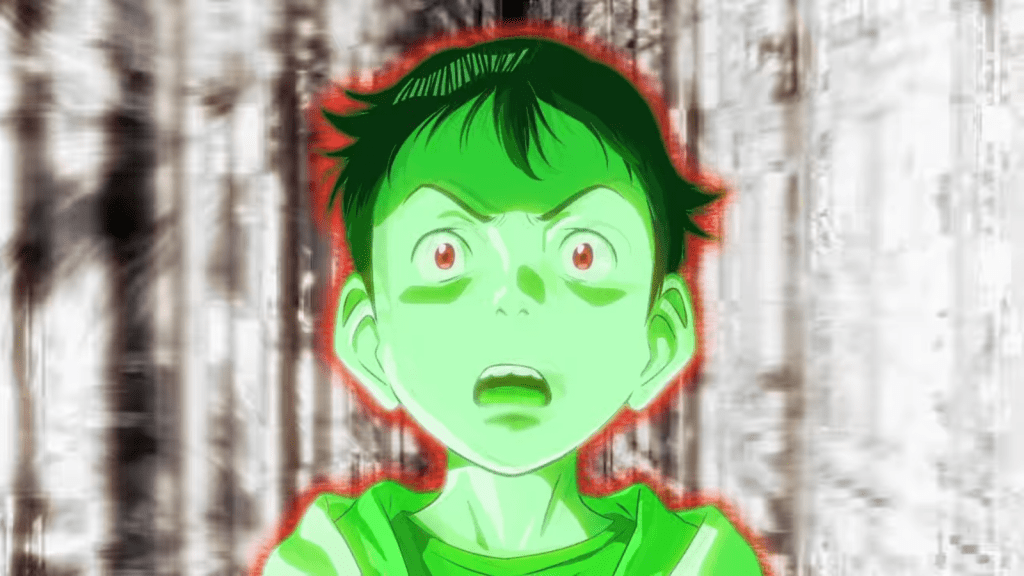
Episode 1
The first episode was very impressive overall. However, the structure was somewhat awkward. After spending about a half an hour on Gesicht and his detective work, the narrative switched over to Sir Duncan and North #2 for the remaining 40 minutes. Of course, I know the two stories are connected, because North #2 was murdered at the end. That makes him the next victim for Gesicht to investigate. Despite being aware of that, I felt like the structure and content balance of the episode was slightly off.
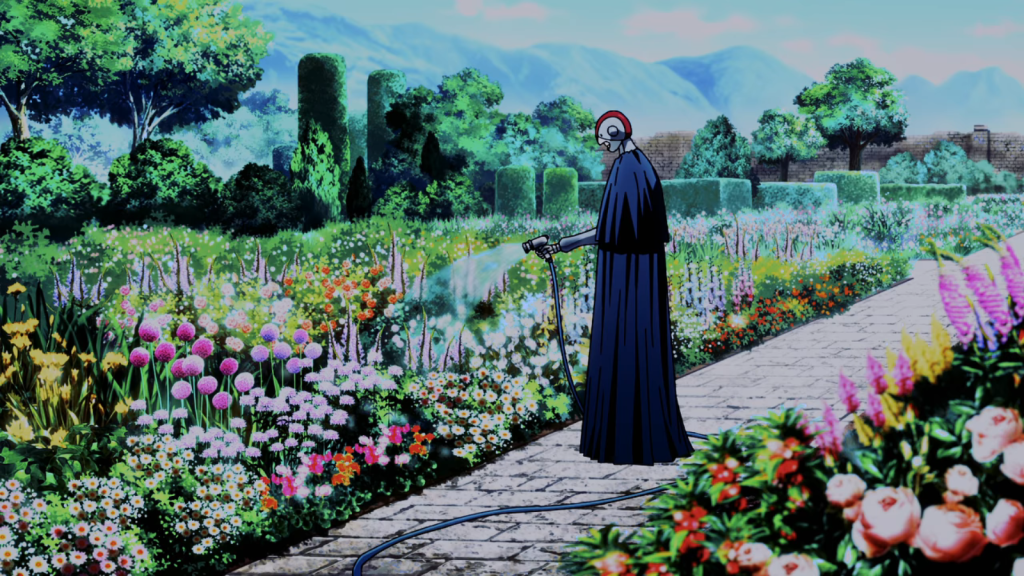
Now, let’s talk about visuals. The art style is obviously the handiwork of Urusawa, with many expressions and character designs similar to those in Monster. Although the core style hasn’t changed, the quality of the art seems better and the animation is more streamlined (in a good way). The robots designs are not exactly original, but they have a classic, old-fashioned sci-fi aesthetic. Special effects like explosions look good, and the CGI is minimal and blended well. In short, the visuals are excellent.
The music was great as well, but I’m not going to spend much time on it for now. Instead, I have some thoughts about Gesicht. I like the way that the show didn’t make it immediately clear that he is a robot. I wasn’t sure about it until I saw him jump off the highway and be perfectly unharmed in the next scene. Gesicht’s design isn’t super creative, but Urusawa prefers to make his characters as realistic as possible and stick to natural hair and eye colors. So, it’s not like I was expecting anything different.
As for his personality, Gesicht is serious, responsible, and thoughtful. He’s definitely an introvert and somewhat of a workaholic. We know he’s one of the seven most advanced robots in the world, but his past is still a mystery at this point. He seems to have the robot equivalent of PTSD, experiencing recurring nightmares as well as disturbing flashbacks of being sold. I look forward to learning more about this robot detective.
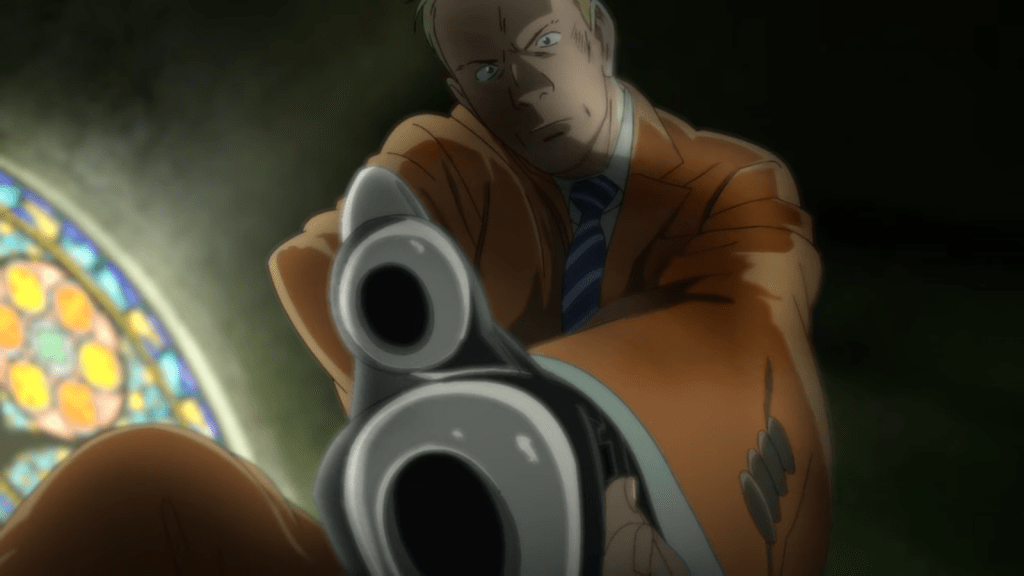
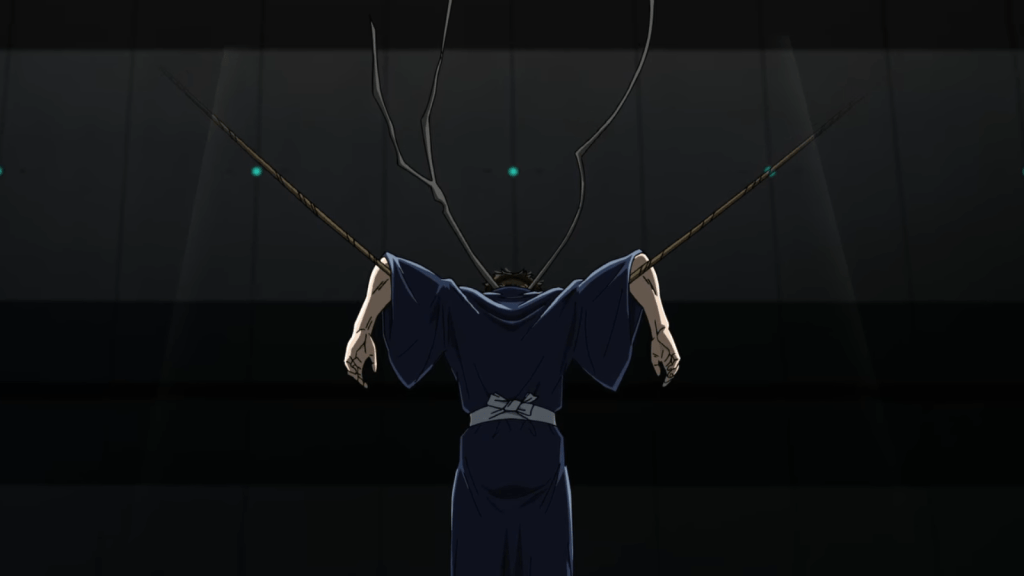
Possibly the most interesting part of the first episode was the scene showing Brau1589, a robot who killed a human eight years ago. It’s not just that robots aren’t allowed to kill humans – they are programmed in such a way that it’s impossible. Experts who visit Brau1589 are still stumped as to how and why he executed this seemingly impossible feat. They could find no defect in him. Terrified, the humans imprisoned him and stuck a spear into his body. If this spear is pulled out, Brau1589 is guaranteed to die.
Gesicht went to see Brau1589 to look for insight into what might be another case of robot-on-human murder. He asked what the meaning might be of the two horns at the crime scenes. Brau1589 explained that it might be symbolism for European gods of death and the underworld. Many iterations of this god have distinct horns – including the Roman version, Pluto. Ladies and gentlemen (and others), we have a title drop!

The brief scene with Brau1589 did more than just explain important history for this sci-fi world – it also gave us a look into criminal psychology. Brau1589’s air of self-satisfaction speaks to the fact that he feels no remorse. Moreover, his apparent delight at the concept of human terror is eerie at best – psychotic at worst. As the creator of characters like Johan Liebert, Urusawa seems to love exploring the minds of criminals in the context of fiction. As always, this exploration was deeply fascinating to me.
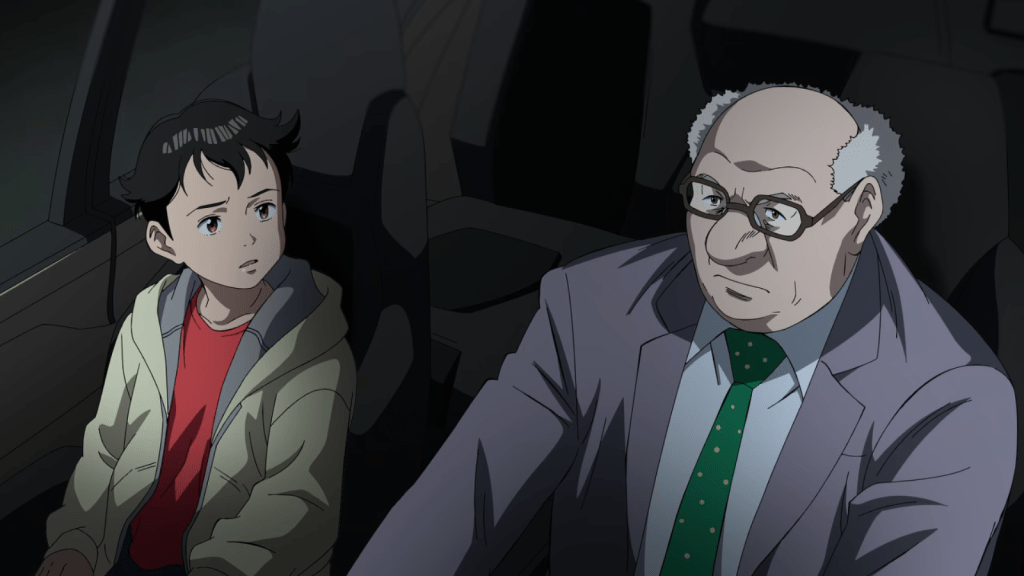
All that’s left to discuss is the story of Duncan and his robot butler, North #2. Urusawa writes villains with proficiency, but he is equally skilled with creating “normal people” who go through emotional and heartfelt tales of healing, hope, and introspection. In this story, the blind composer Duncan is a bitter boomer who despises machines. But over time, as North #2 and Duncan learn about each other, they grow close. By the end of the tale, the once-hateful old man is teaching North #2 how to play the piano.
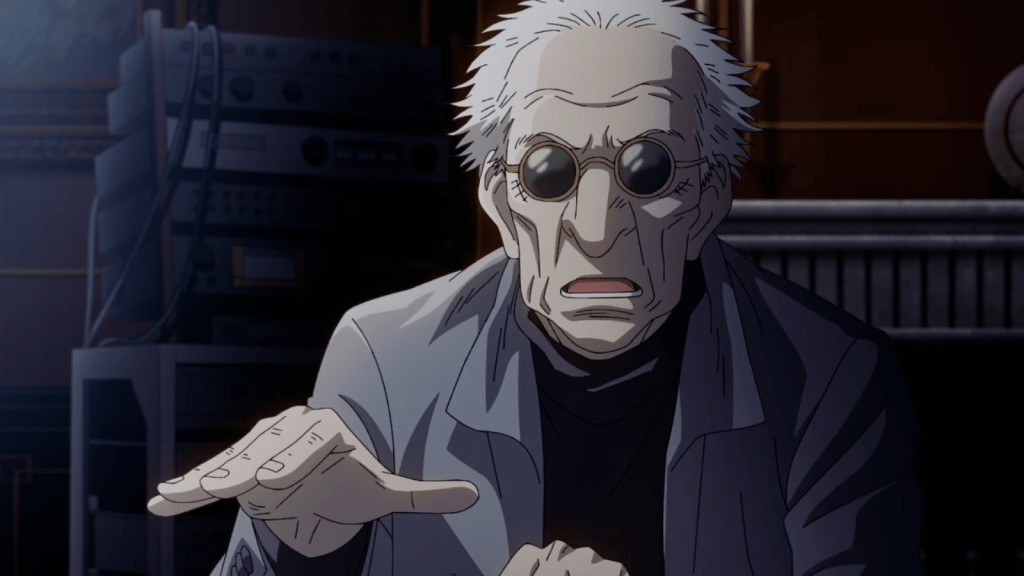
To be honest, I wasn’t terribly interested in learning about Duncan’s childhood or the truth about his mother. The story was told well, and the pain of the old man was real. The lonely piano music and singing were emotionally stirring. It’s not that I hated Duncan’s story – but personally, I was more interested in North #2. He seemed like a character I could really love. I wanted to know more about him and how he started using music as a way to heal from war trauma. That’s why it was extra tragic when North #2 died.
I could spend a long time coming up with theories and guesses about the murders. But frankly, I just want to keep watching and find out organically. For now, I’ll just restate the obvious facts. The murderer (assuming it’s one entity) is targeting the seven most powerful robots, in addition to the human figures who fought for robot rights. Whether the perpetrator is robot, human, or some kind of new hybrid, it is using imagery of death gods as its aesthetic. With that, we’ll move on to episode 2.

Episode 2
Despite its shorter runtime, episode 2 still contained a hell of a lot of important content. I didn’t like this installment as much as the first one, mostly because I had trouble feeling emotionally connected to Brando and Hercules. (I’ll get into that more later.) But besides a few reservations, I still enjoyed this episode. It was full of significant world-building and possible clues. For example, we learned about the war in Central Asia and how robots were at the center of the conflict.
This episode was also salient for its introductions and development of characters. There’s a good deal of variety among the main robots. To start with, we have Atom. The most interesting thing about him (in my opinion) is his infatuation with humans. Some robots, such as Hercules, dislike the idea of copying humans; but Atom makes a point to act as human as possible. He has a strong desire to experience subjective beauty and a wide array of emotions, including those feelings that society says are strictly human.
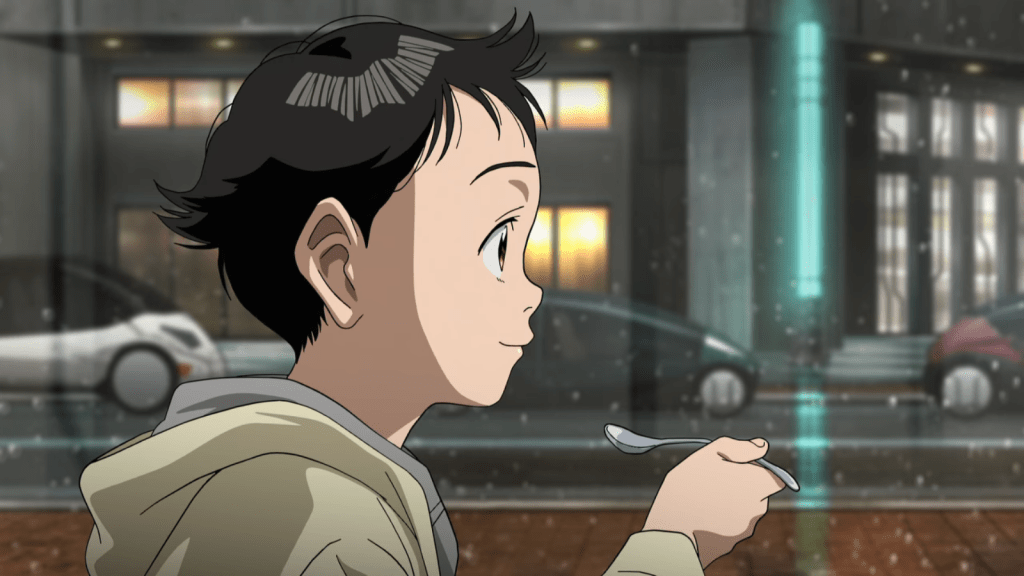
Atom is credited with having superior artificial intelligence compared to Gesicht. His powers of observation, deduction, and problem-solving are indeed excellent. But Atom’s true genius is not in traditional intellect; it’s in “human sensibilities” like curiosity and enthusiasm. He’s the heart of the group: sensitive, inquisitive, and free-spirited. In this episode, several adults state that Atom “only looks like a child” – in reality, he’s just a robot. That’s technically correct. Still, in many ways, Atom has the heart of a child.
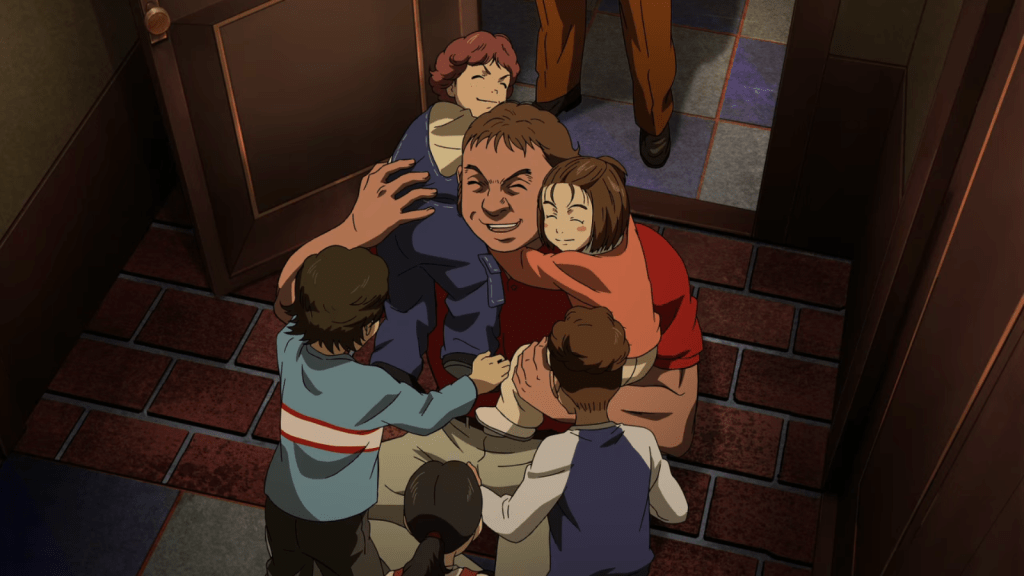
It’s easy for me to relate to a character like Atom: a gentle soul that delights in learning and freedom. Conversely, it’s difficult for me to find an emotional connection to a character like Brando. He’s the brash, masculine, and extraverted “meat-head” type that lives for the thrill of battle. With five adopted children and a wife he loves, Brando is also a great family man. It’s not that I don’t find him admirable. But since we have nothing in common, it was harder for me to care about him.
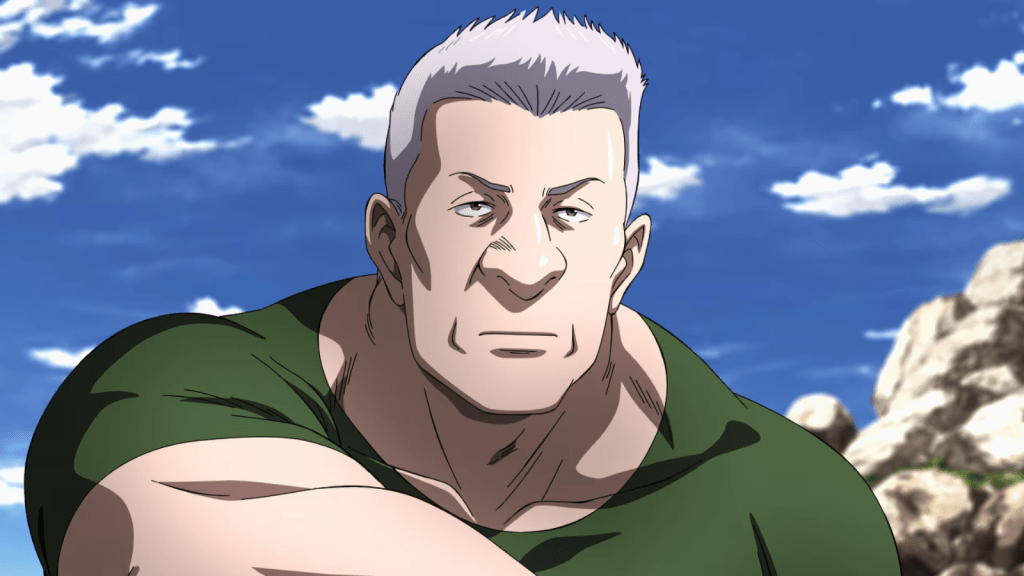
Hercules was much the same in this regard – at least at first. He’s equally battle-oriented with a rough, stoic attitude. But compared to Brando, Hercules is more mature, strategic, and contemplative. At first, I had trouble forming any interest or attachment with this character. However, when I reflected on some of his lines later, I was able to “connect.” Hercules’ experiences as a destroyer caused him to psychologically evolve; he developed the capacity for empathy. That struck me as a very beautiful thing.
While we’re on the topic of Hercules, he said something rather interesting during the flashback to the war. He had just returned from battle along with Montblanc and Brando. Though the war was finally ending, Montblanc was deeply depressed, questioning everything. Hercules essentially agreed. He wondered out loud, “Why did we come here? Who is it that we should have destroyed? Who is it that we’re supposed to hate?” He also adds, “What the hell is it – this thing called hatred?”
That was a poignant line because it showed that robots do not necessarily feel hatred the way we do – at the very least, they don’t normally hate humans or human concepts like governments. Robot programming makes them put up with being used and abused by humans, and yet they never harm or kill their creators. One reason for that is that they lack the capacity for true hatred by default. Of course, if Hercules is right that robot minds can evolve, then it’s at least theoretically possible to develop hatred later on.
This point Hercules made could be an important clue, especially when you put it together with the discussion between Atom and Dr. Ochanomizu. They were talking about Brau1589. Ochanomizu corroborated the story that Brau told in the previous episode: when humans studied his mind for signs of what went wrong, they found that his AI was “”perfect.” Atom then speculates, “A perfect AI killed a human? What does that mean? Could it be that it was human?”
It took me a minute to understand, but now I have an idea where this is all going. What if a “perfect AI” is by definition one which can kill a human? Perfection in this case equals perfect humanity. The murderer could be a robot who evolved a mind capable of anything a human is capable of – including hatred and murderous intent. This killer would have the body of a robot, but the mind of a human. And if other robots identify this criminal as a human, they will be unable to harm or kill him.
I’ve already written a lot about this episode, but there are still two other points left to discuss. The first point is simply an observation: the doctor/scientist from Japan has been mentioned twice now. His origins and purposes are mysterious. All we have is the name “Dr. Goji,” and even his existence is speculative. This enigmatic entity will most likely prove to be extremely important to the plot. He may even be the one behind the murders.
The final discussion point for today is the image Brando relayed in his last moments inside the tornado. I can’t identify the image other than describing it as white static with a thick, wobbly black line running through it. But the important part isn’t the appearance – it’s the fact that this was interference from another mind. It’s like psychological static. Some entity intruded on Brando’s mental circuits as he was dying. The goal was probably to prevent Brando from giving any clues to Atom and Gesicht.
Interestingly, Atom and the other two robots experienced dread when they beheld the psychological static. Gesicht and Hercules just sat there looking horrified, but Atom was able to put words on the experience. He said whatever they were looking at felt like “Shinigami,” meaning God of Death (though Netflix decided to translate it as Death Incarnate for some reason). Atom also sensed “overwhelming pain.”

I’m not sure what to make of this, but I’m intrigued to learn more. As expected, I’m enjoying this anime immensely. I hope you will join me again in a couple weeks for my thoughts on Pluto episodes 3 and 4. Take care until next time!
Thanks for reading~
 Anime Rants
I really want to watch this anime and I’m glad Pluto finally got the anime treatment. It’s great how they retained Urasawa’s art style.
LikeLiked by 1 person