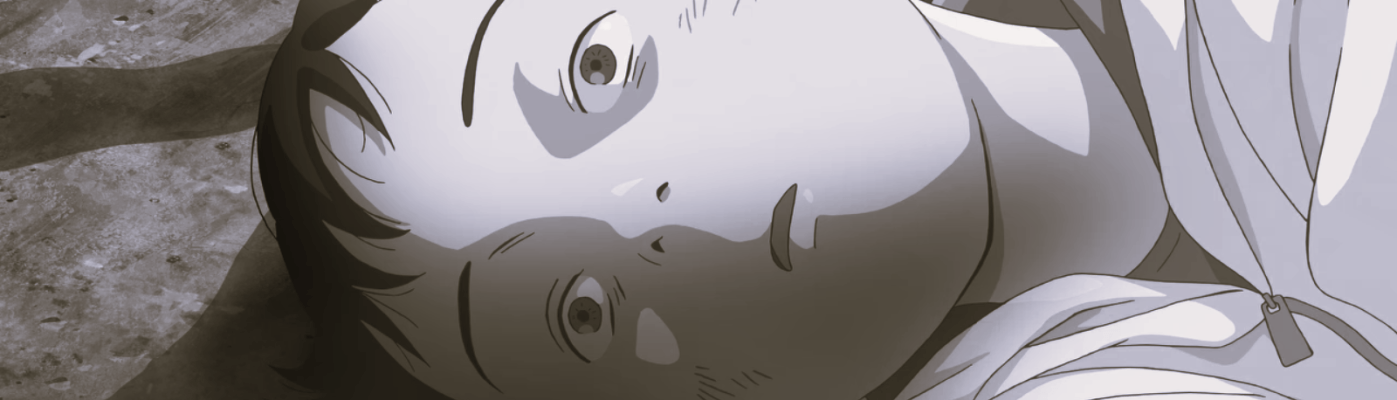
Do you think negative experiences are necessary for personal growth? Most people will say yes, at least to a certain degree. In the sci-fi universe of Pluto, negative experiences may also be the key to the evolution of robot minds. That’s just one of the many interesting topics explored in this anime.
Welcome back to Anime Rants. As I explained in my previous related post, Thoughts on Pluto episodes 1 and 2, I will be releasing episode reviews for Pluto every few weeks throughout Fall 2023. All eight episodes have been on Netflix since October 26th, but I wanted to take my time in processing as much as possible. With that in mind, here are my notes and thoughts on the next two episodes of Pluto.
Episode 3
Episode 3 was long and very eventful. There’s a lot of content to cover, beginning with the introduction of Persian scientist Abullah. When passing by this man for the first time, Atom was unable to tell if Abullah was human or robot. According to the sensor gate he walked through, the Persian wasn’t human. But according to Abullah, most of his original human body had been replaced with mechanical parts after he almost died in the war. I’m still not sure if he’s a modified human, a lying robot, or some new hybrid.
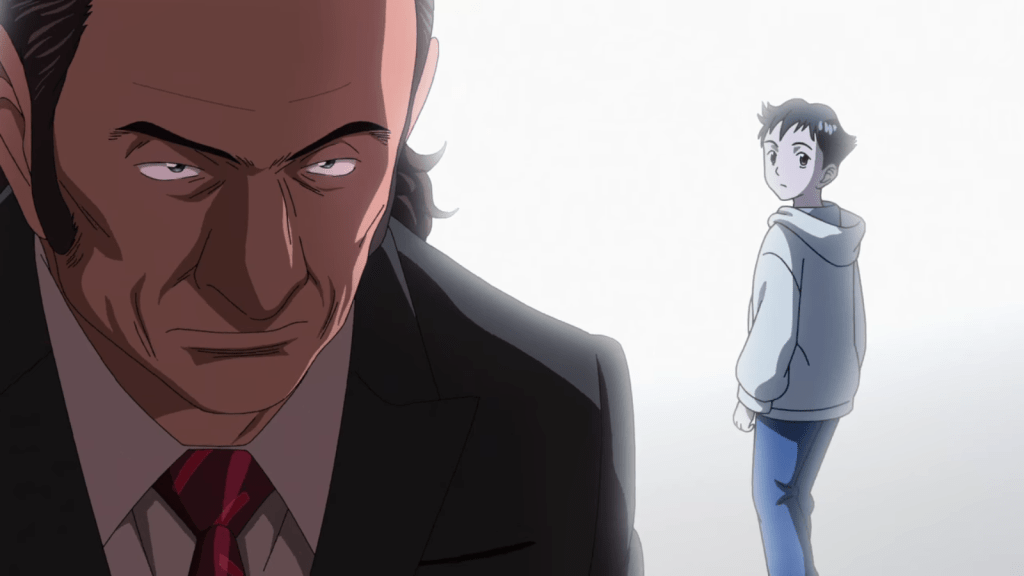
During the 39th Central Asia War, Abullah was the one behind “Bora,” something which I still don’t understand. My guess is that Bora was an experimental project for making robots of mass destruction, including Pluto. By the end of the episode, it’s clear that Abullah the one controlling Pluto and ordering him to kill the strongest robots and most influential humans. I’m still not exactly sure of his end goal, but Abullah seems to be the main villain of this anime.
Other important characters were also introduced in this third episode, including Uran. She is apparently Atom’s younger sister, though I’m not sure who created either of them or how similar they are in terms of specs. Everything about Uran, from her origin to her powers, is a mystery to me. She must have been a beloved character in Astro Boy. There’s nothing wrong with that, as long as the narrative gives explanations. I don’t want to be told to just accept everything about her because she was in the original story.
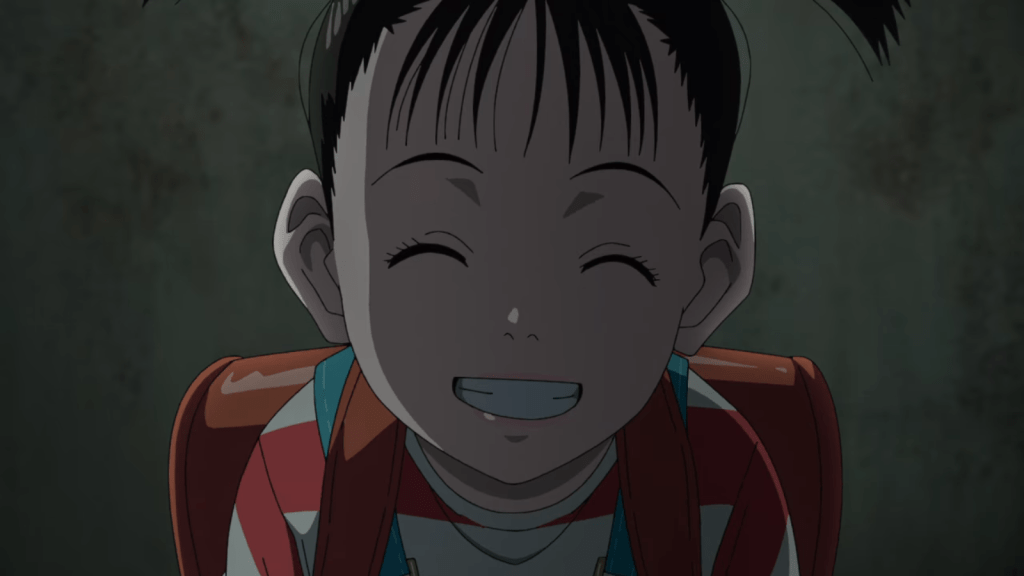
There are three main questions I have about Uran. 1) What is her origin and in what sense is she “related” to Atom? 2) What exactly is this power of that lets her sense emotions like fear, and how does it work? 3) Since she has special abilities, an extremely human-like face and body, and decent intelligence levels, why isn’t she considered one of the most advanced robots like Atom? (Perhaps it’s simply because she has no weaponized abilities?)
Whatever the answers may be, Uran is a cute and likeable new addition. She’s slightly bratty at times, and perhaps too naïve. But overall, I really like her. Like Atom, she is curious and caring, with a wide range of emotions. Uran is also fearless and assertive. She seems to like animals, feeling compelled to help them. It’s this caring nature and love of life that led Uran to find Pluto. She was able to give him a few days of relative peace and contentment before his life became hell again.
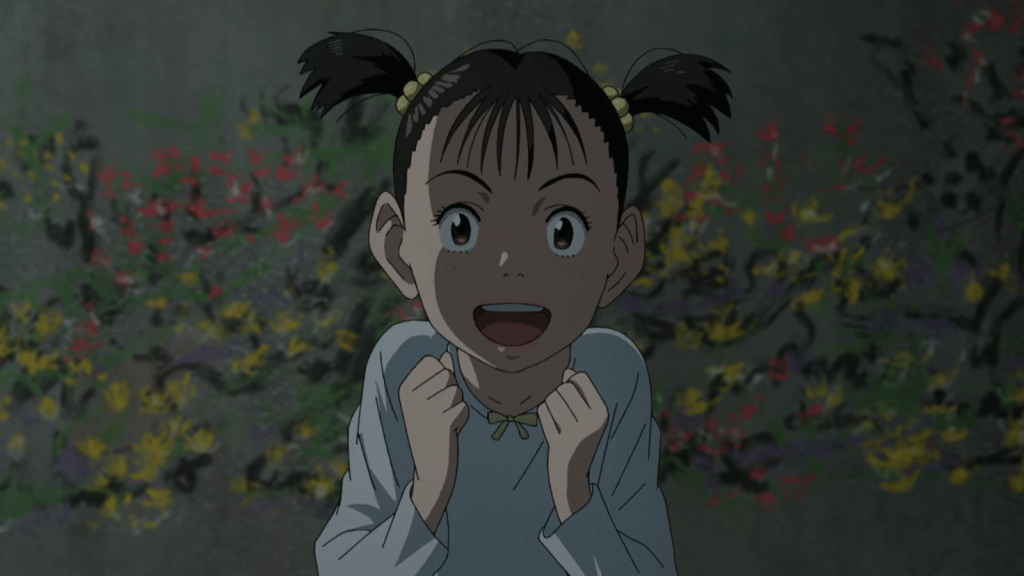
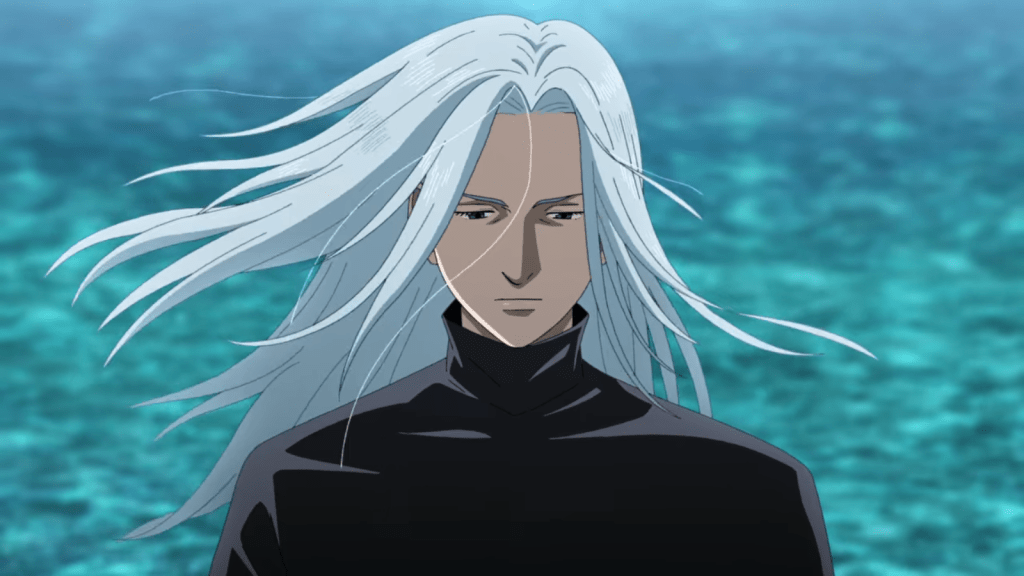
In addition to Abullah and Uran, this episode introduced us to Epsilon, the last member of the seven most advanced robots. This beautiful individual is androgynous, but since Netflix uses masculine pronouns for him, I will do likewise. (And before anyone says “these are robots,” let me remind you that they have had obvious gender identities since the first episode. Even old models like the constable bot and his wife had pronouns and genders.) Whatever his gender, Epsilon is gorgeous.
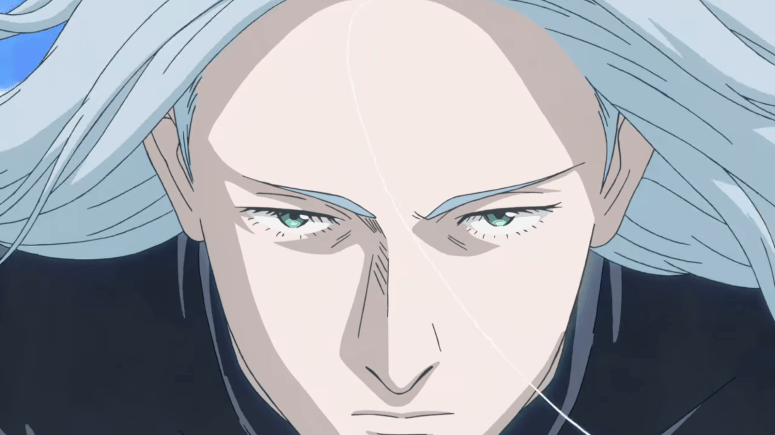
The most interesting aspect of Epsilon’s character so far is his pacifism. Unlike the other six advanced robots, he refused to fight in the 39th Central Asian War because it lacked “a just cause.” Human officials forced Epsilon to help in the post-war cleanup. But thanks to this experience, he found his calling in life. He started to help and even adopt children who were orphaned in the war. I love compassionate and wise characters – especially if they are also attractive. Epsilon quickly won a place in my heart.
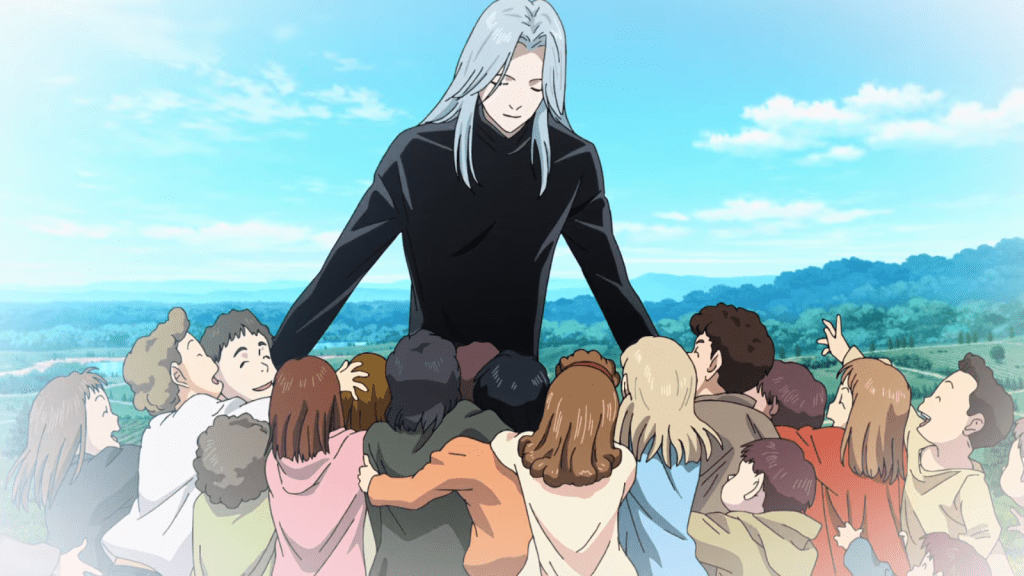
Now let’s move on the meat and potatoes: Pluto himself. The following information is what I’ve been able to gather from this episode so far. Pluto is some kind of entity capable of controlling robotic bodies using electromagnetism. His real body resembles a beast with horns. Pluto’s abilities are amazing, and seem to be mostly related to nature. He can create tornados, bring local rainfall, or change an empty grass field into a beautiful flower garden by stimulating plant growth.
Although Pluto seems to be a contemplative creature who enjoys making art, he is being manipulated or forced into committing the murders. I think Pluto was trying to escape, which is why he hijacked the robot body. Unfortunately, Abullah and his weird roach-spewing companion recaptured Pluto and forced him back into his monster body. To me, this entity seems more like an ancient, vaguely beast-like god than a robot. I’m eager to learn about Pluto’s true nature and origins.
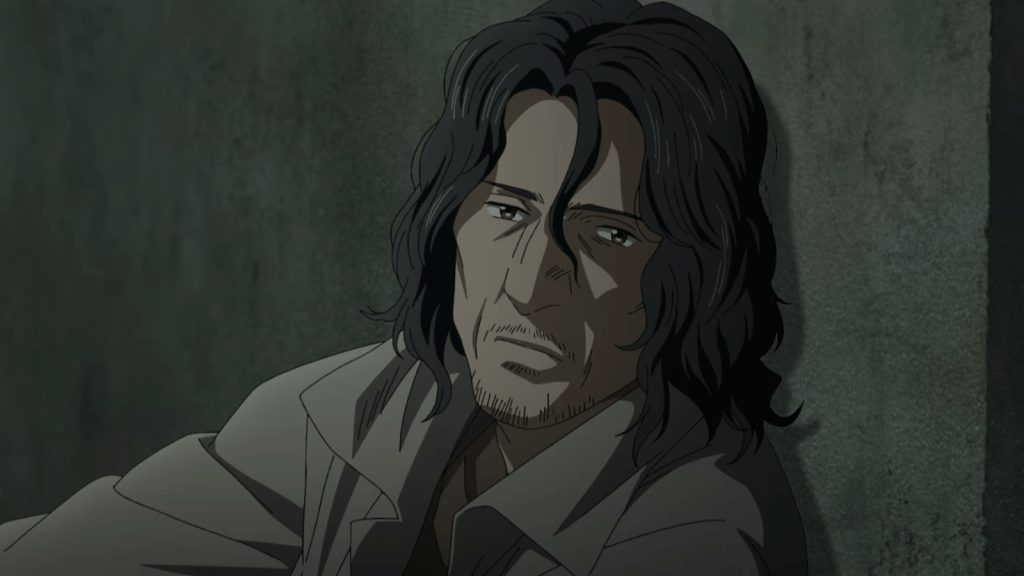
The new characters are great, but what about the ones we already know? Throughout episode 3, Gesicht starts to realize that someone tampered with his memory chip. He and his wife apparently went to Japan two years ago, but their memories of it were wiped and replaced with false memories of a vacation in Spain. It was likely the police chief who ordered this to happen, but as for what he was trying to cover up, that remains unknown. Whatever happened in Japan must have been traumatizing.
Gesicht’s dilemma here is fascinating to me because it brought up a lot of information about robot memories work in this anime. Unlike humans, robots have perfect visual memory. That’s why they can recreate any image they’ve seen, assuming their humanoid body is dexterous enough for drawing or painting. Even more interesting is the fact that robots cannot forget things in the true sense of the word. Unless it’s deleted from their memory chip, they will always have access to their memories.
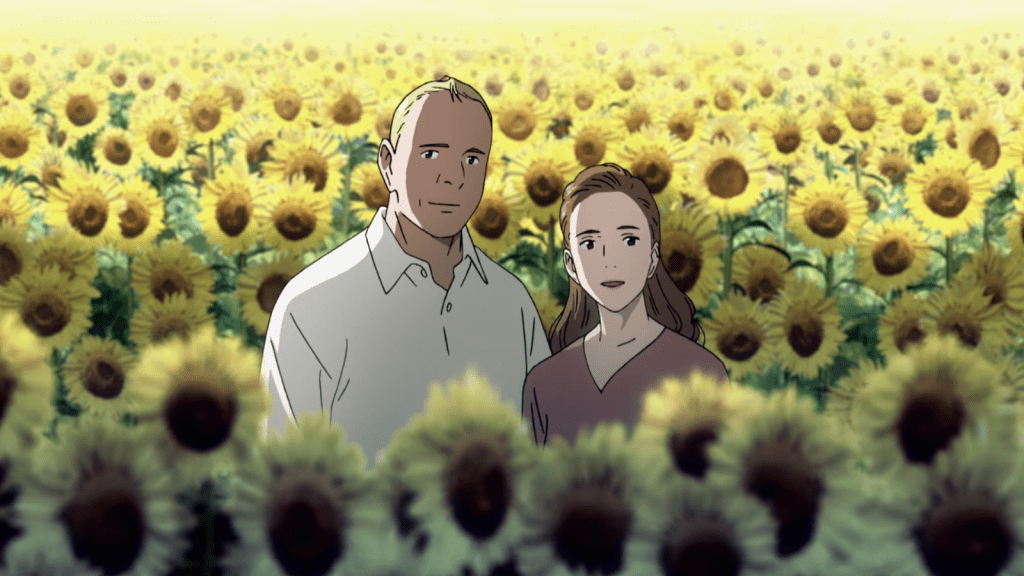
In away, this makes characters like Gesicht more psychologically vulnerable than any human character. Humans can refuse to think about something and essentially forget it with time. The pain of a traumatic experience will decrease as the freshness of the memory fades away. But robots don’t have that luxury. Veterans like Montblanc or North #2 would relive the carnage of war in their heads with the same freshness and accuracy each time. That’s a horrifying concept, and profoundly sad.
Now, there’s one last element to discuss in this episode: political extremism. Adolf Haas, a member of anti-robot group, acquires an illegal weapon with the intent of murdering Gesicht, who he believes killed his brother. The organization that he’s part of is trying to repeal robot rights. In the meantime, these extremists encourage and incite violence against robots. It’s unclear how much government influence this organization has, but they do seem at least as powerful as a large mafia group.
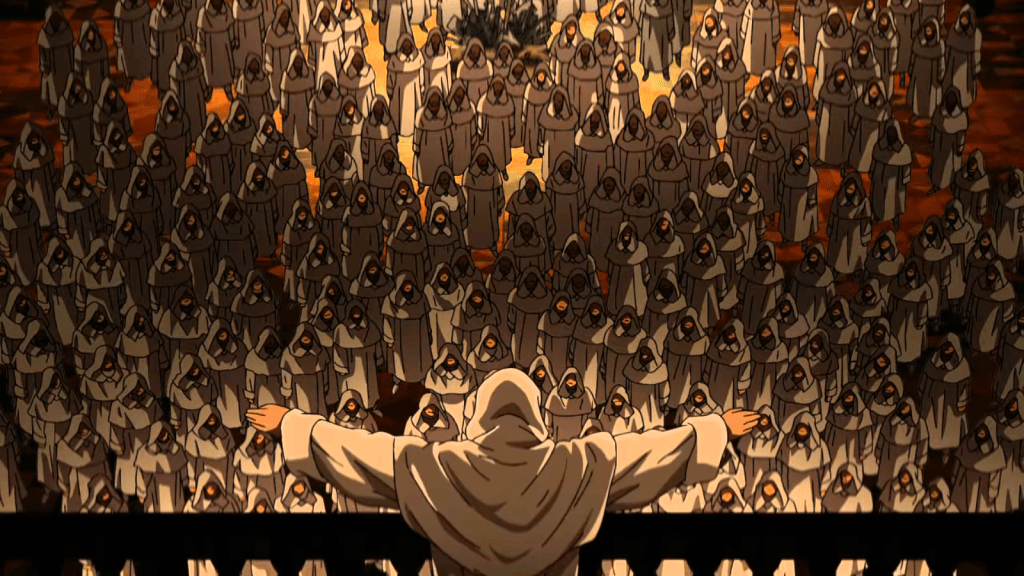
At first, I thought the anti-robot organization was a religious cult, but they do not cite a belief in any gods. Plus, in episode 4, the group is described as an “organization,” rather than a “cult.” I had interesting points to make about religious extremism, but some of the same points apply to political extremism. The main idea is that if don’t want to see a similar future in our reality, we need to stop “political cults” that propogate unfounded bigotry, hatred, and willfull ignorance. That’s all for episode 3.
Episode 4
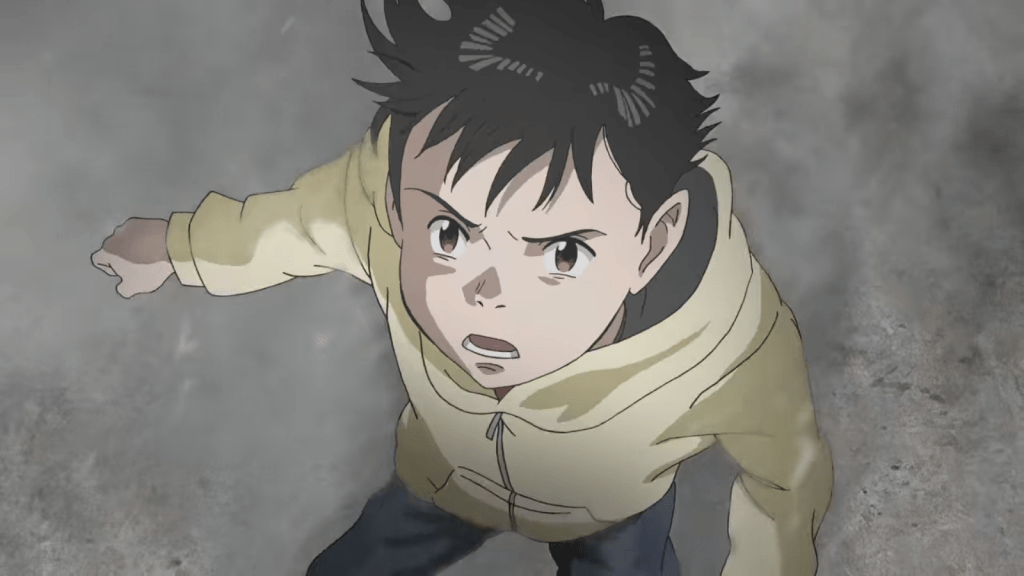
Episode 4 felt extremely long – in a good way – since so much happened. I’m not sure if I fully understand everything yet, but I’m doing my best to patch things together. Let’s go ahead and talk about the biggest plot twist in this episode (and possibly in this whole series): the death of Atom. Although there may be some way to bring him back, he’s definitely dead. It’s quite a bold move to kill off the character whose story you’re supposed to be retelling, Urusawa. I wasn’t expecting this.
I was slightly confused about the person who came to threaten Dr. Ochanomizu. He works with Abullah, and he is able to relocate himself to other bodies by having techno-roaches carry his mechanical brain away. Regardless of what body he may be in, this person claimed to be “Dr Goji.” If true, this means he was the one behind the creation of Persia’s robot army. For some reason, I thought he was lying about his identity, so I was confused. But looking at the episode as a whole, I now think he was telling the truth.
In any case, the schemes of Abullah and his partner led to the death of Atom. At the time of Atom’s demise, Gesicht had a convoluted and horrifying nightmare. I want to try unpacking this dream. First, we see Pluto’s flaming eyes, followed by what appears to be a low-quality transmission from Atom. He says, “Gesicht, you and Pluto are the same. Was it you who killed me?” The next thing in the dream is a repeat of the familiar flashback of the old man talking about selling a robot’s body for “500 Zeus.”
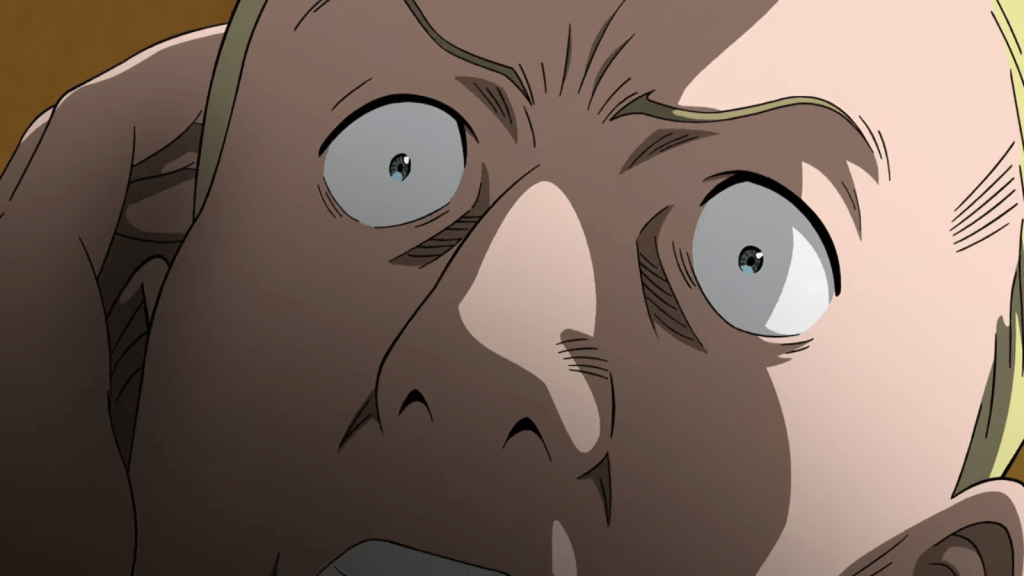
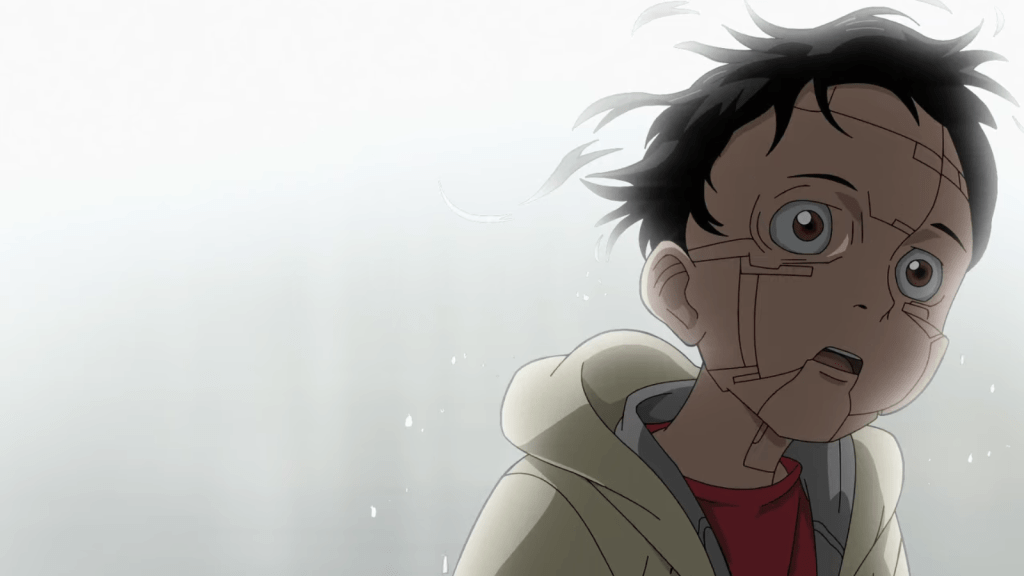
This is where the nightmare becomes especially strange. The imagery clears up so everything is vivid. There was a devastating crash on the highway between two vehicles. Then we see a man – who we now know as Dr. Tenma – crying over his dead son, Tobio. In the following scene, “Tobio” is apparently alive again – and he looks identical to Atom. Tenma, along with Gesicht’s wife, are overjoyed to see the boy walking. But then Atom/Tobio falls apart. His human-like exterior shatters, and tears form in the robotic eyes of the broken mechanical leftovers.
After this disturbing image, Gesicht sees a flashback to his time in the war, when a civilian man was crying and yelling after his baby was killed in a bombing. “There were no terrorists here,” he cries, “only children!” As Gesicht screams in horror and rage, we see him punching and breaking the wall with Pluto’s painting on it. A second later, he wakes up gasping in Dr. Hoffman’s lab. That was the nightmare, as far as I could tell. I think most of the meaning behind it can be explained at this point in the story.
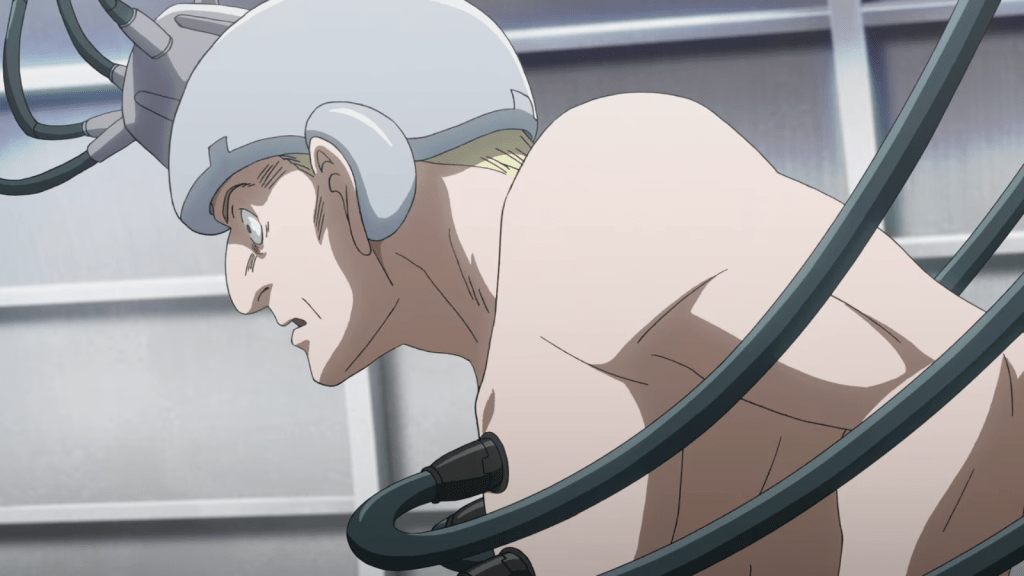
This nightmare wasn’t just a response to the sudden death of Atom. There’s clearly guilt at play from involvement in an unjust war. And there was guilt from something else, too – perhaps an erased memory. My theory is that Gesicht and his wife went to Japan two years ago and accidentally caused the highway crash. This means Gesicht killed a child. The incident proved that robots can kill humans, whether by accident or on purpose. That’s why the whole thing was covered up and Gesicht’s memory was modified.
According to my interpretation, Atom was correct when he said Pluto and Gesicht were the same. Both are robots who have killed humans. Both are capable of losing emotional control. I don’t think that’s a coincidence. Later in this episode, we learned of the existence of the “Tenma chip,” which was probably used by Abullah and Goji to create killer robots. Pluto and Gesicht might have those chips in their heads. That’s just another hypothesis at this point.
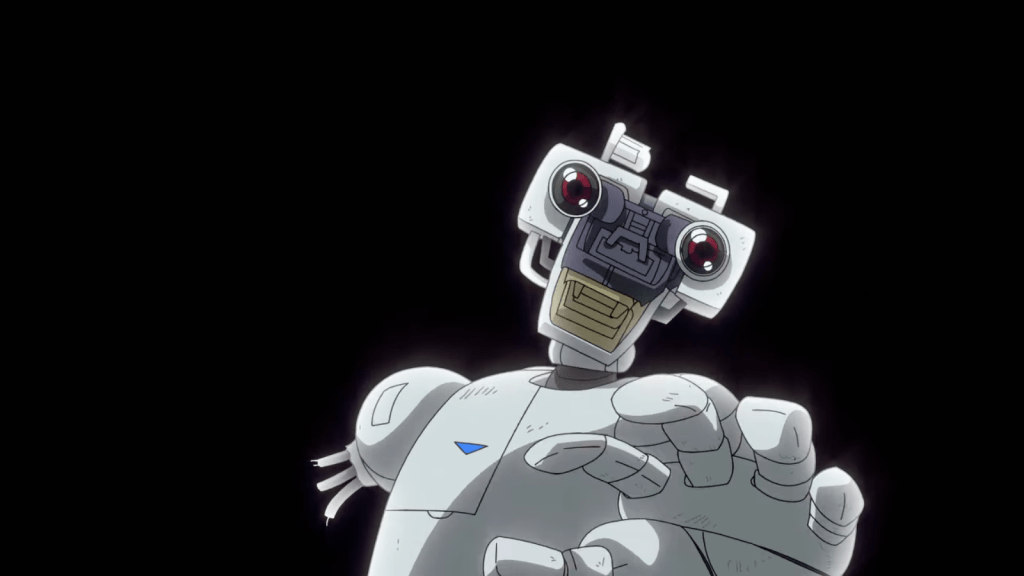
Let’s go ahead and review our information about Dr. Tenma. He is a true genius, much more so than Dr. Goji. He developed the current best version of a robot brain. On top of that, Tenma was the one who created Atom. Despite these successes, Tenma called Atom a failure and disappeared into the underworld of society. He believed that a perfect robot mind would be capable of error and hatred. Moreover, to reach said state of perfection, a robot would need to be exposed to a lot of negative experiences.
Some time later, Dr. Hoffman and Dr. Newton-Howard managed to reach Dr. Tenma through the internet. He agreed to meet with them to review their new research. Hoffman hoped that Tenma would disclose his own discoveries, but the genius did not oblige. Instead, he read the research, immediately understood it, and left. The only thing he offered to his colleagues was a warning: “Stop making robots more like humans, or something terrible will happen.” Afterward, Dr. Tenma vanished again.
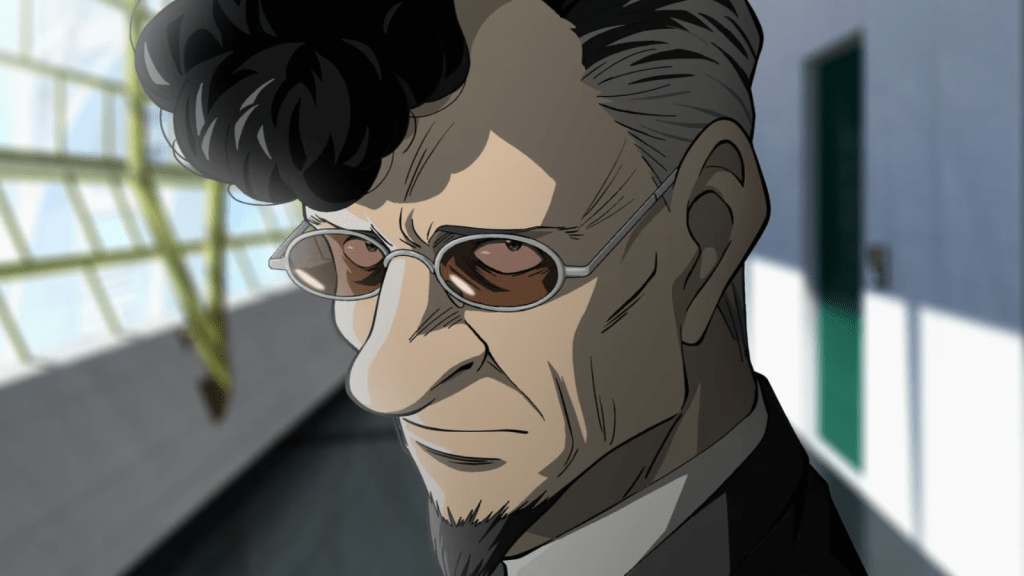
The genius scientist also developed the “Tenma chip” at some point. That’s all we know about Tenma so far. But while we’re on this topic, I’ll add that I was thrilled to hear this name drop. For those who haven’t watched Monster (Urusawa’s best work), the protagonist is named Dr. Kenzo Tenma. It looks like Urusawa included a reference to his other work just to make nerds like me happy. And it worked!
There are a few other things we learned in this episode. For instance, it’s now clear that Abullah’s motive is revenge for the unjustified attacks on Persia. Abullah probably got the information on who to kill from Darius XIV, who spoke the names of the targets to the cameras in solitary confinement. Adolf Haas revealed the footage of Darius in prison to Gesicht. It’s rather interesting that Haas become a prominent character in this episode. I figured he wouldn’t be very important, but that was obviously incorrect.

My final note for this episode is to point out the emotional fragility of Gesicht and Epsilon at the current point in the story. Epsilon’s creator and father-figure, Dr. Newton-Howard, was murdered by Pluto. As a result, the “pacifist robot” is deeply upset and possibly unstable. It was hard to see this beautiful character so grieved. On the bright side, though, he managed to save Dr. Hoffman and reunite with Hercules for safety.
As for Gesicht, he recovered from the nightmare and his collapse at the airport way too quickly. In truth, he hasn’t recovered at all. He’s operating under great stress, fear, and grief. That’s why he grabbed Haas so angrily toward the end of the episode. I think that was the first time Gesicht had a violent urge toward a human, but he snapped out of it quickly. This could be leading up to a situation where he will be faced with a strong desire to kill a human. I hope he can resist. That wraps up my thoughts for episode 4.
Thanks for reading~
 Anime Rants
I actually wondered if Kenzou Tenma from Monster was named after the Astro Boy character, and I’m glad I’m not the only one who noticed. Maybe the character from Monster is also inspired by Black Jack (the Tezuka character) since they’re both surgeons! I seriously have to watch this anime whenever I can.
LikeLiked by 1 person
Is “Adolf Haas” a reference to a historical character whose initials are also AH and led an organization that advocated the elimination of the rights of a minority?
LikeLike