Can a violent war ever be truly justified? Well, the answer will vary according to who you ask. Pacifism, in a nutshell, is taking a stand and speaking out against violence and war. There are several slightly different definitions of pacifism, from looser philosophical ideas to strict descriptions from Oxford dictionaries. By and large, however, pacifists agree on the fact that war is never justified.
Welcome back to Anime Rants. In these episodes of Pluto, the pacifist robot Epsilon becomes a more important, fleshed-out character. That’s why I wanted to introduce the topic of pacifism for discussion. Though I’m not sure if I agree with the philosophy, I still love Epsilon and his sweet personality. So, how will a pacifistic character deal with a murderous robot monster? Let’s find out in the next episode of Pluto.
Episode 7
Much of episode 7 was focused on the children at Epsilon’s foster home in Australia. Well, the main focus was actually just one of the kids: a boy named Wassily. He was traumatized by being in a warzone in a Persia, and for a while, the only word he would say was “Bora.” But in this episode, Wassily starts regaining the use of his vocabulary. Despite having trouble with communication, the boy makes one thing clear – whatever he saw three years ago was a truly horrifying calamity.
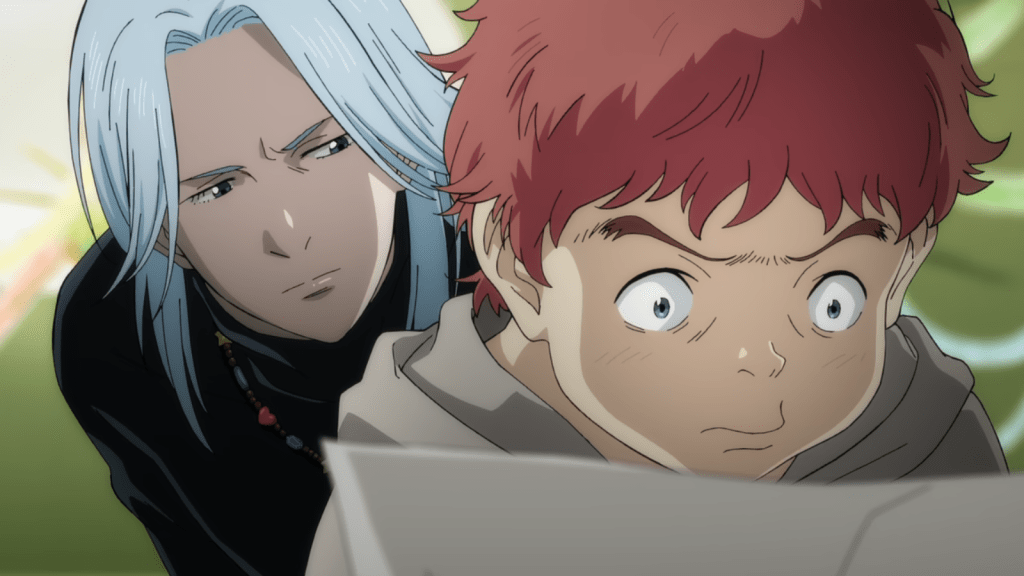
Following the death of Gesicht, Epsilon became the next target of Abullah’s murder conspiracy. He was clearly worried and upset, but the children kept him afloat in a psychological sense. The female caretaker at the foster home said that Epsilon was like the sun to these children, all of whom were rescued from warzones. But the reverse is also true – the kids are the light and warmth in Epsilon’s life. That aspect of the episode was very wholesome and touching.
Epsilon is loving and nurturing to a fault, which is part of why I like him so much. It’s not just that he’s a pacifist on principle; he is also able to empathize with almost anyone he meets in person. That’s why Epsilon couldn’t bring himself to kill Pluto. He felt too much empathy and concern for Sahad, who was trapped inside, being manipulated. During the second fight, the peaceful robot came closer to killing his opponent; but once again, he stopped at the mental image of Sahad crying in a field of flowers.
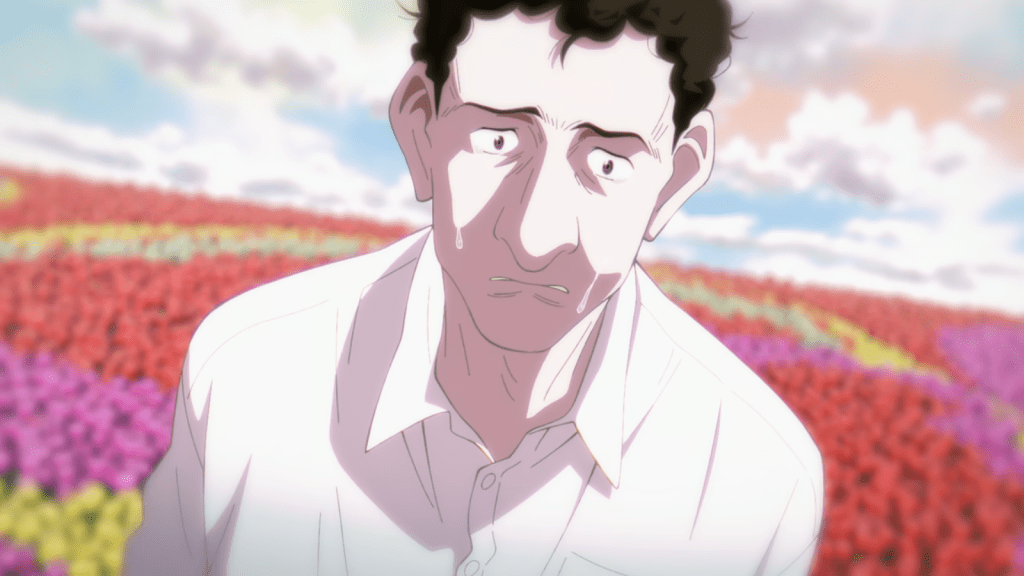
Speaking of Sahad, he defied Abullah a little in this episode. He saved Wassily from physical harm. Then, once the battle started, Pluto begged Epsilon to kill him. That implies that he’s aware of his crimes, and yet he can’t disobey his father. Uran’s insight in this matter was salient. She said Pluto was like Pinocchio: a puppet who couldn’t find his heart. She also observed that Geppetto was a puppet, too. I think she meant that the father – in this case Abullah – was a slave to revenge and hatred.
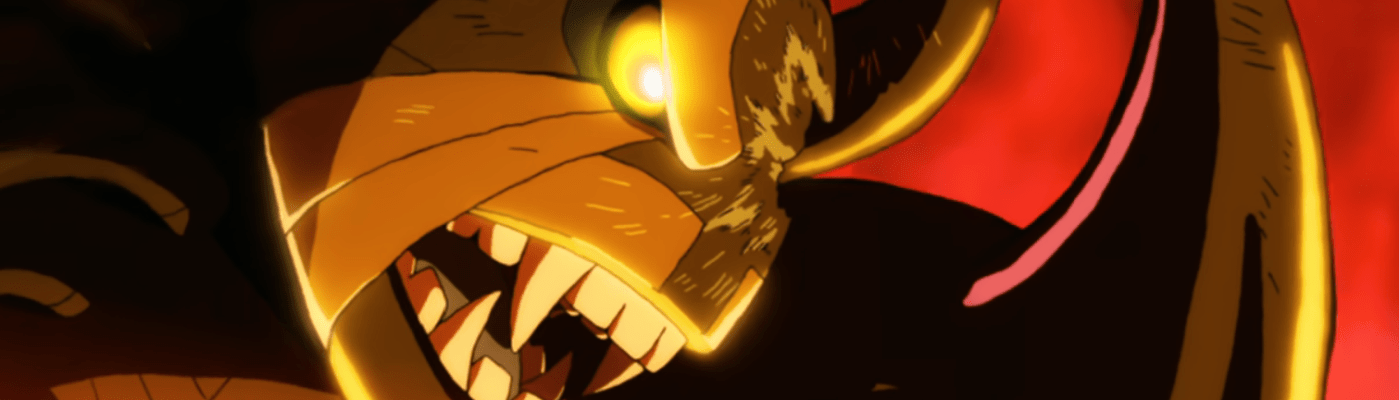
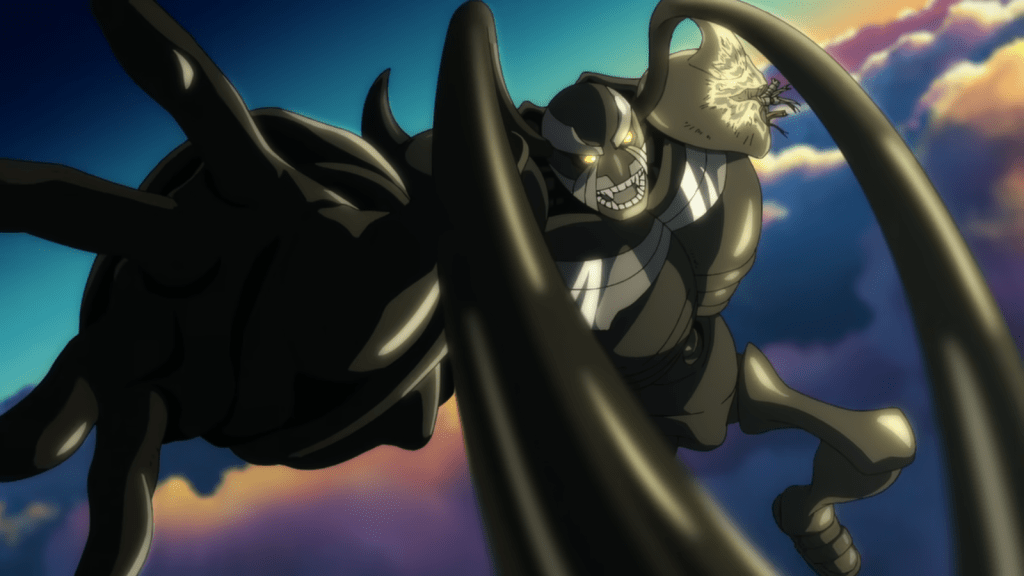
Both Epsilon and Sahad interest me greatly with their gentle personalities, so it was ironic that they ended up in a violent battle in the skies. It was fitting that Epsilon used the last of his energy to save Wassily rather than trying to finish off his adversary. When Pluto bit off Epsilon’s head, it was surprisingly poignant. I loved this character, so of course I’m sad he won’t be there for the final episode. However, it was obvious from the pattern of this series that he would die, so I’m not surprised.
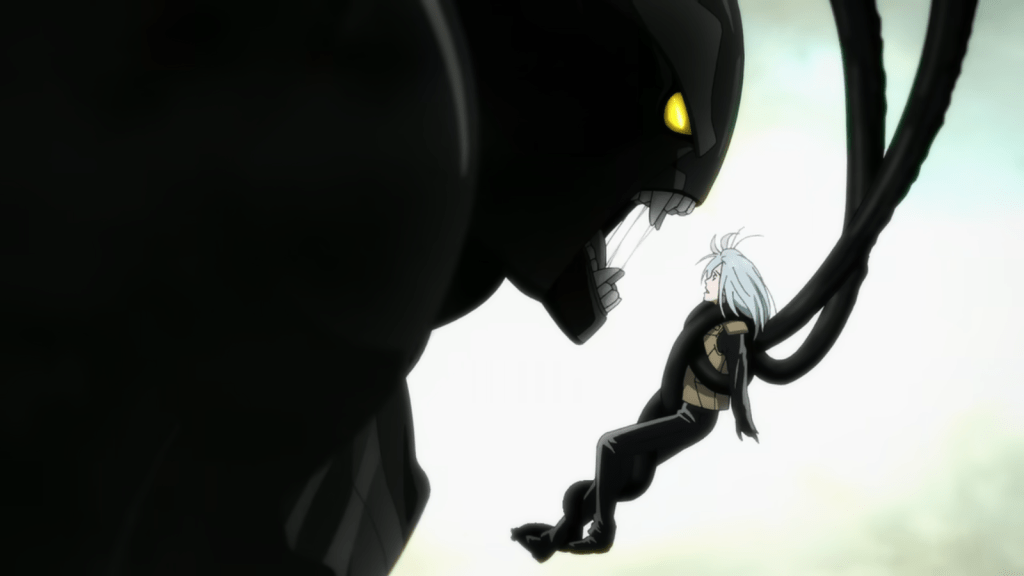
Epsilon’s death was the perfect way to lead into Atom’s awakening. Tenma installed “unbalanced emotions” into the boy robot, declaring that he would gladly become a demon to bring Atom back. Just as Epsilon was killed, the hero regained consciousness. The first thing Atom did was assert that he will protect Earth in place of Epsilon. That’s true to his character, so perhaps I shouldn’t be worried. But he also looks extremely distressed and shocked. I’m concerned about his psychological stability.
The last major mystery, which will hopefully be solved in the next episode, is the true nature of “Bora.” Wassily’s song about the destruction Bora brought was creepy. It didn’t get any less eerie when all the orphans sang it together. According to the song, Bora will eat the whole Earth. Uran described Bora as “a great sadness,” but we know she likes poetic language and metaphors. So, we still don’t know exactly what Bora is or if it’s even an entity with a goal.
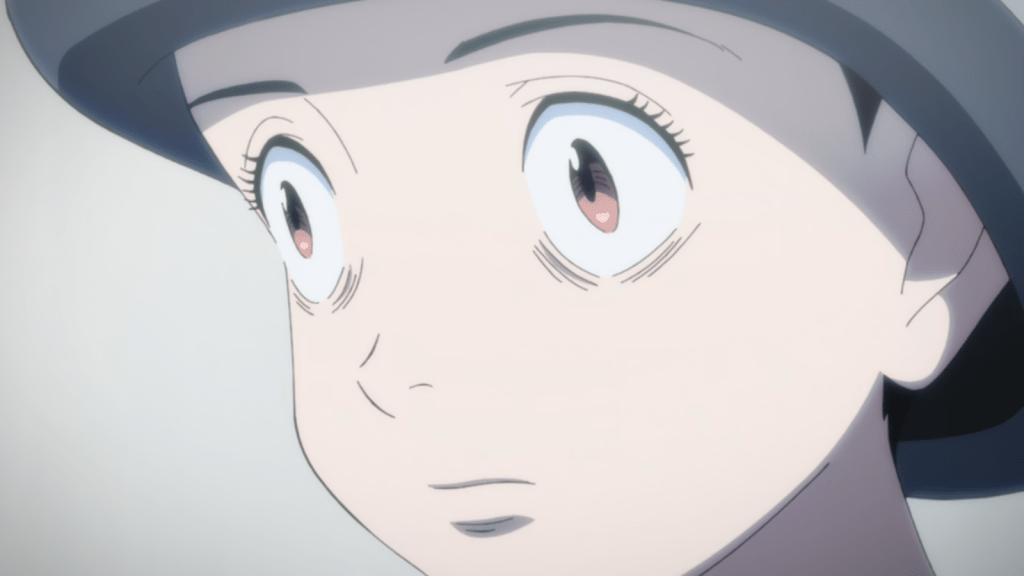
I’m guessing that Bora is a weapon of mass destruction – something capable of instantly vaporizing the fortress and the mountain where Epsilon took refuge. And knowing this series, the “weapon” is probably the perfect robot created by Tenma. Bora’s goal may be to destroy humanity and make way for a robot civilization, just like Darius believed. That’s just a hypothesis. What we know for sure is that Tenam’s other creation – Atom – is the only hope for ending this threat to humanity.
Episode 8
It’s going to take a lot of writing to cover even half of what I think deserves mentioning in the eighth episode, but I’ll do my best. Before we get into the meat and potatoes of the final events, let’s revisit the character of Gesicht. We finally saw the rest of the missing pieces of his story as Atom viewed his memories. Gesicht rescued a robot child from a junkyard and named her Robita. Together with Helena, they were a happy family.
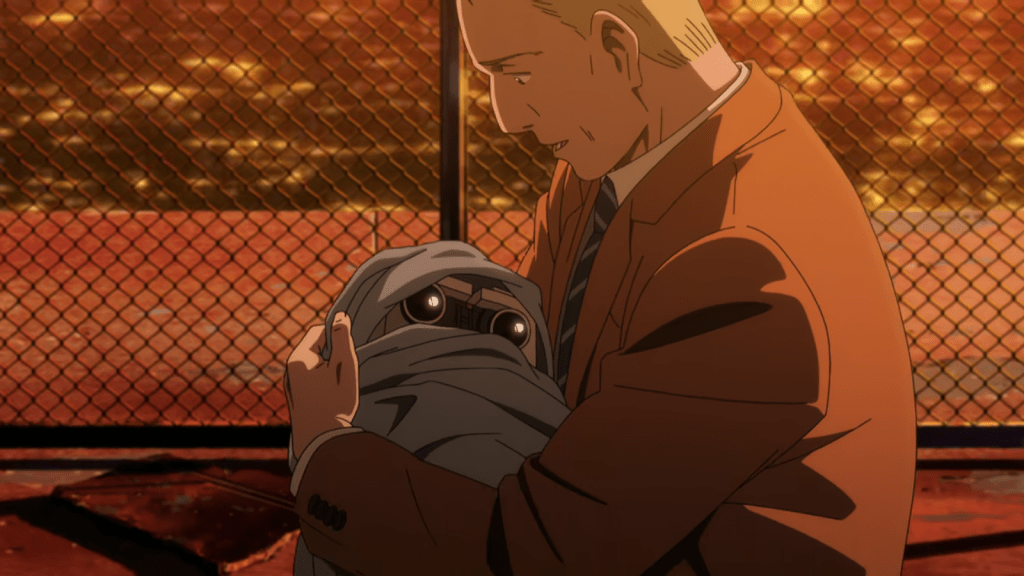
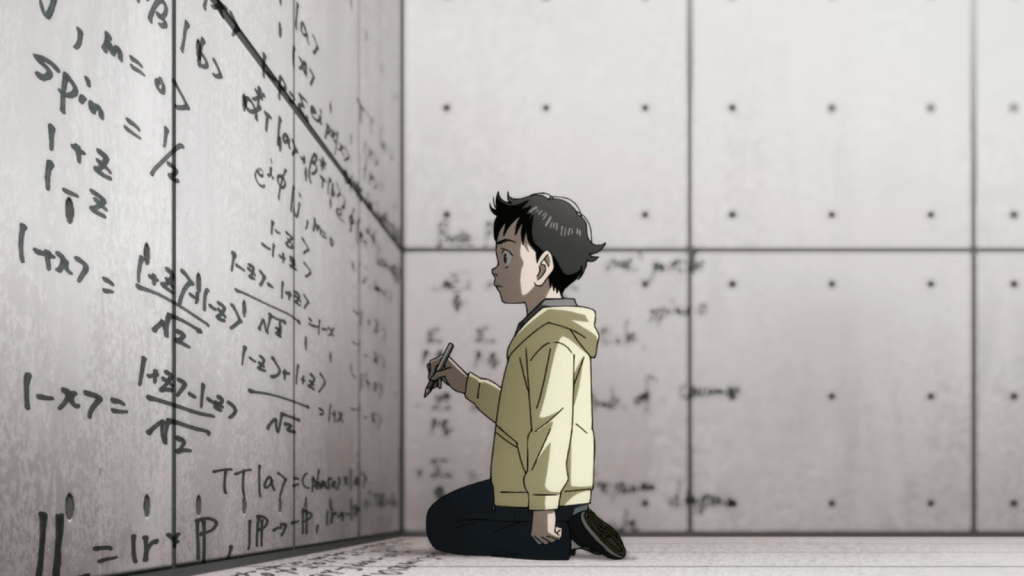
Of course, it all went to hell after that. Robita was brutally murdered, and Gesicht unlawfully executed the criminal responsible. He and Helena had their memories altered. Gesicht still felt lingering hatred at the time of his death. That’s why it was a dangerous choice to give Atom full access to those memories. When he woke up, the boy robot was almost consumed by hatred. The first notable action he took was to write out the formula for an antiproton bomb. Scary.
It turned out that Gesicht’s final memories were those of love toward the child in front of him and Helena back home. His hatred didn’t rule him. Thanks to that knowledge, Atom stabilized. I liked the symbolism of the snail as Atom’s hope and faith in humanity. He almost crushed it in his hand, but he stopped before it was too late. That moment was equally important to Ochanomizu, who wouldn’t have been able to bear it if Atom had succumbed.
This episode finally gave us the truth about Dr. Goji and Abullah. All this time, the person we knew as Abullah was not the true Abullah. He died in an airstrike during the war. So who is the man with Abullah’s face? It’s the robot programmed by Tenma to have a combination of 10 billion personalities. As you recall, that robot wouldn’t wake up. So at the dying request of Abullah, Tenma installed Abullah’s memory chip into the unconscious robot.
When he woke up, that robot had Abullah’s face and believed he was Abullah. Advanced robots can lie – both to others and to themselves. That’s how Abullah convinced himself he was a human who needed revenge for his slaughtered family. Back in the present, when Tenma told the truth to the fake Abullah, it made him lose his sense of self. Thus, the “perfect robot” once again became faceless and unconscious. Without the assurance that he was Abullah, he was too overwhelmed by the many identities inside him.

As for Goji, that was another name for the robot Tenma programmed. The robot that woke up was both Goji and Abullah in one person. You can think of it this way: Goji is the robot who believed he was Abullah. Now that we know about that, let’s also talk about Bora. The natives living in the United States of Thracia have a certain story. Bora is a world-ending spirit of vegeance that rises from a volcano. It was born from the hatred and sorrow of the natives who were tricked in the past.
In reality, there is a huge pool of magma under the ground in Thracia in a place called Eden National Park. Every 5000 years, it rises to the surface and erupts. There is currently no danger of a serious eruption, according to the geologist and meteorologist robot, Arnold. But that’s assuming nobody stirs up the pool of magma. If a powerful enough bomb were to go off in the depths of the cavern, the eruption plus the explosion would wipe out most biological life on Earth in a matter of months.
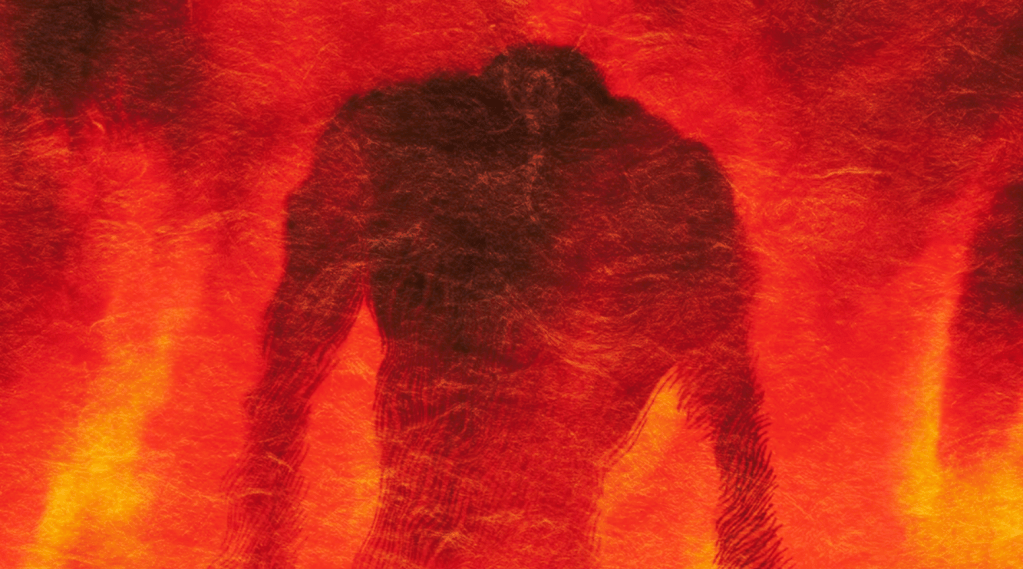
“Bora” is the name of a gigantic robot that Goji/Abullah built secretly. He wanted his brain installed into the body. From there, he would take a antiproton bomb to Eden National Park and set it off from deep underground. That is the danger currently threatening humanity. Atom immediately volunteers for the task of stopping Bora. According to Tenma, there is no way to disarm the bomb quickly enough. Atom will melt before he can succeed. But this information doesn’t stop the hero from trying.
Before we review Atom’s mission, there is one thing that I’m not clear about. The United States of Thracia was somehow complicit in the Bora plan. I’m not exactly sure if they were working with Goji/Abullah or if they were just taking advantage of the situation. In any case, the President of Thracia shares some guilt for allowing Bora to be built. The whole time, he was following the guidance of a certain robot – that creepy little teddy bear. We don’t even know this thing’s name, but it’s frighteningly intelligent.
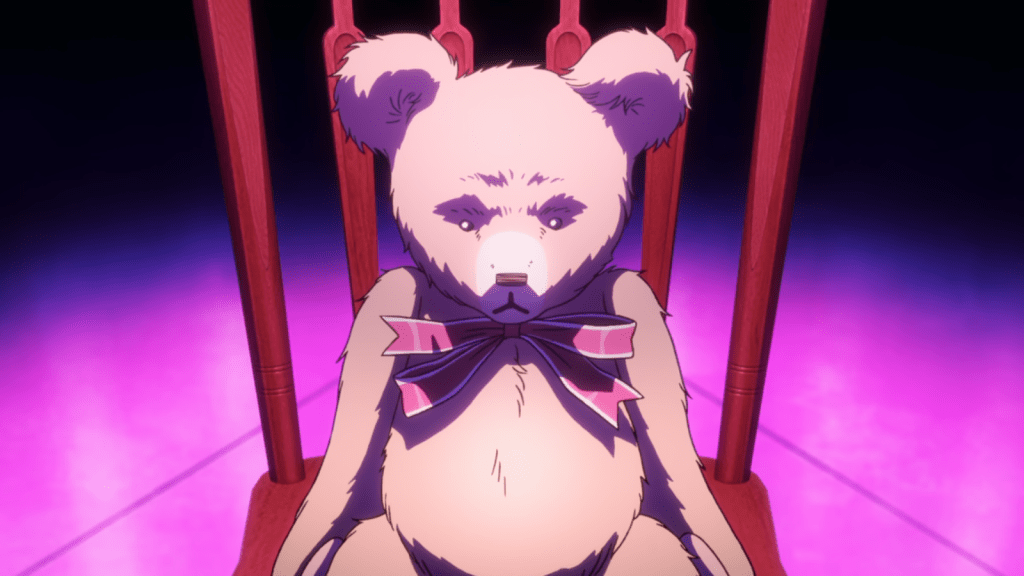
Originally, the goal of the Bora Project was to create a robot who could restore land quality to barren areas. But somewhere along the way – and I think Thracia was to blame – it became a project to build a weapon of mass destruction. The teddy bear robot wanted life on Earth to end to make way for a civilization of robots. The remaining 10% of humanity that could survive – protected citizens of Thracia – would become slaves to the new robot empire.
Now we’ll move on to Atom’s fight with Pluto. It was dramatic, especially when Atom’s hatred bubbled up to the surface again. He truly desired to kill Pluto. But thanks to the memories from the six other robots who were killed, he realizes that “nothing can be born from hatred.” Pluto has apparently regained some control of himself as Sahad, because he stops the farce of a fight quickly. He and Atom both cry for the grief and pain they have had to suffer. They call a truce.
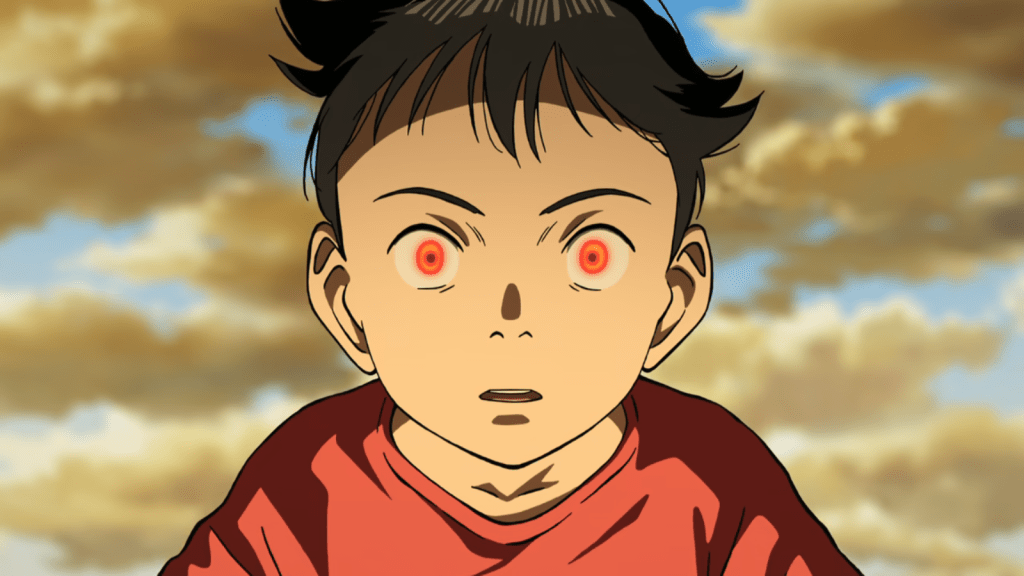
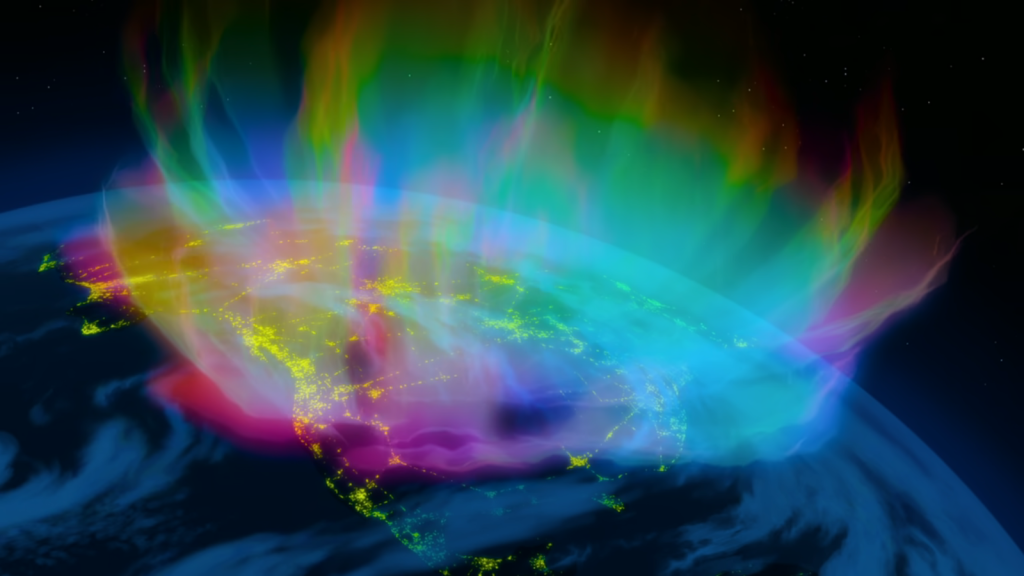
The climax of the episode was when Sahad sacrificed himself to diffuse the bomb while letting Atom escape. Bora was destroyed by Pluto/Sahad. There was still an eruption of magma in the National Park, but it would not be enough to cause worldwide damage, and there was no antiproton explosion. The world has been saved. Due to a chemical reaction of some kind, the sky lights up with multicolored lights.
As the episode draws to a close, Atom states that this isn’t the end. Something like this will happen again as long as there are powerful negative emotions like hatred. Still, it’s a good ending for the world. Additionally, the teddy bear robot in Thracia gets killed by Brau1589, who was freed by Atom. Since Brau impaled the enemy with the spear that was in his own body, it also means he died, too. The killer robot actually did something noble there at the end.
I had planned to include a section that briefly addressed some of the weak points in the story and characterization of Pluto. But I’ve already rambled on for quite some time, so I’ll save the criticisms for my series review. I was definitely impressed with Pluto overall, and any complaints are small. Still, I need practice to have a balanced view sometimes.
That conlcudes my episode reviews for Pluto. You can expect a series review soon that will measure the quality of all eight episodes. Sayonara until next time!
Thank you for reading~


Just a thought here. Humans aren’t natural pacifists. We have a Bell curve of affinity for violence where the people with the right amount of violent tendencies form the hump. Those with too much or too little in their nature tended to get selected out. Violent people and pacifists are the tails of the curve.
Unfortunately, what was appropriate for ancient and prehistoric times may not be appropriate for today. We are cave people with nuclear weapons.
LikeLiked by 1 person