
Jujutsu Kaisen isn’t the perfect anime by any stretch of the imagination. It isn’t even my favorite of the battle shonen series. (My favorite is still Hunter x Hunter.) That being said, this show is really damn good. I think it’s my second-favorite shounen anime. The first season comes with surprising re-watch value.
After seeing the devastation in the Shibuya Incident, I needed a break. I focused on other anime and started to think of Jujutsu Kaisen as an overly chaotic story with significant issues like fridging. While it’s true that fridging can be found in Jujutsu Kaisen, it also utilizes good storytelling in other ways. The themes and characters explored in this show can be moving and profound. I had forgotten this until recently, when I sat down to re-watch the first season all the way through.
Today’s article will cover several discusion points that stuck out to me during this re-watch. I was already aware of most of these points, but their significance grew on me as I fully grasped them for the first time. Please keep in mind that I am primarily an anime consumer and I lack knowledge of the manga’s story after the Shibuya Incident. (I’ve started reading the manga, but I have a long way to go, and it’s a slow process for me.) Discussion in the comments is welcome, but please avoid manga spoilers.
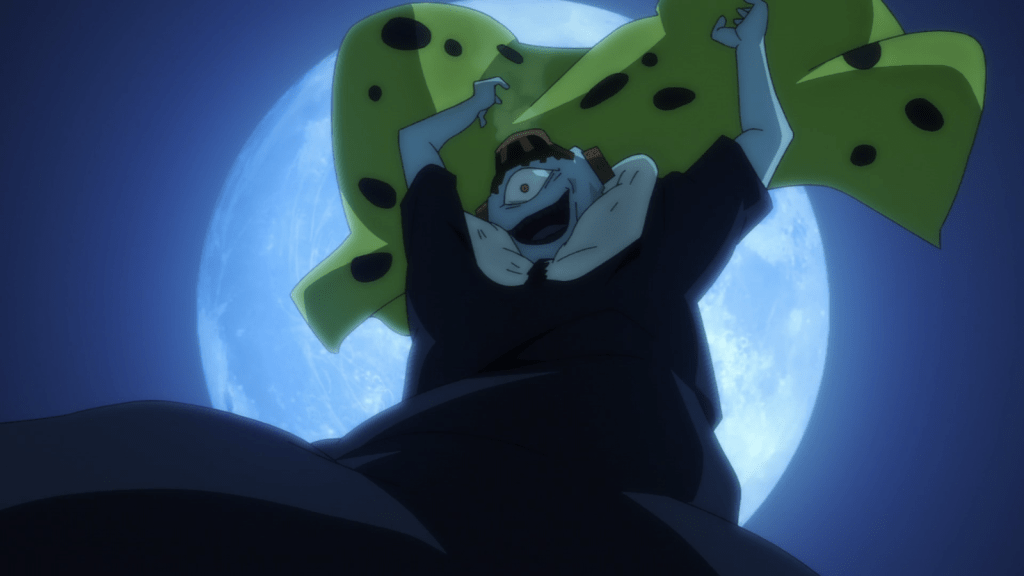
Article contents
- Horror in Jujutsu Kaisen
- Yuuji’s Suffering and Proper Deaths
- Jujutsu Sorcerers are Not Heroes
- The Nature of Mahito
Horror in Jujutsu Kaisen
Jujutsu Kaisen is dark, at least for a shounen anime. Generally, seinen shows are darker and/or explore mature themes, while shounen battle shows are not as complex or disturbing. Of course, the differences between seinen and shounen are slippery, and sometimes it’s just an arbitrary line according to what kind of magazine the manga started in. There are also plenty of seinen anime that lack either darkness, thought-provoking themes, or both.
Rather than say it’s like a seinen anime, I would call Jujutsu Kaisen a “Dark Shounen.” I also consider Demon Slayer to be in this category due to its violence. Hunter x Hunter occasionally crosses into dark territory, but it also contains lighter arcs. As for Jujutsu Kaisen, it’s a Dark Shounen from start to finish due to one main reason: the element of horror.

“Horror in Jujutsu Kaisen” is a topic is worthy of its own article, and I might write it out in the future. For now, the most important point is that Jujutsu Kaisen explores a number of flavors of horror, including body horror, supernatural horror, and shocking violence. There are even occasional tastes of cosmic and existential horror. I will quickly outline three examples of surprisingly horrifying moments in Jujutsu Kaisen season one.
The first example has become almost iconic among anime fans. In episode 4, “Cursed Womb Must Die,” Megumi and Yuuji are arguing, when Kugisaki gets sucked into a pool of darkness. Before the two boys can fully figure out what happened, they are met with the appearance of a new curse that just “hatched” from its cursed womb. It’s a creature many times more powerful than the boys at their current level. The curse came out of nowhere and now stands between Megumi and Yuuji, staring ahead in eerie silence while they are frozen in place.
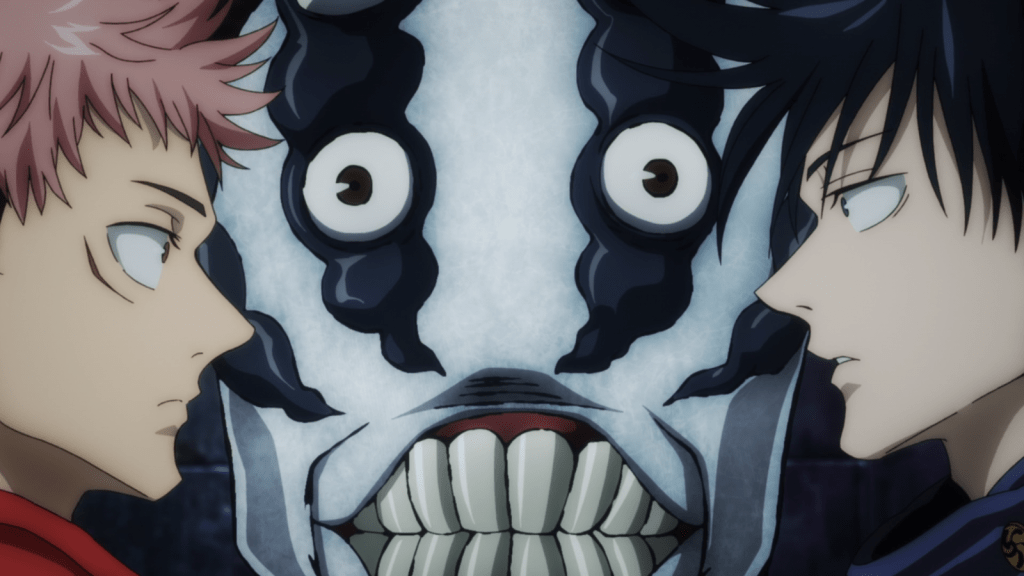
They are so overwhelmed by the power of the curse that they cannot move for a few long seconds. Yuuji breaks out of the trance first and tries to slash at the curse with his knife – only to find that his hand has been sliced off. From there, the encounter becomes an intense battle to stay alive. This scene is extremely well-directed and manages to be unsettling to say the least. I can’t do it justice with my own description. Watch the scene and you can sense yourself the fear in the air where the boys are standing.
The next example is probably the one you think of first when you remember dark moments in Jujutsu Kaisen‘s first season. Of course, I mean when Mahito uses Idle Transfiguration on Junpei Yoshino, turning him into a wretched, deformed creature that dies in minutes. This takes place in episode 12, “To You, Someday.” When I first saw this scene, I felt disgusted and mildly disturbed. It’s a combination of body horror from seeing Junpei’s transfigured form and tragic horror from seeing a likeable young character die so brutally. Even now, regardless of how many times I see it, this moment remains unpleasant.

The last example I’ll mention is a short, minor scene in Episode 22, “The Origin of Blind Obedience.” Mahito forces an innocent man to swallow a Cursed Womb, which will turn him into a half-curse, half-human creature called a Death Painting. The man is chained to the wall in an abandoned building. He can’t even see curses, meaning he’s being terrorized by an invisible enemy. As the man begs for his life, Mahito grabs his face and forces the slimy embryo of a curse down his throat, smiling all the while.
This scene may not be particularly horrifying – in fact, compared to Junpei’s transfiguration, it’s nothing. We don’t care about this random civilian man the way we cared about Junpei. But it’s an important scene for proving the point that Jujutsu Kasien is full of “background horror.” There is so much death, fear, and pain in the background of the story at all times. Even in an insignificant moment like this one, awful things are happening to people. Clearly, the element of horror in Jujutsu Kaisen is a powerful part of the story.

Yuuji’s Suffering and Proper Deaths
During my first watch of Jujutsu Kaisen, I didn’t really understand Yuuji and how much he suffers. Some may point out that he doesn’t suffer much in the first season compared to the second season, but I think what he goes through in season one is already way more pain than any kid deserves. This show as a whole is set up to put Yuuji through utter hell. That makes it even more amazing that he can smile and be his goofy self as often as he does.
Take the first two episodes alone. Yuuji says his grandfather was more like a father to him. In the course of a few days, this highschool boy learned of the existence of disgusting curses, lost his father-figure, failed to save a friend who then became comatose, and was sentenced to death by a shadowy organization he can’t possibly defy. It’s hard to watch him picking up his grandfather’s ashes in episode 2.

Most shounen heroes have a motivation something along the lines of, “I want to become the strongest,” or “I want to fulfill my dream.” They usually have promising futures ahead of them. Not Yuuji Itadori. His motivation is now to get rid of Sukuna – which means submitting to his own death after acquiring the other fingers.
Of course, Yuuji doesn’t really want to die. I’m sure he still wants to experience life, and he plans to save as many people as possible while alive. But he’s convinced that ending Sukuna is something only he can do. (And as far as we know, he’s correct.) In accordance with his grandfather’s last wish, Yuuji needs to do whatever he can to save people. His ultimate goal – dying to rid the world of a demon – is surprisingly grim.

After inheriting Sukuna, Yuuji becomes quite taken with the idea of “Proper Death” – a death where one doesn’t regret the way they lived. While living as a Jujutsu sorcerer, he will try to lead others away from “Improper Deaths” – those that are unfair, unacceptable, and full of regret. Though Yuuji never abandons this philosophy, it becomes harder and harder to follow as he witnesses more curses and deaths – some of which would not have happened if he hadn’t consumed Sukuna’s finger on that fateful night.
There were several events in the first season that weighed heavily on Yuuji given his personality and ideals. In episode 12 (“To You, Someday”) Junpei died tragically. Yuuji felt responsible for his death and that of his mother, telling Nanami, “I couldn’t save two people.” That moment when he begs Sukuna to save Junpei is heartbreaking. Sukuna and Mahito both burst out laughing, jeering and mocking Yuuji as he helplessly watched his friend die.
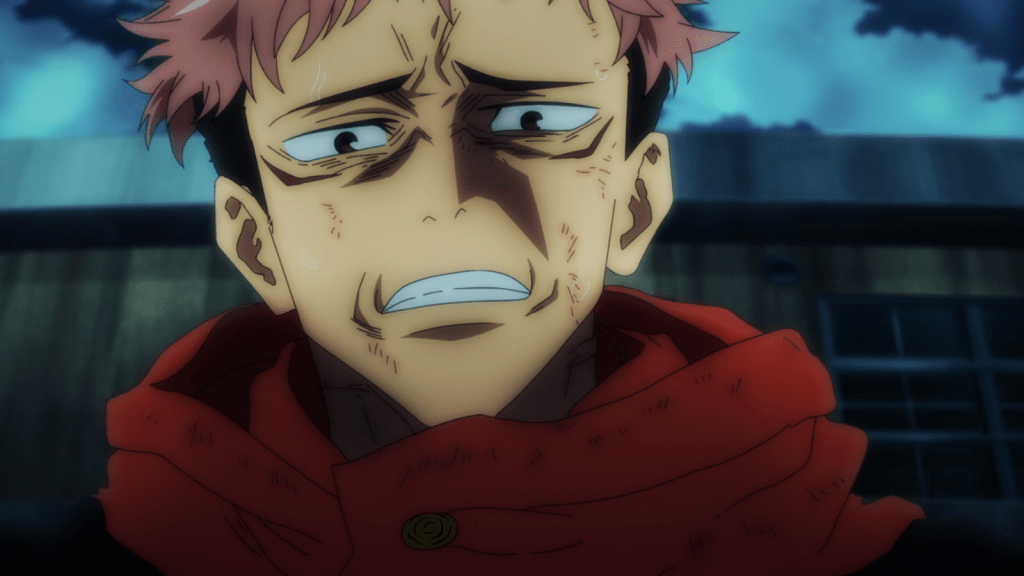
In Episode 13 (“Tomorrow”), Mahito sent the cursed, disfigured bodies of three children to fight Yuuji and keep him distracted. Rather than let Nanami die in battle with Mahito, Yuuji was forced to kill the transfigured humans. Later, he tells Nanami “I killed people today.” He also goes on to say, “Now that I’ve pulled that trigger myself, I don’t understand anymore. What even is a proper death?”
Finally, in episode 24 (“Accomplices”), Yuuji and Nobara work together to kill two Death Paintings – powerful beings that are much closer to “human” than most cursed spirits. The two enemies called themselves brothers, and when the smaller one was killed first, the older one wept. This didn’t escape Yuuji’s notice. As he told Nobara, “Tears were shed over the lives I ended tonight.” From these examples, it’s clear that Yuuji’s suffering is tremendous even before the Shibuya Incident.

Jujutsu Sorcerers are Not Heroes
Most shounen battle anime feature heroes as their main characters. I don’t just mean My Hero Academia, where they are literally superheroes. Many famous shounen anime have heroic characters that will always fight to save lives and do “the right thing,” no matter how idealistic and impractical it may be. But there are also a few shounen series where the good-guys are not traditionally heroic. Hunter x Hunter and Akame ga Kill are good examples. In my opinion, Jujutsu Kaisen is one of these shows as well.
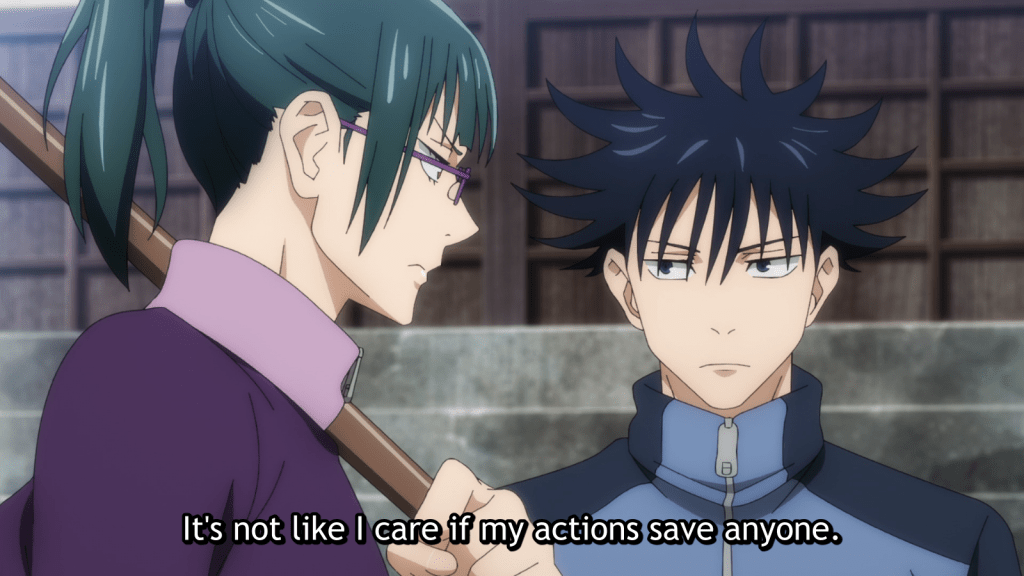
You might be thinking, “Wait a minute. Jujutsu sorcerers exorcise curses. That helps people and makes them heroes, right?” My answer is, “Sometimes.” You see, Jujutsu sorcerers do not always care about saving people. The fact that they save people sometimes is a bonus or just irrelevant. Remember when Megumi asks Maki what kind of people she wants to save? Maki replies, “Huh? It’s not like I care if my actions save anyone.” (Episode 6: “After Rain.”)
Don’t get me wrong. I think many individual sorcerers are heroic – especially those aligned with Jujutsu High, like Nanami, Megumi, and Yuuji. What I’m saying is that it’s not a requirement to be heroic as a sorcerer. There are obviously evil, rouge sorcerers like Suguru Getou. But even among those aligned with Jujutsu education, the supposed “good-guys,” there are terrible people. (For example, most members of the Zenin clan are disgusting. I’ve read just enough of the manga to know that now.)
There are many ways in which the Jujutsu sorcerers are not traditionally heroic. Don’t forget about the conservative faction in the leaders of the Jujutsu world. They want to kill Yuuji, and even convince a bunch of other highschoolers to try to murder him during a competition. Another example is Satoru Gojo and the way he casually considers killing all of the old conservatives to get his way. Of course, he doesn’t choose this path in the end. Still, the way his mind works isn’t typical of a hero.

Megumi Fushiguro is extremely serious about morality and saving others. But even he isn’t some kind of blind idealist. He recognizes that the world isn’t fair and that he can’t save everyone. That’s why he thinks about the idea of “saving people unequally” – essentially picking who deserves to be saved. That might sound sort of heartless on its face, but it’s reality. Better to try to save a small group of worthy people than to freeze with indecision and lose everyone.
At several points in the series, this idea comes up about continuing to fight “because we’re Jujutsu sorcerers.” During the Shibuya incident, this is especially relevant. Todo’s inspirational speech to Yuuji built on the idea that they are not perfect heroes, but Jujutsu sorcerers who need to continue their fights. That suggests an attitude that Jujutsu sorcerers cannot be held accountable for deaths in the same way as normal humans.
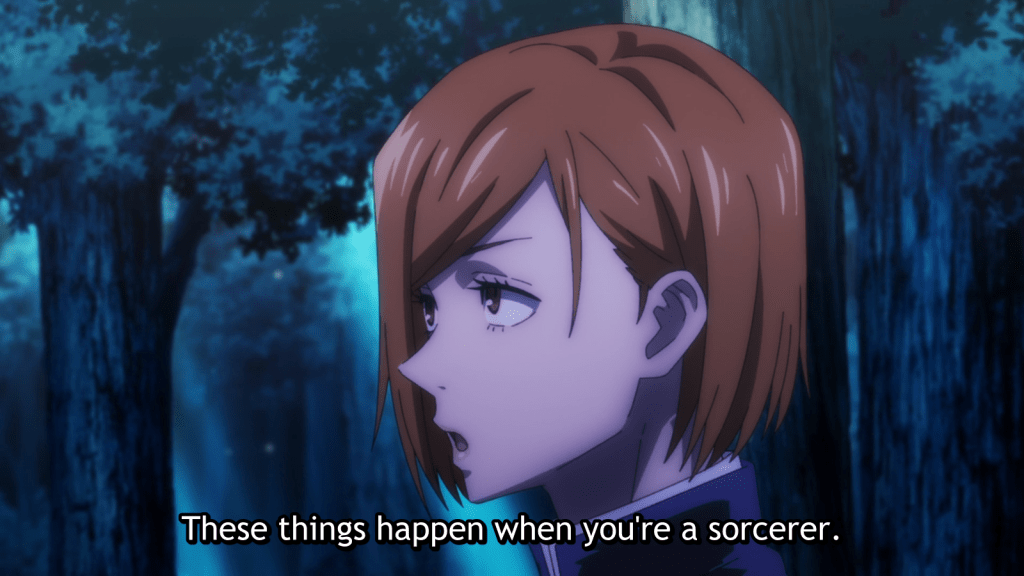
This attitude permeates the Jujutsu world. It’s not a very heroic take, is it? That these powerful beings are above judgement by normal human morals? However, I think there’s another way of looking at it. Nanami tells Yuuji that he may take lives, but he also may save many others. Jujutsu sorcerers have a disproportionate chance of saving a lot of people, even if their existence also costs a lot of people.
In other words, despite the unavoidable casualties, continuing to live as a sorcerer is still the best way to save the greatest number of people. This motivation is certainly heroic. Again, Jujutsu sorcerers are not heroes by default, but some individuals may rise to the occasion and become saviors of those in need.

The Nature of Mahito
Note: This is not a detailed character analysis of Mahito, and will definitely miss important points about him. This section just contains a few facts about Mahito’s nature as a curse.
There were a few things about Mahito that I didn’t notice the first time around or that never really sunk in until my second watch. For example, Mahito was born in the theater where Junpei and the bullies were watching a movie. I knew Mahito was a young curse, but I didn’t realize he was literally born that day. This fact alone isn’t anything to be in awe about. However, I do find it significant that he was born in a movie theater: a place where human emotions can be powerful and unpredictable. That tracks with what we know about curses.

The next fact is something I knew about but forgot at some point. Many curses have specific themes or causes to their existence. For instance, Jougo is probably the curse born of humanity’s fear of volcanoes and other natural disasters involving fire. What about Mahito? He is known as “Humanity’s Curse.” In other words, he is the curse born of humans and their negative emotions toward each other. He also embodies the worst traits of humanity. This is hugely important to understanding Mahito and his powers.
Because of his nature as humanity’s curse, Mahito’s personality traits are largely repulsive and creepy. He’s sadistic, mocking, manipulative, selfish, and surprisingly clever. In addition, Mahito loves to elicit negative emotions in humans. He understands delayed gratification. That’s why he can work for days at a time manipulating someone like Junpei before finally getting an increased payoff of delicious despair at the moment of the kill. Mahito’s fascination with Yuuji and desire to break him psychologically makes perfect sense for a being who feeds off negative emotions.

Have you ever wondered why Mahito looks so human compared to other powerful curses? That can also be explained by the fact that he’s the curse of humanity. He can shapeshift, but until he unlocks his armored form in season 2, he usually sticks to his human body, suggesting that it’s most true to his nature. But Mahito doesn’t appear 100% human, either. His patchwork face makes him look artificially sewn together, like a creepy ragdoll. After all, at the end of the day, he is a curse.
I noticed the second time around that hands are visual motifs for the character of Mahito. His domain, Self-Embodiment of Perfection, is characterized by numerous giant hands. This artistic theme is great for Mahito since he manipulates people with touch. Idle Transfiguration forcibly mutates and disfigures whoever Mahito is touching when he activates this technique. Moreover, hands are thematically associated with manipulation of objects – the hands that control the strings of marionette puppets, for example.
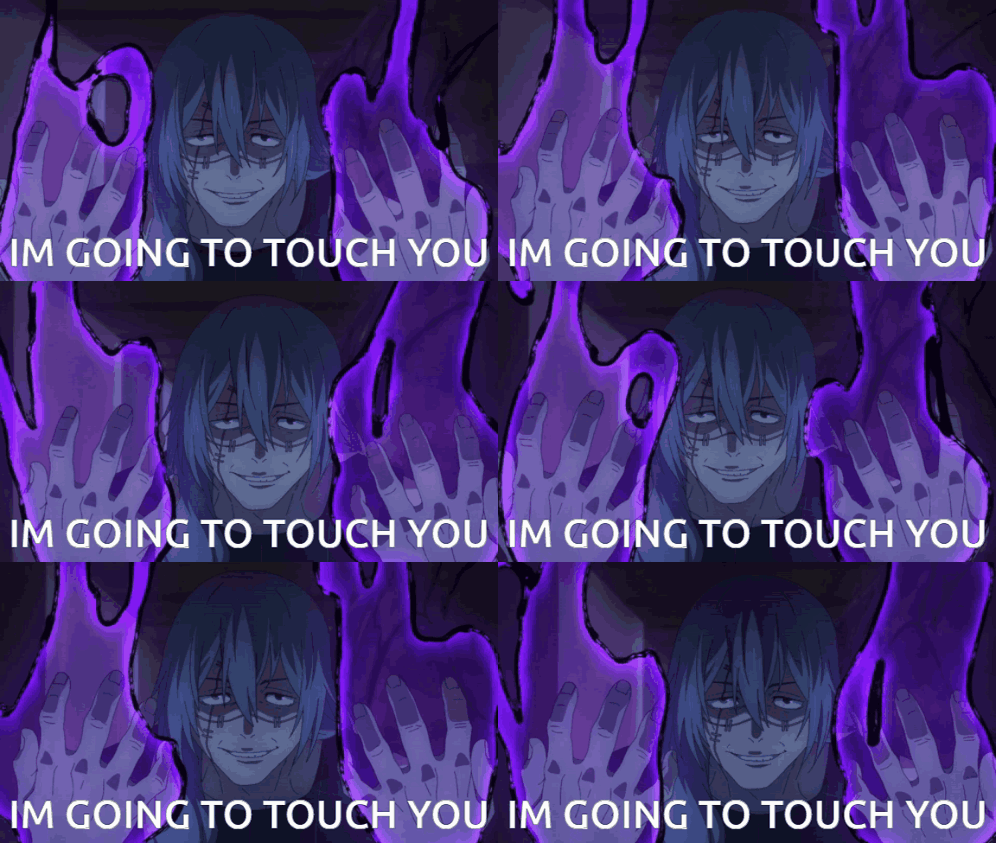
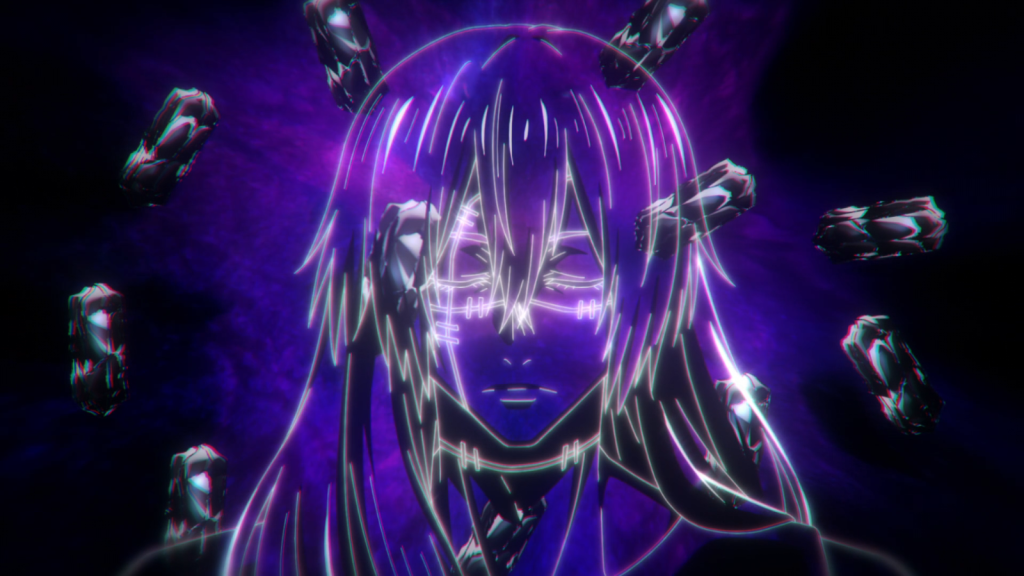
On the subject of Mahito, I want to briefly mention his beliefs about human souls and hearts. In episode 10 (“Idle Transfiguration”), Mahito shares his philosophy of life with Junpei. In order to fully analyze this scene – and how souls work in the JJK world – I might need another full article. So, for now, I’ll keep it super simple. According to Mahito, humans have souls which only he can see and manipulate. But humans do not have “hearts,” or meaningful emotional cores. That’s why it’s fine to kill humans.
Mahito’s conclusion – that killing is acceptable – is obviously wrong. But I also think there’s no particular reason we should believe the rest of what he said. He was clearly trying to manipulate Junpei when he rambled about hearts and souls. It’s possible that he was lying or simply hypothesizing as his own thoughts came to mind. I don’t believe that Mahito’s idea of the soul is necessarily correct. Jujutsu Kaisen has yet to elaborate much on human souls. And Mahito’s belief that humans lack an emotional core is wrong in any universe.
There are a few other topics and points that stood out to me as I re-watched Jujutsu Kaisen, but this article should already be plenty to digest for now. Rest assured – I’ll make those points into other articles if they are compelling enough. You can definitely expect more Jujutsu Kaisen content in the future here at Anime Rants. I hope you’ve enjoyed today’s discussions. Until next time, Sayonara!
~Thanks for reading~
~

 Anime Rants
That is one of the deepest anime analyses I have ever seen.
LikeLiked by 1 person
Thanks! I’ve been pretty much obsessed with JJK recently so I spent a loooong time thinking this stuff over.
LikeLike