
- Introduction – The Villainy of Nowak
- Part 1: Discussion in the Church
- Part 2: Rafal’s Ghost and Nowak’s End
- Part 3: Draka’s Death and Albert’s Debut
Introduction – The Villainy of Nowak
This was another amazing episode of Orb, though as always, it was tragic on many levels. There were several memorable moments in this installment. For me, the one that sticks out the most was when Nowak admitted he was the villain of the story.
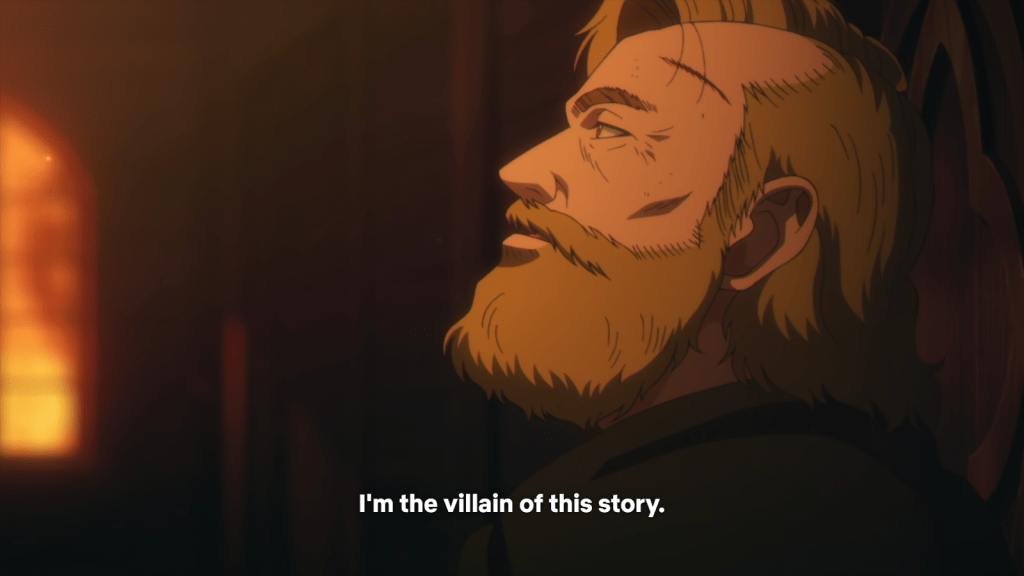
All this time, he has firmly believed he was right. Unlike many characters in Orb, Nowak didn’t die doubting his idea of a god, but praying to his god instead. It’s also fitting for this anime that the villain is stubbornly religious to the very end. Still, he at least died knowing he was wrong for persecuting heretics.
Rafal said that he and Nowak were comrades in the grand scheme of history. He’s right in that they were both humans who did their best in the time and place in which they were born. But importantly, Nowak insisted he was the villain. He was correct – not only because he is responsible for the deaths of several protagonists, but also because he was on the side of the oppressors.

Nowak was always on the wrong side of history. It doesn’t redeem him in any way, but it was fitting for him to realize the truth as he died. I will briefly revisit the topic of Nowak as the villain later on. With that in mind, let’s discuss the rest of the episode.
Part 1: Discussion in the Church
Antoni, Draka, and Nowak continued talking in the church for a few minutes before any action took place. So, to start things off, I’ll offer my thoughts on the discussion they had. Nowak correctly surmised that money was at the heart of the issue for Antoni. In his view, money was replacing the fear of god in people’s hearts. Draka predicted the age of money, and although it was a while away, she was right. Excessive capitalism has become a major problem.

In my opinion, moving society from one evil to another – religious theocracy to greedy capitalist oligarchy – is not certainly not ideal. But I simply don’t think that’s a fair view of history. The times were changing, moving in the direction of better humanism and academic enlightenment. It wasn’t just humans being greedy that built modern secular society. It was the idealistic efforts and sacrifices of countless people who wanted a better world. I agree with Draka’s “pathetic optimism” and that even if humans wander, we will learn and grow better for it.
The topic of technology also came up in this discussion. Draka was more focused on money given her character arc, but technology is a much better example of something that would quickly take over society and cause mass destruction. First gunpowder and then eventually nuclear bombs. More people may have died from secular technology by now than were killed in the name of religion specifically.
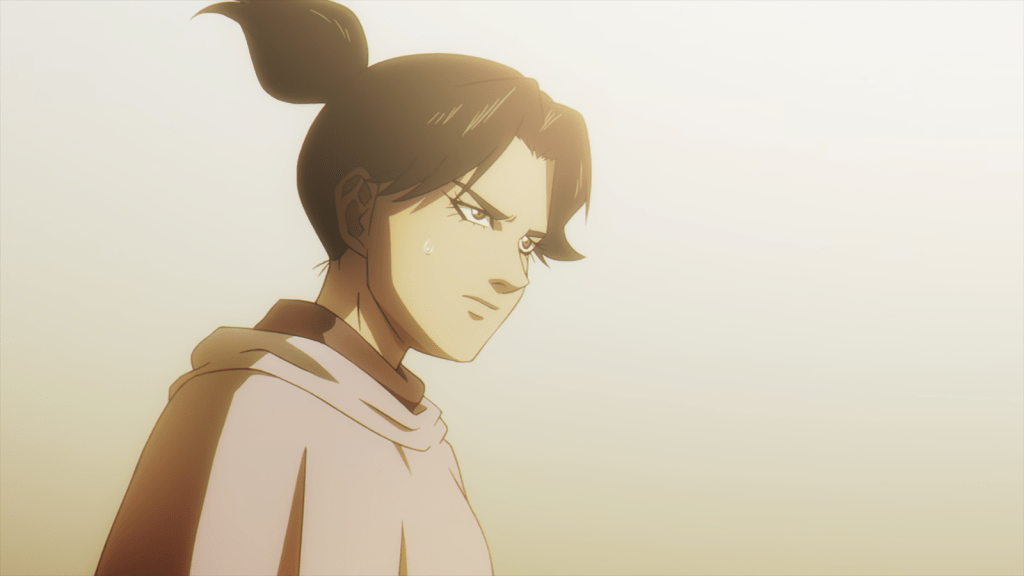
Even with churches out of political power, wars will persist and humans will kill each other. I can’t argue with that fact, but evidence still suggests that human society gets better as people keep working together over time. Education and technology make conditions improve for more groups of people. Look at how far humans have come since the 1400s. So, even with technology destroying everything, I have hope for humanity.
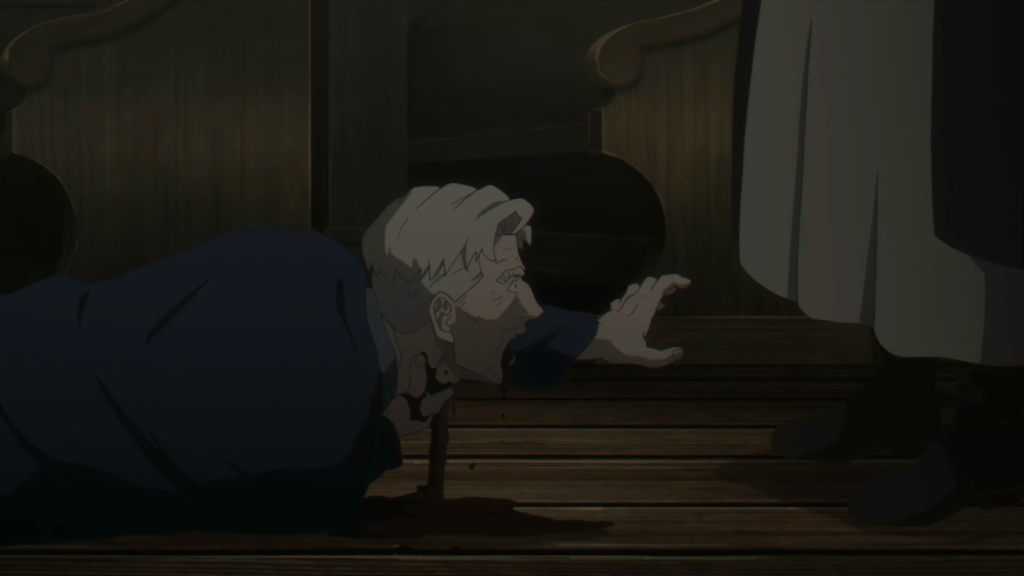
The talk ended and the action quickly picked up. Nowak had doused the church entrance in alcohol and straw. He also told the guards that he was hunting a heretic who believed in heliocentrism. If he now set the church on fire and killed everyone present, everyone would blame the heretics. Heliocentrism would be treated as dangerous. So, without warning, Nowak stabbed Antoni in the carotid artery. He bled out in seconds. I would be lying if I said I didn’t delight a little bit in the demise of that scumbag. Still, this was bad news for Draka.
After a brief standoff with Nowak at knifepoint, Draka tried to run. Nowak threw his torch ahead of her to the entryway and the fire immediately sprang to life. As Draka hesistated to run through the flames, she was stabbed in the side by Nowak. To my surprise and delight, however, Draka fought back. She wasn’t going to be the only one going down. She stabbed Nowak with his own knife and fled the scene, leaving the old inquisitor dying in the burning church.
Part 2: Rafal’s Ghost and Nowak’s End
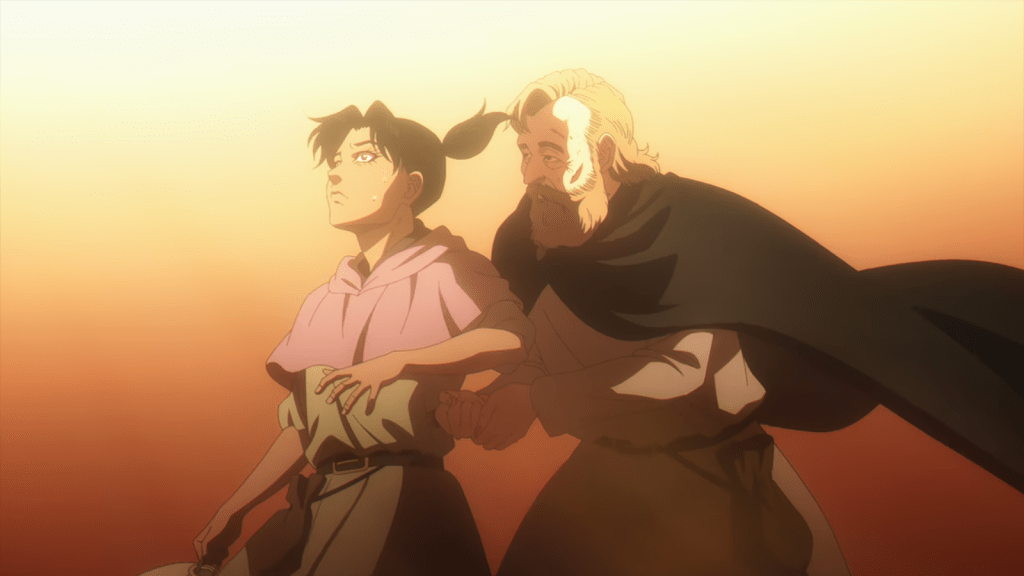
As Nowak sat against the alter, dying from the stab wound and the smoke, he had a vivid, prolonged hallucinating of Rafal. It was his subconscious giving him a strange experience to help him make peace with his impending death. Rafal was my favorite character before we met Jolenta, so I was pleased to see him again, even though it wasn’t really him. The apparition’s personality was very accurate to the original, as he was eloquent, wise, and logical.
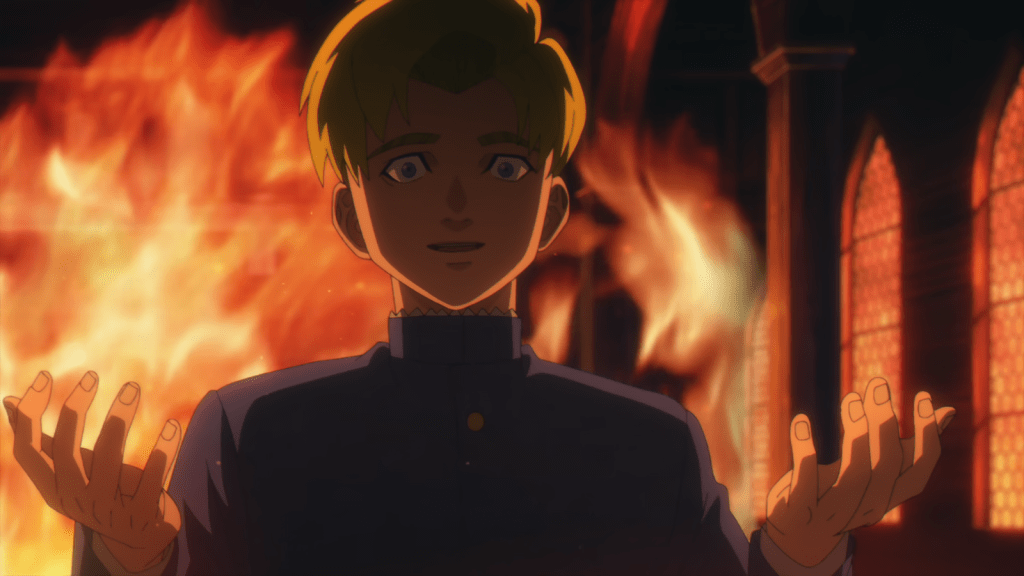
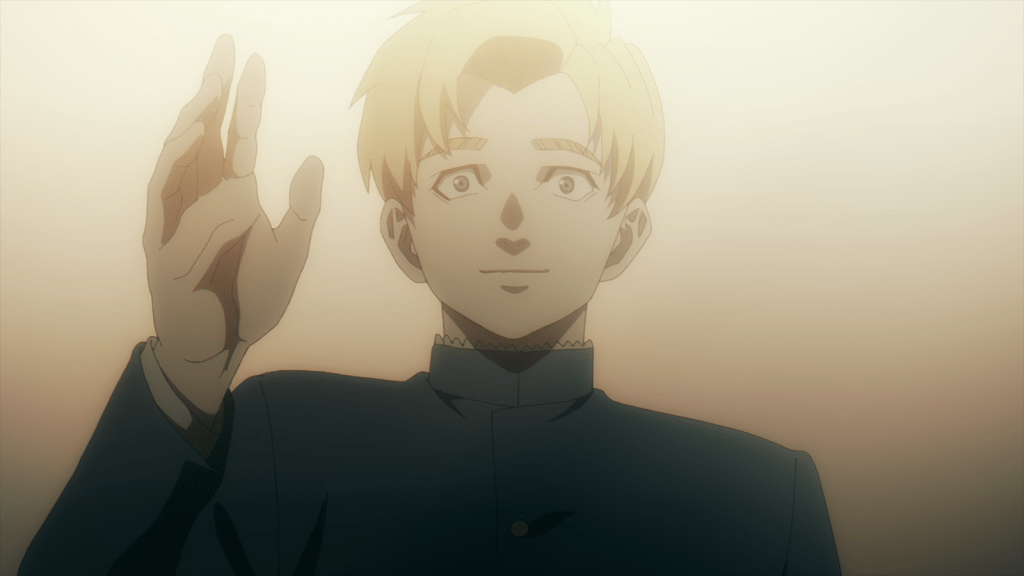
I won’t spend much time on the talk between Rafal and Nowak because I covered it in the introduction. Rafal looked at history in a bigger sense that made him recognize the humanity of Nowak. The ghost called him a comrade, but Nowak restated that he was the villain. At the end of the discussion, Nowak asked if Jolenta was in heaven, to which Rafal said he had no idea. Before vanishing, the apparition of the wise boy told Nowak to “do what was appropriate” with regards to Jolenta.
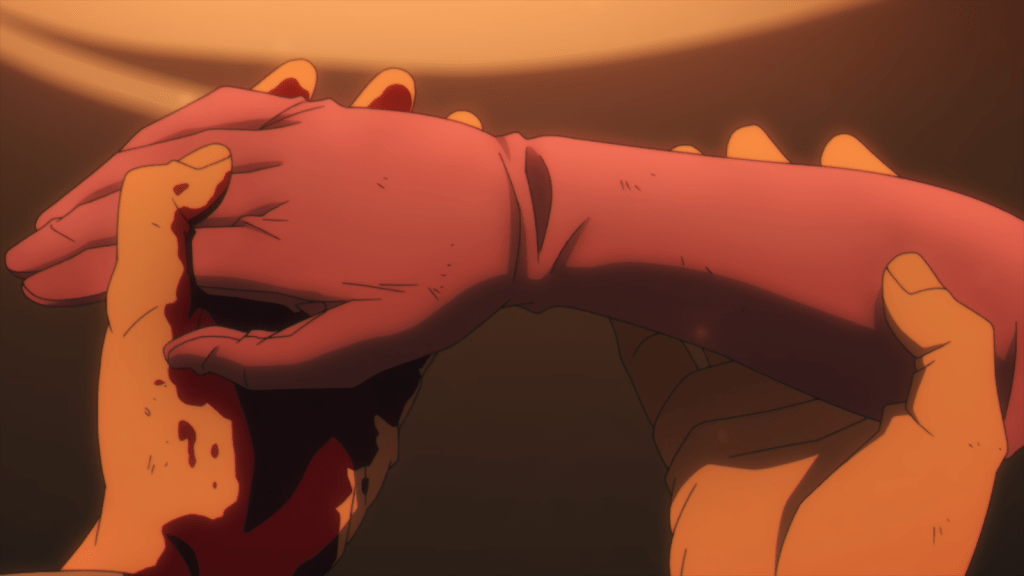
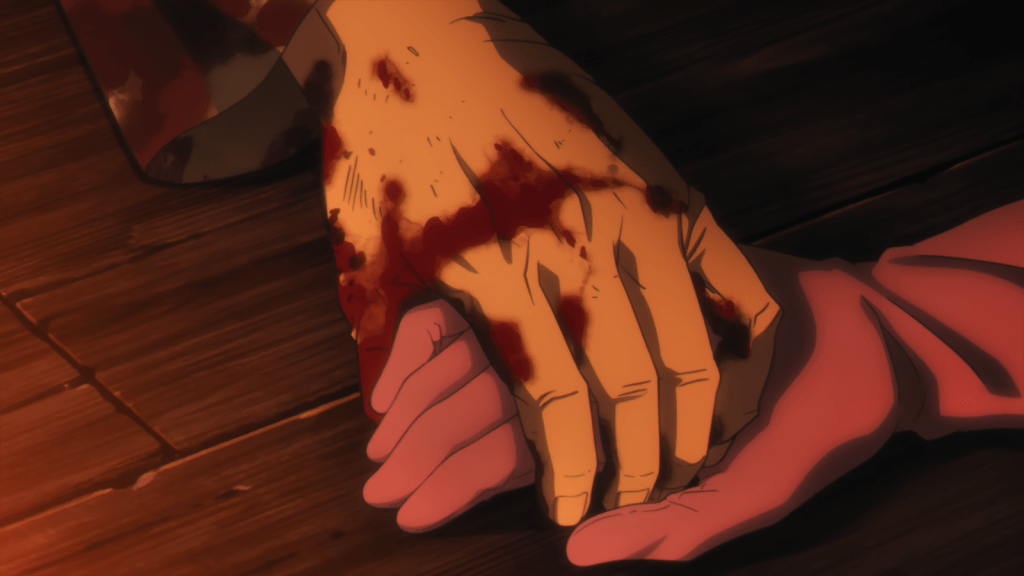
Since it was basically his mind talking to itself, Nowak knew what this meant. He had saved Jolenta’s arm from the site of the explosion earlier that night. Apparently, he already suspected that the heretic leader could have been his daughter. To confirm it, he put Jolenta’s glove on her disembodied hand. It fit perfectly. Though this form of confirmation is not very reliable, it was enough for Nowak in that moment. He wept as he realized that Jolenta had indeed been the heretic leader.
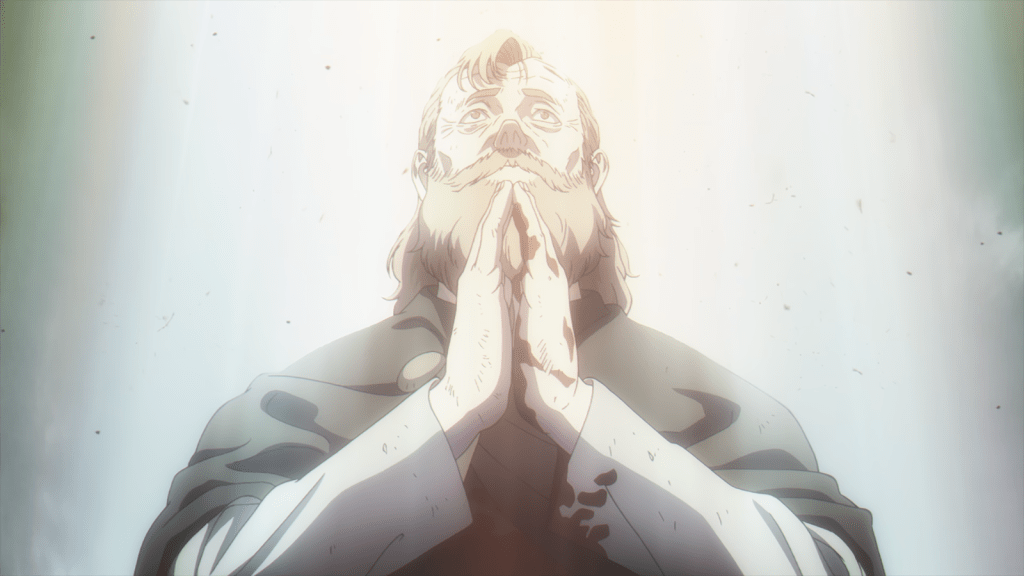
Nowak died praying that Jolenta would be accepted into heaven. In the end, he was a sympathetic villain for two reasons. First, he admitted that he was the evil one for perpetuating the system that drove people like his daughter into becoming terrorists. Secondly, his final act of begging for Jolenta’s soul reinforced the fact that he genuinely loved his daughter. Villains and sociopaths are often sympathetic characters once you understand that even they had someone they truly loved.
I recognize Nowak as an extremely well-written character and a sympathetic villain. However, personally, my sympathy for him is limited. There is no convincing proof of an afterlife – let alone the specific afterlife of Christian Heaven. I used to be a Christian, and I know people don’t chose what they’re convinced of at a given time. But I can no longer relate to being convinced of something so irrational.
In my opinion, organized religion puts fathers through hell. It makes them depressed for no reason, which is another reason I detest traditional religion. I have to deal with this in my real life, too, since my Christian Nationalist father worries intensely for my non-existent soul. Worst of all, if this country continues its decline, I’m not entirely sure he wouldn’t hand me over to a concentration camp out of “love.” Considering what I have to deal with in this regard, my sympathy for Nowak is relatively low.
Part 3: Draka’s Death and Albert’s Debut
Early in Draka’s story, I was less than happy with her money obsession. But by this point, she has matured immensely and given up her original conviction in favor of helping a greater cause. Sadly, like so many other characters in this anime, Draka would die unfairly and prematurely. As she died, the girl began to panic and despair. She started thinking her life had been a waste.

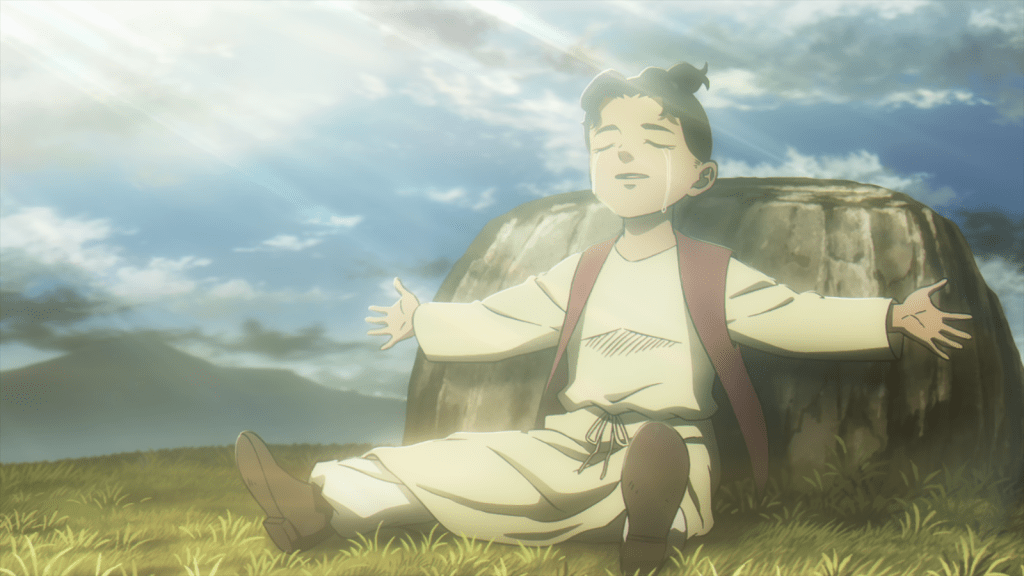
Draka was correct that, as far as we know, it’s all over after death. But does that mean life was pointless? Certainly not. The very idea that we will live forever is an supported claim fed to us by religion. This life is all we have for sure, so it’s indescribably precious. In her last moments, I think Draka realized that it’s the little joys that make life worth living. As the sun rose over the mountains, she looked at the morning light for the first time since her father died.
The dawn was so beautiful that Draka died with a smile and joyful tears. It was fitting that the anime depicted her as a small child again in that scene because Draka had returned to the state of wonder and peace she felt before her emotional trauma. I’m so happy she could appreciate a moment of healing and beauty before she faded away.
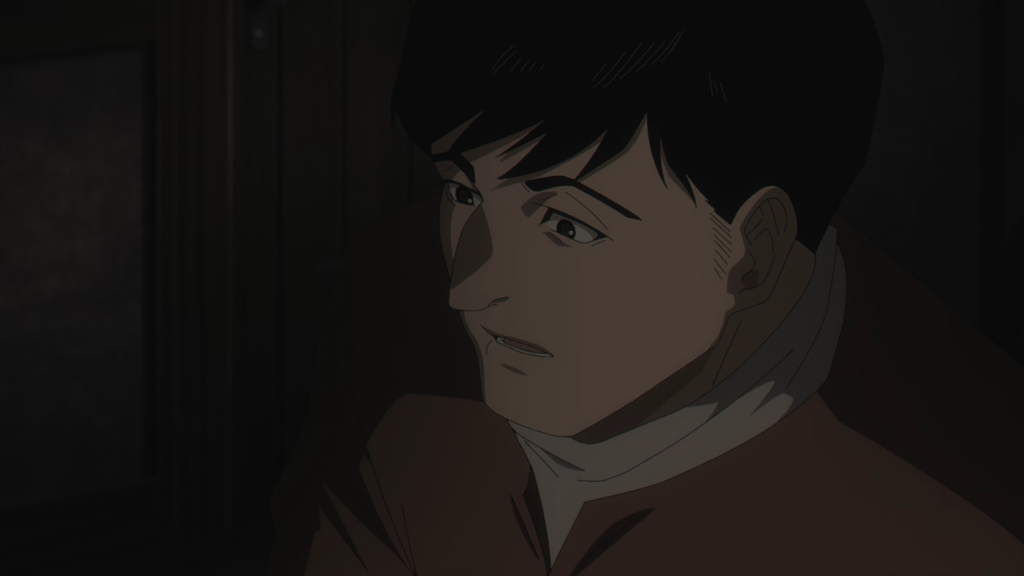
I’ve already rambled for a long time and, quite frankly, I’m tired. The last scene introduced Albert, a young man living with a kind baker. It seemed like the baker was his surrogate father. He offered Albert the chance to go to university, an extremely rare honor in those days. However, Albert declined, saying human curiosity and academia were evil. In that case, the baker asked, why hadn’t Albert thrown away his device for making astronomy measurements?
The episode ends at that point. The old cast is now dead and it’s time for a new character to take over. Albert’s tale begins a lot like that of Rafal, so it seems like the story is repeating itself. Honestly, I’m here for that, but I don’t know how long I will be able to keep investing in characters that don’t make any headway. If the series continues in a second season, the heretics are surely going to make some progress for heliocentrism, right? Right?? Anyway, that’s all for today.
~Thanks for reading~
Written by 7Mononoke



I got a little spoiler. This is the last “part” of the source material, centering on the real historical figure, Albert Brudzewski, a Polish astronomer, mathematician, philosopher, and diplomat. So, don’t be looking for a second season.
Pretty much nothing went as I expected it to with Nowak. I mean, he did kill the man who hurt his daughter, but his motivation was practically unrelated. And he did set fire to the place, but apparently did so more deliberately and thoroughly than I thought. It is still profoundly poetic that he, who talked to Rafal about burning heretics so they would never rise again, gets burned in the end, and by his own flame, born of his own misdirected wrath.
I am one to try an keep away from politics and such, as far as our blogging goes, but, two things: 1) look up the last words of famous atheists vs famous Christians, and 2) in three-and-a-half years, when it is time to vote again, will you then be willing to admit that our country is not declining at all and all the talk of “concentration camps” is just baseless lies and fear-mongering?
LikeLike
i understand the frustration of the meaningless and unfruitful nature of their actions, it frustrates me too but i think its very fitting as a reflection of history and how the pursuit of truth will always in some way have dire effects. The slow and painful struggle for someone’s absolute truth and conviction will always stay unfruitful at some point in time. Sorry for the lack of grammar and punctuation, tbh im not bothered however i’d really appreciate if you wrote something about focusing on the concept of conviction and how it was abruptly introduced in draka’s arc. something like how every character, tragically crawls toward what they feel is right and their conviction. Like a spectrum, rafal—nowak, frei—schmidt. something like that idk tbh sry :sob:
LikeLiked by 1 person