
Introduction: Albert Brudzewski
This penultimate episode focused on our new protagonist, Albert. In case some readers don’t know, this character is based on Albert Brudzewski, who was a real astronomer in the 15th Century. He was the professor who oversaw the doctorate of Copernicus, who famously proposed heliocentrism in academia. That means that our story is most likely coming to an end.
A long while ago, I predicted this anime would end with Copernicus. Honestly, I was hoping for a continued story and a second season. However, assuming the final episode can wrap things up neatly, I am also satisfied with this ending. Now let’s review the main events and topics of this episode – including the meaning of “Thaumazein.”

Episode Recap: Alternate Universe
Albert’s surrogate father, the baker, told him he was lying to himself about being satisfied with life. It was obvious to him that Albert loved learning and should go to university. Albert seriously considered his guardian’s words, but something stopped him from tracing and measuring the stars that night when he tried. Memories of his past were probably to blame. Something happened that made him shun and fear the idea of being a scholar.

The next day, Albert went to deliver bread to the local church. There, the priest asked him to confess his sins in a confessional booth – the way Catholics still do it today. Back then, it was a novel idea, so Albert didn’t feel comfortable with it at first. But the more he talked to the light-hearted, friendly priest, the more he realized he had nothing to lose by just talking about what weighed him down.
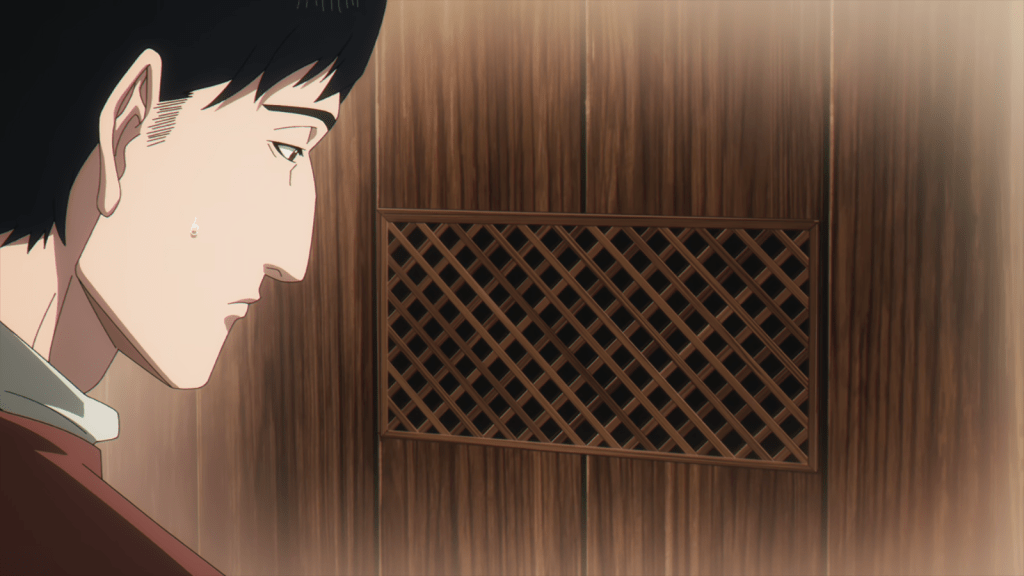
Thus, Albert began telling the story of his childhood. His real father was an extremely rare example of a literate farmer who valued learning and teaching. He taught little Albert to read, write, and study. As a child, Albert was enamored with the night sky. Even before he knew the constellations, he took nightly measurements with his astrolabe. The kid was so curious and keen to learn that his father arranged for him to have a private tutor.

The tutor that Albert’s father chose was Rafal. Yes, you read that correctly. It was Rafal, who supposedly died at twelve years old, but who now looked like a grown man. This can only mean that the last two episodes of Orb take place in an alternate universe. In this version of history, Rafal didn’t die. It’s unclear if he ever met Hubert or researched heliocentrism in this world.
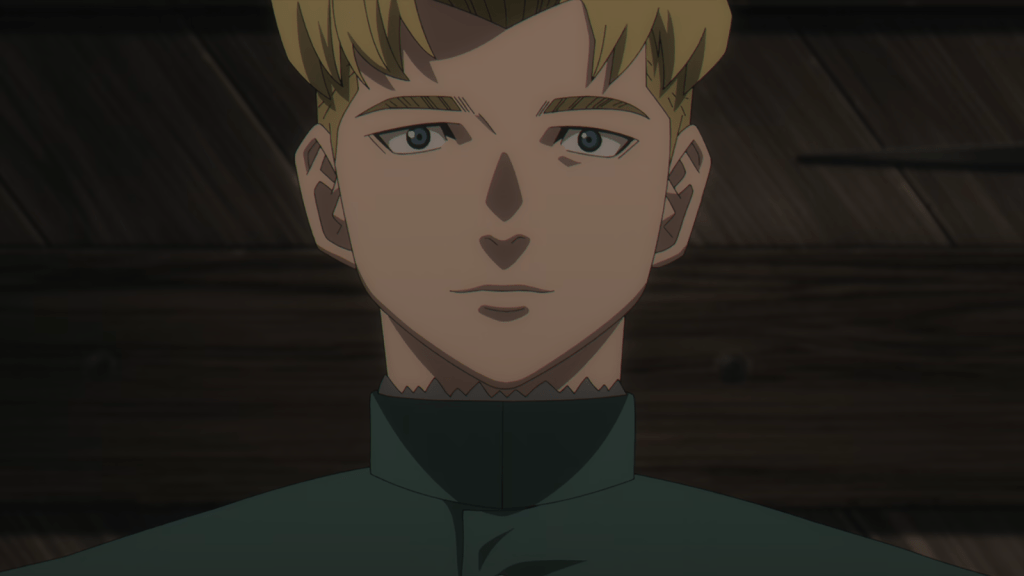
I’m surprised by this twist and I’m not sure if I like it. Rafal was my favorite character after Jolenta, so I’m glad he’s alive in this version – for now, anyway. But why switch to an alternate universe after viewers invested so much time and energy in another version of events? What was the point of all those characters dying? I think I must not understand yet the significance of this major perspective change.

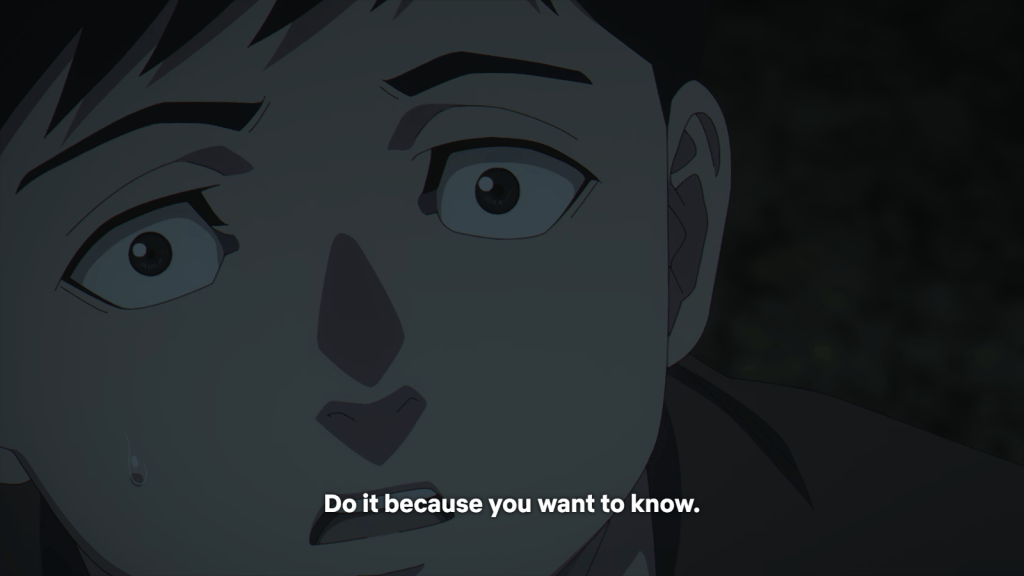
Regardless, it was great to see Rafal again. He taught Albert astronomy and math. The two of them also had an interesting talk during which Albert revealed his anxieties about learning. His father taught him that discoveries and knowledge needed to be useful in order to be valid. As a result, Albert was worried that his curiosity was wrong and selfish. Rafal told him the most liberating thing he had ever heard: that he should learn because he wants to know. No reason was needed other than his own curiosity.
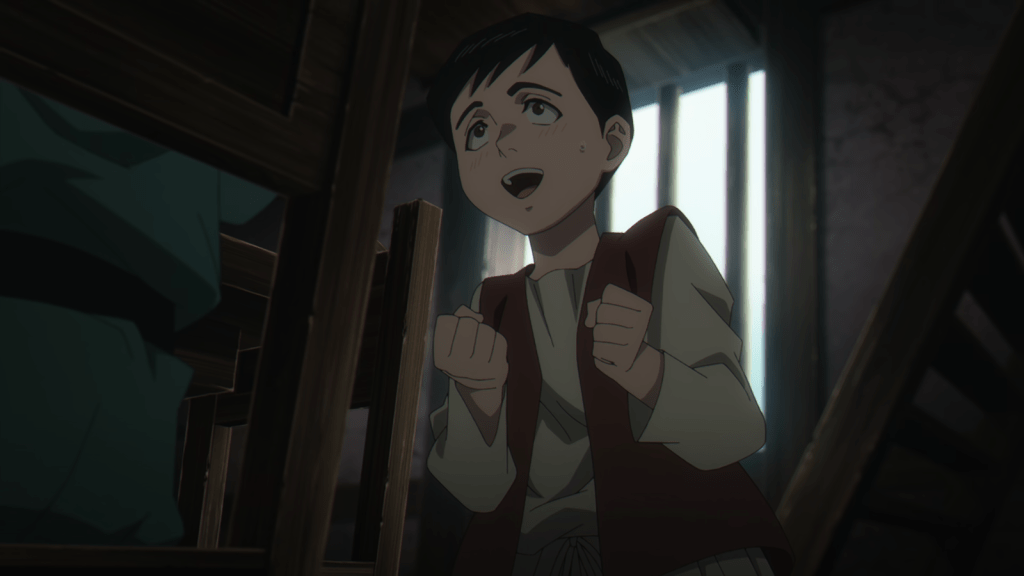
After more discussion, Rafal promised to teach Albert about constellations. Afterward, the young child started learning faster than ever, mastering different types of math. Rafal then proposed taking Albert to a meeting of “truth-seekers.” It was a group of unconventional scholars who prized the pursuit of truth above all else. Albert’s father agreed, and Rafal took the kid with him to the next meeting. Seeing so many scholars packed into one room was exciting for little Albert. The episode leaves off at this point.
Discussion: Thaumazein and More
The conversation between Rafal and young Albert was, in my opinion, the most interesting part of the episode. One of the topics Rafal brought up was thaumazein. This Greek word means “wonder” or “awe.” According to Ancient Greek philosophy, thaumazein was the basis of human thought. When we see something awe-inspiring, we stop and think about it, admiring its beauty or strangeness. Thaumazein is the feeling of fascination from which all inquiry begins.

I think the Greek philosophers were correct that for most people, scientific study begins with a sense of wonder at the natural world. It’s certainly true for me. I also think it’s only natural that a human’s interest in science and/or logic began because of an emotional experience. We’re emotional creatures. In other words, I agree that thaumazein is an important part of the human experience for many, especially those who spend their lives studying.
Despite this show’s general high-quality in writing, it sometimes produces lines that don’t make sense. When it does this, I think it’s showing us the emotional heart of the character rather than approving of anything they are saying. A great example is what Rafal said about belief. He stated, “When it comes to searching for the truth, one thing is most important. You must believe – in your intuition, in the beauty of this world.”
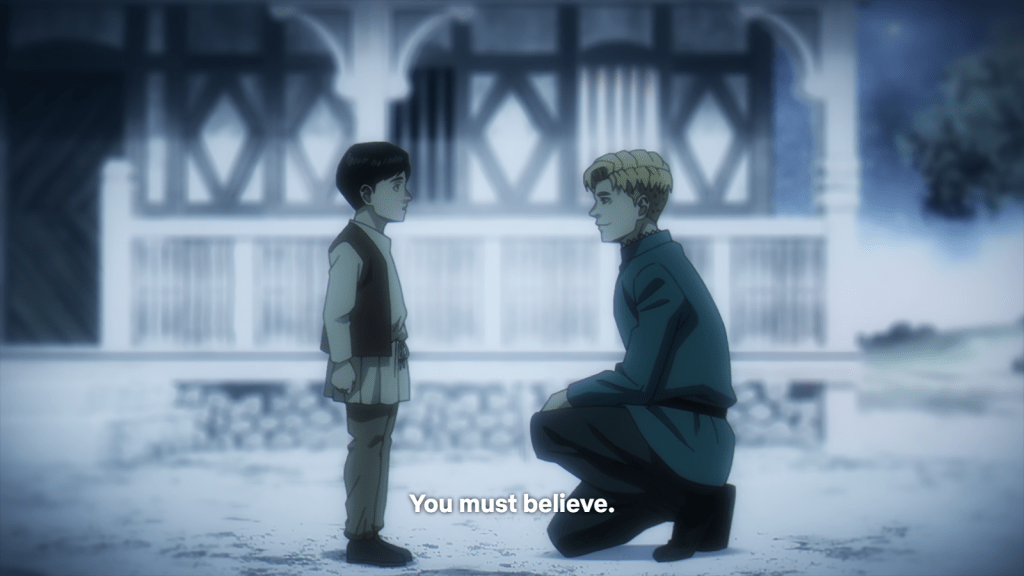
If I take Rafal’s words literally, I am left with a foolish and unreliable way of finding truth. Obviously, one’s intuition is not always trustworthy. The beauty of the world is irrelevant to whether or not something is objectively true. Is Rafal’s epistemology that poor? It’s quite likely, and that would be historically accurate for the times. People in the 15th century weren’t known for their rigorous epistemology. The scientific revolution hadn’t even begun.
Rafal’s statement was about what we should expect from a man from his time period. More importantly, this statement was about revealing the emotional heart of Rafal. To him, intuition and beauty are of paramount importance.

While we’re on the topic of history, it’s about time we discussed Christianity’s historical role in slowing down learning and progress. Albert’s initial hesitation about learning was caused by the common belief of Christians at the time that knowledge-seeking and independent thinking were generally bad things. At its core, Christianity is a religion that punishes humans for curiosity – for wanting knowledge that would make us godlike.
I’m not trying to offend the progressive Christians who hold humanistic and pro-social values. If you think Christianity generally encourages learning, I urge you to study the history of that religion as documented by professional historians and scholars. Do your own research – assuming you know how to evaluate sources – and maybe take a course at a community college in the history of religion. Traditional Christianity discourages thinking and logic in favor of supernatural terror and blind faith.

There are many good people who happen to be Christians, and these people may craft for themselves a soft version of Christianity minus the most appalling Biblical fundamentals. I did this myself for a number of years, loosely holding on to the Christian title but clearly prioritizing the humane treatment of others over any doctrine. At the end of the day, progressive Christianity may be good for some people, but it’s not what the religion is like at its fundamental core.
I felt it was important to point this out for those who are unaware of the bloody history of religion. It’s been shocking to see the number of people who deny history these days. Even some people who claim to be studying history are revisionists or have bought into revisionist narratives. For those people more than anyone, a show like Orb is important. It isn’t anti-theistic, as 90% of the characters are theists, but its story showcases the horrors of having organized religion in charge. The narrative also strongly encourages freethinking and being brave enough to question the status quo. That’s why I truly love Orb.
Next week is the final installment. I hope you’ll join me again at Anime Rants. Remember: keep questioning and think for yourself.
~Thanks for reading~
Written by 7Mononoke
 Anime Rants
it’s not an alternate universe (technically). The first 23 episodes is a story that Albert wrote based on:
a)his experiences and people he met during the last 2 epiaodes, including the older Rafal he met who he divided up and wrote him as 2 separate characters: Rafal AND Nowak. Both characters were inspired from the real Rafal, hence why they have such a strong connection.
b)things and quotes he heard. Such as the quote about what one should give up to obtain truth, spoken by the priest, and then are the first words we hear in the first episode
c) himself. He has a lot of similarities with some of the previous characters, such as oczy.
d) and the catalyst, a lost letter addressed to a Potocki about a book titled “about the movements of earth”
Bonus 1: Evidence of this theory is that the setting where the first 23 episodes happened is called The kingdom of P. But the setting in the last 2 episodes is written as the Kingdom of Poland.
Bonus 2: The author possibly inserts himself in one of the last quotes of Rafal. Right after Rafal killed Albert’s dad, Rafal said something along the lines of: this may seem strange, but if you think about it logically you can figure it out. This could be the author trying to give us some support in trying to figure out this crazy plot twist
LikeLiked by 1 person