
Welcome to Anime Rants! Today we have a list of the characters from Jujutsu Kaisen with their MBTI types! I hope it will be a useful reference for those interested in the model and these characters. As always, feel free to comment your ideas or arguments if you have disagreements with my choices. However, keep it polite, or your comments will be deleted.
Warning: Anime Spoilers will be present
Akari Nitta: ESFJ

Akari is a minor supporting character who helps out at Jujutsu High. She drives the teenagers around for their mission in the last arc of season one. Working with the teens, she tries to find out the mystery of the haunted bridge. She’s a cheerful and warm person.
It’s hard to know Akari’s type based on our limited information, but my rough guess would be ESFJ. For one thing, Akari is obviously very caring and extraverted. For another, she’s pracitcal, responsible, and helpful. You can even see little bit of the “overprotective mom” in her, which is a common stereotype of ESFJ.
Aoi Todo: ESTP

Todo is a promising Jujutsu student from the Kyoto Sister School. After meeting Yuji Itadori, this man decided they might as well be brothers. He has an extremely exuberant personality and a great sense of teamwork and optimism. With a strong need for action and a powerful focus on physical reality, Todo certainly uses extroverted sensing (Se). That is his primary cognitive function.
I used to think Todo was an ESFP, making his secondary function introverted feeling (Fi). However, due to the arguments of several people on the Personality Database, I now think ESTP is a better choice for Todo. We expect to see an analytical, logical mind from a user of introverted thinking (Ti). This doesn’t sound super accurate to Todo if you ask me. But you can also look at it this way: Todo is incredibly fair, always striving for good sportsmanship. That can definitely be a Thinking trait.
Random note: Todo is also possibly the most gay heterosexual man to exist in anime. You’ll probably know what I’m talking about if you’ve looked at this man’s interactions with Yuuji. I may or may not have lost my shit laughing at the baseball scene, when Todo said he wanted to see Yuuji being “pitcher.” My fellow Fujoshis should understand.
Choso: ISTJ

Choso is one of the Cursed Wombs crafted by Noritoshi Kamo over a hundred years ago. He is half human and half cursed spirit. In terms of personality, Choso is intense, serious, and quick to take action. As a user of introverted sensing (Si), he is reliable, cautious, dedicated, and effective at what he does. I also think Choso would use extroverted thinking (Te), what with his no-nonsense attitude, intensity, and the way he strives to be both logical and moral. This would make Choso an ISTJ. Though I can see an argument for him being ISTP, I think his strong adherence to fairness and loyalty is more of an ISTJ thing.
Dagon: ISFP?

Dagon is a cursed spirit who works with Mahito and Jougo. We only get a little bit of time with Dagon, so my guess for his personality type comes with a low degree of certainty. Dagon’s attachment to the concept of personal identity is evidenced by the way he demands to be called by name like a human. To me, this suggests a strong function of introverted feeling (Fi). Since he is quick to action, adaptable, and practical, Dagon probably uses extroverted sensing (Se) as his secondary function. This makes him an ISFP.
Hanami: ISFJ

Hanami is a cursed spirit embodying humanity’s fear of nature. As such, her powers are based around plant and earth manipulation. She is one of the few cursed spirits capable of reason and human speech, and she believes humans are a blight on the earth. Hanami is my personal favorite out of all cursed spirits we’ve seen so far. Since Hanami is driven by her personal beliefs, and seeks to protect the planet, she is probably a feeling type. Also, because she is practical and sensory-oriented, she is uses sensing over intuition.
My first guess for Hanami’s type based on cognitive functions was actually ISFP, because I thought her dominant function would be introverted feeling (Fi). Upon closer inspection, Hanami’s form of feeling is more extraverted (Fe). But I think this trait is too active to be the dominant function for someone quiet and thoughtful like Hanami. Therefore, she is probably an ISFJ, whose top two functions are introverted sensing (Si) and extraverted feeling (Fe).
Haruto Shigemo: ESFP

Appearing briefly in the exchange school arc, Haruto is an evil curse user. He has a distinct voice and appearance that make him seem odd and effeminate. Fans suspect he might be a pervert from the way he holds his clothes in the crotch area. In addition, he is clearly extremely sadistic, and seems to derive pleasure from hurting people.
Minus the pervert part, Haruto seems like a stereotypical ESFP. People of this type are usually extaverted and a bit larger-than-life. They are also very concerned with self-expression and sharing their unique personal aesthetics. Compared to other ESFPs on this list, Haruto seems less aggressive and more feminine in the way he talks. It just goes to show that there is a lot of variety in each MBTI type.
Jougo: ESTJ

Jougo is a cursed spirit with volcano-themed powers. He is one of the few cursed spirits capable of rational thought and speech. As he is the first to challenge Gojo in season one, he is clearly confident and ambitious, hungry for power and victory.
Jougo dislikes the irrationality of humans, and has little emotional expression outside of anger or annoyance (at least in season one). Always one to keep others on track, he is probably a strong user of extroverted thinking (Te). As a sensing type, Jougo is focused on reality and what he can see with his own eyes. He may not be the most clever or imaginative thinker, but he’s not stupid. This cursed spirit is logical, practical, and capable. Assuming Si (introverted sensing) is his secondary function, Jougo would be an ESTJ type.
Update Note: Season 2 showed us Jougo’s softer side. He is a lot more “human” than I previously believed. Since Jougo cares about his mission and a handful of other cursed spirits, one may interpret him as a feeling type. However, I still think ESTJ is a fairly good fit, as people of this type can be effective leaders with a strong dedication to both their goals and the well-being of those in their care.
Junpei Yoshino: INFP

Severely bullied in school, Junpei became resentful toward humans and unable to see the value in human life. All of the 16 types have cases of both healthy and unhealthy individuals. Junpei is an example of the unhealthy kind of INFP, usually called the turbulent variant. Healthy INFPs are typically quiet but sweet, with a romantic nature and a strong set of personal ethics. They are also thoughtful and understand abstract connections and ideas. An unhealthy INFP, on the other hand, is impossible to reason with, being driven by powerful negative emotions and destructive impulses.
The dominant function for an INFP is Fi, or introverted feeling. It’s possible for this trait to become toxic when the emotions guiding it are negative instead of based on hope and good will. When the Fi function becomes corrupted, it results in a hyper-emotional individual who cannot reconcile reality to their expectations. In my opinion, this is exactly what happened with Junpei. Mahito disrupted his already damaged sense of values and preyed on his naturally intense emotions.
Juuzou Kumiya: ESFP

Juuzou is the insane and evil Jujutsu sorcerer who worked with Mahito for one reason only: to have a chance to kill Satoru Gojo. You see, Juuzou’s passion is to use human pieces to make crafts, tools, and decorations. He longs to make a coat-rack out of Gojo’s body. As far as we know from the anime, that’s literally Juuzou’s only motivation and character feature.
Based on stereotypes, the obvious choice for Juuzou’s type is ESFP. Frankly, at least in fiction, this type is rather stupid and thinks they are the center of the world. Looking at it a bit more closely, we can see that Juuzou’s need for action and lust for violence suggests a dominant function of Se (extraverted sensing). His secondary function would either be Fi or Ti. Considering his lack of logic and his passion for his peculiar self-expression, I would say he uses Fi (introverted feeling.) This indeed makes Juuzou an ESFP.
Kasumi Miwa: ISFJ

Miwa is an adorable Jujutsu sorcerer who uses a sword. Though she is fairly skilled, she isn’t very high-ranking, and often feels useless. Nevertheless, Miwa always tries her best. She is working hard to finish training as soon as possible so she can make money to send home to her poor family. Clearly, she’s a sweetheart. Extraverted feeling would have to be one of her primary cognitive functions.
Miwa’s practicality and focus on reality suggest sensing over intuition. The form of sensing is definitely introverted, as Miwa is more level-headed and contemplative than someone who uses extraverted sensing. This means her type would likely be ESFJ or ISFJ. I believe the latter is the better option because her introverted ensing is stronger than her extraverted feeling.
“Kenjaku”: INTJ
Warning: Season 2 Spoilers!

“Kenjaku” is the mysterious entity possessing the body of Suguru Getou after his death in Jujutsu Kaisen 0. The second season reveals that Kenjaku is a curse user from long ago who has been hopping around in different bodies to stay alive. His old name was Noritoshi Kamo and he is thus the father of the Cursed Wombs, including Choso.
Kenjaku is a fairly classic anime villain of the strategic variety. He is intelligent and has excellent intuition, always scheming in the background and making predictions about how things will unfold. Kenjaku is a little more amiable and cheerful than the stereotypical INTJ, but I still think INTJ is a good choice for a villainous mastermind. If we learn more specific information about his personality in future seasons, I may update my opinion.
Kento Nanami: ISTJ

ISTJs are often workaholics and people who take life very seriously. They are logical and analytical, but also typically concerned with duty and protecting others. An ISTJ might seem stiff and aloof, but they are always trying to do what’s right. Going by stereotypes, Nanami is a textbook ISTJ. I’m very familiar with the type, so I’m confident about this. However, I’ll also provide a quick breakdown.
Nanami is extremely grounded and down-to-earth. This plus his practicality and sense of responsiblity suggests introverted sensing. The only types with dominant Si are ISFJ and ISTJ. It shouldn’t be difficult to see that Nanami is a thinking type. He’s sensible, fair, and does not make decisions based on personal emotions. Nanami’s form of thinking is extraverted, directed at the world around him (sometimes a bit aggressively). With all this in mind, it’s clear this man is an ISTJ.
Koukichi Muta (“Mechamaru”): INTJ

Muta is a Jujutsu sorcerer who remotely controls a mechanical soldier with impressive power. He seems like an unbalanced thinking type – someone who ignores or tramples on the feelings and values of others in the name of logic. Mechamaru is likely a user of extraverted thinking (Te), which is more outwardly directed form of thinking. However, I don’t think Muta is as bold as an ENTJ or as aggressive as an ESTJ. So, Te is probably his secondary function.
His first function is either introverted sensing (Si) or introverted intuition (Ni). The latter makes a lot more sense since we saw Muta’s fighting strategies and creative plans against Mahito in the second season. Intuitive people are also less traditional and more individualistic than most sensing people. Finally, to me, Mechamaru just has the vibe of a bitter INTJ whose unfair lot in life led him to desperate measures.
Kiyotaka Ijichi: ISFJ

Ijichi is a secretary and a helpful man who often drives Yuuji and the others around for their missions. He is not a teacher, but helps Jujutsu High function. Despite having a small role in the anime, Ijichi leaves an impression as a genuinely kind-hearted, caring man. He sees it as his duty to protect the students. Based on this much alone, his type is probably ISFJ. Since there are no examples I can think of that disagree, we’ll assume that’s right for now.
Mahito: ENFP

The main antagonist of Jujutsu Kaisen, Mahito is a powerful cursed spirit with a distinctly human appearance. His goal is to let cursed spirits rule in place of humans and to fully awaken the demon Sukuna. Without a doubt, Mahito is a psychopath, a sadist, and a hedonist. He excels at manipulating people and delights in chaos. Other strongly defining traits of Mahito are his playfulness and his sense of exhilaration at being alive. In some ways, he has the mind of a badly behaved child.
At the time of writing this article, the general opinion online is that Mahito is an ENTP. That’s what I thought at first, too. But I no longer believe that’s the most fitting choice. I will quickly break down how I determined Mahito’s MBTI type. First of all, Mahito is a great example of someone who uses extraverted intuition (Ne) as their primary function. This individual is clever and abstract in his thinking; he can quickly leap between different ideas to make connections and theories. He loves to learn and experiment with everything.
Mahito is either an ENTP or an ENFP, since both have extraverted intuition as their primary function. Now, Mahito may seem like a thinking type, mostly because they are perceived as being more intelligent than feeling types (which isn’t necessarily true). ENTPs are also stereotypically more villainous in fiction than the heroic, encouraging ENFPs.
For these reasons, it’s not immediately obvious that Mahito is ENFP. In my opinion, he is clearly guided by his personal beliefs, which is a feeling trait. He experiences a rich world of emotions, and he knows exactly how to emotionally manipulate others. These are the marks of a toxic feeling type. Therefore, I think Mahito is an ENFP.
Mai Zenin: ISFP

My nickname for this character is “Thunder Cunt,” and she’s a real piece of work. For starters, she’s a bully who likes to intimidate and even physically harm younger students. She’s also short-fused in general, and her insecurity makes her harshly judgmental of others. Mai’s issues at least partly stem from perceived abandonment. She hates her sister Maki for leaving the clan and following her own dreams. But even if she’s hurting a lot, that’s not an excuse for her bitchy behavior.
Mai has a strongly emotional nature and feels she will never be worthy. She prioritizes her own feelings and beliefs over anyone else and their wellbeing. This suggets she uses a toxic version of introverted feeling (Fi). Additionally, Mai uses extraverted sensing (Se), as evidenced by her quickness to take action and hands-on approach to everything. With Fi and Se as her top functions, this unpleasant girl is either an ESFP or an ISFP. I believe she is the latter, since she isn’t especially extraverted. While ISFPs have many good traits, Mai is an example of a turbulent variant with strong negative sides.
Note: I can also see a strong argument for Mai being a turbulent ISTP.
Maki Zenin: ENTJ

Maki is the twin sister of Mai who takes over the role of “Big Sister,”‘ even though the two are technically the same age. She is the heir to the Zenin clan, but unfortunately, she didn’t inherit any Jujutsu abilities or cursed powers. This impairment didn’t stop Maki. She made a Havenly Pact, gained immense strength, and left the clan behind to do things her own way. One day, she promised, she would be back to rule over the whole family. Maki is amazing.
Generally, this bold girl seems extraverted, thinking, and judging. It’s a bit harder to tell whether she’s intuitive or sensing. When it comes to the cognitive functions, Maki uses the extraverted form of thinking, Te. That is her primary function, making her either ESTJ or ENTJ.
At the time of writing this article, the internet consensus is that Maki is an ESTJ. Since many people have read the manga and know more than me, I admit they may be correct. But based on season one of the anime, I believe Maki is slightly more intuitive than sensing. She has the ENTJ boldness and unique vision. Her thinking is more creative and less traditional. She isn’t always practical, but her methods are frighteningly effective. That’s why I think Maki is an ENTJ in the anime version.
Masamichi Yaga: ISTP

Yaga is a first grade Jujutsu sorcerer. He was the teacher for Gojo and Suguru in the past. Additionally, Yaga is a master of crafting cursed puppets. He created Panda, possbily the first puppet with his own soul. Based on his brusque speech and grumpy attitude, Yaga isn’t the most sociable or amiable man. He uses an internal system of logic to make decisions. In other words, he uses introverted thinking (Ti). This is probably his primary function.
It’s also clear that Yaga is strongly sensing. While anyone of any type can be a fine craftsman, it’s also true that sensing types tend to have more natural talent with physical skills and handiwork. Yaga’s form of sensing is active and outwardly directed – extraverted sensing (Se). He is a bit of a muscle-head, disliking theory and abstract rhetoric. With his top functions being Ti and Se (in that order), Yaga is an ISTP type.
Megumi Fushiguro: ISTP

Megumi is a young Jujutsu sorcerer who often works together with Yuuji and Kugisaki on their missions. He is quiet, aloof, and somewhat grumpy, but he has a heart of gold. Though he used to be a punk in middle school, now he’s a little too altruistic for his own good. That said, Megumi is a logical thinker, and usually makes the reasonable choices. Despite being a bit hostile early on, he is good friends with Kugisaki and Yuuji by the end of the season. He may be rough on the outside, but this young man is always trying to protect others.
As for his MBTI type, Megumi is a great example of an ISTP. His primary function is introverted thinking (Ti), as evidenced by his objective decision-making and need to screen every action against his internal logic system. This boy’s secondary function is extraverted sensing (Se), and it’s apparent from his practicality, physical connection to reality, and lack of intuitive qualities. ISTPs in fiction are usually the cool hero type, but as teenagers, they are often more aggressive and hotheaded. Megumi fits this description perfectly.
Mei Mei: INTJ

A grade one sorcerer, Mei Mei is a smart and beautiful woman. She is a teacher at Jujutsu High, helping multiple generations of young sorcerers. There are few things – if any – that Mei Mei cares about more than money and personal gain. My first thought about her MBTI type was that she had to be intuitive. Compared to a sensing type, she’s more abstract and clever in her thinking, and less grounded in physical reality. It’s also obvious that Mei Mei would be a thinking type, who uses a system of logic to make decisions over the human elements of emotion and values.
Now we just need to find out what types of intuition and thinking Mei Mei uses, and what order makes the most sense for them. Her thinking seems extraverted to me, directed outwardly to make sense of the world. In contrast, her intuition is a more passive characteristic, as she’s always thinking quietly in the back of her mind. With her two leading functions being Te and Ni, Mei Mei is either INTJ or ENTJ. Although I can see a strong argument for ENTJ, I personally think INTJ is the better fit.
Miguel Oduol: ENTP?

Miguel is a talented jujutsu sorcerer who tried to help Suguru Getou become king in Jujutsu Kaisen 0. Following Getou’s defeat, Miguel switched to the “good side” and began helping Satoru Gojo. We only have a little bit of time with this character, but Miguel seems relatively laidback and cheerful, becoming excited and passionate when there’s something to fight for. My initial guess for Miguel’s type is ENTP, but I don’t feel certain.
Misato Kuroi: ISFP

Kuroi is a supporting female character who appears in the Hidden Inventory arc of Jujutsu Kaisen 2nd Season. She is a maid who takes care of Riko Amanai. Based on everything we’ve seen, Kuroi thinks of Riko as family and is the closest thing in her life to a parent. In terms of personality, Kuroi is quiet but fierce, with a strongly protective and loyal nature. She has good practical skills, and is also brave and quick to action in dangerous scenarios.
The usual type for this character archetype is ISFJ. However, though an ISFJ is unsurpassed in loyal caretaking, they are generally steady, reliable, and traditional. In comparison, an ISFP is harder to pin down, more chaotic, and usually equipped with an extremely stubborn streak. ISFPs tend to be fearless, reckless idiots who will do anything for their loved ones. Kuroi to me sounds more like an ISFP than an ISFJ.
Momo Nishimiya: INFP

In my opinion a sadly underrated character, Momo is a cute young Jujutsu sorcerer whose ability lets her fly on a broom like a witch. Although she is antagonist to Yuuji and helps out in the attempt to kill him, I don’t think she is an evil person. Anyone who doesn’t know Yuuji would be justified in fearing and distrusting the vessel of Sukuna. Plus, Momo has little ability to go against orders – she could, but it would risk her standing as a sorcerer, for which she worked so hard. In short, Momo is selfish and insecure, but not evil.
In terms of the MBTI, I immediately pegged Momo as an INFP. As a type whose dominant function is Fi (introverted feeling), Momo is driven first and foremost by her powerful emotions. A healthy and well-adjusted Fi-dom usually develops a strong ethics system and an attitude of optimism, but not everyone is so fortunate. Many INFPs and ISFPs find themselves too easily governed by negative emotions as a result of difficulty and harsh environments.
Since Momo is more abstract and creative than practical and grounded, she is probably an intuitive type. She’s certainly quite thoughtful and quick to learn. Extraverted intuition (Ne) is most likely her secondary function. With the top functions of Fi and Ne, and an introverted personality, Momo is definitely an INFP.
Nagi Yoshino: ENFP
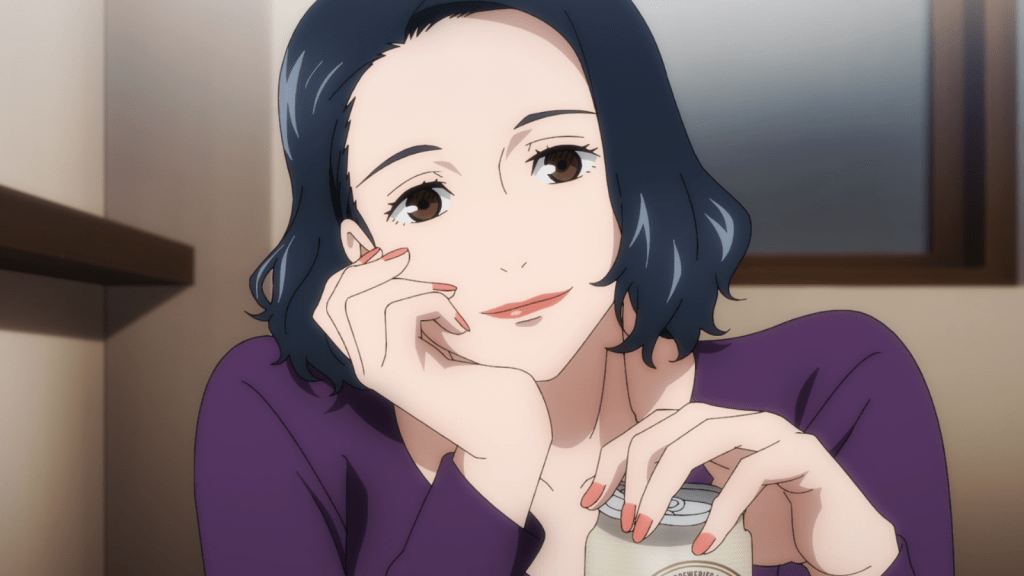
A minor supporting character, Nagi is the mother of Junpei Yoshino. I wanted to include her because I loved the brief time we got to see her character. Nagi is a nontraditional mother who values personal freedom, self-expression and individuality. She’s also a bit irresponsible at times, like when she gets drunk in front of Junpei’s new friend. (I loved that scene.)
In terms of the MBTI, it’s fairly obvious to me that Nagi is an ENFP type. I can see an argument for ENTP as well, but I think she follows her heart (Fi) more than trying to stick to fair, logical rules (Ti). Nagi is a great example of a warm, supportive ENFP.
Naobito Zenin: ESTJ?

Naobito, or Old Man Zenin, was the leader of the Zenin Clan of Jujutsu sorcerers. He appears in season 2 to help fight Mahito’s forces. Because his leadership allowed many backwards and unjust things – including the mistreatment of Maki – it’s hard to hold a positive opinion of the old man. Naobito’s personality isn’t entirely clear from his limited screentime, but his nature as a capable, outspoken, and stubborn leader suggests ENTJ or ESTJ. The latter is probably more accurate, since Naobito seems more traditional than inventive and very geared toward practical action.
Nobara Kugisaki: ESTP

An independent and defiant girl, Kugisaki can come across as purely aggressive at first. She is actually just assertive and confident, usually choosing self-expression over consideration for others. Kugisaki is very capable of caring for others, but as she puts it, she has “limited seats,” or only a few people for whom she feels deep care and love. This girl can get a little crazy in her eagerness for battle and lust for action. She also loves nice sensory things like clothes and cosmetics.
Two things become clear about her fairly quickly: 1) she’s a very physical person, and 2) she isn’t concerned with emotional attachments or romantic values. In other words, Kugisaki is a sensing type and a thinking type. While a feeler would be driven by personal values, feelings, and subjective details, a thinking type like Kugisaki is driven by internal logic and more objective reasoning. This spunky girl is likely an ESTP, whose top functions are extraverted sensing (Se) and introverted thinking (Ti).
(Please note: a thinking type doesn’t always make the best decisions. They forget the human elements and how to consider others. Their “internal logic” can easily be clouded by anger or carelessness. This is especially true for the ESTP type, who is so governed by their sensory appetites that they may throw out reason on purpose.)
Noritoshi Kamo: ISTJ or ESTJ

A promising Jujustsu student, this young man is the heir to the prominent sorcerer clan of Kamo. His techniques use his own blood mixed with cursed energy, and he’s an excellent archer. Even though he’s the heir to the clan, Kamo is actually a “bastard child” whose mother was an object of scorn to the family. Because of how unfairly his mother is treated, Kamo wants to take over the clan and make it a better place for people like him and his mom.
Kamo is a highly logical person who relies on reason. As such, it doesn’t make sense to him that his mother is treated so badly because of arbitrary rules. Extraverted thinking (Te) is definitely one of Kamo’s top functions. In addition, he is a user of introverted sensing (Si), whose practicality and good sense help make him an effective fighter.
Both ISTJ and ESTJ have these two traits as their top functions. The thinking element is stronger in the ESTJ, and they are more outgoing and sometimes aggressive. Meanwhile, the sensing element is stronger in the ISTJ, and they are quieter and more concerned with personal honor. I don’t think there’s enough information in the anime’s first season to say for sure if Kamo is ESTJ or ISTJ. You’ll have to decide this one for yourself.
Panda: ENTP

Panda is not actually a real panda bear, but a biotic “puppet” made with cursed energy. His creator and surrogate father was Yaga-sensei. Unlike other cursed puppets, Panda has a mind and will of his own. Within the lore of Jujutsu Kaisen, he is the only puppet who seems to have a soul. Throughout his screentime, Panda is insightful, intelligent, and helpful. His goofy sense of humor always lightens the mood. Plus, he gives really good advice sometimes.
As for Panda’s MBTI type, I think it’s either ENFP or ENTP. It’s clear that he is confident and social. Although he’s not too impractical, he does seem to be more intuitive than sensing. He is much quicker on the uptake than you might initially think. Plus, Panda is very adaptable. It’s likely that he uses extroverted intuition (Ne). But what about his second function? Is it introverted thinking (Ti) or feeling (Fi)?
Although Panda is kind-hearted and uplifting to others, I think he’s slightly more of a thinker than a feeler. This is evidenced by his neutral and fair way of handling tough situations. In addition, Panda has the stereotypical ENTP habit of teasing his friends whenever he can.
Rika Orimoto: ENFP
Warning: Spoilers for Jujutsu Kaisen 0

Rika is a minor character in the movie Jujutsu Kaisen 0. She was the childhood friend of Yuta Okkotsu. An enthusiastic, active, and loving child, Rika gave Yuta an “engagement ring” to show her affection. But unfortunately, the young girl died in a tragic accident. She revived in the form of a powerful cursed spirit. Rika obsessively protected Yuta from childhood through late teenage years. ENFP is the most likely contender for Rika’s personality type. People with this personality are generally very extraverted, optimistic, and emotional.
Note: Rika’s original spirit seems to have been “sent off” peacefully at the end of the movie. However, Rika the cursed spirit still exists as an entity that fights alongside Yuta.
Riko Amanai: ENFP
Warning: Jujutsu Kaisen Season 2 Spoilers!

Appearing in the Hidden Inventory Arc of Jujutsu Kaisen Season 2, Riko was an extroverted teenage girl. She was chosen to be the next vessel for the mysterious entity known as Tengen. This means she would have to offer her body and life to that being. Riko grew up with this knowledge, and it shaped her personality to some degree. Before she could give herself to Tengen, Riko was assassinated.
Riko’s most noticeable traits included her enthusiasm, tenacity, and courage. She put on a tough, heroic act most of the time, and claimed that it was her sacred duty to prolong the life of Tengen. Under the bravado, Riko was also sensitive and romantic in nature. She wanted nothing more than to taste and understand the beauty of life. All of this describes the ENFP type to a T. I think it’s clear that ENFP is the right choice for Riko.
Satoru Gojo: ENTP

Gojo is the unconventional Jujutsu teacher who first recruited Yuuji. As the user of Six Eyes and Infinity techniques, he is regarded as the most powerful sorcerer in all the Jujutsu families. He is extremely extraverted and playful, with a love of teasing others. Additionally, Gojo enjoys upsetting the established order and bringing change to the systems at play. This man is used to being special, so he can be very arrogant. This was especially true when he was a student in Jujutsu High himself.
With a keen mind and an eye for seeing how things will play out, Gojo is definitely intuitive. He loves to learn and is exceptionally bright. Extraverted intuition (Ne) would be his dominant function. In my opinion, Gojo’s secondary function is Ti (introverted thinking), as he makes his decisions based on a system of internal logic. Though he can be reckless, he does have a logical mind and can understand when to be more objective. This makes Gojo a prime example of an ENTP.
Shoko Ieiri: INTP

Shoko is a Jujutsu sorcerer with an important technique: the ability to reverse cursed energy. Nobody else can do this. This young woman is generally quiet yet assertive – calm yet sassy. She’s very easygoing and prefers to avoid drama and emotional encounters in general. Additionally, she is great at analyzing things and thinking outside of the box. When Shoko communicates with others, she always tells it to them straight, not sparing their feelings.
Based on all this, it’s apparent that Shoko is introverted, intuitive, and thinking. If you consider her laidback nature, you’ll see that INTJ is not the best choice for Shoko. INTP is a much better fit. People of this type are usually intelligent, analytical, and individualistic. They also have a reputation for wanting to avoid expending effort – except if it’s effort put toward their personal passions. The INTP’s dominant function is introverted thinking (Ti), with a secondary function of extraverted intuition (Ne). This makes sense for Shoko.
Suguru Getou: INFJ
Note: Jujutsu Kaisen Season 2 Spoilers
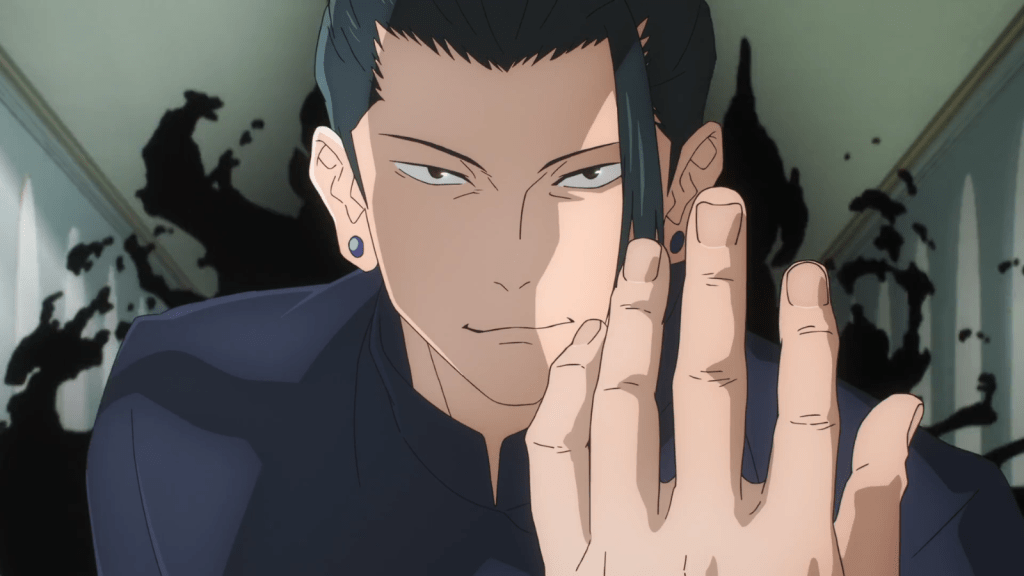
In Jujutsu Kaisen 0, Getou acted as a cunning antagonist and evil user of curses. However, before that, he was a “good” Jujutsu sorcerer who spent a lot of time on missions with Satoru Gojo and Shoko Ieiri. The first few episodes of Jujutsu Kaisen Season 2 show us the story of Getou’s descent into villainy. His main motivation is to rid the world of curses by causing the evolution of all humans into Jujutsu sorcerers. The mechanism for this “evolution,” of course, is the systematic elimination of non-sorcerers. Yikes.
As a young man, Getou had a strong sense of ethics and the desire to protect those weaker than himself. He was always polite, insightful, and dignified with his words. Even as a villain, he was excellent at reading other’s emotions and responding to them to achieve the desired outcome. As a clever antagonist, the most obvious choice for Getou would be INTJ – But I don’t think that’s right. I agree that introverted intuition (Ni) is his primary function, but I see him as a feeling type mostly due to his perfectionistic idealism and ability to manipulate others.
Contrary to the idea that calculating antagonists cannot be feelers, there are many examples of smart ENFJ and INFJ villains in anime. I believe Getou is the latter. People with the extroverted feeling trait (Fe) need not always be altruistic or heroic. A toxic INFJ is extremely manipulative and outwardly charming to others – this is made possible by their use of Fe.
Besides, looking at the usual profiles of INTJ versus INFJ, it’s the INFJs who are able to blend in smoothly into society and who are respected as wise and resourceful. In contrast, INTJs get an unfair rep for being villainous because of their lack of emotional expression and intense focus on their work or passion. INTJs are also generally more individualistic, while (some) INFJs excel at group cooperation. In short, Suguru Getou is probably an INFJ.
Sukuna Ryoumen: ENTJ

Called the King of Curses, Sukuna was once the world’s most powerful demon. When he died, he split his strength into twenty pieces: the twenty fingers from his four arms. By consuming one of Sukuna’s cursed fingers, Yuuji became the vessel of Sukuna. Despite once being so powerful, Sukuna cannot control Yuuji, and and can only fully “come out” when given permission. This demonic being is pure evil, loving chaos and destruction of innocent lives. He is also confident, clever, and a long-term thinker with big plans.
Sukuna is the textbook ENTJ villain: arrogant, cruel, and extremely intelligent. ENTJs are defined by their extraverted thinking function (Te), which allows them to make the best decisions. A healthy Te-user with a moral compass is concerned with fairness and objectivity, but a power-hungry and toxic Te-user ignores ethical values and social considerations in favor of cold, analytical logic.
Unlike the more practical (and often more traditional) ESTJ, an ENTJ like Sukuna is bolder and more clever. Introverted intuition (Ni) is the second function, and it lets the ENTJ achieve innovative ideas. While good-aligned ENTJs can be amazing leaders, an evil one like Sukuna is simply a tyrant.
Toge Inumaki: INTP

Hailing from the Kyoto sister school, Inumaki is a young Jujutsu sorcerer with the power of cursed speech. Basically, whatever he says will happen. The feedback from this powerful technique can be deadly, and the cursed words can only be used a few times before destroying their user. Inumaki is so dangerous that he must limit his vocabularly in daily life so as not to use his cursed speech on anyone. That’s why the only words he ever says are ingrediants in onigiri (rice balls). Typically, he responds with “Salmon” or “Tuna.”
Despite not having any meaningful dialogue, Inumaki still has a distinct personality. He is calm, laidback, and quiet. Unlike Todo and Mai, he’s not a bully and will sometimes protect new students from them. This shows he cares about fairness and being reasonable. Inumaki is likely an introvert with the thinking and perceiving traits. This means he is either ISTP or INTP. I believe he is the latter, because his attitude is more in line with the typical INTP, lacking the open defiance and intensity of most ISTPs.
Toji Fushiguro: ESTP
Warning: Jujutsu Kaisen Season 2 Spoilers

The father of Megumi and Tsumiki, Toji Fushiguro was an assassin specialized in killing Jujutsu sorcerers. He was originally from the Zenin Clan. After he killed Riko in the Hidden Inventory Arc, Toji was obliterated by the newly awakened Satoru Gojo. As for personality, this man was something of an adrenaline junkie. He fathered kids without caring about them, enjoyed dangerous assassin jobs, and took up hobbies like gambling.
Based on stereotypes alone, Toji would have to be an ESTP. People of this type, though easily capable of good logic, sometimes seek thrills to the point where good sense gets thrown away. An ESTP’s two main functions are extroverted sensing (Se) – which gives them an appetite for action and physical stimuli – and introverted thinking (Ti), which gives them analytical skills and a sense of internal logic. It’s possible that Toji is an ISTP, because they have the same two leading functions. But since Se is the stronger function, I think ESTP is a better description for Toji.
Tsumiki Fushiguro: INFJ?

Tsumiki is the older sister of Megumi. Due to a certain curse, she is bedridden and basically unconscious. All we know about Tsumiki (in the anime) comes from Megumi’s flashbacks. In my opinion, there isn’t enough information yet to pinpoint the MBTI for Tsumiki. However, based only the vibes of her character, I would guess INFJ or ISFJ for her. To me, she seems unusual, mysterious, and idealistic. Therefore, my guess is INFJ.
Utahime Iori: ENFJ

Once a student at Jujutsu High, Utahime is now a beloved teacher there. The current consensus on The Personality Database app is that Utahime is an ISTJ, but I disagree. I see her as intuitive type, since she’s a creative thinker and a bit of an airhead. Morever, I don’t see her using much extraverted thinking (Te) at all. Utahime is deeply caring, very emotional, and wants to take care of others. As such, her primary function would be extraverted feeling (Fe). Her secondary function would reflect the fact that she is intuitive – introverted intuition (Ni).
Yoshinobu Gakuganji: ESTJ
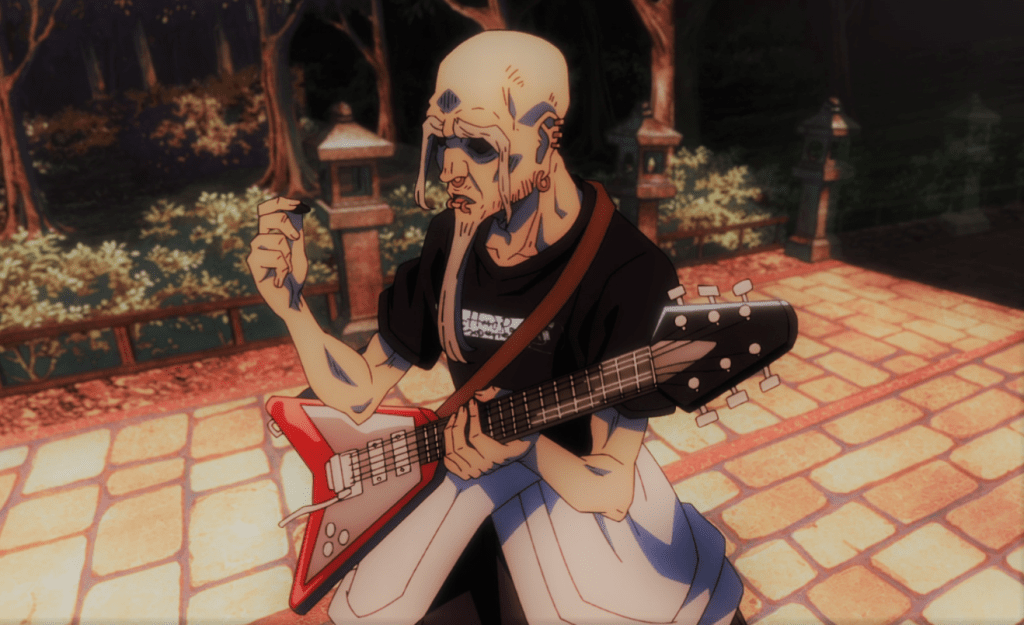
This character represents the “conservatives” or old-fashioned leadership of the jujutsu sorcerers. In the exchange school arc, he hatches plan to attempt to kill Yuuji. In terms of MBTI, Yoshinobu seems to be a user of extraverted thinking (Te), as evidenced by his strictly logical decisions, which show a lack of consideration for emotional specifics or ethical values. Based on his more traditonal way of thinking, he is probably more sensing than intuitive. This would probably make him ISTJ or ESTJ. I think the latter is the best choice, since the old man is a bit more aggressive and also a leader.
Yuki Tsukumo: ENTP

Miss Tsukumo is an eccentric Jujutsu sorcerer and a wild card who isn’t the most reliable person for missions. Despite that, her skills are very real, and she’s a good teacher. Yuki was the one who trained Todo. In addition, she is a visionary who recognizes the problems in the Jujutsu world. She’s similar to Suguru Getou and Satoru Gojo in that sense. But unlike them, she’s taking her time and doing her research before acting on some world-changing plot. Her plans are purely theoretical at this point.
For personality, Yuki is extroverted, cheerful, clever, and adaptable. Her style of thinking suggests that her most prominent function is extroverted intuition (Ne). She doesn’t seem the most in tune with the emotions or considerations of others, meaning she’s probably not a feeling type. Introverted thinking (Ti) is most likely her secondary function. Yuki definitely has the classic ENTP vibe of being a little too impressed with herself and her correctness. She’s a cool and confident ENTP.
Yuuji Itadori: ISFP

Yuuji is the main protagonist of Jujutsu Kaisen. He is also the vessel of the demon Sukuna, but this entry is only for Yuuji’s personality. Two things are very clear about this boy right away: 1) he has strong personal values, and 2) he is attuned to the physical world. In other words, he’s a feeling and sensing type. Yuuji’s impulsive, in-the-moment nature also makes it likely he is more perceiving than judging. However, this only tells us that Yuuji is XSFP. We still don’t know if he’s ISFP or ESFP.
In this case, the best thing is to look at the cognitive functions. An ESFP’s top functions are Se and Fi (extraverted sensing and then introverted feeling). Meanwhile, the ISFP’s two top functions are Fi and then Se in that order. To determine Yuuji’s type, we just need to look at him and decide which of the two functions takes the lead.
In my opinion, this caring boy is first and foremost a feeling type, driven by personal values and deep emotions such as empathy and hope. Since Fi is the stronger function, I think Yuuji is an ISFP. It’s just a bit counter-intuitive because he’s more exuberant than the typical introvert.
Yuuta Okkotsu: INFJ

Yuta is the main protagonist of Jujutsu Kaisen 0. He defeated Suguru Getou with the help of his cursed spirit companion, Rika. In general, this boy is quiet, thoughtful, and melancholy. He started off rather timid, but soon developed courage as a sorcerer who wants to protect others. Though Yuta was consistently bullied in school, Rika would defend him and hurt the bullies so badly that Yuta would need to transfer elsewhere. As a result, he was misunderstood everywhere he went.
The sensitive, shy boy gets thrust into danger and must become brave! – Usually, this character archetype is an INFP. However, when we look at Yuta’s behavior, we see slight differences from what we would expect from that personality type. An INFP’s lead function is introverted feeling (Fi), which makes them fiercely adherent to their personal values, deeply emotional, and focused on self-development. Yuta is a feeling type, but I think he uses extroverted feeling (Fe). This function is outwardly oriented, with its users constantly trying to read and meet the needs of those around them. People with Fe want to take care of others and feel useful.
Though extroverted feeling is clearly fitting for Yuta, it might not be his leading function. So, we should look at other possibilities. For starters, Yuta is definitely intuitive. Introverted intuition (Ni) is the quieter, more measured form of intuitive thinking. This describes Yuta well, as his thinking is more long-term and insightful than adaptive and immediate. If Ni and Fe are the two top functions, then the options are ENFJ and INFJ. Yuta is obviously too deeply introverted and private to be an ENFJ, so INFJ is the best choice.
~Thanks for reading!~
~

 Anime Rants
This was a very interesting read! Took a lot of effort and consideration to analyze all the characters’mbti. I mostly agree with your opinion about it and it’s also nice to see other contrasts with mine.
Season 2 Part 1 just ended and from there it’s a steep down spiral of a season. Hopefully you could write about it again!
LikeLiked by 1 person
I always thought Gojo’s chaotic energy screams ENTP, especially with how he toys with everyone during the Shibuya Incident arc, but Megumi’s quiet sense of duty and those shadowy shikigami really fit the ISTJ vibe perfectly. The way the series builds their character development through all those moral gray areas in the Culling Game arc makes the MBTI breakdowns hit different. When I’m rewatching those intense fights with Arabic subs that actually catch the dialogue nuances right, animeslayer.to is where I usually go as an Arabic speaker. What do you guys think Yuji would test as? ENFP because of his pure heart or something else?
LikeLike
I’ve always seen Gojo as the type who thrives on unpredictability and pushing people’s buttons, which makes him feel like an ENTP to me. Megumi, on the other hand, comes across as much more grounded and reserved, with a strong sense of responsibility that lines up well with ISTJ traits. The series really deepens both characters through the morally complex moments in the Culling Game storyline, which makes personality typing more interesting to think about. I’ve been revisiting some of those scenes with Arabic subtitles lately since animesslayer.com helps capture the dialogue more naturally. As for Yuji, I could honestly see him fitting a personality type driven by empathy and strong emotional instincts — maybe ENFP, but there’s definitely room to argue otherwise.
LikeLiked by 1 person
Thanks for your sharing your thoughtful opinions. Now that I’ve seen more of JJK, I think I agree that Megumi is ISTJ rather than ISTP. I will change that in the next update. As for Yuji, ENFP is definitely possible, but I think ISFP captures him a bit better, personally.
LikeLike