
- Introduction
- Story: 5/10
- Visuals: 5/10
- Audio: 7/10
- Characters: 6/10
- Personal Enjoyment: 6/10
- Overall Score
Warning: Spoilers
Introduction
In recent years, a new genre of anime, manga, novels, and games established itself. I call it “Akujo” (Villainess) content. For those who are not familiar, Villainess content is focused on female main characters and appeals primarily to feminine viewers in a similar way to shoujo (girls’) anime and classic romance anime. Instead of being about a traditional heroine of light, Akujo content is concerned with the female villain, rival, or anti-hero, who is typically a girl reincarnated from our world. The setting is often based on Otome games (dating sims with lots of pretty boys). In this fantasy isekai off-shoot, the villainess may pursue a particular romantic interest or have other goals.
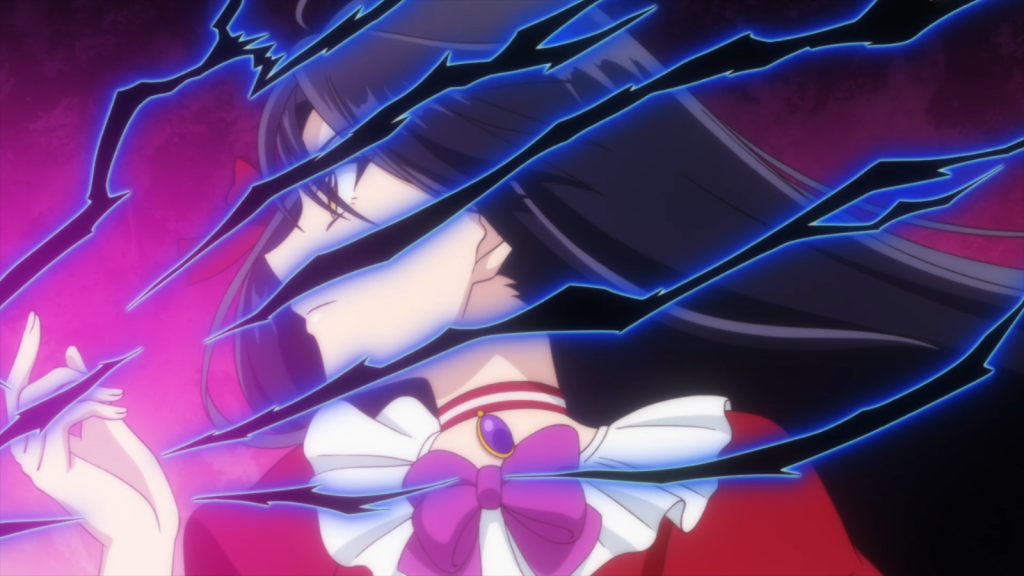
Despite being a masculine-leaning non-binary person, I did spend most of my life until now thinking I was supposed to be feminine. Now it’s as an ally, but I am still a feminist, and still very eager to hear feminine perspectives. That’s why I found myself interested in the Akujo genre conceptually. Unfortunately, the first Villainess anime I tried wasn’t particularly enjoyable nor in any way exceptional. Today, we’re here to review the positives and negatives of the 2024 anime, I’ll Become a Villainess Who Goes Down in History. The Japanese title is Rekishi ni Nokoru Akujo ni Naru zo. The series will be abbreviated herein as RekiAku and explored in five categories. Let’s rant!
Story: 5/10
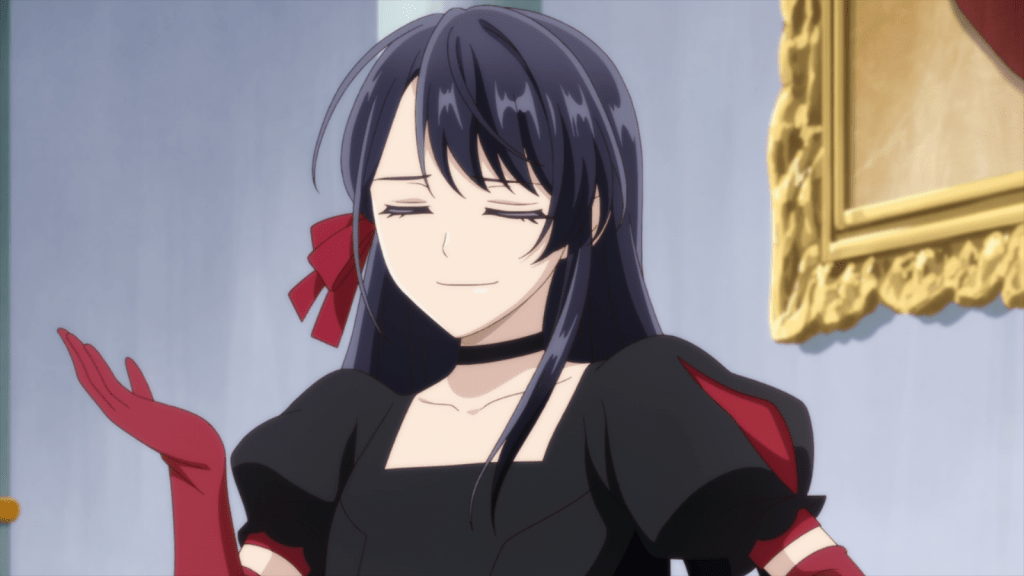
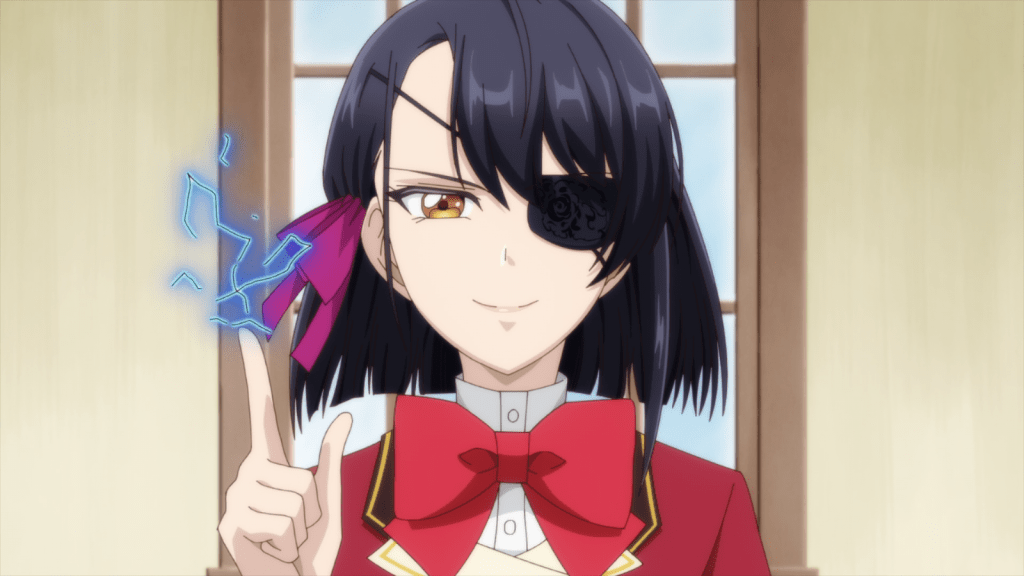
A young woman in Japan was reincarnated into a world exactly like the fantasy Otome game she loved to play. She was reborn as Alicia Williams, self-proclaimed villainess and romantic rival of the game’s heroine. This doesn’t sound like a great story idea to me because it’s hard to believe that someone would reincarnate into a world based on the exact game they loved best. But this is all fantasy anyway, so I might as well embrace it and try to suspend my disbelief with this plot concept. Alicia was a strong-willed girl who sought to be a “villainess” because she admired the spirited and bold character in the game. Thus began her journey to become a powerful female sorcerer capable of changing the world. This part of the story concept was solid and appealing. I liked Alicia in theory and I wanted to see her grow and succeed.
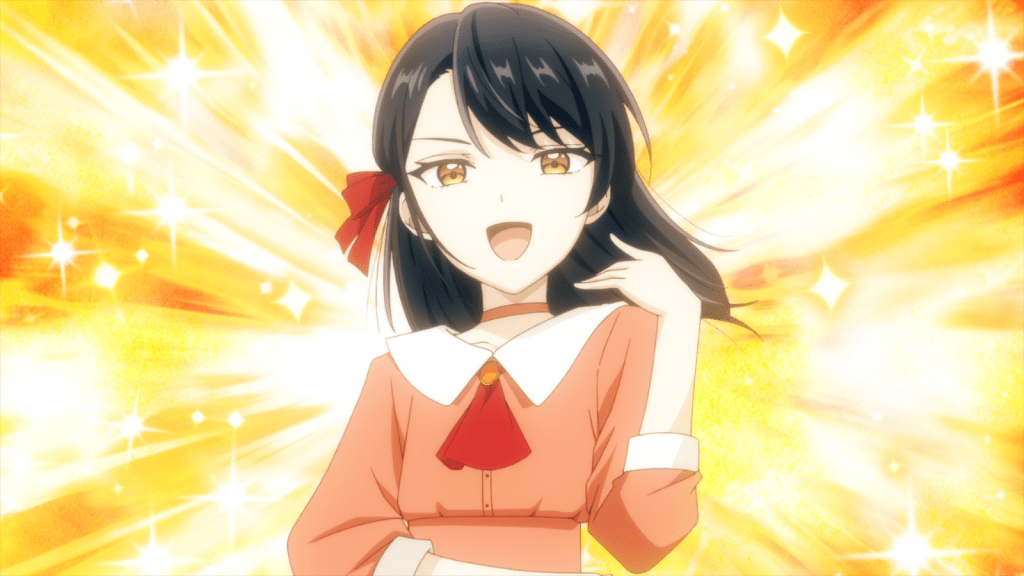
One of the strangest things about RekiAku is that Alicia isn’t a villainess by all definitions. She is genuinely a good person, playing the role of charismatic villainess as a sort of social performance. She was the villain of the story only because the story was about the heroine who wanted to win the heart off the love interest. In plain terms, Alicia is a morally upstanding girl who cosplays as a villainess. That’s an extremely important part of her character to understand. And perhaps this isn’t even strange for the genre. I don’t know yet. But I do know that Japanese culture still has a big problem with misogyny, so women are sometimes regarded as evil for being critical, independent, or assertive. You’ve probably heard that “Well-behaved women seldom make history.” It makes sense that Alicia – and many outspoken Japanese girls in reality – would identify with a villainess.

With a character like Alicia in the lead, I was hopeful about this anime. But the story was painfully average all around. Elements like world-building and magic systems are important in any fantasy anime. In RekiAku, these elements are mediocre and unsatisfying. When the narrative did focus on the magic, it was fairly interesting, but there wasn’t nearly enough of that focus. The world-building was shallow and unoriginal. The drama aspects also felt rather juvenile and basic. Additionally, RekiAku suffered when it came to building suspense, setting up and executing plot twists, and incorporating good content balance. (The humor was always awkward and the moods of the scenes were unpredictable.) Though there was ample opportunity, this anime did not explore any psychological or philosophical story themes that piqued my interest. Put simply, it had no substance.

There were a few commendable features of the story category in RekiAku. For example, I was impressed with the planning and structure. It’s difficult to pull off time-skips and episodes happening over the course of years, but this anime managed to do it smoothly enough. Still, strengths like this were few and far between. I don’t like being so harsh, but the story category in RekiAku was weak.
Visuals: 5/10
I don’t pay as much attention to visuals as the typical anime enjoyer, since I regard them as less important than story and character writing. That being said, it’s still disappointing when a fantasy show with high potential ends up looking underwhelming. For RekiAku, there was nothing especially impressive or beautiful in the art or animation. Personally, I liked the design and outfits for Alicia as well as the rich colors like black, red, and gold used in this series. Other than that, there was nothing good to speak of in the visuals. You can get an idea of the general visual style in the clip below.
For the most part, the character designs were boring. The art-style looked “off” to me because of the way the highlights in the eyes were drawn. Action sequences were short, basic, and used very little movement. Even the most impressive feats of magic didn’t stand out in my mind as memorable or eye-catching. I never have as much to say about the animation, but I think I’ve made my point. Sadly, the visuals were subpar.
Audio: 7/10
Maybe it’s because I am better at auditory than visual processing, but I find that many otherwise poor anime series still have great audio elements. Sometimes it’s the music, sometimes it’s the voice-acting, and sometimes it’s both. I love OSTs and I’m lowkey obsessed with Japanese seiyuus. So, I’ll have a lot to say about the audio category compared to the visual category. We’ll start with the instrumental music. It was composed by Moe Hyuuga, who also wrote the music for two other series I liked with good soundtracks (Steins;Gate 0 and Tenten Kakumei). I enjoyed the music and even took some time to listen to the OST after the series was complete. In addition, I appreciate Hyuuga’s work even more because she’s one of the rare examples of a female music composer in the anime industry. Visit Spotify if you want to listen to Moe Hyuuga’s music.
Rating art and/or music is ultimately very subjective, so I’ll just come out and say that I did not particularly like the opening song and I disliked the ending song. The opening, “Baddududu” by Liyuu, is an upbeat and charming song. The chorus is exciting and the singer has a cute voice. But it still didn’t stick in my memory for long and it’s a little too Disney-Princess-sparkly for my personal taste. Then there’s the ending song, “What’s Your Name?” by Rin Kurusu. I do occasionally listen to cutesy weeabo songs, but this song pushes my limits a bit too much. I become overloaded by the kawaii toxicity. But if you don’t mind things like high-pitched vocals and cutesy lyrics, you might like this song. It’s worth listening to if you like anime songs and J-pop.
Next, we’ll talk about the Japanese voice-acting. I really enjoyed most of the performances. The star of the show, Alicia Williams, was voiced by Kanna Nakamura, a fresh new seiyuu with very few roles. In 2025, she played Renako Amaori in Watashi ga Koibito ni Nareru Wake Nai jan, Muri Muri! (※Muri ja Nakatta!?) I expect great things from her going forward since she has a cute and distinct voice. Prince Duke was voiced by Kaito Ishikawa, a talented male seiyuu known for a number of popular roles, including Sakuta Azusagawa from Seishun Buta Yarou and Tenya Iida from My Hero Acadamia. Though I disliked the character of Duke, there was nothing lacking in Ishikawa’s performance of him.

There are two other seiyuus I want to mention before ending this section. The first is Rie Takahashi, a beautiful singer and voice-actress known for roles like Megumin (KonoSuba), Emilia (Re: Zero) and Ai Hoshino (Oshi no Ko). In RekiAku, Miss Takahashi played Jill, the young boy who became Alicia’s trusted assistant. As usual, I loved hearing her voice and I’m impressed by the range of her talent. The second and final VA to mention today is Manaka Iwami. She is probably best known for playing Tohru Honda in the 2019 version of Fruits Basket. I’m a big fan of Iwami’s soft, high-pitched voice. It’s so cute! The character of Liz was often a bit annoying to me, but there’s no question that she was played proficiently by this talented young seiyuu. Manaka Iwami was a great fit for the role of Liz.
Characters: 6/10
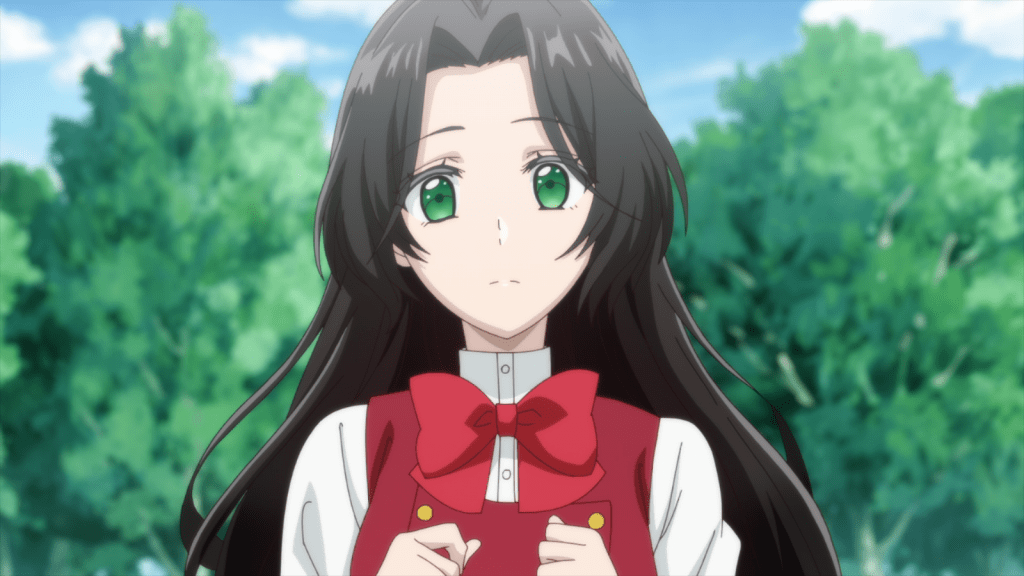
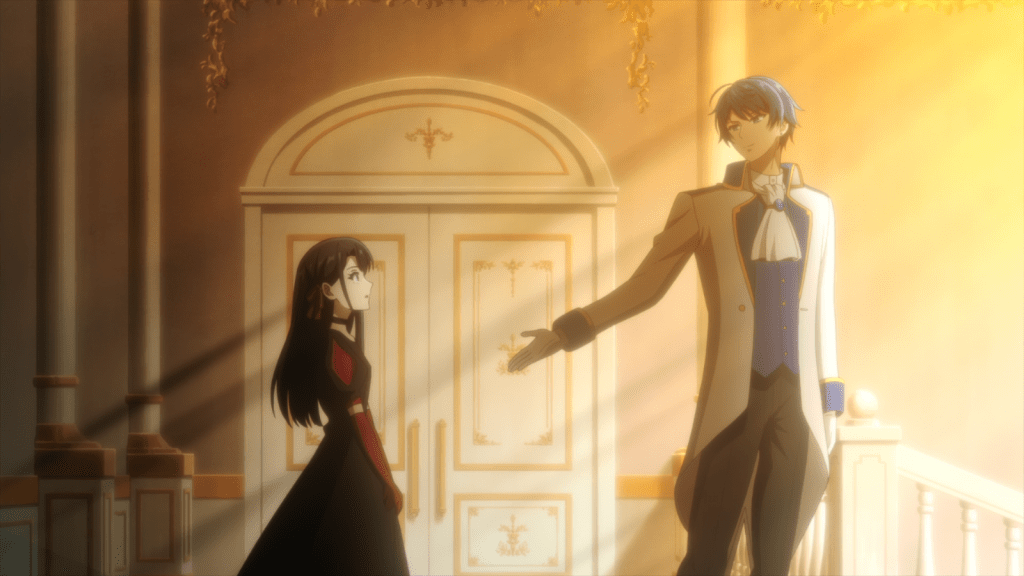
The character writing was not great. Although Alicia was a decent character, the others were underwhelming, shallow, or just annoying. For example, Duke was consistently creepy toward Alicia, starting when she was a little child. He never considers her consent. What happens between Duke and Alicia may have been considered normal in that world, as it still is in some places in our own world – but in many societies, we now know better. So naturally, I found Duke’s predatory behavior disgusting. The other male characters were bland as hell. Alicia’s father, for example, was sadly underdeveloped despite significant potential. Of the male characters, the two that were the most well-written were Jill, the assistant of Alicia, and Will, the man blind man from Roanna. They were both interesting characters, but didn’t get quite enough development.
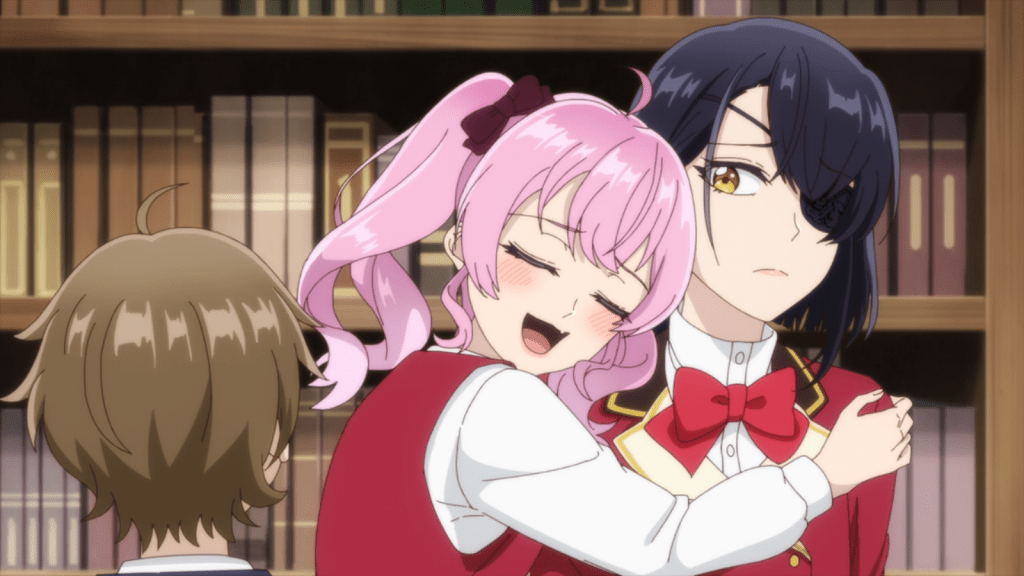
Liz was slightly annoying because of her self-righteous and impulsive nature. I know that was sort of the point of her character, but I felt that more should have been done to make her sympathetic – she came across as too entitled and whiny. Mel was very cute but also a bit difficult to deal with because she only had two character traits: being loud and being enthusiastically gay for the villainess. She was a promising character with no actual substance, and she was introduced too late. Alicia was a fairly well-written protagonist, but even her character development felt superficial to me at times. I would have loved a deeper and more creative psychological exploration of this character. Overall, the characters weren’t badly written – they were just “fine.” 😛
Personal Enjoyment: 6/10
In terms of personal enjoyment, my experience watching RekiAku was fairly neutral. There was more that I enjoyed than what I didn’t – but the ratio was close. That’s why I only gave this category a 6/10. The more enjoyable elements included: the rich colors used in the hair and outfits of the characters, the personality of Alicia, the story of how Alicia freed the village of Roana, the character concept for Mel, the adorable face expressions of Jill, Alicia, and others; and the music and voice-acting throughout the series. The aspects I disliked in RekiAku were the creepiness of Duke, the shallowness of the world-building and character development, and the lack of substance in terms of story themes. There was also a lot of content toward which I felt neutral. I don’t regret watching RekiAku, but I wish it had been a stronger, more well-written series.
Overall Score
Score: 5.8 out of 10.0
The mean or average of the five scores from above is what I call the “overall score.” Typically, the anime I watch and review falls between 7 and 9. It usually takes a lot to get to me to be harsh enough on anime to give it a score in the 5s range. RekiAku is unique in that it didn’t piss me off significantly, but it still got a low score from being consistently mediocre. Unless you love Akujo content for its own sake, this anime is probably not worth your time. That being said, I might tune in for a second season if it ever comes around and I have free time. There’s hope that the writing will improve.
To my surprise, the reception for RekiAku was fairly positive (for a lower-budget anime made for girls). It has a current score of 7.34 on MyAnimeList (as of June 5, 2026). Though I stand by my criticisms of this series, a part of me is also happy to see Akujo content getting the attention it deserves in theory. I will eventually watch another villainess anime because I do like the genre – again, in theory. RekiAku was not an example of a good villainess anime, but let’s not despair at the whole category just yet.

~Thanks for Reading~
Written by 7Mononoke at Anime Rants


I haven’t seen this one. The ones I’ve seen the character finds herself (or himself in one) as the villainess. The game structure equates to destiny, and all the possible routes in the game end in disaster or death for that character.
You can’t do a sharp 180 and suddenly be a good person, so there’s a challenge on how to subtly subvert the narrative. This one may have been a quick jump-on-the-wagon series.
In Akuyaku Reijō Tensei Oji-san, a middle-aged bureaucrat ends up in a coma, and finds himself in the otome game his daughter has been playing. He uses the organizational skills he’s learned to change destiny. Eventually his wife and daughter discover that he’s in the game.
LikeLiked by 2 people
I’m a die hard fan of the Villainess genre, I’ve seen dozens of them including this one, and I totally agree with your review. This was just a lackluster anime all around. The story was flat, the characters were kind of boring, and the ML was creepy. If you are looking for something in the Villainess genre that had the main character acting truly villainous, I recommend the manhwa “Villains Are Destined To Die”. It’s dark, it’s gritty, it’s grim, and yet it also has a gripping story, character depth, and weirdly a happy ending (for some). A great series to dip your toes into this genre is the anime “My Next Life As A Villainess: All Routes Lead To Doom!” It’s fun, lighthearted, silly, and explains the genre very well.
LikeLiked by 3 people
I was pretty unimpressed with this one as well. I agree with momomanamu. “My Next Life As a Villainess: All Routes Lead to Doom!” is a much better one!
LikeLiked by 1 person