Thank you for visiting Anime Rants. This is the second post in a blog series exploring examples of some of my favorite anime songs with deeply meaningful lyrics. In the first post, we discussed a few songs that directly reflected the feelings of the protagonist of that anime. For this second post, the songs are not necessarily reflections of the main character – though some of them still fit that description. But these songs are more about the themes of the series as a whole.
For instance, the famous intro song for Black Butler (“Monochrome Kiss” by SID) does not seem to directly reflect the thoughts of Ciel nor of Sebastian. However, the desperation and frustration in the song does speak to the broader, darker themes of the series, as Ciel deals with constant danger, trauma, and strained relationships. There is obviously some overlap between the categories, but the distinction isn’t that important. The real point is to provide my thoughts on a few more anime songs that possess profound meaning and sound beautiful.
Note: My English translations of Japanese lyrics might differ slighty from what you see on other sites, but you should probably trust the lyric websites more because I am not proficient in Japanese and my insight is thus extremely limited.
Warning: Spoilers may be present for Jujutsu Kaisen, Steins;Gate, Casshern Sins, Orb: On the Movements of the Earth, and Higurashi When They Cry.
- Summer Love and Regret – Jujutsu Kaisen Season 2
- Fighting A Cruel Fate – Steins;Gate
- Existential Pondering – Casshern Sins
- Roaring Out The Truth – Orb: On the Movements of the Earth
- Forbidden Forests and Inner Darkness – Higurashi When They Cry
Summer Love and Regret – Jujutsu Kaisen Season 2
Jujutsu Kaisen season 2 has two opening songs – one for the Hidden Inventory Arc, which was about young Gojo and Getou, and one for the Shibuya Incident, which focuses back on Yuji Itadori. Both songs were popular hits among fans of anime and the Japanese rock scene. I love the two openings, but for this post, we are only discussing the first one – “Where Our Blue Is” by Tatsuya Kitani. It’s an emotional rock song with a beautiful melody and an upbeat chorus that may initially hide the sad longing and regret in the lyrics. “Where Our Blue Is” is a poetic love song, most likely reflecting Gojo’s feelings toward Getou after he became an evil sorcerer and left Jujutsu High.
The first line in this song that sticks out to me is “Kimi to iu chinmoku ga kikoenaku naru” meaning “Your silence became inaudible” or “I stopped hearing your silence.” Some of the lyrics are poetic love verses, while others show the growing, sinister differences between the singer and the one he loves. Getou’s “silence” was his emotional withdrawal after Riko’s murder. Gojo laments his inability to notice the changes in his manic state in the wondrous “season of blue.” Another powerful line is “Boku to chigau kimi no nioi wo shitte shimattemo,” meaning, “Even though I’ve come to know your scent, different from mine.” This shows the closeness between Gojo and Getou and strongly suggests their connection was romantic, at least on Gojo’s side. Now let’s get to the chorus.
Japanese Romaji Chorus and Post-Chorus
“Ima demo, ao ga sundeiru.
Ima demo, ao wa sundeiru.
Donna inori mo kotoba mo –
Chikazukeru no ni, todokanakatta.
Marude, shizuka na koi no you na
Hoho wo tsutatta natsu no you na, iro no naka.
Kimi wo norou kotoba ga zutto nodo no oku ni tsukaeteru
‘Mata aeru yo ne?’ tte
Koe ni naranai koe.”
English Translation Chorus and Post-Chorus
“Even now, blue resides.
Even now, blue remains clear.
No matter the prayers or words –
Though they draw near, they never reach.
Like a quiet love
In the summer-like colors running down my cheeks.
The words that curse you are stuck in the back of my throat:
‘We’ll meet again, right?’
A voice that cannot be heard.”
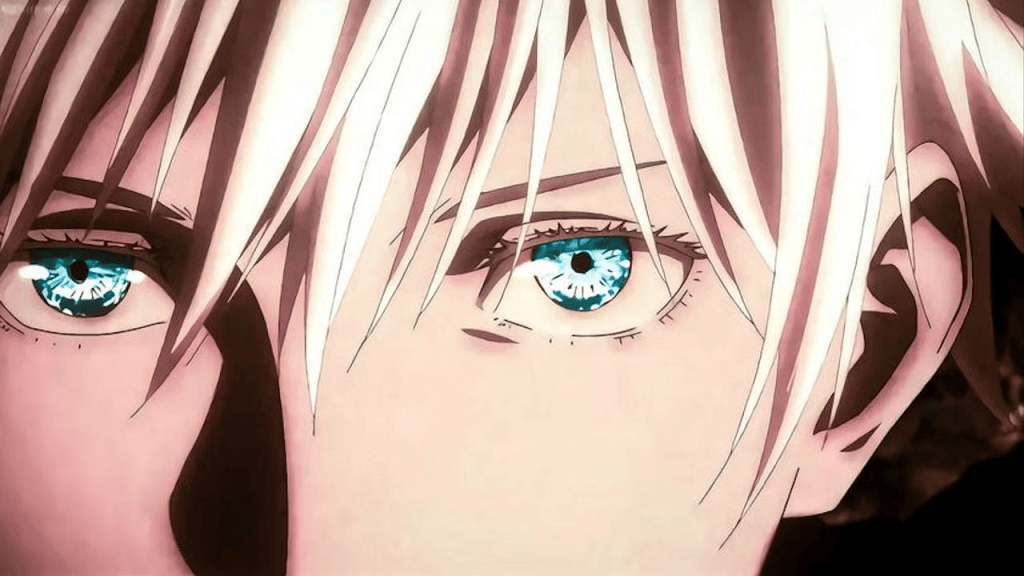
As you can see, this song is full of longing and regret as the singer realizes things can never be the same again with the person he loved. “Blue” is generally interpreted here to be the relationship between the young men. Even now, the singer believes, their love lives on. Even now, he wants to believe that they will meet again. He even compares it to a quiet love, and the form of love used here is not “ai” for a general, wholesome love, but “koi” for a romantic or sexual love.
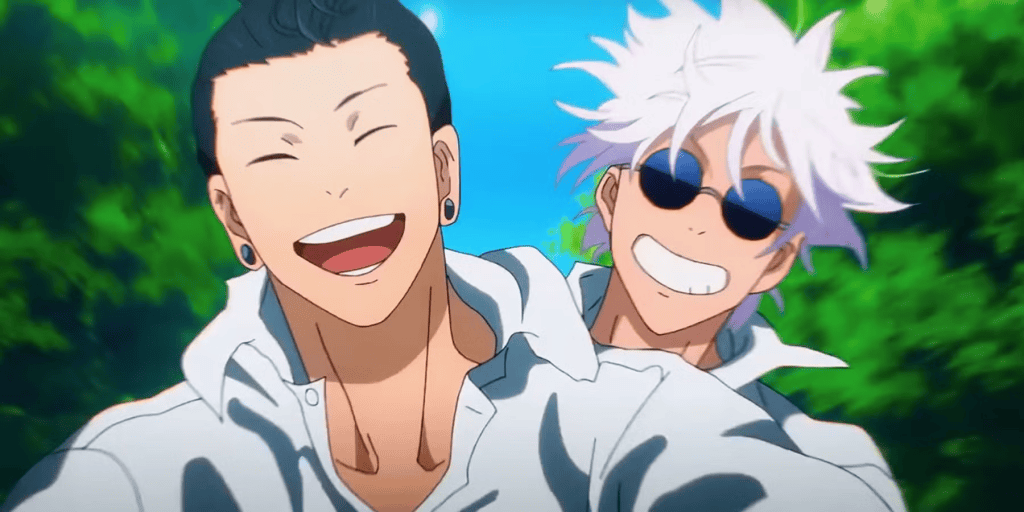
Every damn line of this song is beautiful, meaningful, and deserves to be analyzed. However, for today, I’ll just point out one more lyric that stands out to me as one of the most heart-wrenching, especially with the way Tatsuya Kitani sings the words. The line is, “Adabana to saite chittе iku, kimi ni – sayonara.” This translates to “To you, who blooms and scatters like transient flowers – goodbye.” This is Satoru Gojo’s farewell to Suguru Getou, his best friend and the man he loved. Summer is a wonderful season, and when you’re young and in love, it feels like it will never end. But eventually, everything ceases to be. When that happens, one often looks back with fondness, regret, and yearning to that time. “Where Our Blue Is” captures this emotional scenery with perfection.
Fighting A Cruel Fate – Steins;Gate
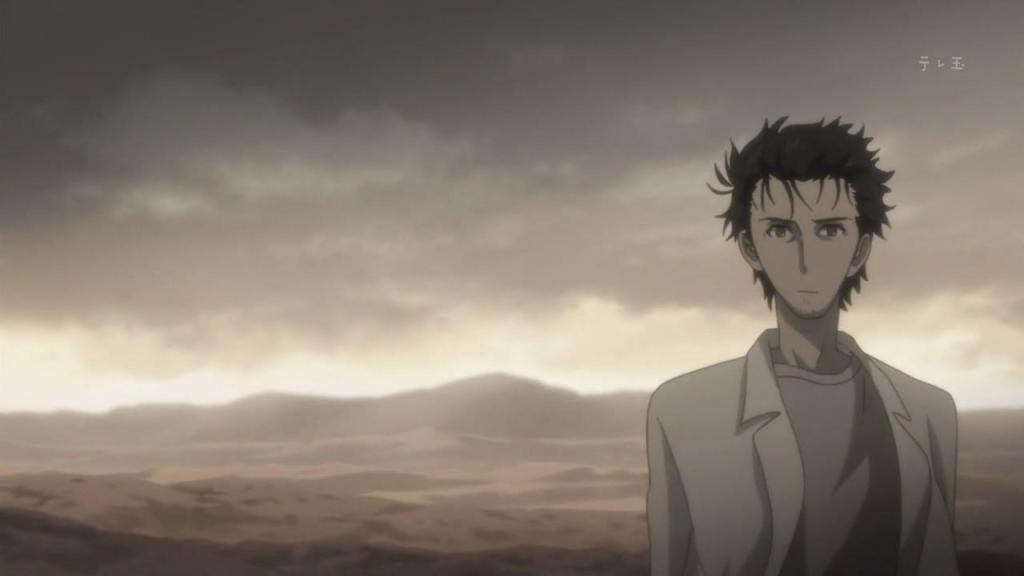
“Hacking to the Gate” by Kanako Ito is often cited as a song whose lyrics essentially describe what happens in the anime. Steins;Gate is an anime about time-traveling, and if I’m interpreting it right, parts of the song lyrics are addressed to time itself – or perhaps fate or god. The opening song for Steins;Gate, “Hacking to the Gate” is about Rintarou Okabe’s quest to save his friends by altering the world with a time machine. He’s up against impossible odds, trying to reach the perfect dimension where his childhood friend doesn’t die – and he calls this dimension “Stein’s Gate.” In terms of sound, “Hacking to the Gate” is an inspiring, fast-paced J-rock song featuring extremely cool electric guitar and a futuristic aesthetic. The overall feeling of the song is powerful perseverance on the part of the protagonist, the lonely observer. You can read the lyrics in Japanese Romaji here at Anime Song Lyrics, side-by-side with an English translation.
First Chorus in Romaji Japanese
“Dakara ima ichibyou goto ni sekaisen wo koete
kimi no sono egao mamoritai no sa
soshite mata kanashimi no nai jikan no RUUPU e to
nomikomarete yuku kodoku no kansokusha.”
First Chorus in English
“That’s why, at this very moment, in the interval of a second,
I wish to cross the world lines and protect that smile.
Then, once again, into a time loop devoid of misery,
I will be swallowed as a lonely observer.”
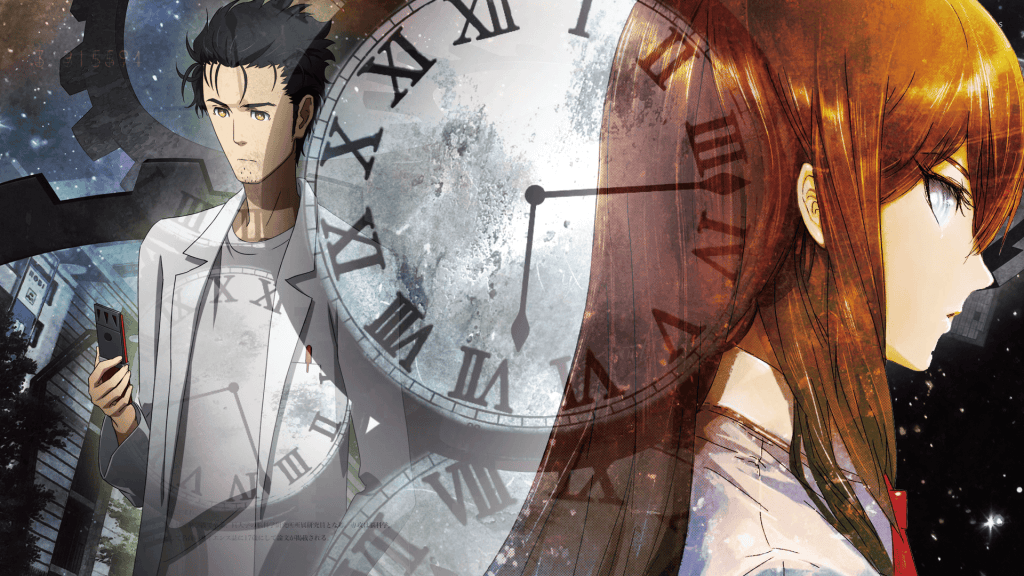
I also find the second chorus very meaningful because it reflects the heart of Steins;Gate as a series – the fact that it’s about these characters and their love for each other. Okabe had to ask each of his friends to make a major sacrifice in order to shift the timeline toward the world where his friend won’t die. This was a painful and highly emotional experience. In addition to highlighting Okabe’s friendships, the second chorus also foretells the plot twist at the end of Steins;Gate: when Okabe “tricks time” to avoid a paradox and save his loved ones. That’s why it makes sense that the second chorus goes as follows.
Second Chorus in Romanized Japanese
“Ikutsu mono kagayakeru hibi nakama to no yakusoku
nakatta koto ni wa shite wa ikenai.
Sono tame ni toki wo azamuku nokosareta shikake ni,
mou mayoi wa nai, kodoku no kansokusha.”
Second Chorus in English
“I must not pretend that I never made promises
with my friends back in those brilliant days.
For that reason, using my remaining tricks to deceive time,
I will no longer waver as a lonely observer.”
On a final note for this song, you may be wondering why the perspective character in the lyrics keeps calling himself a lonely observer. This is done in all three iterations of the chorus, where the last line is always “kodoku no kansokusha” (“lonely observer.”) Put simply, Okabe is “cursed” with knowledge and memories from other world lines and dimensions. Whenever the dimension changes, the majority of people do not notice; their memories are updated for the new dimension and they think it’s always been this way. Only Okabe possesses the consistent ability to remember events from other world lines. This means he will forever be isolated to some degree from others. Though his fate may be cruel, the protagonist powers onward, challenging time itself. “Hacking to the Gate” is an epic anime song that’s famous for good reason.
Existential Pondering – Casshern Sins
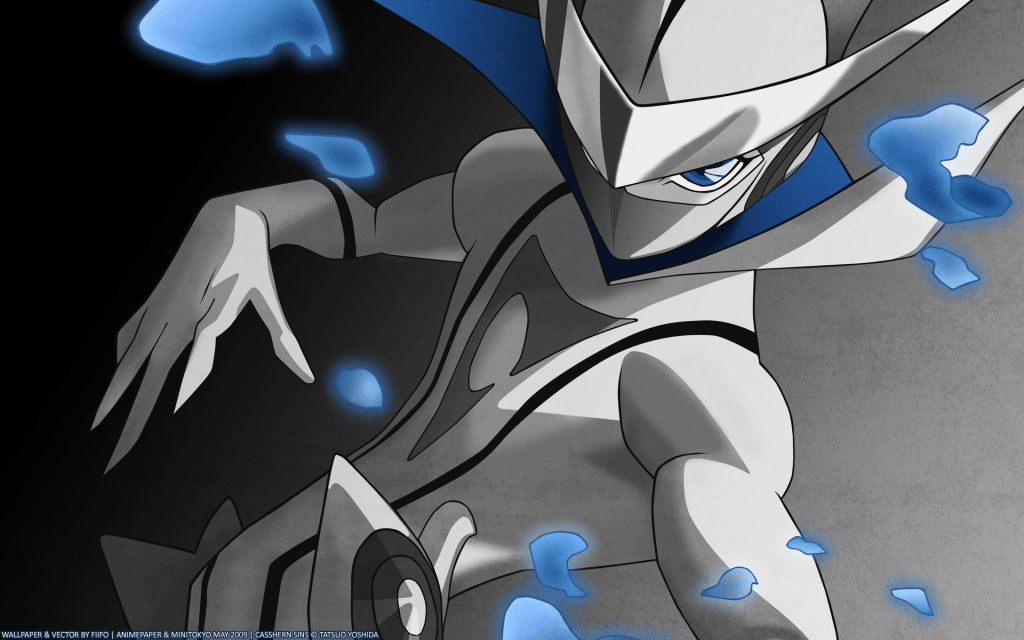
It’s quite possible you’ve never even heard of the obscure 2008 anime Casshern Sins. The franchise of Casshern (AKA Casshan) has existed since the 1970s, with several adaptations and reboots throughout the decades. But to watch the 2008 anime, you need no prior knowledge of Casshern. The only Casshern content I’ve seen is the 2008 anime, and I loved it. I would love to hear from other fans of this underrated series. The anime is a deeply existential and arguably depressing story that deals primarily with the topic of death. Keep that in mind before charging in and expecting a cute shounen robot anime.
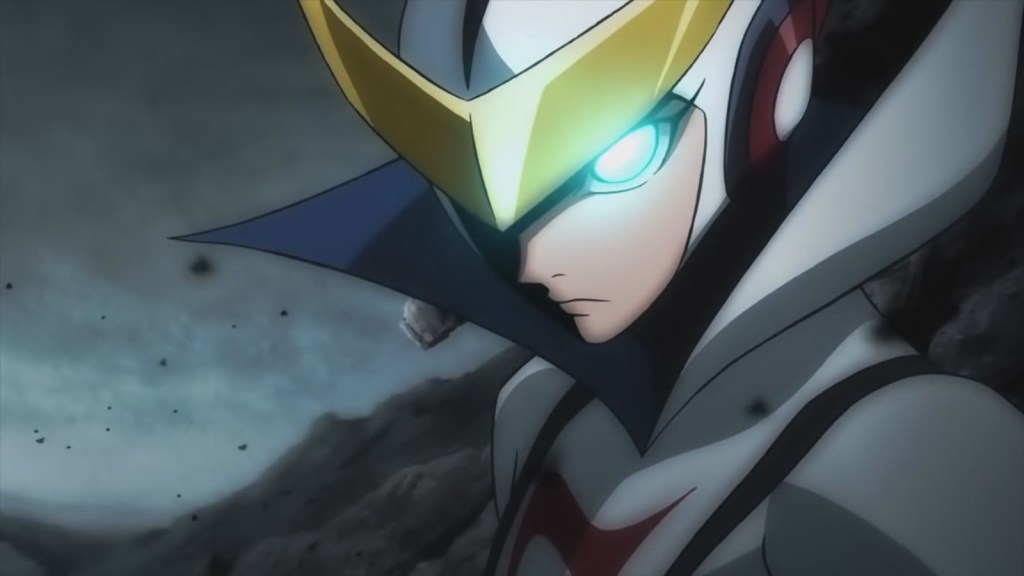
Before I introduce the song, here is a synopsis for Casshern Sins. Casshern is an invincible android who brought about the end of the world by killing the godlike priestess of the robots, Luna. Everyone knows that Casshern, bringer of death, killed Luna. That’s what started the epidemic of “The Ruin” – the death curse that now befalls all robots except Casshern. But Casshern can’t remember having killed Luna. As he journeys through the post-apocalyptic wastelands, encountering dying robots and humans alike, Casshern will slowly come to understand the truths of this desolate world and his place in it.
The opening song for Casshern Sins is “Aoi Hana” (“Blue Flowers”) by Color Bottle. This song is definitely older J-pop that draws from disco dance music. The male vocals are high-energy, and the drums, bass, and electric guitar are all awesome. I adore the sound of this song, but we’re here to discuss the lyrics. Like the anime itself, the opening song for Casshern Sins focuses on existential contemplation and unease. The English and Japanese lyrics can be read here at Anime Song Lyrics. Let’s take a look at the words.
Japanese Pre-Chorus and Second Chorus
“Hibiwareta oka, sabita sora no shita,
Ikiru bokura maru de aoi hana.
Yorisoi, utakata no yume wo miru;
Soredemo mada karetaku wa nai.
Nee ima doushite bokura umareta no?
Nee hora doushite bokura deatta no?
Wakaranakute kowai kara tsunaida kono te wo
Ima kimi ni tsuyoku nigirikaeshite hoshii nda.”
English Pre-Chorus and Second Chorus
“On a hill rife with fissures, under the rusted sky,
We, the living, are much like blue flowers.
Huddled together, we dream our ephemeral dreams;
Even so, we don’t want to wilt yet.
Hey, now, why were we born?
Hey, look, why did we meet?
I don’t get it and I’m scared so I want you
To firmly return my grip on your hand.”
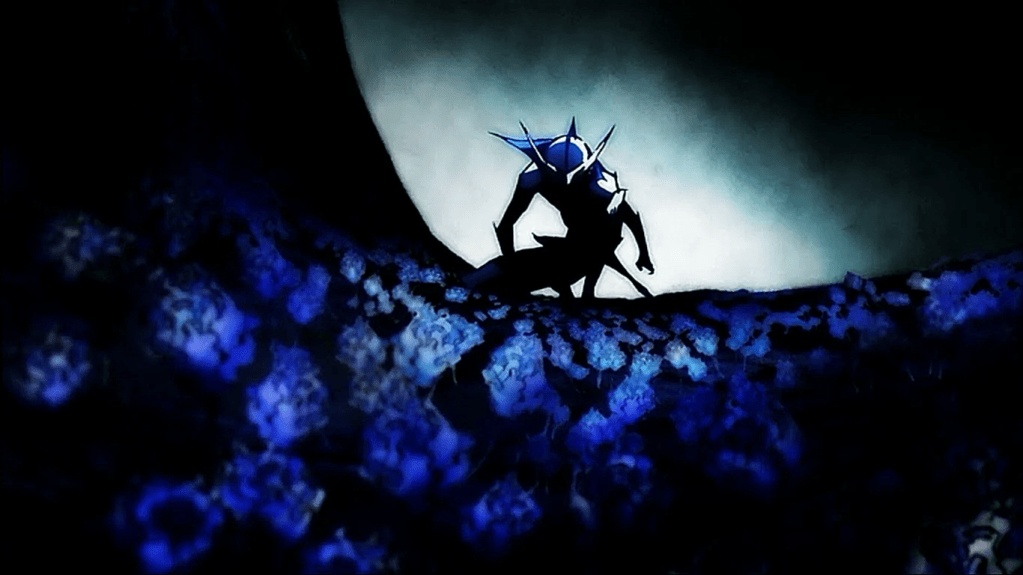
As you can see, this song is about someone having an existential crisis, which is a great fit for Casshern Sins. The pre-chorus compares humans on Earth to blue flowers on a hilltop in the wasteland. I find that so incredibly poetic. The lyrics then acknowledge that although the flowers and their dreams are ephemeral, they don’t want to wilt. In other words, humans generally don’t want to die. Most people are afraid of dying. I think it serves most people well to fear death provided they don’t stop functioning. To help deal with mortality, humans create deep connections with each other, forming relationships like some flowers form clusters.
In the chorus, the singer wonders why they were born and why they happened to meet the person they love. Fearful and confused, all the singer can do is ask for the physical comfort of their partner holding their hand. I find this exceptionally beautiful and vulnerable. Personally, I don’t think there is a real answer to the problem of mortality. Death is meant to be scary and confusing because we’re living beings with only one life (of which we can be certain). I think “the answer” is to find comfort and meaning in our relationships with others. The song “Blue Flowers” represents this perfectly with its emphasis on closeness to others even in the midst of serious existential questioning.
Roaring Out The Truth – Orb: On the Movements of the Earth
My favorite anime of the decade so far is Orb: On the Movements of the Earth, which was released on Netflix in 2024. Since I love this anime so much, I have a lot to write about its legendary opening song, “Kaiju” by Sakanaction. According to Wikipedia, Sakanaction’s music is “a fusion of alternative rock, electronic, pop, and new wave styles.” Some of this can be heard in “Kaiju.” It sounds like alternative rock at its core with elements of a pop song like upbeat tempo and a powerful chorus that tends to stick in your head. The heavy keyboard and strong underlying rhythm sounds unusual and exciting. But that’s enough about audio components, as we’re here to discuss the lyrics.
“Kaiju” is a song of both desperation and determination – depression and hope – as the singer/writer tries to impart that which he has experienced before it inevitably vanishes from his hands. The song is profoundly abstract and parts of it are difficult to interpret, but the lyrics are truly poetic and beautiful. They also tie into some of the main themes and moods of the anime, Orb. For example, let’s take the first pre-chorus and chorus of the song. The lyrics can be read here at Lyrical Nonsense.
Romanized Japanese Pre-Chrous and Chorus:
“Oka no ue de hoshi wo miru to kanjiru
kono samishisa mo
Asayake de te ga somaru koro ni wa
mou wasureterun da.
Kono sekai wa koutsugou ni mikansei
Dakara shiritain da!
Demo kaijuu mitai ni tooku tooku sakendemo
Mata kiete shimaun da.”
English Translation of Pre-Chorus and Chorus:
“From the hilltop, I gaze at the stars and
feel this loneliness too;
But once my hands are stained with the morning glow,
I’ll have already forgotten it.
This world is conveniently incomplete,
So I want to know!
But even if I scream far, far away like a monster,
It will disappear once more.”
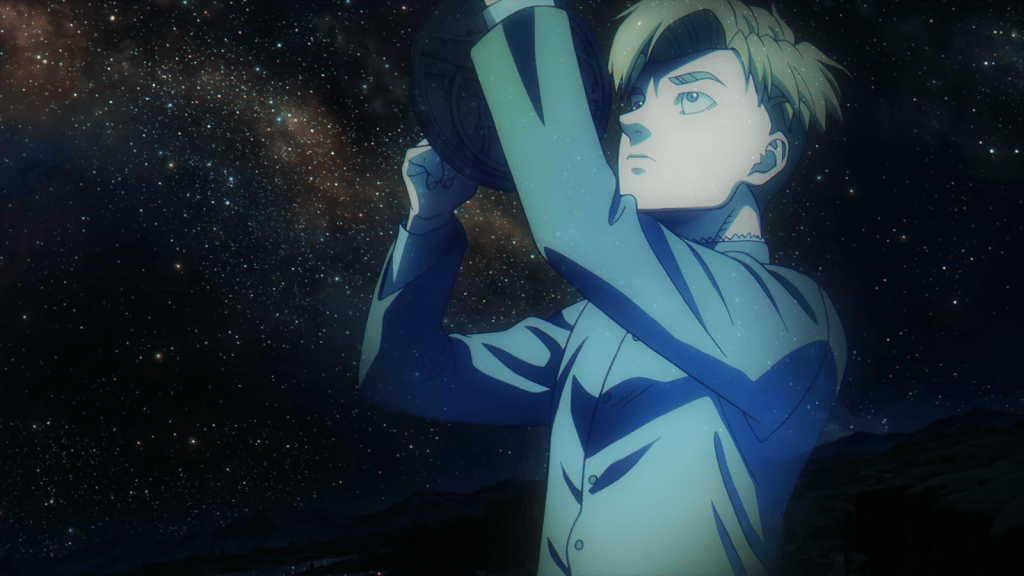
There’s a lot to unpack even in this short section of the song. First, take this line: “From the hilltop, I gaze at the stars and feel this loneliness too.” The themes of stars and existential insignificance are of paramount importance in Orb. The characters are drawn to the stars. They also feel chronically alone and hopeless as they are unjustly persecuted by the Church. Many of them rethink or abandon their idea of god, which can also make them feel lonely. The next line is, “But once my hands are stained with the morning glow, I’ll have already forgotten it.” It uses the imagery of dawn’s light as hope that washes away doubt and darkness. The singer feels inspired and forgets his worries. In the anime, the dawn is especially significant for the characters of Schmit and Draka. Also, note the theme that all things are transient, even loneliness and hopelessness.
The chorus begins with the emphatic lines, “This world is conveniently incomplete, so I want to know!” Orb takes place in the 15th Century, before science was an established thing. The main characters all thirst for knowledge, even if it’s cursed knowledge that could get them executed as heretics. As for the next part of the quote, it’s “Even if I scream far, far away like a monster….” The Japanese word kaijuu literally means “strange beast,” but translating it as “monster” makes sense. Orb features the theme that humans can become terrible monsters. Torture is common throughout the story. The monster idea is also important in the final arc, when we see adult Rafal resort to murder. Additionally, it seems to me that the singer in this line is resigned to the fact that he will become a monster because that’s what it takes to scream out the truth.
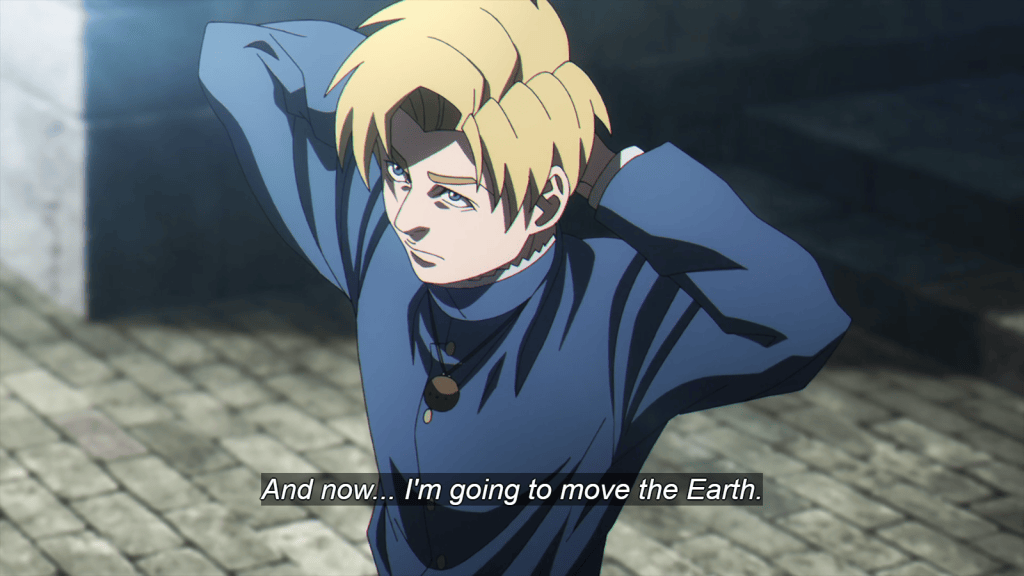
The final part of the quote is, “It will disappear once more.” What is the thing that’s disappearing? I interpret it to be the truth or the knowledge that the singer has found in life. It could also be his personal experiences that he wants to express to others. In Orb, the evidence for Heliocentrism keeps being scrubbed out by the Church. Nevertheless, characters like Hubert, Rafal, and Badeni continue trying to tell the truth to the world. This line also brings back the theme of transience of all things. Orb: On the Movements of the Earth is an amazing anime with an absolutely epic opening song.
Forbidden Forests and Inner Darkness – Higurashi When They Cry
Higurashi no Naku Koro ni translates roughly to When The Cicadas Cry and is known in English as Higurashi: When They Cry. It was a fairly notorious horror cult classic of the 2000s. Though the series is unhinged and inappropriate in several ways, Higurashi is still enjoyable to me for the absurdity, spectacles of anime violence, and some of the better character/mystery writing.
The show is about a tiny rural Japanese town, Hinamizawa, in the 1980s. The area is heavily forested and it is said that demons sometimes emerge from the nearby swamp. Things are not all they seem in this diminutive village, as the new resident Keiichi Maebara soon finds himself caught up in secret murder mysteries and struggling to stay sane against escalating psychological and physical threats. There’s a ton more to say about Higurashi, but to put it simply: “cute anime characters go insane and take turns committing violence and massacres.”
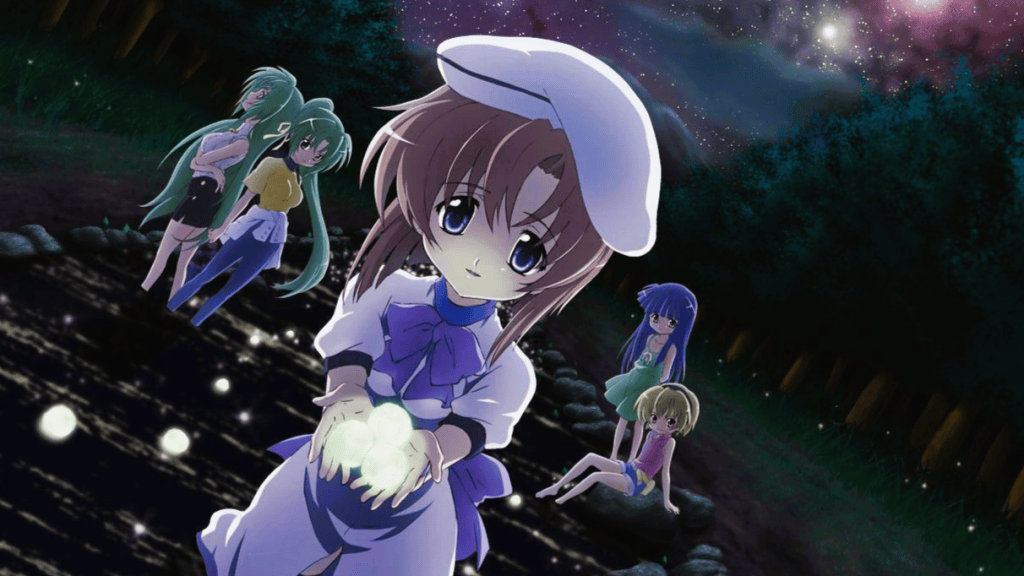
The opening song for the first season of Higurashi is named after the series. It’s called “Higurashi no Naku Koro ni” (“When the Cicadas Cry”) by Eiko Shimamiya. The main melody is memorable and beautiful. This song can be described as industrial rock with electronic vibes and dissonance. The chanting background vocals are ethereal and vaguely haunting in a good way. I love the beat as well, but we’re here to analyze the lyrics, so let’s shift gears to that discussion. Higurashi is about characters descending into madness as they isolate from their friends and end up commiting unforgiveable acts. So, it’s fitting that the song is about a person fighting emotional turmoil and inner demons, who reaches the point of no return and gives into the darkness. The best examples of the themes of the song are in the following excerpt from the lyrics.
(Note: You can read the lyrics here at Anime Song Lyrics)
Pre-chorus and First Chorus in Romanized Japanese
“Amadare wa chi no shizuku to natte hoho wo tsutaiochiru.
Mou doko ni mo kaeru basho ga nai nara…
Kono yubi tomare, watashi no yubi ni.
Sono yubi goto tsuretette ageru
Higurashi ga naku akazu no mori e.
Ato modori wa mou dekinai!”
Pre-chorus and First Chorus English translation
“Raindrops become blood-drops and stream down my cheeks.
If there’s no longer a place you call home, then…
Stop on this finger, my finger.
And this finger will guide you
To the forbidden forest where cicadas cry.
Turning back is no longer possible.”
The first line of the pre-chorus, “Raindrops become blood-drops and stream down my cheeks,” could suggest that the person in the song is shifting from sorrow and grief to desperation and violence. There is the sense that the person has changed and can never return to how things were before, as seen in the lines, “If there’s no longer a place you call home,” and “Turning back is no longer possible.” The tipping point has already passed. The only option at this point is to follow the beckoning of the demonic hands and embrace the taboo (enter the “forbidden forest”). The characters in the anime lose their minds and eventually commit violence they can no longer hide, so it’s not difficult to see the thematic connections to the song. Additionally, the forested swamp in Higurashi When They Cry was said to be haunted by demons and was key to the mysteries of the village. This ties in nicely to the lyrical imagery of “the forbidden forest where the cicadas cry.”
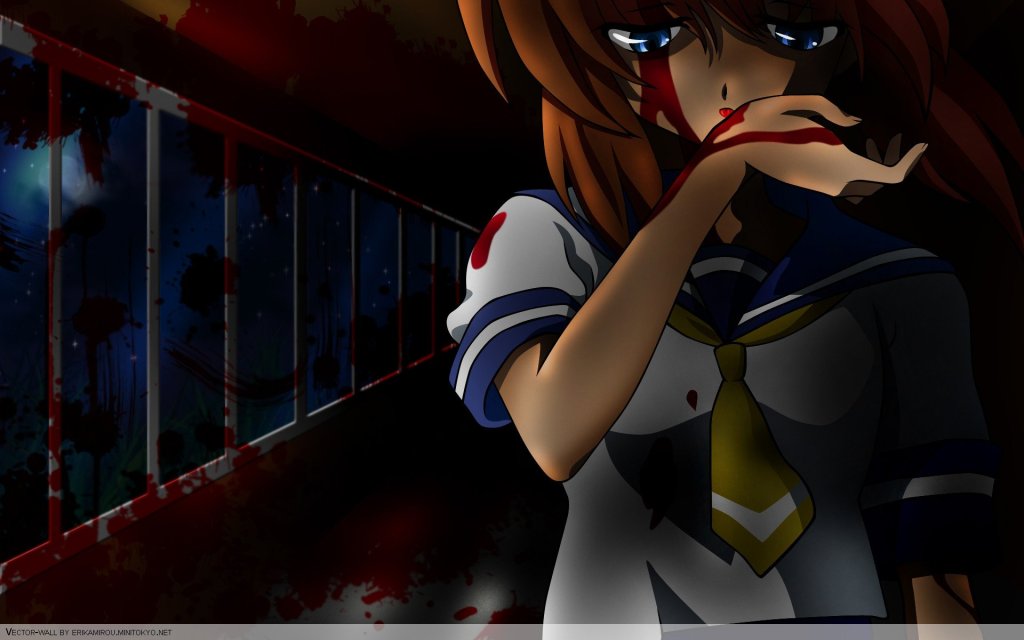
This haunting and beautiful song is interesting from start to finish, but I’m especially fascinated by the first line of the second chorus, “Mr. Demon, come this way, to where my hands clap.” (“Oni-san kochira, te no naru hou e.”) Several times throughout this song, references are made to Japanese children’s games. In this case, the game is like tag, but the person who we would call “it” is instead called the “Oni,” which can be translated as demon or ogre. This line makes it sound like the person in the song is taunting a demon and thus playing with fire. It’s only a matter of time before the demon catches everyone.
Thank you for joining me for this post discussing meaningful anime songs. Originally, this was only going to be a two-part blog series, but now I have a third and maybe even a fourth post in mind for the future. So, if you enjoyed learning about selected Japanese anime songs, rest assured that there will be similar content down the road.
~Thanks for Reading~
Written by 7Mononoke at Anime Rants
See other posts in this series


One thought on “Meaningful Anime Songs Part 2: Thematic Connections”