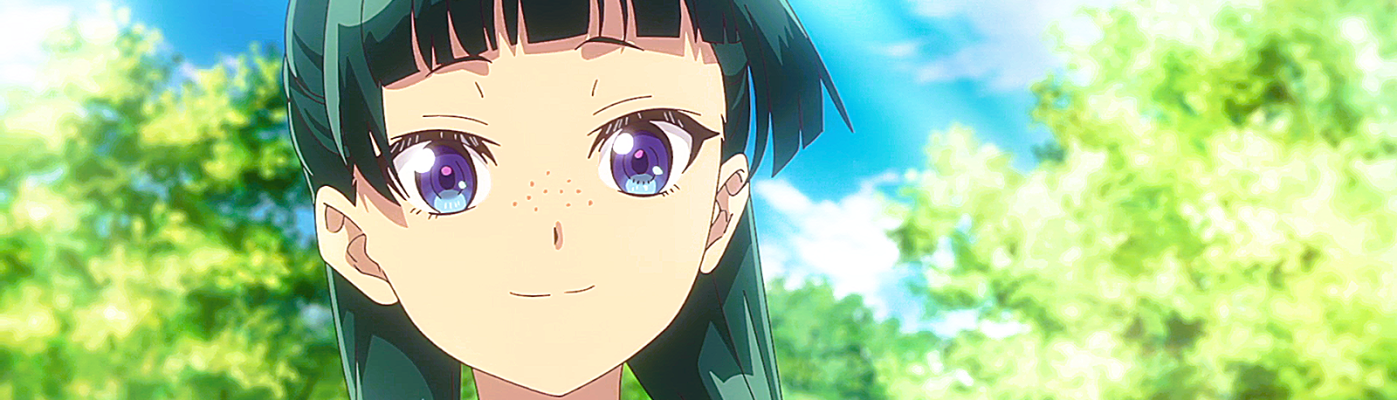
Welcome to 7Mono’s review of The Apothecary Diaries Season 2 (2025). Before we get into the more technical review section, there is first a rant section that I think is important. Also, before we begin, keep two disclaimers in mind. Firstly, this review will contain spoilers. Secondly, we need a content warning. This article contains mentions and/or discussion of grim NSFW topics like sexual assault (including rape) and pedophilia within a work of fiction. Also warnings for mentions of physical and emotional abuse. If that sounds triggering for you, please skip this article.
Contents
Rant: This Is Not Romance!
The Apothecary Diaries Season 2 was amazing in terms of audio and visuals. Also, in terms of story and character writing, it was excellent for the most part. I thoroughly enjoyed this season, especially in its more exciting second half. However, I also found myself disappointed by some of the narrative choices and the surrounding discourse in the fandom. I’m mainly referring to the fact that this anime is marketed to teenage girls as a romance despite featuring a toxic relationship rife with the lack of understanding of consent. Season 2 escalates the unhealthy dynamic between Maomao and Jinshi, leading to a scene (in episode 36) where Jinshi attempts to rape Maomao. To make things worse, many vocal online fans defended Jinshi. For some fans, this was enough to drive them to drop the anime. (And that choice is justified for some people, so I respect it.)
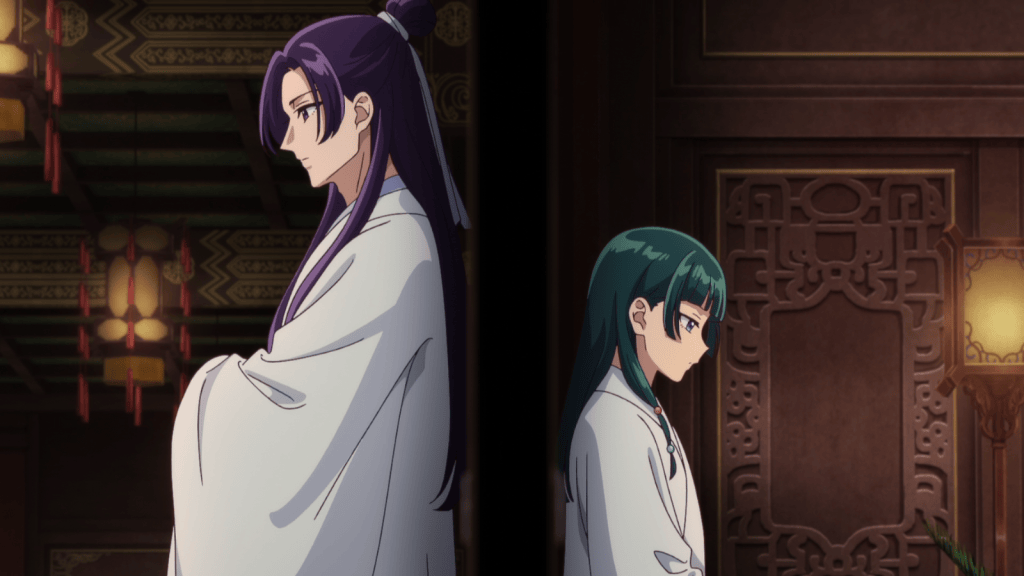
Despite my high personal enjoyment of The Apothecary Diaries Season 2, I want to make sure I take this issue seriously. Even if it’s fiction, it can be problematic for certain individuals. That’s why I will straight up say that I do not recommend this anime as a romance. It should be thought of as a period piece loosely based on history, but which realistically depicts a world full of social wrongs, classism, and sexism. In addition, the series – and in particular the second season – should come with a huge content warning for abusive relationships and nonconsensual sexuality. If these subjects are triggering for you, then I simply cannot recommend The Apothecary Diaries. For those who can enjoy the better parts of the anime, please proceed and check out my review.
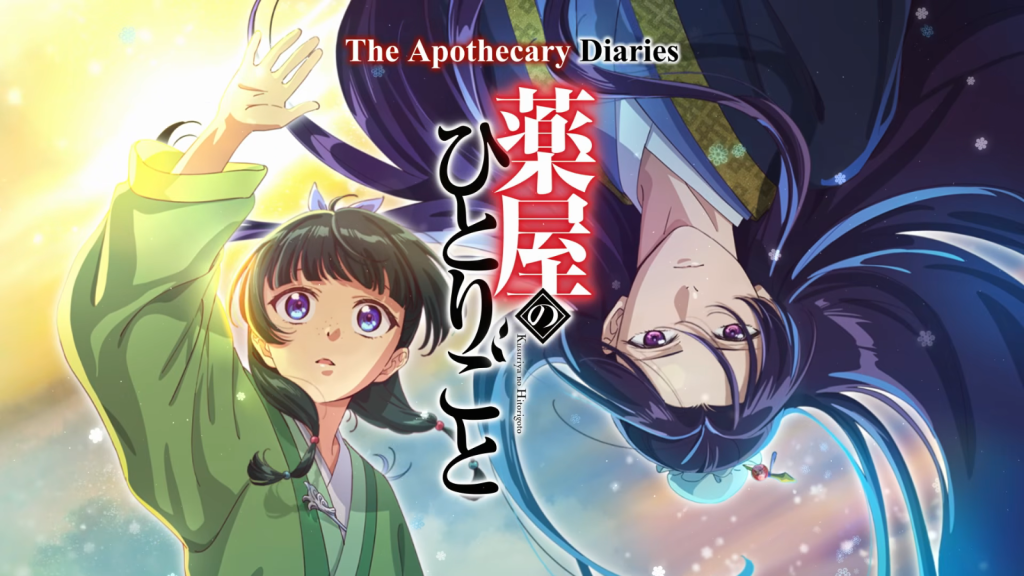
Story Category
Score: 8/10
The storytelling in Apothecary Diaries is commendable and intriguing, but not always easy to follow. It’s the type of show that requires a lot of thinking and reading between the lines to fully appreciate. For example, the narrative has never outright said, “Jinshi is a secret Prince.” But even in season one, it was fairly obvious from context clues that this was the case. In season two, the trend continued of complex, detailed story-writing, but it was sometimes difficult to comprehend everything. I consider this a win overall because I like stories that make me stop to ponder. The many details and interconnected plot pieces also mean that the show has immense rewatch value, which is something I personally love in an anime. Below, you will find an oversimplified summary of the second season, followed by discussion of world-building and story themes.
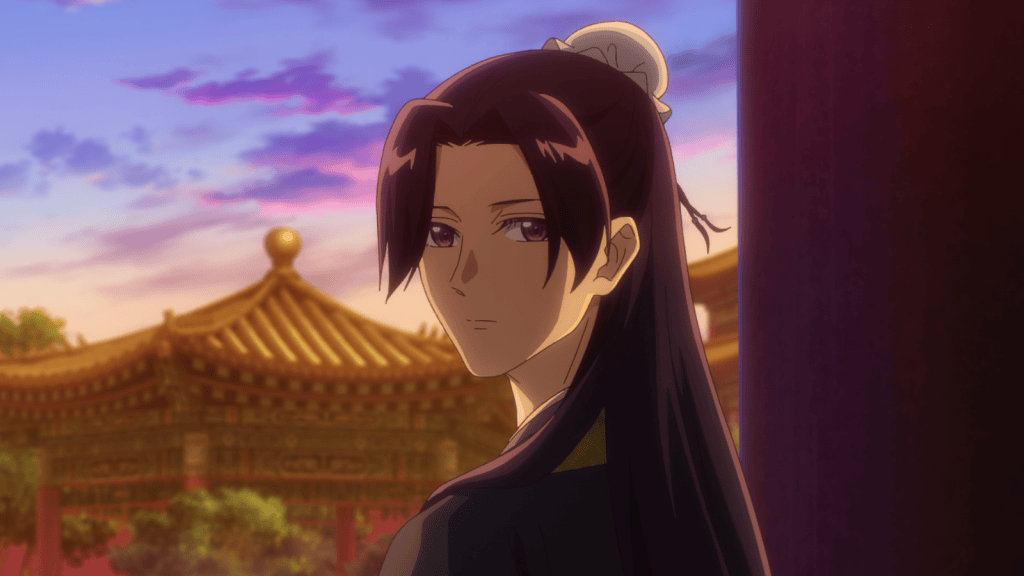
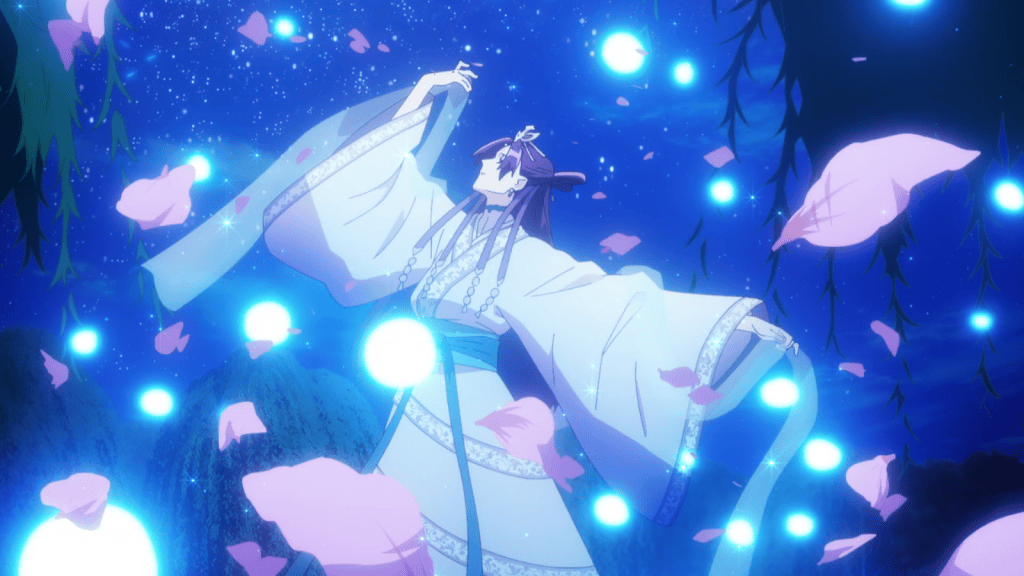
In the second season, Apothecary Diaries crafted a slow but compelling story that eventually led to quite high stakes. The first twelve or thirteen episodes in the season were slow-paced and took place in the palace like usual. We got to know the characters better as various events transpired, including meeting Shisui in episode 25, visiting the Caravan in episode 26, Jinshi’s moon fairy dance in episode 29, the excursion through the Shrine of Choosing in episode 31, and the exploration of Anshi and her relationship with the previous emperor in episode 33. The climax of the first half of the season was the assassination attempt on Jinshi and his bold escape with Maomao in episodes 35 and 36. Throughout these installments, we learned more about the world in which this anime is set, as well as clues to the mysteries of the royal family, Jinshi, Loulan, and Suirei.
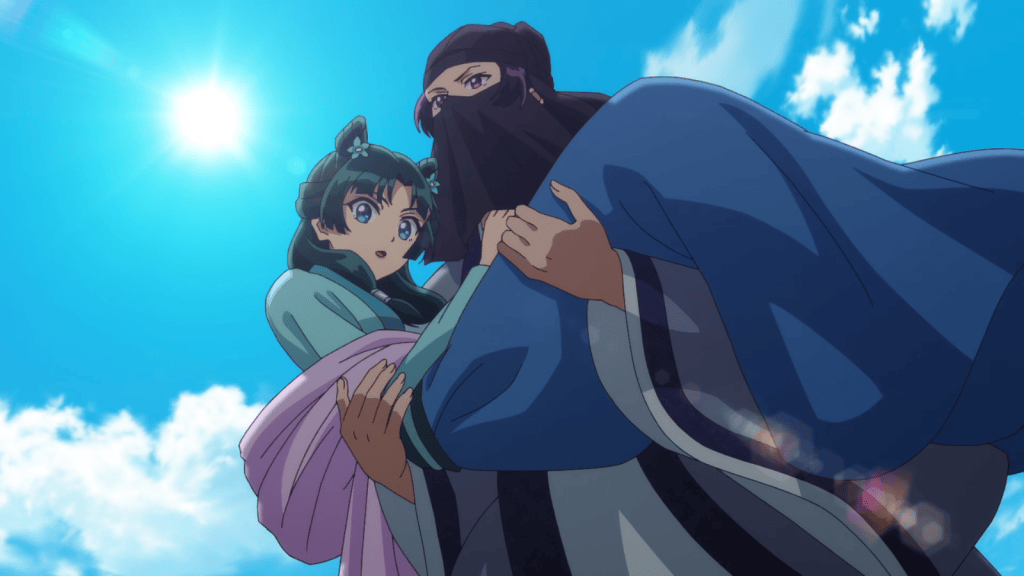
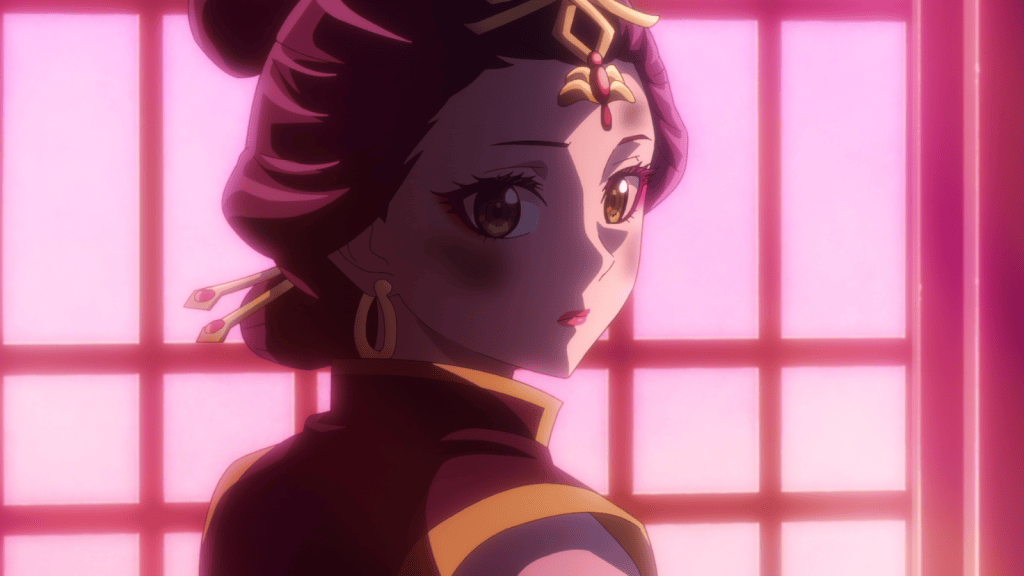
The second half of the season focused on the development of the friendship between Maomao, Shisui, and Xiaolan. (They made icecream in episode 39!) Then the pace increased a bit in the last eight episodes with the kidnapping of Shisui and Maomao in episode 40. The rest of the time was spent away from the palace. We met Kyou-u and the village children while learning about the family dynamics and history of Shisui’s clan. The last few episodes were intense as Jinshi’s army attacked the fortress and killed Shenmei and Shishou (Loulan’s parents). Shisui, AKA Loulan, was shot for scarring Jinshi’s face and plotting with her rebel family. In an epic climax, Maomao helped saved the lives of the village children who had been rendered unconscious by “resurrection medicine.” Finally, we learned that Shisui survived and started a new life overseas.
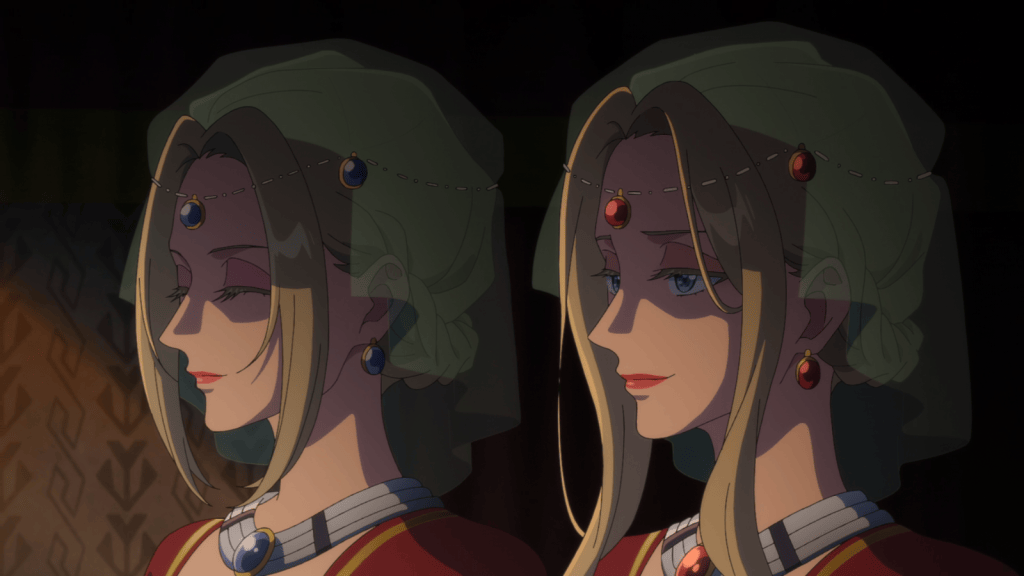
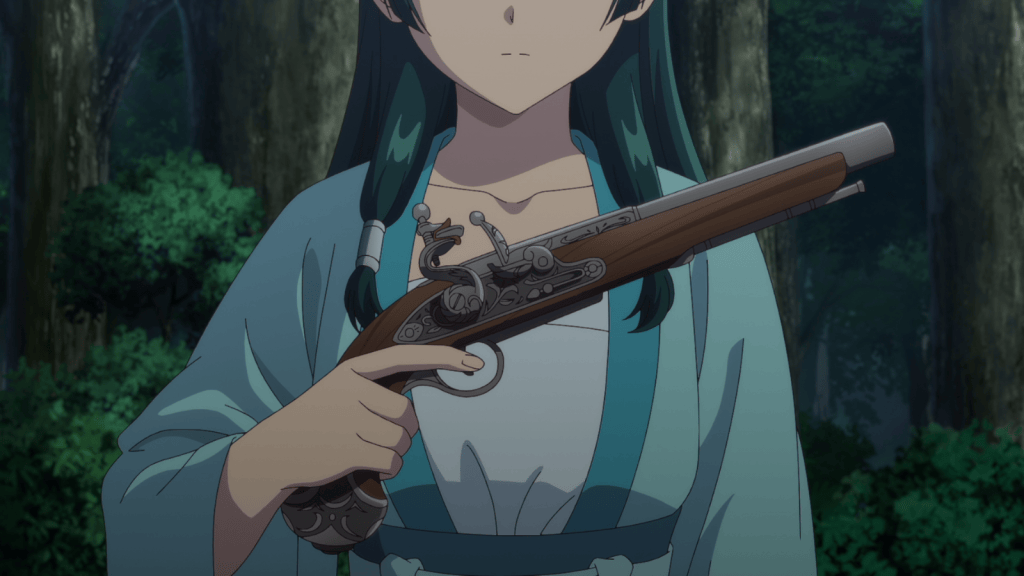
World-building for a series like this encompasses the limited yet complex “world” of the palace, including the lives of the concubines and the history of the royal family. Whether or not this is remotely interesting depends on the viewer, but I find this kind of world-building fascinating. In addition to the royal family and the ongoing court drama, we also learned a bit about the broader world. The two foreign envoys were from the country of Shaoh, which is probably based on a number of different real countries, including Tibet, Turkey, and Kazakhstan. Their decorations and clothes were gorgeous. Seeing history in the making was another good aspect of the world-building in this series. By that I mean we see technology evolving in real time with the invention of guns (Feifa). On a related note, the “resurrection medicine” that Maomao yearns for is an early form of anesthesia.
(Side Note: We know the Country of Li is based on China, but on what era of Chinese history is a bit unclear, and I have certainly never learned much on this subject. I thought I read that Li took most of its inspiration from the Ming Dynasty era, which stretched from 1368 to 1644. But according to the fandom wiki, it’s more based on the era of the Tang Dynasty, from 618 to 907 CE. Again, I am not well-educated in history – but to me, it makes more sense that this is closer to the Ming Dynasty. My main evidence is that guns were invented in the 10th Century in reality, and Feifa hand-guns have now been seen in The Apothecary Diaries. It seems unlikely that they were circulating in the Tang Dynasty. I know that was random, but I wanted to state my opinion.)
Several interesting story themes appeared throughout this season. One pertinent and ever-present example would be the societal difficulties of being a woman – even a “high-class” woman. Beyond the women, who are the most oppressed, many male characters must also contend with the fact that their lives do not belong to them in this society. Therefore, one of the most consistent themes is systemic inequality. Other themes included: political intrigue, generational trauma, sexual abuse including pedophilia, abuse within families, the cost of power, change and transformation, and the joy and pain of social bonds. Like the first season, The Apothecary Diaries Season 2 consistently dealt with dark and mature topics, but I don’t view it as condoning or glorifying these. One of the more psychological motifs in the second season was “wearing a mask” or masking one’s true self. The fascinating themes combined nicely with the excellent world-building and complex, intrigue-filled narrative. The story category thus deserves at least 8/10.
Visuals Category
Score: 9/10
Before we begin discussing the art and animation, I’ll point out that this is the category about which I know the least. Visuals are not typically something I care about when compared to audio or story. Additionally, I’m fairly certain I have visual processing issues, because I’m keenly oblivious to physical details; sometimes, they don’t even register for me. I’ve never tried animating and I have never learned things like color theory or taken any art classes. Because this category matters so little to me and I have so little knowledge about it, this section will mostly rely on what other reviewers have written online.
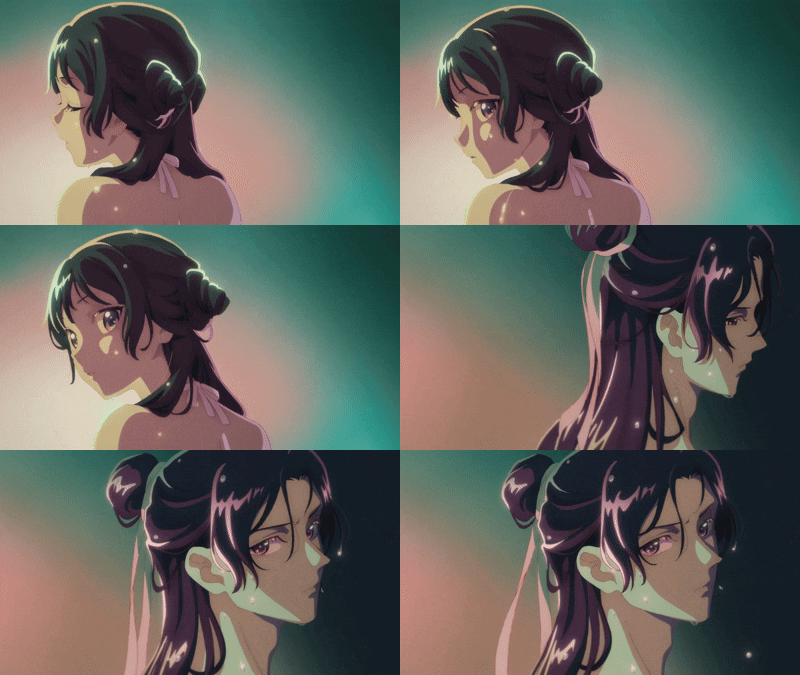
The first season of Apothecary Diaries was widely praised for its stunning art and animation. The general opinion online is that though the visuals are still excellent, they did take a step down from the more consistent quality in the first season. People have said the frame rates were lower and the animation was only truly great at a few key points in the series (such as Jinshi’s Moon Fairy dance). More still frames were used compared to the first season and there was less movement shown. Despite these weaknesses, I argue that Apothecary Diaries Season 2 was still better than the average anime visually.
Here are a few elements of the visuals that I appreciated. Certain moments featured excellent animation, including the final dance of Loulan/Shisui. As with the previous season, there’s a crazy amount of art and detail put into the palace décor and design. Similarly, the flowers and nature scenes remain gorgeous. The rich colors continued to draw me in as someone who prefers creative and colorful art-styles in anime. I also enjoyed the cute chibi moments wherein Maomao usually has cat features. Finally, I absolutely love the face expressions in Apothecary Diaries. Below is a video clip of a fairly normal scene from the second season. It’s not stunning, and by action standards it may look a bit boring. It also shows the general look of things, including the memorable expressions, anime dramatic effects, detailed backgrounds, and eye-catching color. These beautiful visuals still deserve a 9/10 in my mind.
Audio Category
Score: 9/10
The audio category was amazing, featuring memorable songs and music and delightful voice-acting performances. The instrumental OST for The Apothecary Diaries Season 2 was the combined work of three different composers: Kevin Penkin, Satoru Kousaki, and Alisa Okehazama. Kevin Penkin has been a favorite of mine since he first made a name for himself composing the music for Made in Abyss. I know Satoru Kousaki best as the composer for Beastars, though he’s probably most known for the music of the Monogatari series. Alisa Okehazama worked on Jujutsu Kaisen and The God of Highschool (among others), two series known for their impressive soundtracks. With talent like this, the second season’s OST was overwhelmingly beautiful. Sometimes, listening to OSTs for reviews feels a bit boring. But in this case, the music was so captivating that it wasn’t an issue.
Since there were 24 episodes in the second season, there were two cours and thus two sets of songs. The first opening song was “Hyakka Ryouran” by Lilas Ikuta. It was a fast-paced song with the distinct vocals of Ikuta that fans of J-Pop know and love. The first ending song was “Shiawase no Recipe” (or “Happiness Recipe”) by Dai Hirai. This one didn’t appeal to me much despite being a beautiful, emotional ballad with a waltz rhythm. Usually, I like slower and more romantic songs in anime because they are easiest for me to understand. But in this case, the upbeat opening song was much more enjoyable and memorable to me than the slow, steady closing song.
As for the second set of songs, we have “Kusushiki” by Mrs. Green Apple for the opening and “Hitorgoto” by Omoinotake for the ending. Both of these songs were memorable to me. “Kusushiki” is a bop with a hopeful ring to it. It also served as my main introduction to the wildly popular J-rock band, Mrs. Green Apple. The main vocalist, Motoki Ohmori, is astounding! I recognized Omoinotake because they also performed the opening song for Horimiya: The Missing Pieces. “Hitorigoto” is a moving, heart-wrenching song about love and loss. The lyrics reflect Maomao’s hidden feelings toward Shisui after she (supposedly) died. This song has literally made me cry before. The lead singer for Omoinotake, by the way, is Reo Fuji. His voice is different but equally as stunning as that of Motoki Ohmori, in my humble opinion. Gods, I love the music in this series!
Moving on, The Apothecary Diaries Season 2 had really awesome voice-acting (though I am only referring to the Japanese audio at this point because I haven’t seen the English Dub yet). There were so many talented seiyuus in this production. It would take too long to name them all, so I selected just four to mention. First and foremost, there is Aoi Yuuki. She a veteran seiyuu with a high but strong and melodic voice. Her more famous roles include Madoka from Madoka Magica, Tsuyu Asui from My Hero Academia, Tanya Degurechaff from Youjo Senki, and Tatsumaki from One Punch Man. Yuuki is capable of a huge range of voices, and as Maomao, she performs perfectly the part of the introverted, insightful, and witty heroine.
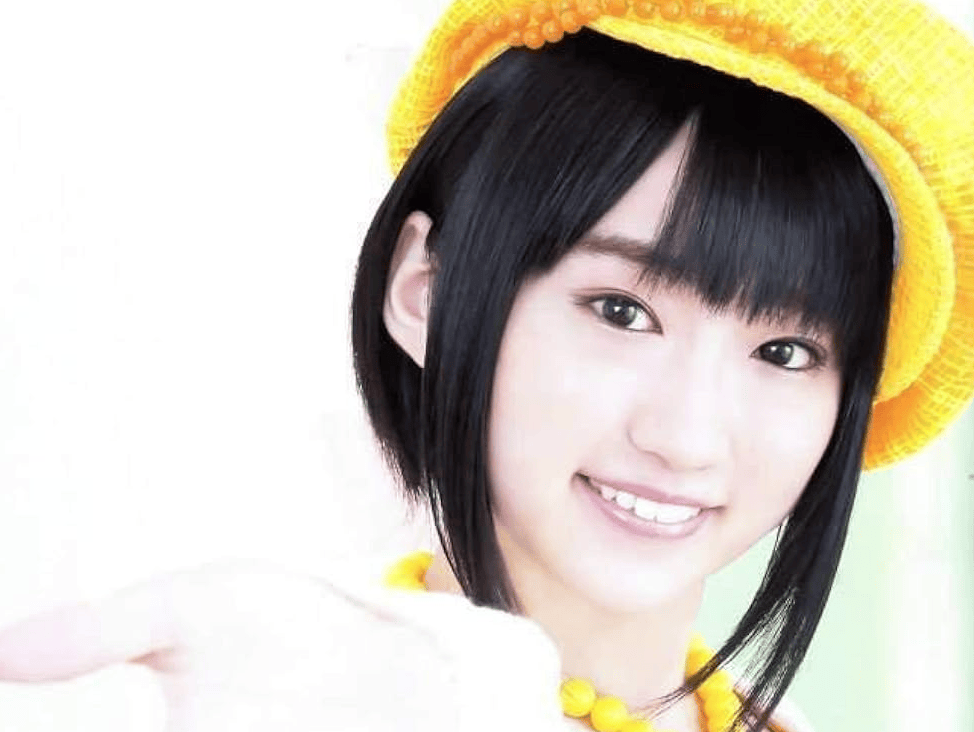
Second to mention is Asami Seto, voice of Shisui/Loulan. Her other roles include Raphtalia from Shield Hero, Mai Sakurajima from Bunny Girl Senpai, and Nobara Kugisaki from Jujutsu Kaisen. She captured the cheerful and clever essence of Shisui with her excellent voice-acting. Thirdly, I will also mention Takeo Ootsuka, voice of Jinshi. He can also be heard as Aquamarine Hoshino from Oshi no Ko, Tsukasa Akeuraji from Medalist, and various supporting voices from Beastars. Personally, I really enjoyed his portrayal of Hyouma Kunato in the obscure anime Mononogatari: Malevolent Spirits. Last but not least, there is Toshiyuki Toyonaga, who appeared briefly but memorably in the role of Lahan. I absolutely loved hearing this voice-actor as Tanizaki in Bungo Stray Dogs. He is a talented and under-utilized voice in the industry. To restate, the voice-acting and audio were top-notch in The Apothecary Diaries Season 2!
Character Category
Score: 9/10
The character writing in The Apothecary Diaries Season 2 was high-quality and emotionally engaging. It was also especially refreshing in an industry where female characters are overwhelmingly written by male creators. (The Apothecary Diaries original light novels were written by a woman pen-named Natsu Hyuuga.) After discussing character development, this section will look at Maomao and Jinshi in particular, including criticisms of their characters and my personal perspective. In general, the character development in Apothecary Diaries is subtle but detailed and sometimes profound. Typically, the story teaches us about different characters little by little via dialogue, expression, behavior, narration, and sometimes directly letting us hear the character’s thoughts. (This is done most often with Maomao.)
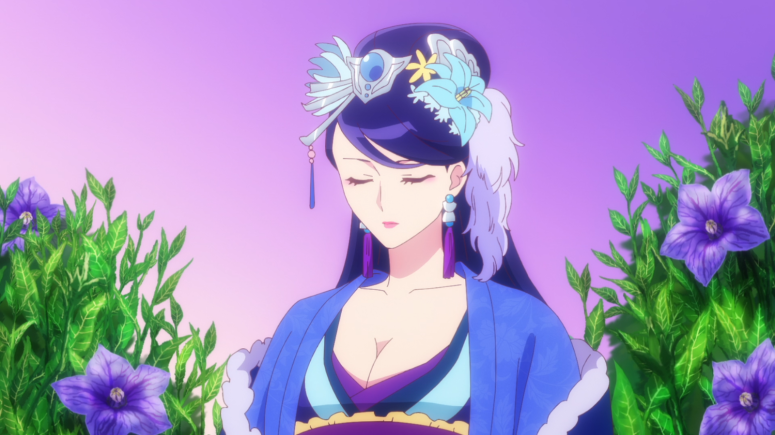
Lihua provides a good example of subtle ongoing development of a supporting character. As I’m sure you recall, Lihua is one of the emperor’s four favorite concubines and the one who nearly died from toxic makeup powder in the first season. She developed a unique bond with Maomao after the servant girl carefully nursed her back to health and helped her rediscover hope in life. Because of limited screen-time but also due to the quiet personality of the character, it was difficult to get the best grasp on Lihua as a person. What kind of woman is she? The second season was sure to develop her character further and make sure she left more of an impression. I loved Lihua’s character in the second season because she was so much more determined and assertive while still retaining her shy-girl cuteness and sense of grace.
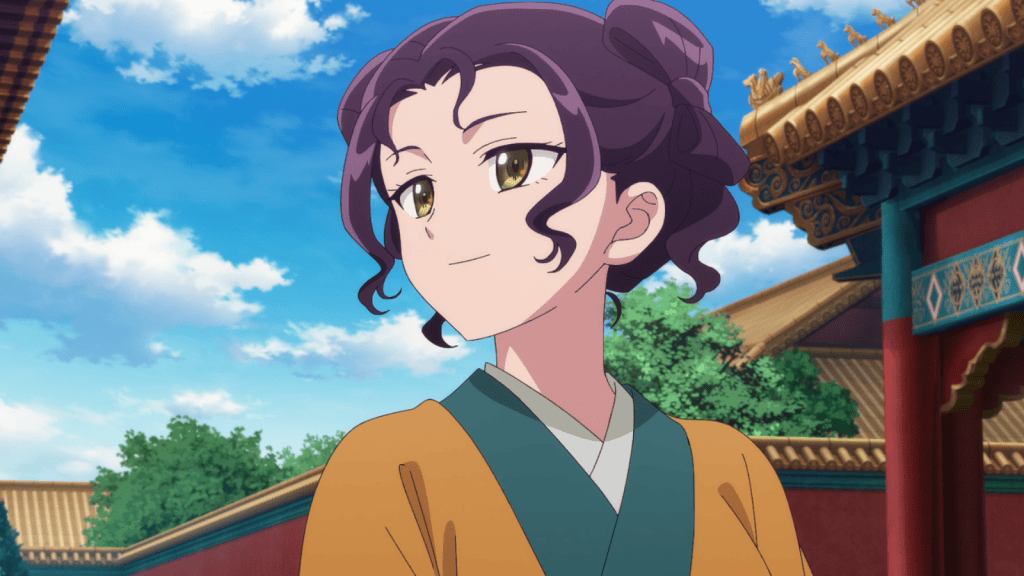
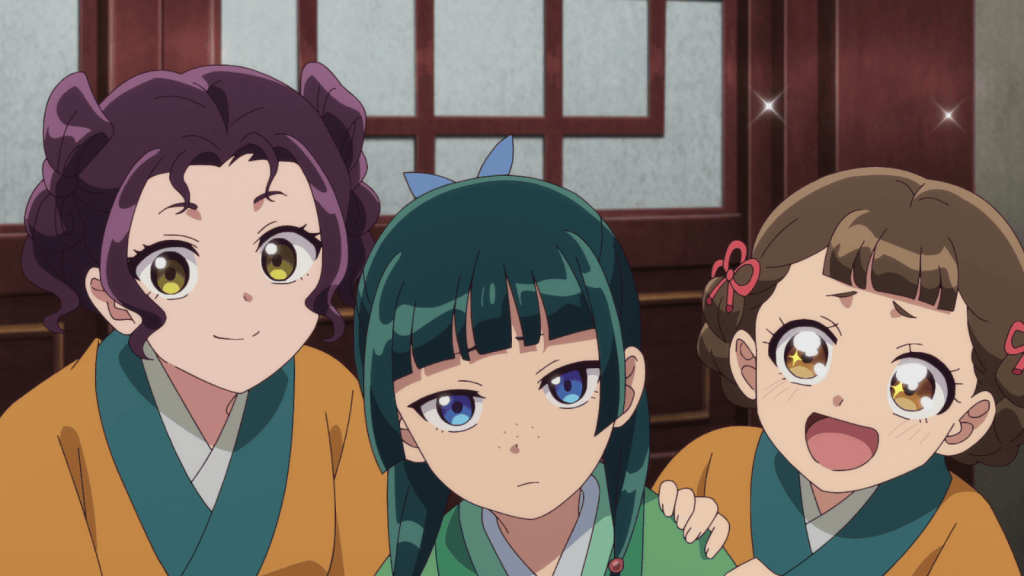
Beyond just Lihua, many supporting characters saw similar levels of development and exploration in the second season. (Sure, some characters are more basic than others so far – such as Basen – but there is time for them to be developed appropriately later in the series.) Exploration of the main characters was equally satisfying and far more in-depth than the more surface-level development of the supporting cast. I’m referring not only to Jinshi and Maomao, but also to Loulan/Shisui, who I consider to be a main character in the second season. I was surprised and impressed by the character writing for this insect-loving girl. I empathized with the abuse she suffered and her lack of stable identity. She had the most compelling story of the season and she became my second favorite female character in Apothecary Diaries after Maomao.
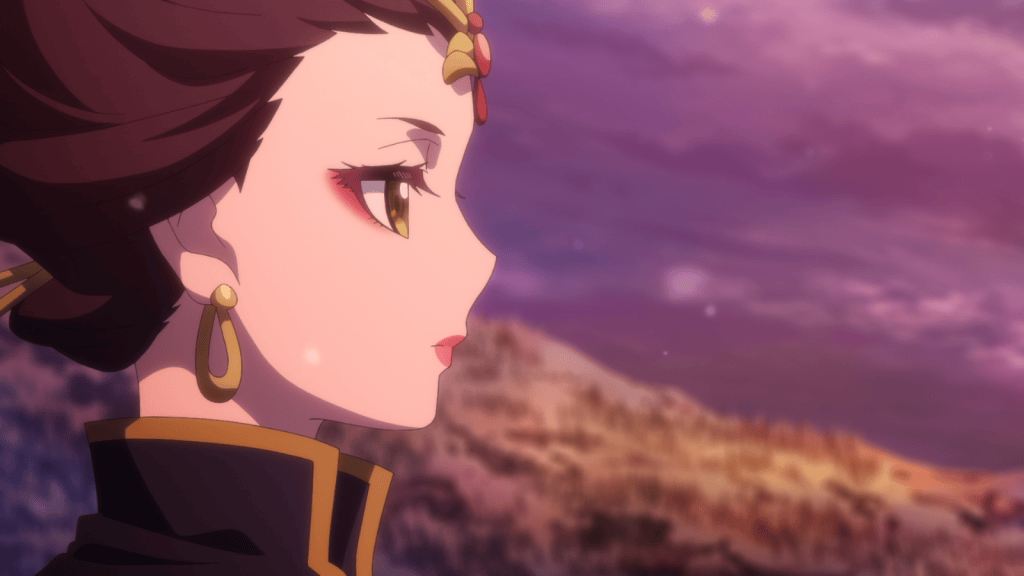
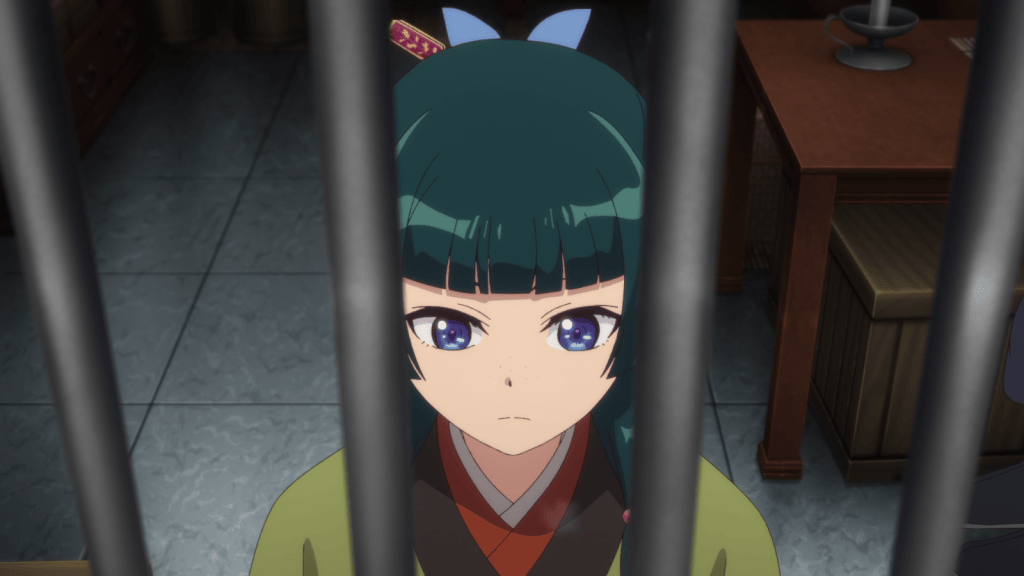
As much as I love Shisui, the star of Apothecary Diaries and one of its greatest draws is undoubtedly the character of Maomao. In my mind, she is one of the best heroines in all anime. Many have said, “Maomao is just built differently,” citing that she’s tough, smart, and less gender-conforming in an industry full of passive, frail, and poorly written female characters. In season 2, one of the best moments was when Maomao underwent the trial of Taibon. She was locked in a dungeon with a box of venemous snakes, spiders, and insects. Instead of cowering in the corner and waiting to be saved, the heroine used her sharp hairpins to kill the snakes, after which she casually built a fire and enjoyed roast snake meat. My favorite thing about Maomao is her systematic and keen mind. I also consider her a neurodivergent character, which makes her more relatable to me.
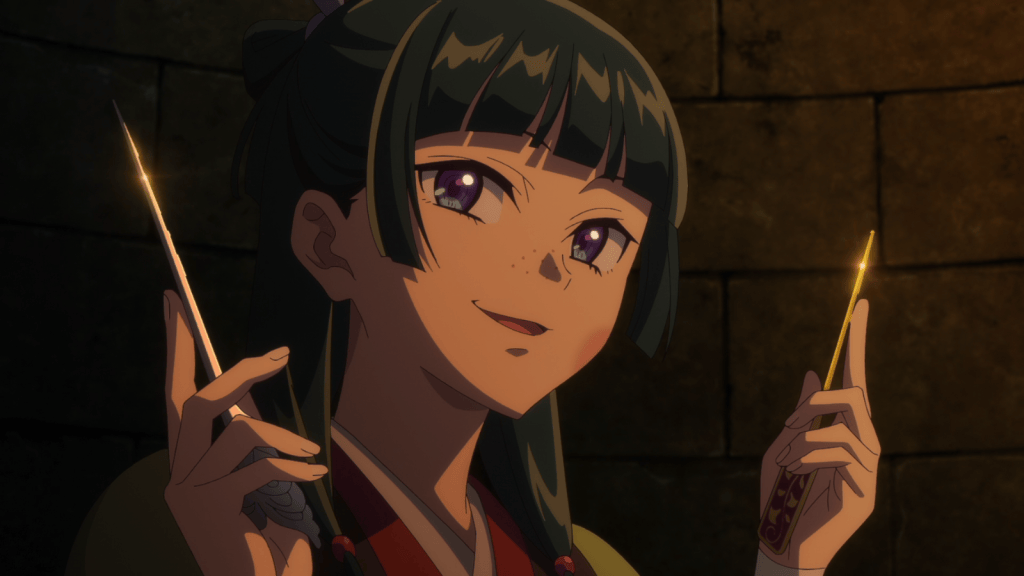
Importantly, Maomao is a great example of an inspiring, capable anime girl without being a Mary Sue. Some argue that Maomao fits this overly perfect type of character, but I strongly disagree. A Mary Sue is unrealistically flawless and doesn’t struggle meaningfully to overcome obstacles. Maomao, meanwhile, is distinctly human, with traits that don’t always serve her or others well, including her extreme curiosity and lack of social etiquette. More to the point, it seems obvious to me that Maomao is largely powerless and experiences significant suffering on a regular basis from her social status alone. Maomao can’t escape the fact that she’s a woman or a “commoner.” And in the palace, she could be executed for the slightest mistake. A Mary Sue would just break, burn, and overcome the unjust systems without having to pay for it. Maomao suffers not only from various forms of systemic inequality, but also from deep emotional struggles like the grief of losing Shisui at the conclusion of the second season. Because she struggles and suffers, having realistic personal issues, Maomao cannot be a Mary Sue.
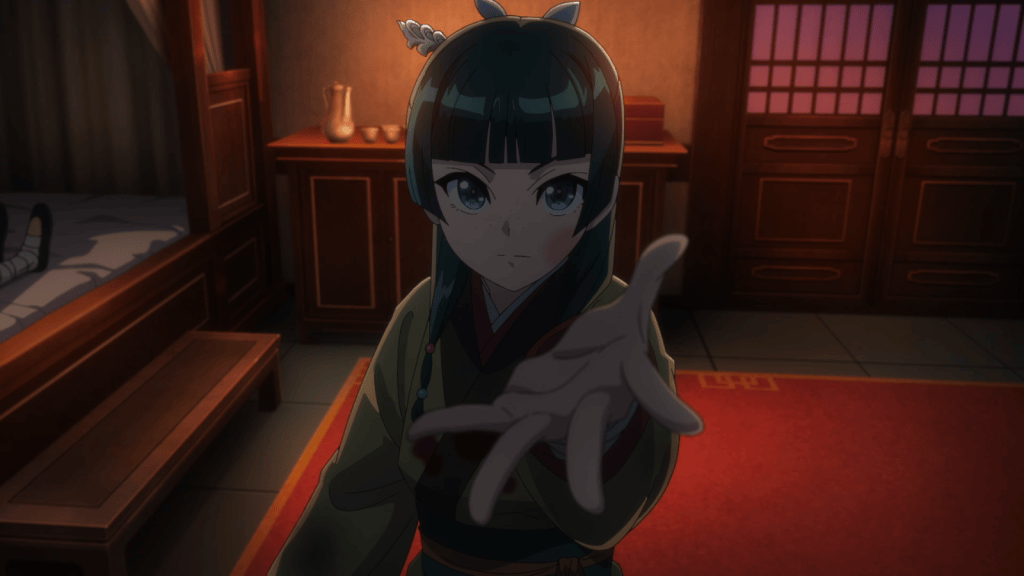
Another criticism of the character writing is that Jinshi is a bad person and yet this kind of narrative might frame him in a heroic light. After all, he’s the handsome love interest. I agree that Jinshi is a bad person because he doesn’t understand consent, is a misogynist, faithfully serves royalty, enjoys unfair wealth, and holds unethical power over many lives. However, I don’t think a main character must necessarily be heroic. Protagonists can be morally gray; an anime star can be even a murderous, narcissistic maniac like Light Yagami of Death Note. In my mind, Jinshi is a morally gray character because, though his morals are horrendous according to what we know now, he was trying his utmost to change the system in limited ways in the time period in which he was born. Jinshi wants to make the world a better place to the best of his ability. His genuine desire for change and mercy in a cruel and static world is, comparative to more conservative men of the times, admirable.
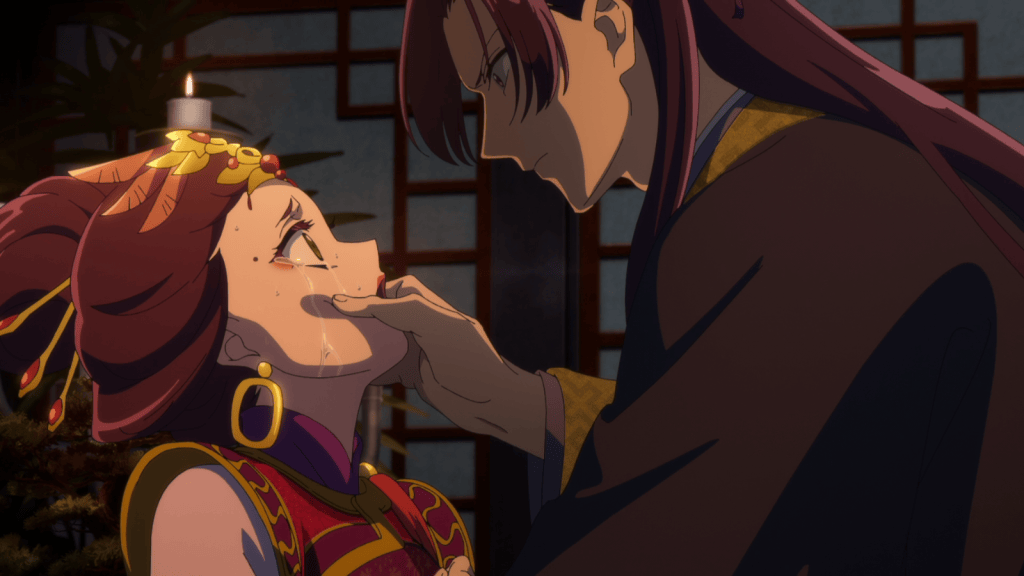
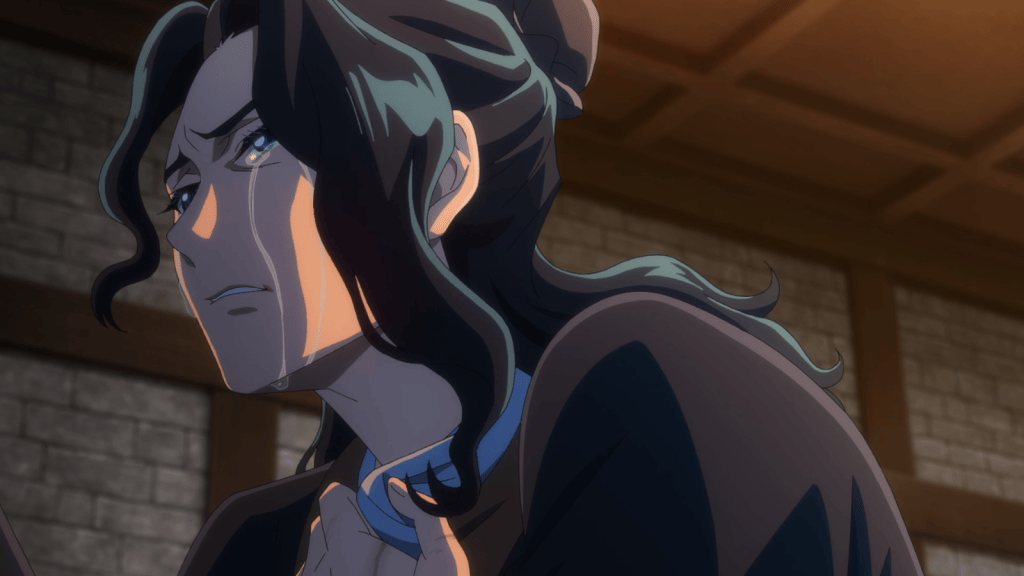
Even those who don’t personally like Jinshi should be able to recognize that a lot of thought went into developing his character. Personally, I find him fascinating, if annoying at times. On a final note for the character section, Apothecary Diaries excels at subverting expectations in interesting ways with its character writing. The best example is probably the character of Suirei, who changed from mysterious and intimidating to sympathetic and emotionally fragile. Since she was basically the “evil mastermind” of the first season, many people expected her to continue being villainous. However, we learned in this season that Suirei is a victim of serious abuse at the hands of her stepmother, Shenmei. Her trauma surrounding snakes was a result of being made to undergo Taibon as punishment. This and other details – like Suirei’s attachment to her sister, Shisui – helped make Suirei easy to root for and empathize with. All in all, the character writing was excellent.
Personal Enjoyment Category
Score: 7/10
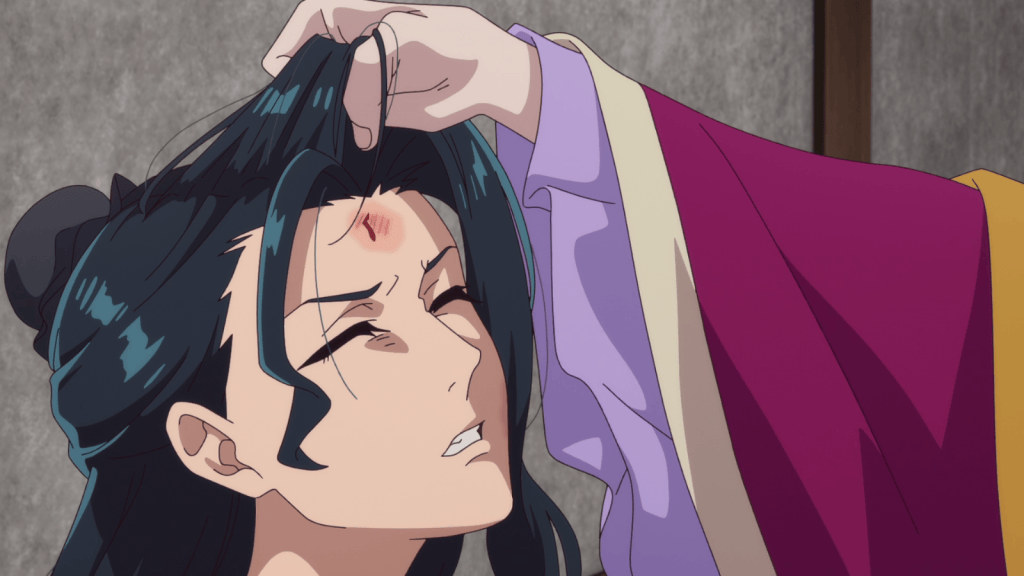
In this section, I restate what I liked in this anime and get a chance to rant about specific elements I didn’t appreciate. Let’s start with the parts that were less than enjoyable to me. I decided to touch on two main examples. The first one would be the issue I mentioned in the opening anime rant; Jinshi’s dynamic with Maomao has always been unhealthy, but he escalated it in the second season by threatening her with rape. The amount of online fans who defended Jinshi’s actions was disturbing. The fact that this show is marketed as romance is also infuriating. I’ve slowly learned that most online discussion about anime is toxic (at least on forum-style sites like Reddit and X), but that didn’t make it less disappointing to see such a poignant example.
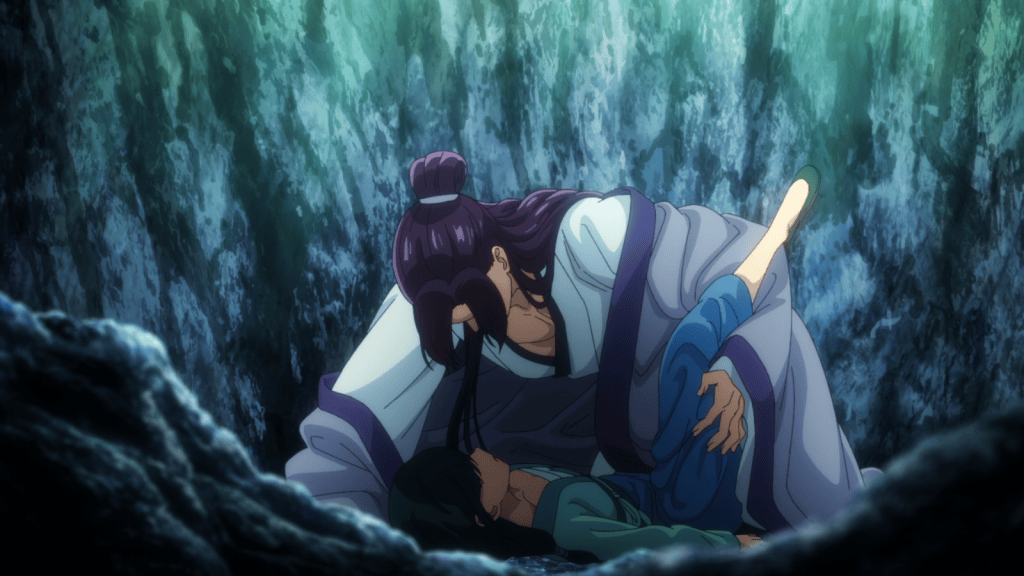
The second issue is that the narrative wasn’t harsh enough on the previous emperor even though he was a child rapist. The point of Anshi’s story is that Maomao helped her find closure and get rid of the idea that she cursed the previous emperor to death. (Anshi, now known as the Empress Dowager, sexually assaulted the previous emperor in revenge for ignoring her after she grew up – not to mention abusing her when she was a child. After that, the emperor withdrew socially and slowly died. Anshi thought her hatred cursed him, but Maomao proved that orpiment poisoning was the real culprit.) The point was not to say that the emperor deserved pity, but to help Anshi let go of the past. However, admittedly, it was a strange choice to make the child rapist mentally unwell and pathetic in the flashbacks, as if he deserved sympathy for being insane. Even if pitying him was not the intended purpose of the story, as I believe, I still disliked this plot point.
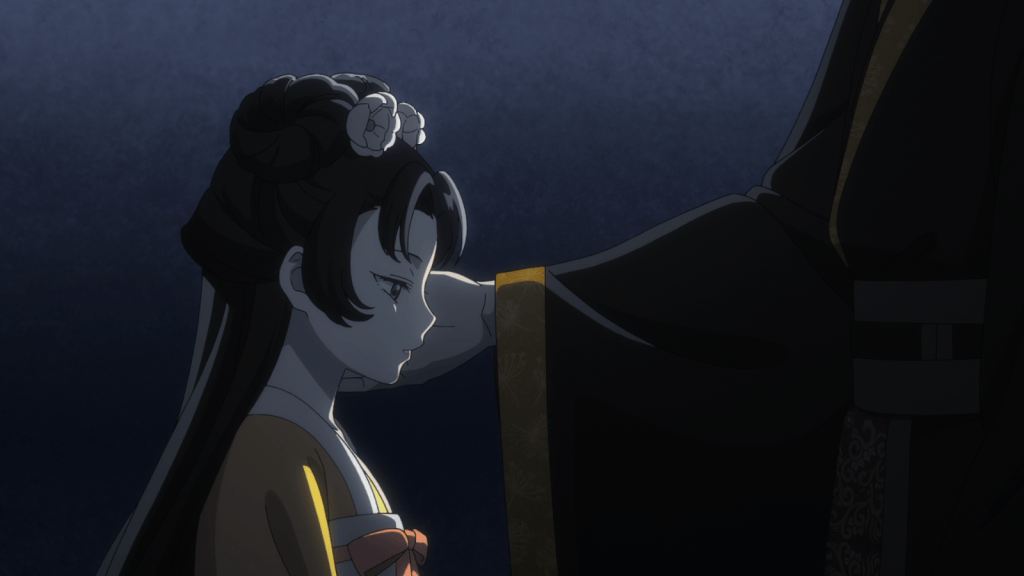
There were a few other issues here and there, but I’ll stick with those two complaints for today as they are the biggest factors that negatively influenced my enjoyment level. Now, before we get into the elements I enjoyed, I also want to mention the topic of familial abuse, which was explored in this season with the extremely abusive stepmother, Shenmei. Learning about the abuse suffered by Suirei and Shisui felt pretty rough. It could even be triggering if you’ve suffered abuse from family yourself, so approach with caution. But personally, I’m glad that this season broached the topic and treated it with the appropriate level of seriousness.
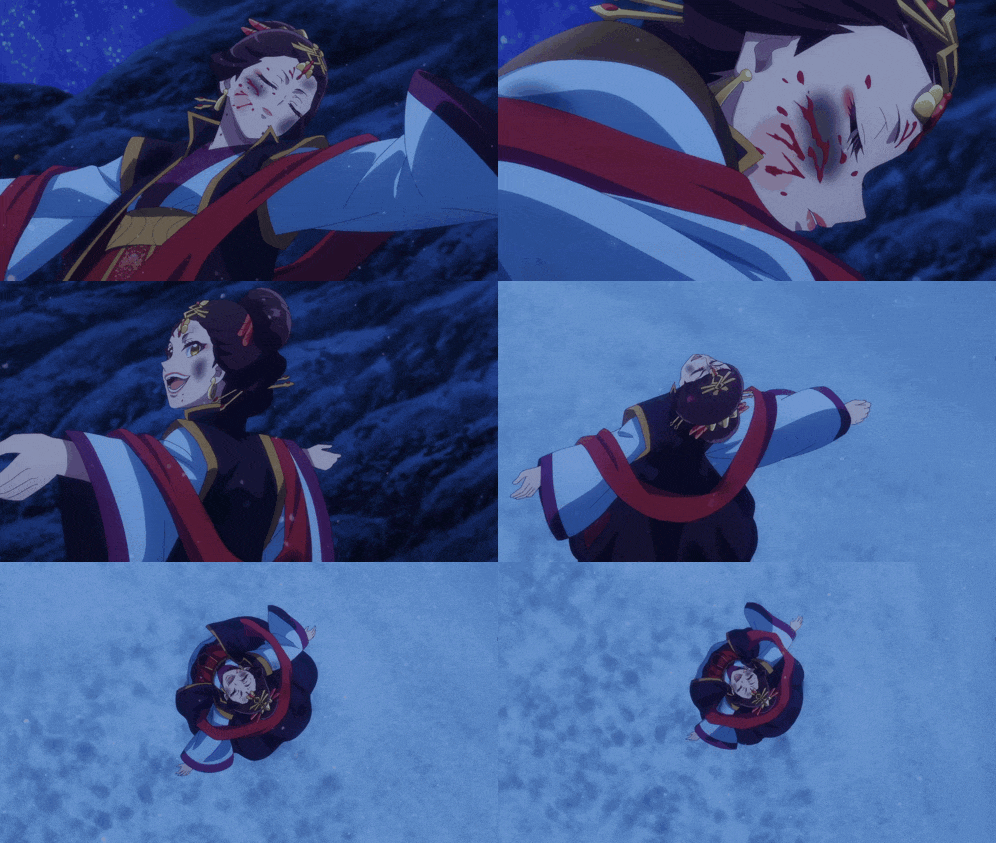
Now it’s finally time to rapid-fire some enjoyable elements of The Apothecary Diaries Season 2. First of all, the art and animation were delightful to me despite my usual lack of interest in the visuals compared to other categories. One of the most beautiful scenes was Shisui’s dance in episode 47. Watching her move was hypnotizing, even if it hadn’t also been a key moment in her emotional character arc. In addition to visuals, I loved the voice-acting and music. I loved the second season’s OST so much that I made a playlist of my favorite tracks on YouTube. Some of the story and character writing was amazing as well, making me inspired to understand and analyze this anime and write better characters myself in the future. (I used to write original stories and fanfiction, but it’s been a while. I hope to go back to that one day when I feel ready.)
Besides those general sources of enjoyment, I will quickly mention two specific character-related elements that contributed greatly to my appreciation of this anime. Firstly, even though some would call it doomed, I loved the friendship/relationship between Maomao and Shisui, particularly in the last eight episodes after they are both taken back to Shenmei’s fortress. I’m a hopeless yuri shipper sometimes, and I adored the idea of Maomao together with Shisui/Loulan. Despite their sad parting, I still loved it when the two girls were together. I cried when Shisui rejected Maomao. I’m an emotional masochist!
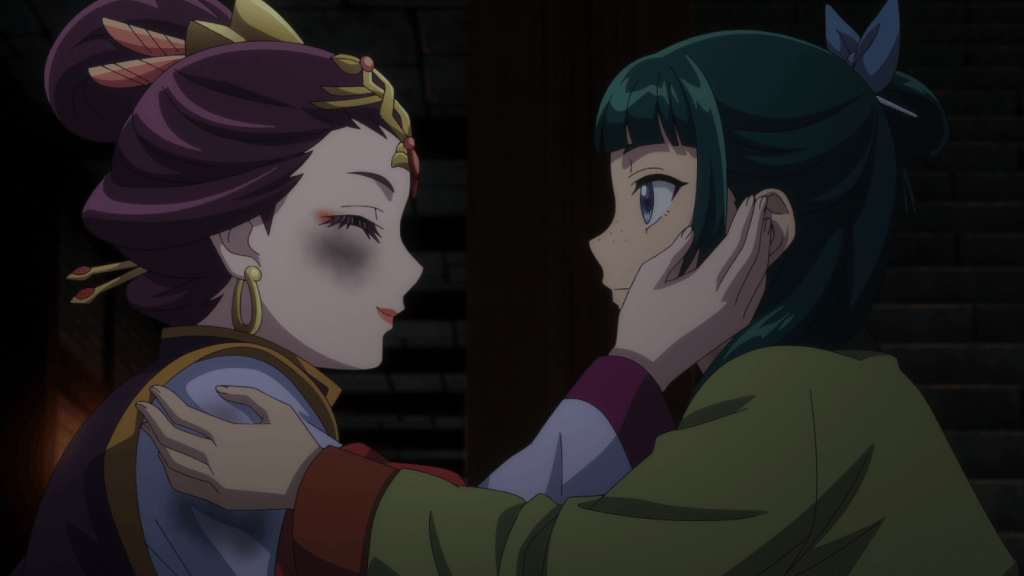
Secondly, I enjoyed the exploration of Shisui’s character and how she responded to the hardships she suffered. It was psychologically interesting and also relatable for me. Shisui experiences dissociation and an unstable sense of identity as a result of abuse and having to live two lives. She was forced to take on the false identity of Loulan, making her mask her other more cheerful and free personality. On a related note, the discussion of names is another psychological topic that I enjoy. Her birth name may have been Loulan, but this complex girl chose the name “Shisui” for herself and responded positively when Maomao addressed her by it. I will hopefully eventually write a character analysis for Shisui, but I think I’ve gotten the basics across.
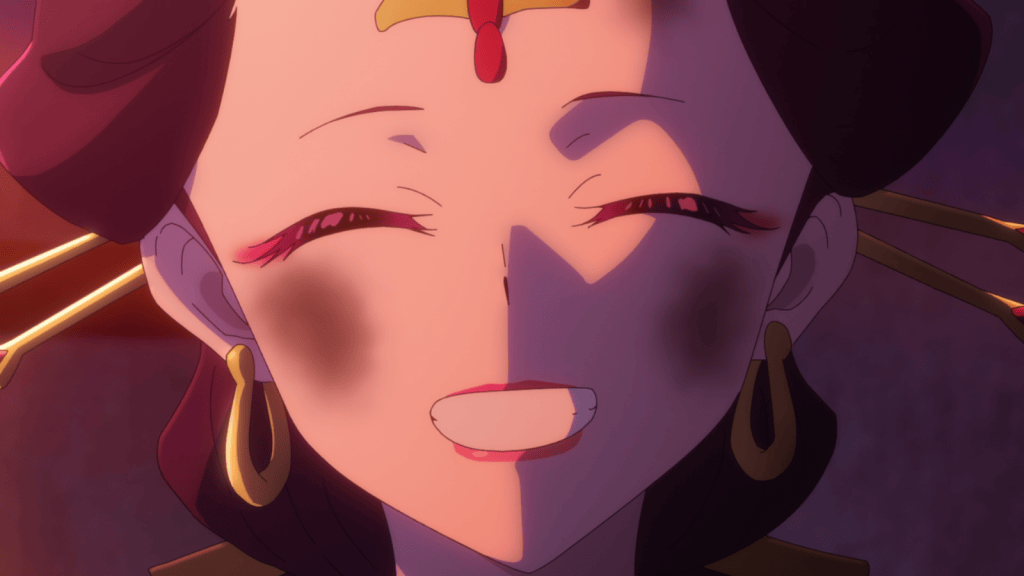
The Apothecary Diaries Season 2 was intense and covered many dark and difficult topics. Even though there were several aspects that negatively impacted my enjoyment level, I still appreciated the second season overall. I re-watched part of it for this review and can hardly wait to re-watch the season in full again – hopefully with friends.
Overall Score
Score: 8.4 out of 10.0 Medicinal Herbs
The overall score is the average of the five scores discussed in the categories above. In my system, a score in the 8s range means that anime is pretty damn excellent. That being said, I currently have the first season listed as a full 9.0, so the second season was undeniably several points worse in my metric. Why? Well, the second season was significantly darker, with several disturbing narrative choices, so my personal enjoyment score was lower. The visuals and audio were slightly less perfect to me than in the first season. It’s worth noting that I believe I am now more aware of the darker elements of the series as a whole, and I don’t know if I would still give the first season a full 9. But that’s enough about my own boring judgments. How was this anime perceived by the public?
The Apothecary Diaries Season 2 currently has a score of 8.90 on MyAnimeList (as of September 2026). This score is insanely high and places the season in twenty-fourth place of all anime. The season also has a current median rating of “Excellent” (or 8.8) on Anime News Network. To put it simply, the second season was as popular and well-received as the first. Though I’m thrilled to see this show getting popular, I think it should be approached with some level of caution, or at least better awareness of the potentially triggering content. You should watch the second season if you enjoyed the first Apothecary Diaries and can tolerate the mature themes becoming more intense. To restate, I think this season deserves a high rating overall despite a few significant personal issues I have with it. I continue to enjoy Apothecary Diaries for the characters, story-writing, and audiovisual bliss. This has been 7Mononoke at Anime Rants.
~Thanks for Reading~
Written by 7Mononoke at Anime Rants

