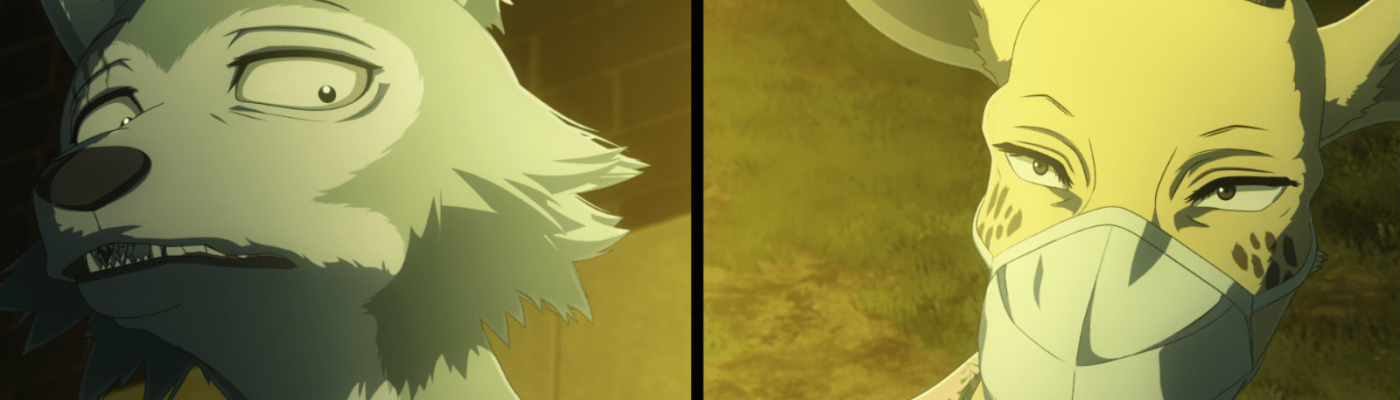
Thank you for visiting Anime Rants! In addition to the five shows I’m writing about in weekly episode review posts, I decided to write about Beastars Final Season Part 2. These twelve episodes were released on Netflix in late March 2026. I have always loved Beastars, but even I must admit that the final season was not great. In fact, the second half of the final season wasn’t even good most of the time. These three episodes that I’m writing about today were the worst installments yet. Still, I’ve tried to point out some positives or interesting choices in the writing so it’s not just pure roasting.
Contents
- Episode 7 (AKA 19): Feline Fall
- Episode 8 (AKA 20): Gotta Buy a Step Stool
- Episode 9 (AKA 21): The Demon King of Beasts
Episode 7 (AKA 19): Feline Fall
Episode Rating: 6/10
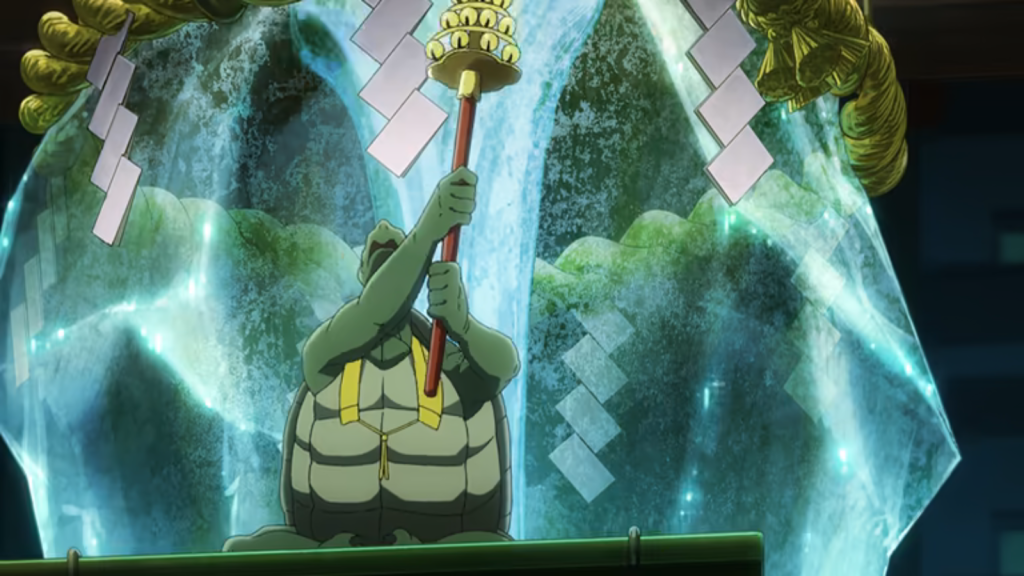
The episode begins with the Festival of Odd Souls. We haven’t heard a lot about this celebration other than it’s on Melon’s birthday, but I thought it looked and sounded interesting, so I looked it up on the Beastars Wiki. According to the wiki, the festival is celebrated during the year’s odd months. On this occasion, herbivores give thanks for the fact they weren’t eaten and beg the carnivores to keep them alive in the future. The wiki also explains that herbivores worship the frozen bone of a Brachiosaurus, revering it like a god. We actually saw a brief scene in the anime of a turtle praying to the dinosaur deity, so kudos to the anime makers for incorporating this detail from the manga.
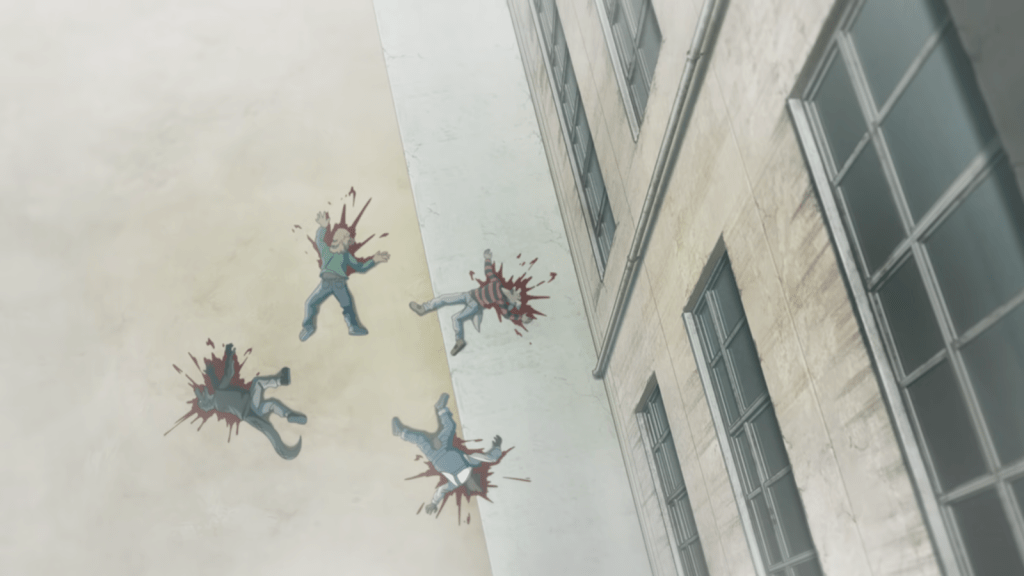
Previously, Haru had agreed to meet Melon at this strange celebration and be his birthday meal. The written-to-be stupid rabbit was still intent on going to the festival right up until Louis kidnapped her and brought her to his house. Meanwhile, Legoshi went to meet Melon in Haru’s place. During the confrontation between the wolf and the hybrid animal, we learned two important truths about Melon. First, he wasn’t pushed off the roof by his carnivore bullies as a child. I’m not sure what the teacher was doing, but Melon turned around and apparently pushed each of the bullies off the roof. It doesn’t really make sense to me that a hybrid with a primarily herbivore body would be able to overpower four or more carnivores. However unlikely it may be, this is Melon’s backstory and the origin of his murderous behaviors. The second important fact we learned is that Melon is responsible for the series of interspecies murders happening recently.
The motivation for these murders was twofold. One reason was sick curiosity – he wanted to know what it would take to drive those couples to the point of a devouring. The other reason was revenge. Melon resented being born and didn’t want any more mixes to be created. Killing those couples was his way of spiting his parents, too. Melon’s motivations and backstory are relatively interesting, but the way he spilled everything to Legoshi in this scene felt like a clumsy case of character exposition dumping. I honestly love the character of Melon in theory, as I am quite fond of “studying” fictional psychopaths. But in execution – especially in these final few episodes – the character writing was rushed, unbelievable, and confusing if not outright inconsistent. The worst choice in Melon’s character writing was, in my opinion, the decision to have him jump off the building in this episode. I’ll explain what happened and why it didn’t seem like good writing to me.
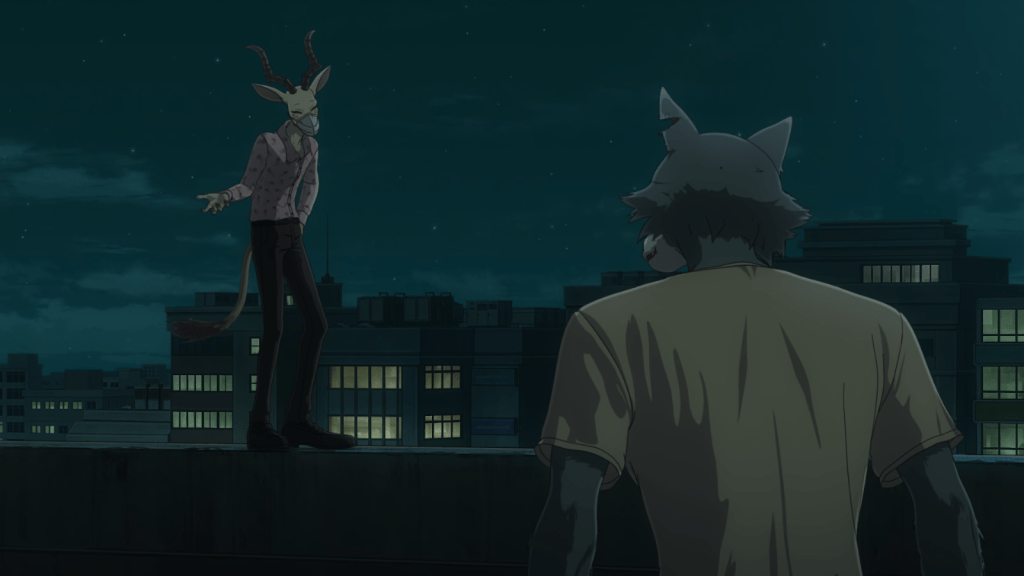
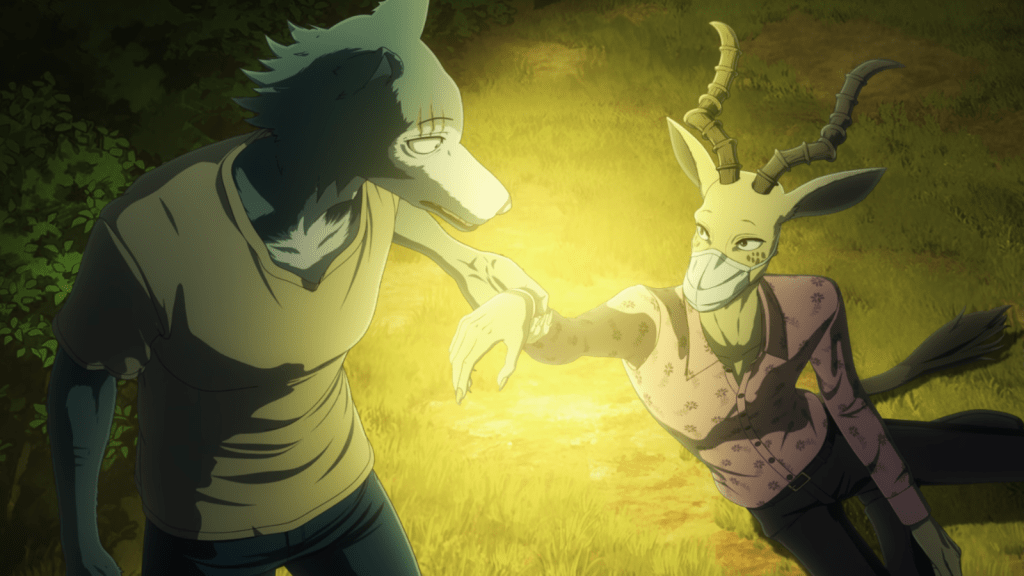
The carnivore bullies and the teacher from Melon’s past told him to jump off the school roof, but Melon chose instead to kill them all. However, he apparently always wondered if he should have jumped. Melon then decided that now was as good a time as any and leaped off the building, telling Legoshi to watch closely. Legoshi ended up catching Melon and breaking his fall, but hang on – why did Melon jump? I get that he hates mixes and has even turned that hatred against himself, leading him to not care about his own life. But it was unclear if he truly wanted to die in this scene or if he predicted that Legoshi would save him. The timing also made no sense. If Melon was going to give up, he should have done so after an intense fight with Legoshi. Instead, he gave up when he was ahead – he even had a gun, for fuck’s sake. It didn’t make sense.
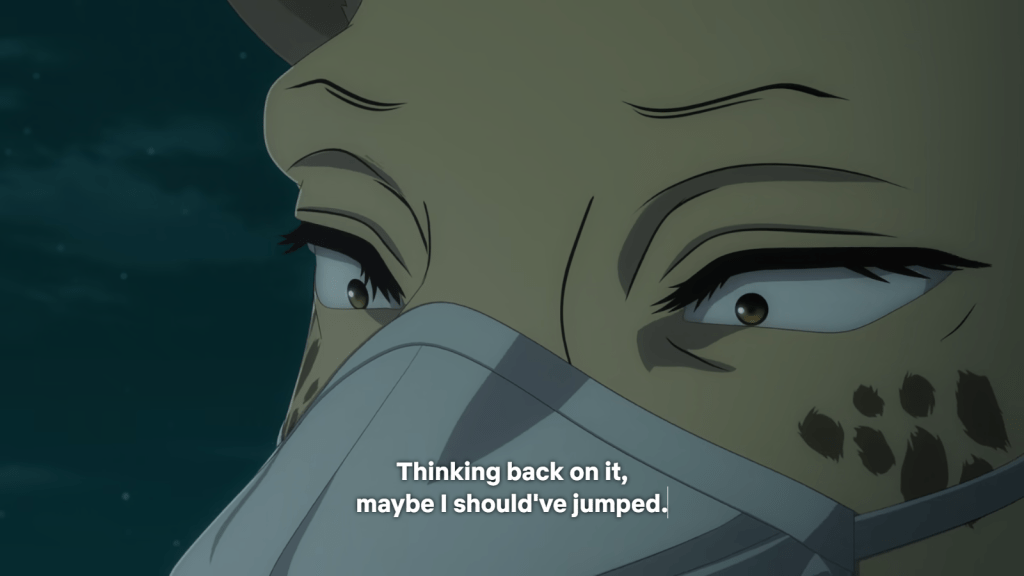
I do understand the argument that Melon is simply insane and that’s why his actions are not consistent. But that feels like lazy writing to me. You should be able to have a mentally unwell villain and still have his moves make sense for the most part. On an additional note, perhaps the point of Melon jumping was to foreshadow the ending – after all, in the final episode, he shoots himself in the chest (but somehow survives). Still, rather than feeling like effective foreshadowing, Melon’s jump simply made his decision in the final episode seem predictable and anti-climactic. I’m giving the character writing for Melon a lot of grief because I genuinely wanted it to be better – it had so much potential.
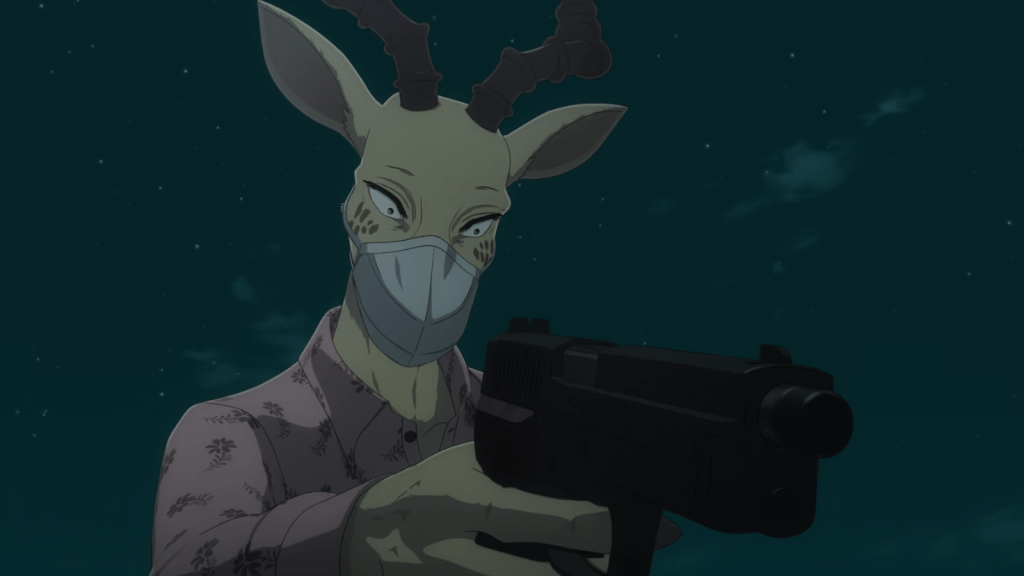
A separate issue that made this scene less impressive was the fact that Legoshi’s actions are repetitive and stupid. He’s already gone to confront Melon once and got nearly murdered. Why did he think Melon would not have a gun this time? Also, it was really dumb that Legoshi fell for Melon’s “weak herbivore” act. Melon asked Legoshi to be more gentle with his hold. This enabled the villain to escape. Legoshi went home without accomplishing anything, and without any proof that Melon was behind the murders – but at the very least, Haru was safe.
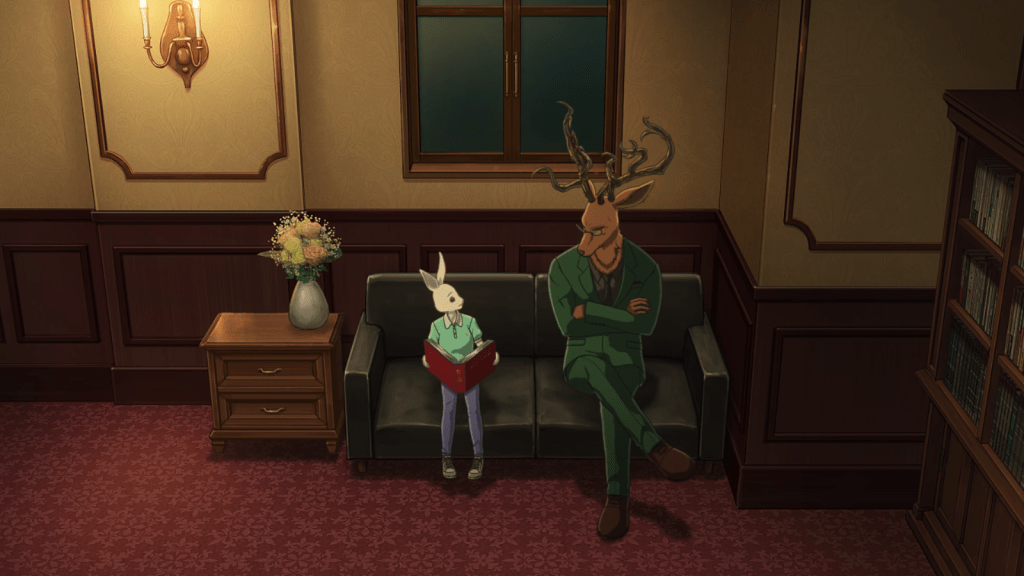
Speaking of Haru, she was initially furious at Louis. But after the deer explained that Melon was not a university teacher and actually a murderous mafia boss, Haru accepted the truth and stayed in the house. She did wander around though, and soon encountered Louis’ father, Ogma. He showed her some books about running a business, which Haru was keenly interested in because she wanted to open a restaurant someday. Ogma is an interesting character who deserved a bit more exploration than he got. Still, it was nice to see this random scene of him interacting with Haru.
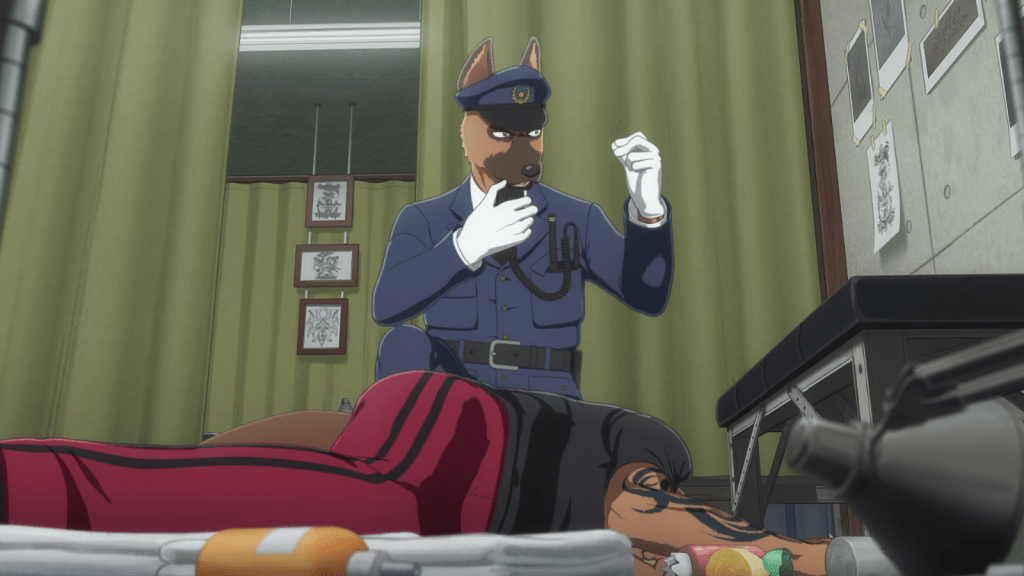
In the last part of the episode, Legoshi went looking for Melon again and decided to visit the tattoo parlor. The last time he went there, he was tricked by Holger the sloth, but I guess he figured it would be different this time. When he arrived, both employees of the tattoo studio (a kangaroo and a bulldog) were dead on the floor. This was a crime scene that Melon set up for Legoshi to frame him. As the cops pulled up the tattoo parlor, Legoshi was spotted running away from the scene. His fur was also found at the site. Investigation by the dog cops started immediately. And thus begins the ill-advised plot point of Legoshi being framed for murder! This plot thread was way too rushed, and as Legoshi’s alleged crimes escalate, it was also difficult to believe or take seriously. Let’s move on.
Episode 8 (AKA 20): Gotta Buy a Step Stool
Episode Rating: 6/10
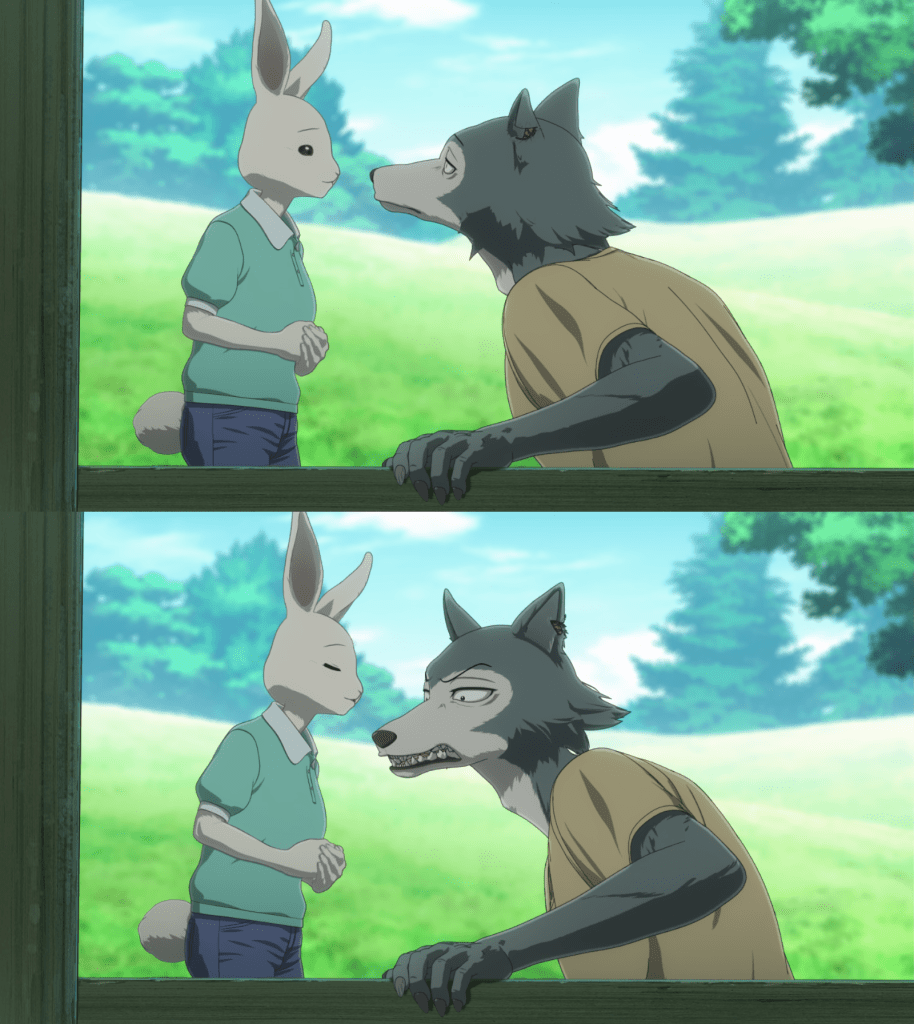
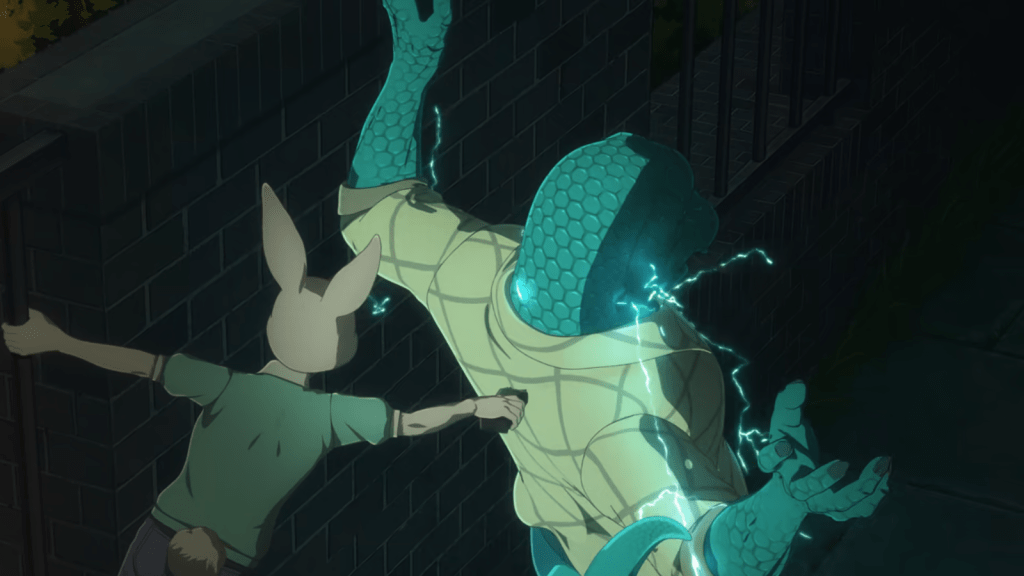
This episode was mostly fine, but I didn’t like the whole rushed plot of Legoshi being framed. Regardless, we began with a cute and enjoyable scene of Legoshi and Haru in a park gazebo. The wolf gave the rabbit several tools and weapons for self-defense, such as a stun gun with high voltage. During Legoshi and Haru’s outing, an unnamed rat from the black market suddenly appeared. He informed Legoshi that he was wanted as a murder suspect and that things were about to get crazy and unstable as the cops dug up his life details. Kindly, the rat gave Legoshi a tiny map leading to a rat base where he could take shelter. Haru was surprised and worried, but she didn’t have any trouble believing that Legoshi was innocent. This would later shock her friends from university.
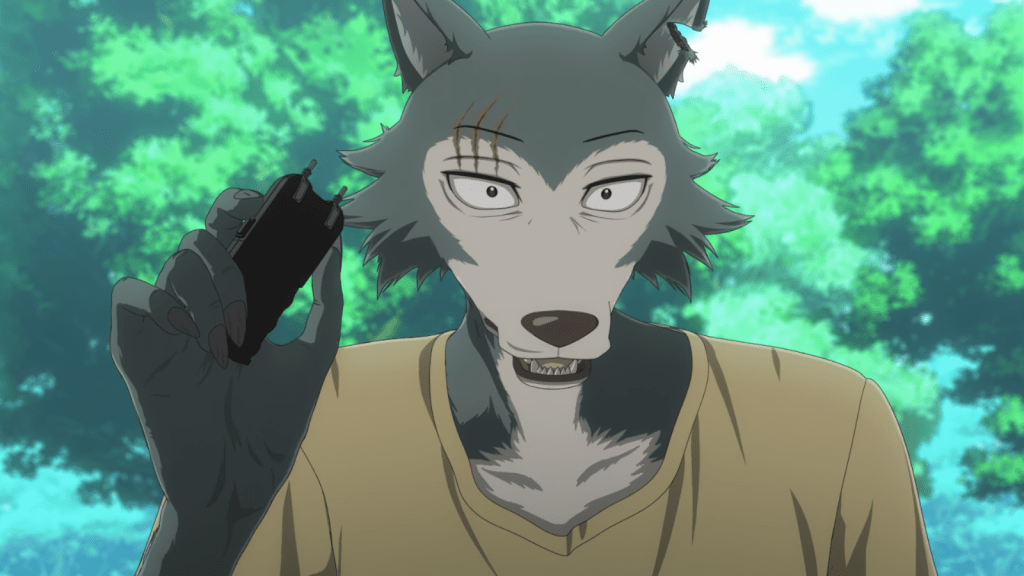
Speaking of the university, Haru offered to look for clues there concerning Melon. That was when Legoshi noticed that he and Haru were in a prime position for a kiss. This was one of the more stupid and aggravating parts of the episode, as Legoshi first said he wanted to kiss, but then backed out. He wanted the first kiss with Haru to be after he was sure they could get married – so not until after Melon was behind bars. I can’t tell you how frustrating it is that the wolf and the rabbit have been doing this for three seasons now. I understand that Legoshi puts great sentimental value on a kiss – much more so than a handjob or blowjob – but not kissing this far into a relationship is unreasonable. Legoshi shouldn’t drag Haru into his (borderline chauvinistic) emotional hangups when she deserves to be kissed by her boyfriend whenever she wishes. That’s what I think anyway. I don’t blame Haru for getting frustrated and leaving Legoshi at the park.
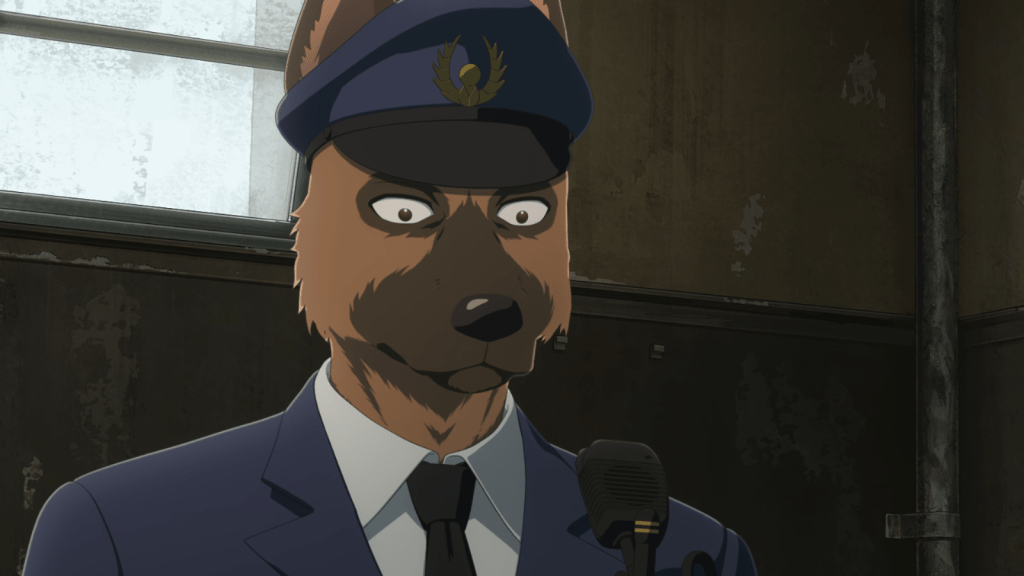
Next, we had a few frustrating scenes of the police investigators questioning Legoshi’s connections. The dogs intentionally misinterpreted everthing that was said to them in order to make Legoshi look worse. Also, Melon or a collaborator left Kines in Legoshi’s room, linking him to the interspecies couples murders. (Kines was always found used at those crime scenes, too.) For some reason, the entire world has already decided that Legoshi is guilty, and we’re supposed to accept this without batting an eye. It was difficult to suspend my disbelief that every cop and casual bystander in the city would turn against him so single-mindedly. Perhaps the point is that the justice system is too harsh against carnivore suspects, forcing them to plead guilty even when they were innocent and giving them long sentences. That would make sense in this setting, but it still seems to me like this murder plot was unpolished and rough from start to finish.
Meanwhile, Louis wondered what he could do to help Legoshi and prevent more victims of Melon. He ended up using his name as a celebrity to endorse a YouTube channel promoting “Live Together” – an organization that fought for coexistence between species. His main message was to warn interspecies couples of the killer on the loose. In terms of protecting his own career and avoiding a scandal, this choice was a poor one. But it was an ethically good thing to do and I was proud of Louis for giving his name to the cause. While that was happening, Haru was at university and started to feel like someone was stalking her. Before we get to that, though, I want to discuss the rat scene.
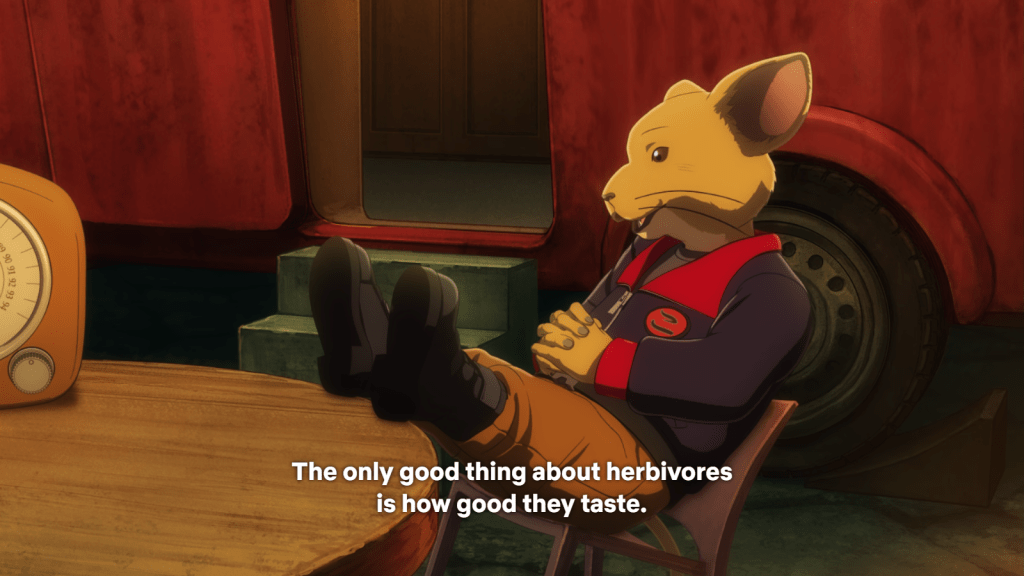
Legoshi went to the location in the black market recommended by the rat. Once he arrived, he saw the nameless rat from before with his two followers (or possibly his children). Now, there has always been a problem with the binary system of carnivores and herbivores in Beastars: it completely ignores the existence of omnivores in reality. Rats should be omnivores, but instead, in this scene, they are strictly carnivores. The rats eat tiny scraps of meat stolen from the black market shops, being unable to afford it otherwise. The rat boss also stated that the only good thing about herbivores is their taste. Talk about a problematic carnivore. This scene was an opportunity for Beastars to discuss the idea of omnivores, but the narrative reinforced the binary system. It was lowkey disappointing. Also, this goes without saying, but the rats’ only argument is that “meat makes us happy,” which is very weak compared to the herbivore argument of “being alive makes us happy, thanks.” Honestly, the rats were gross.
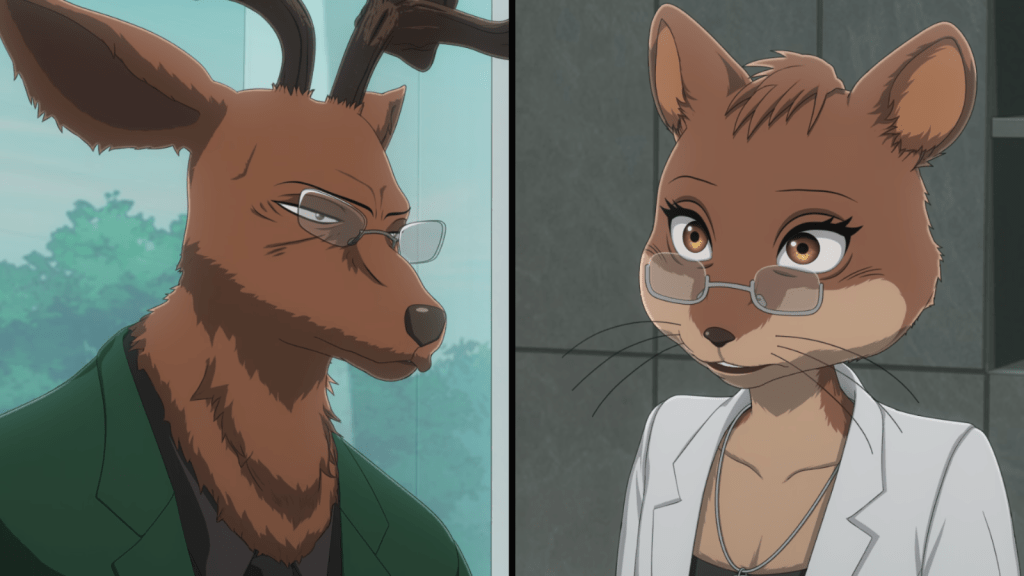
There was a short scene with Kuroe (AKA Chloe) the weasel scientist speaking to Ogma, the father of Louis and head of the Horns Conglomerate. The scene mostly served to establish that Kuroe is working on developing the artificial meat so that it’s ready for release at the opening announcement for the Zoolympics. I’m always happy for scenes of Kuroe because she has a really cute design – though I’m not sure why her tail is striped. I thought she was a racoon or something, but apparently, she is a weasel – which is one of my favorite animals in reality. Anyway, the last part of the episode to discuss is the bit about Haru and her stalker. I have a few things to say about what happened.
Legoshi told his grandpa, Gosha, to keep an eye on Haru and help protect her from Melon. The wolf didn’t mention this to Haru because he knew she wouldn’t like it. Obviously, it would be problematic for someone to secretly hire a bodyguard/stalker for their girlfriend against her will. In reality, I’d say that’s wrong regardless of good intentions. However, in this fictional setting, an active serial killer is known to be targeting the girl. In a situation like that, refusing extra protection would be insane, so Haru’s preferences make no sense. It’s like she’s written to be stupid, at least in the final season. What I’m saying is that this situation would probably never come up in reality because anyone who isn’t an idiot – woman or otherwise – would accept help dealing with a powerful psychopath cannibal. (In any sane society, you would be protected by actual police.) Legoshi’s controlling behavior is excusable to me only because a) this is fiction, and b) the whole scenario is unrealistic.
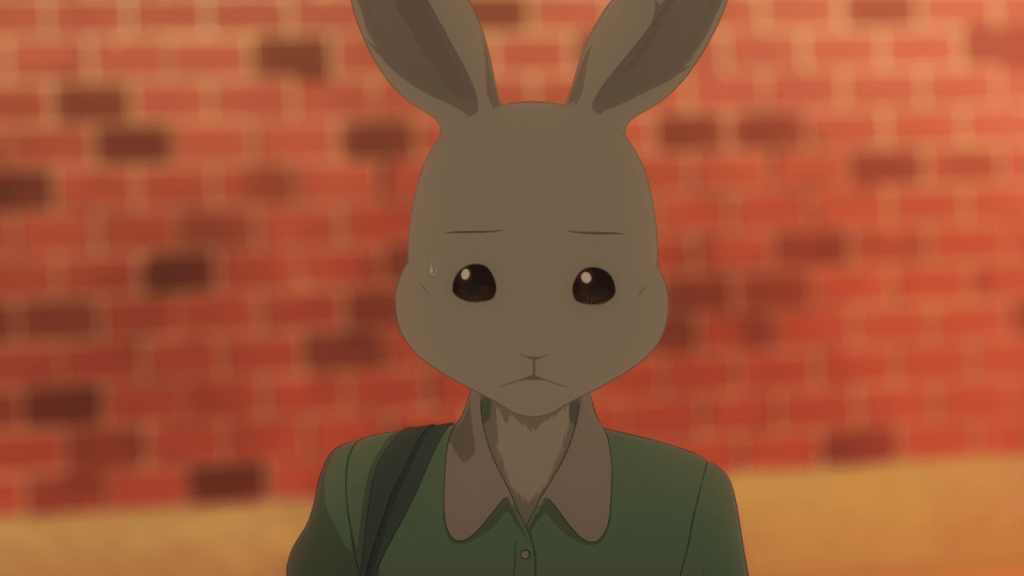
My other point to make on this topic is that it was good to show Haru’s perspective as she was being followed. Perhaps this will help open the eyes of some men viewers who don’t understand the daily terror of being in public as a woman or AFAB individual. Being stalked, attacked, harassed, cat-called, or ogled are all far too common for women and AFAB people – and the perpetrators are usually men. I have experienced some such things myself, unfortunately. Anyway, to her credit, Haru zapped Gosha with the stun-gun, rendering him immobile for a few minutes. The episode ends there.
Episode 9 (AKA 21): The Demon King of Beasts
Episode Rating: 5/10
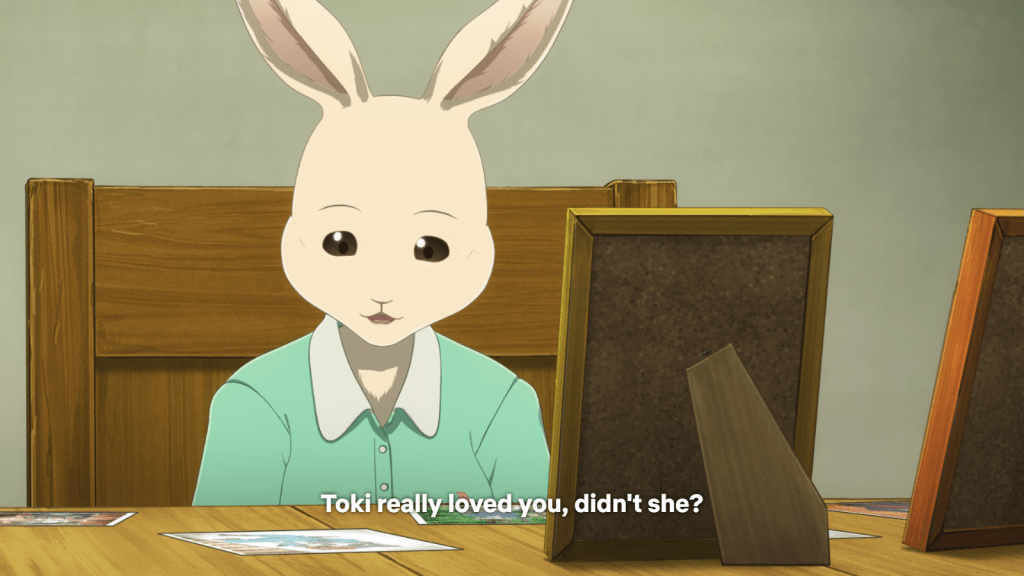
Haru ended up bonding with Gosha after he explained who he was and proved it with photos. (He had many pictures of him with baby Legoshi.) It didn’t take long for Gosha to begin telling the story of his life with his gray wolf wife, Toki. This brings us to what I consider the two stupidest plot points in the entire series of Beastars: 1) Komodo dragon venom is so dangerous it can kill a creature by touching them; 2) Toki killed herself by kissing Gosha – and her psychotic, traumatizing death was framed as romantic! I knew the venom was deadly if it gets into your mouth or bloodstream, but I didn’t know that so much as a drop of saliva anywhere on the body could kill. I guess it’s supposed to be “cool” to think Gosha is a monster whose very existence is poisonous to those around him. But I see this is as exceptionally stupid and unnecessarily cruel character writing.
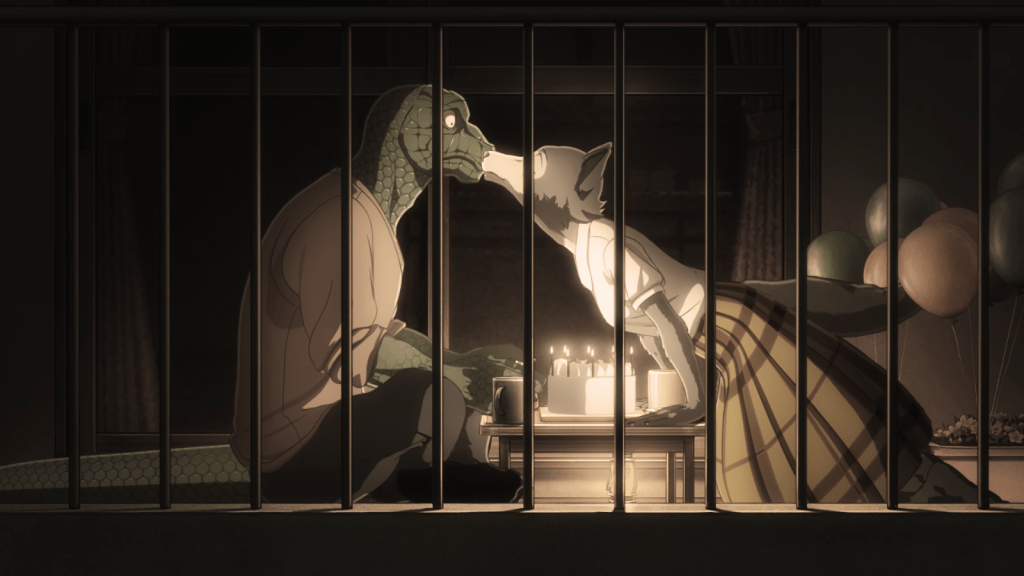
Then there’s Toki. Her final action was framed as romantic, which is incredibly wild to me. But the female wolf must have been psychotic to do such a thing, right? No suicide should be glorified, but especially not if the person dying has a family, including a baby daughter!! Can you imagine what she put Gosha through by dying to his venom and leaving him with a child to raise alone? Talk about a coward’s way out. I honestly hate Toki for what she did. Making her mentally unstable does sort of make sense, because it makes it believable that her daughter Leanno would one day commit suicide, too. Generational trauma like that happens. However, this plot point and the narrative framing around was still annoying, aggravating, and wrong as all hell. I really hated it and found it stupid.
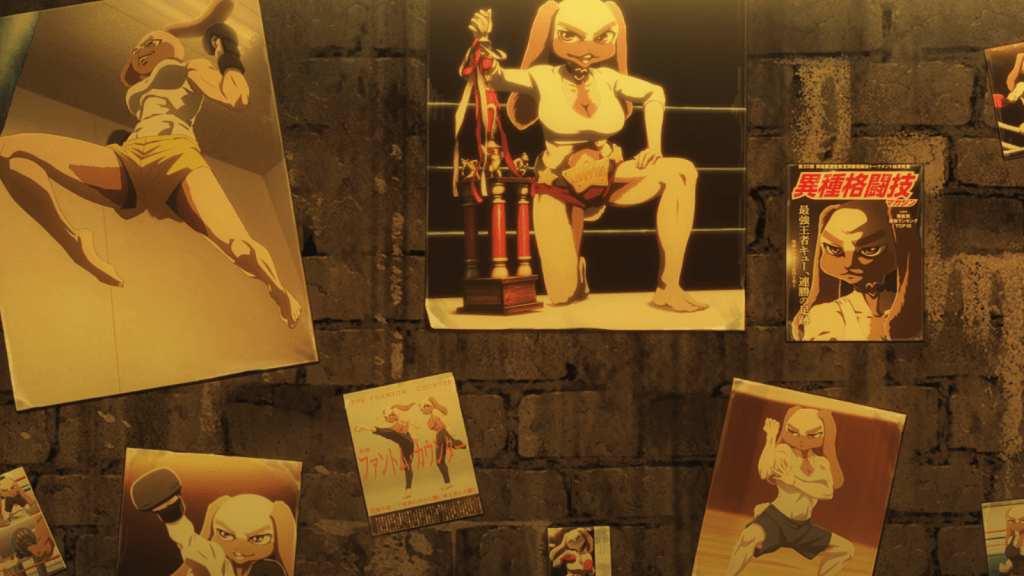
The next point to mention is the scene where the rat was practicing martial arts. Legoshi observed and found that one of the rats was a huge fan of Kyuu. This rabbit fighter was mentioned in Beastars Final Season Part 1, but we never actually meet the character – not even in the last few episodes of the series. The purpose of Kyuu is to give the Black Market people someone to look up to. As a strong fighter who survived being in the “Live Bait” market, Kyuu was the star of the underground world. I am disappointed because I wanted to meet Kyuu, but in the end, I think this was for the best. I don’t trust the writer(s) of Beastars to write a strong female character well. They would probably make her full of misogynistic character tropes. Compared to that, I’d rather not meet Kyuu at all.
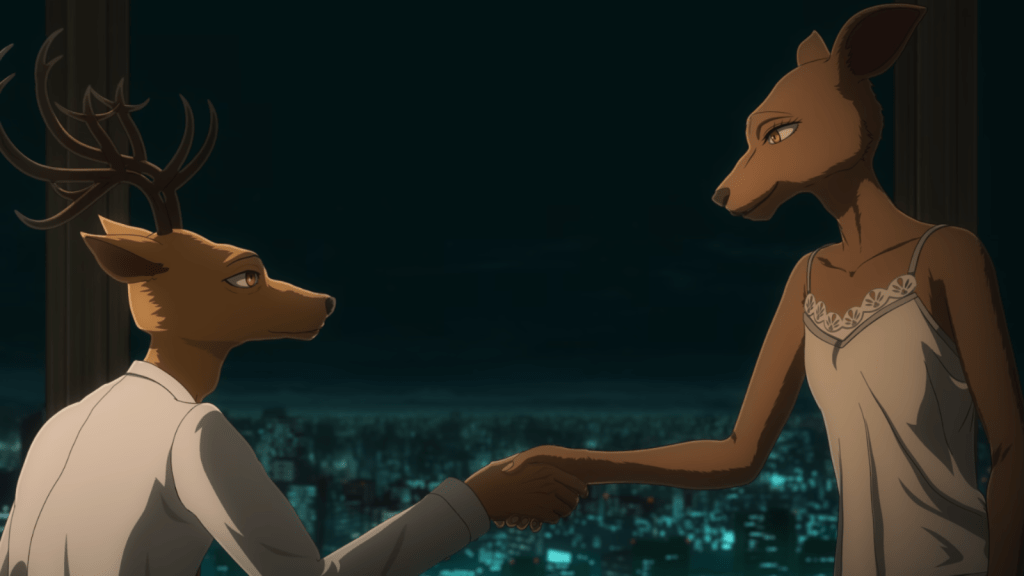
With the stupid story of Toki and, later, the stupid choice of the Shishigumi, this episode was irritating. One thing stopped me from rating this episode 4/10, and that was the scene with Louis and Azuki. I truly enjoyed this part of the installment. Louis finally confessed to Azuki that he was unable to be sexually attracted to herbivores. To my surprise, the pretty deer lady was really freaking cool about it. She agreed to become his “business partner” and not expect a romantic or sexual relationship. The marriage was still on, however. The situation with Louis and Azuki reads similarly to a closeted gay man and an understanding “alibi wife.” In the world of Beastars, Louis is most definitely “queer.”
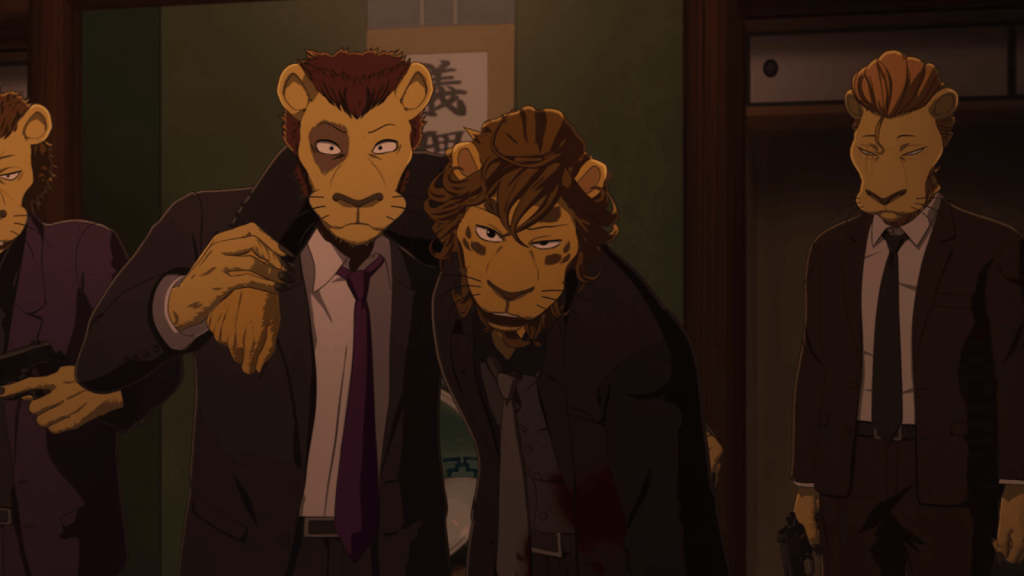
Going back to stupid plot points and bad character writing, we have the scene where Melon returns to the Shishigumi. The lions were preparing to enter the competition that would settle the turf war in the Black Market. Agata was initially going to enter himself as the temporary leader of the Shishigumi, but Melon returned suddenly. Accusing Agata of trying to replace him, Melon shot the young lion’s hand, blowing it off violently. The rest of the lions pointed their guns at Melon at first. But for some unhinged reason, Agata started respecting Melon, calling him “The Demon King of Beasts.” After Agata said he would follow Melon, the other lions agreed to do the same. Thus, the Shishigumi entered the competition with Melon as their boss.
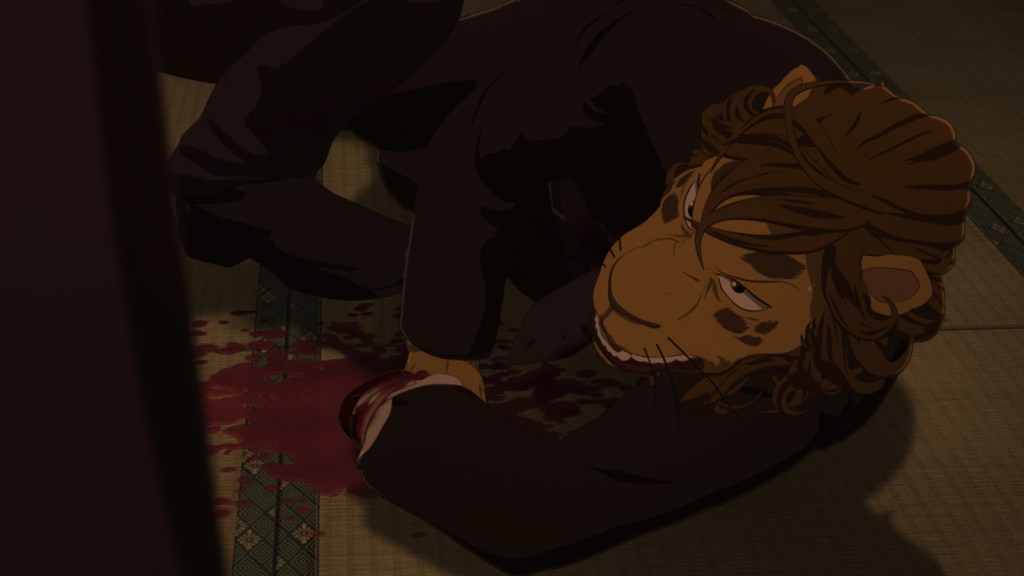
The abrupt, unexplained epiphany of Agata and the agreement of the other lions felt like terrible writing, and it pissed me off. I would go so far as to call this “character annihilation.” Until now, the Shishigumi have been moving toward redemption in terms of character writing. Even if they were never fully redeemed, they were being increasingly humanized whilst learning to make more moral decisions. Now, all that character development just went down the drain. The lions are suddenly bloodthirsty again and eager to become more evil and corrupt than ever under Melon. It seems like only one of the lions – Free – was in his right mind, remaining reluctant to follow the psychopath. Besides Free, the Shishigumi lost all their progress in one meeting, which I think was a bad writing choice.
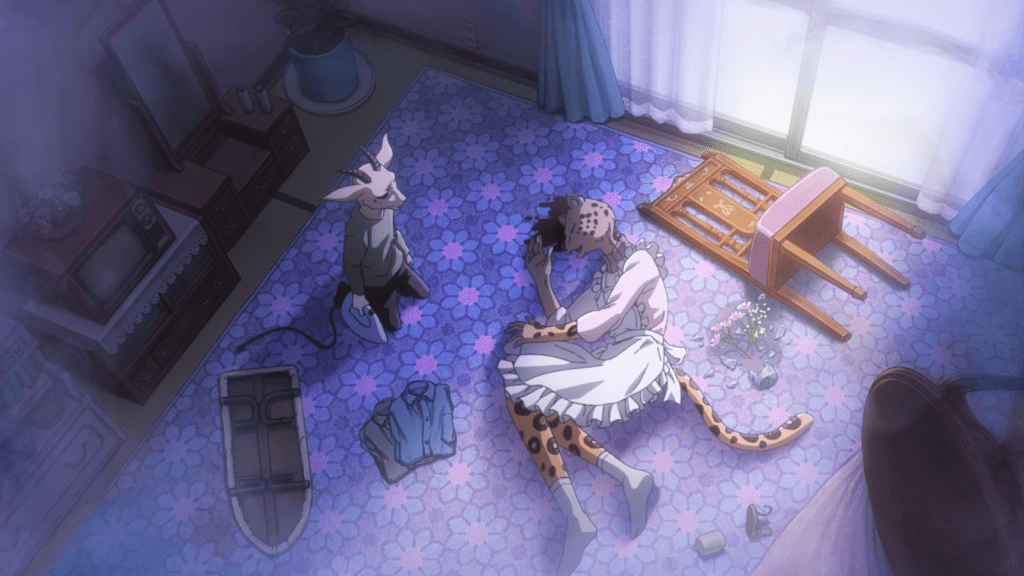
I’ve already been going on about these episodes for longer than I intended. But on a final note, we learned in episode 21 that Melon murdered his own mother. I suppose that’s not a huge surprise. I was expecting that the mother was cruel and abusive, and thus arguably deserving of death. However, the flashbacks and Melon’s narration are not very clear on this point. According to Melon, his mother only looked for his father within him, never recognizing her son as his own being. If this was true, it would be problematic, but who knows when Melon is telling the truth? Even if the mother was not always supportive, I doubt she did anything worthy of being burned and beaten to death with a hot iron. Melon obviously had a complex view of his mother, calling her terrifying. But we’ll never know the specifics of their life together or if abuse was actually happening. Personally, I would have liked to know. Anyway, that’s finally all for my notes.
~Thanks for Reading~
Written by 7Mononoke at Anime Rants

