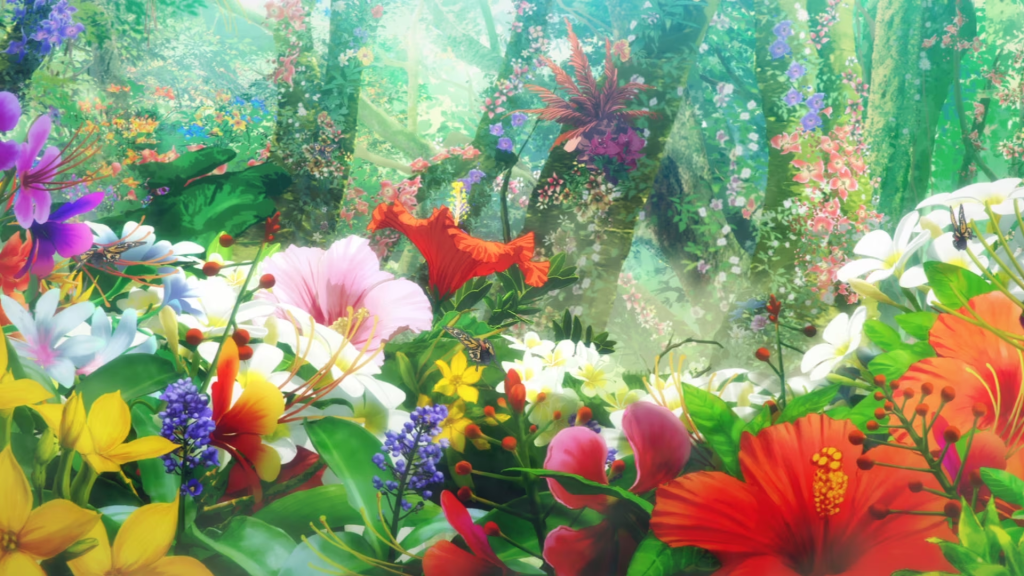
This must be paradise, you think, walking through a glade of gorgeous, brightly colored flowers. The air smells sweet, and nearby, the lush jungle trees are laden with succulent fruit. But as you reach for a plump pink peach, the ground begins to tremble. It sounds like a impossibly heavy creature is approaching step by step. At the same time, a swarm of buzzing, biting insects appear. They are mothlike but have tiny, ugly heads of humans. Enormous black centipedes rush toward you. As a hideous giant enters your view, you find yourself thinking you are actually in hell.
Welcome to Anime Rants. Today, I present my review for the successful Spring 2023 anime, Hell’s Paradise (Japanese: Jigokuraku). The review follows my usual style of examining five categories: Visual, Story, Audio, Characters, and Personal Enjoyment. Additionally, I decided to try something a bit unusual that might complement my tendency to be very wordy. Important terms in each paragraph are bolded for easy reading. I hope it’s not annoying. Anyway, please enjoy the review and let me know your thoughts!
Warning: This review contains spoilers
Visuals: 9/10
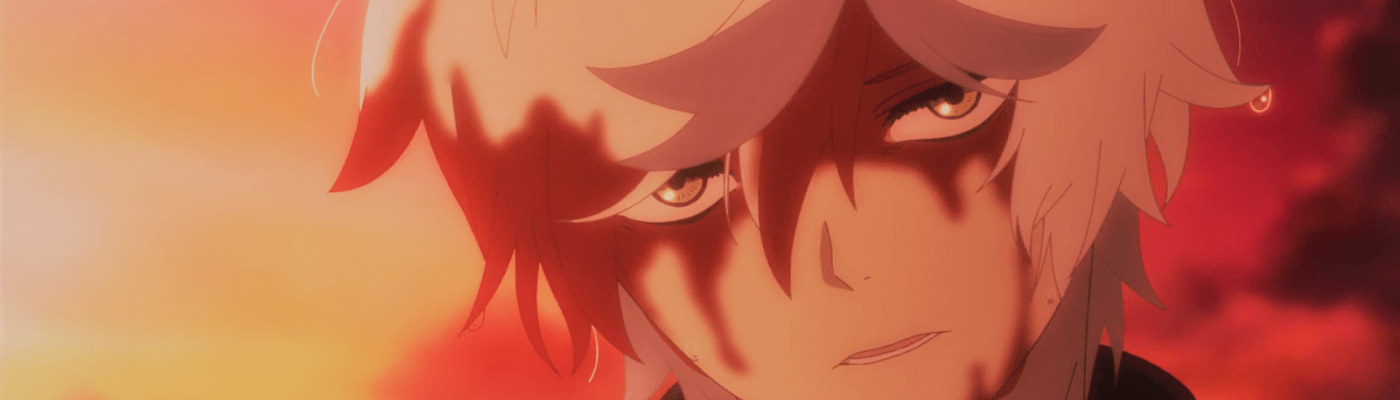
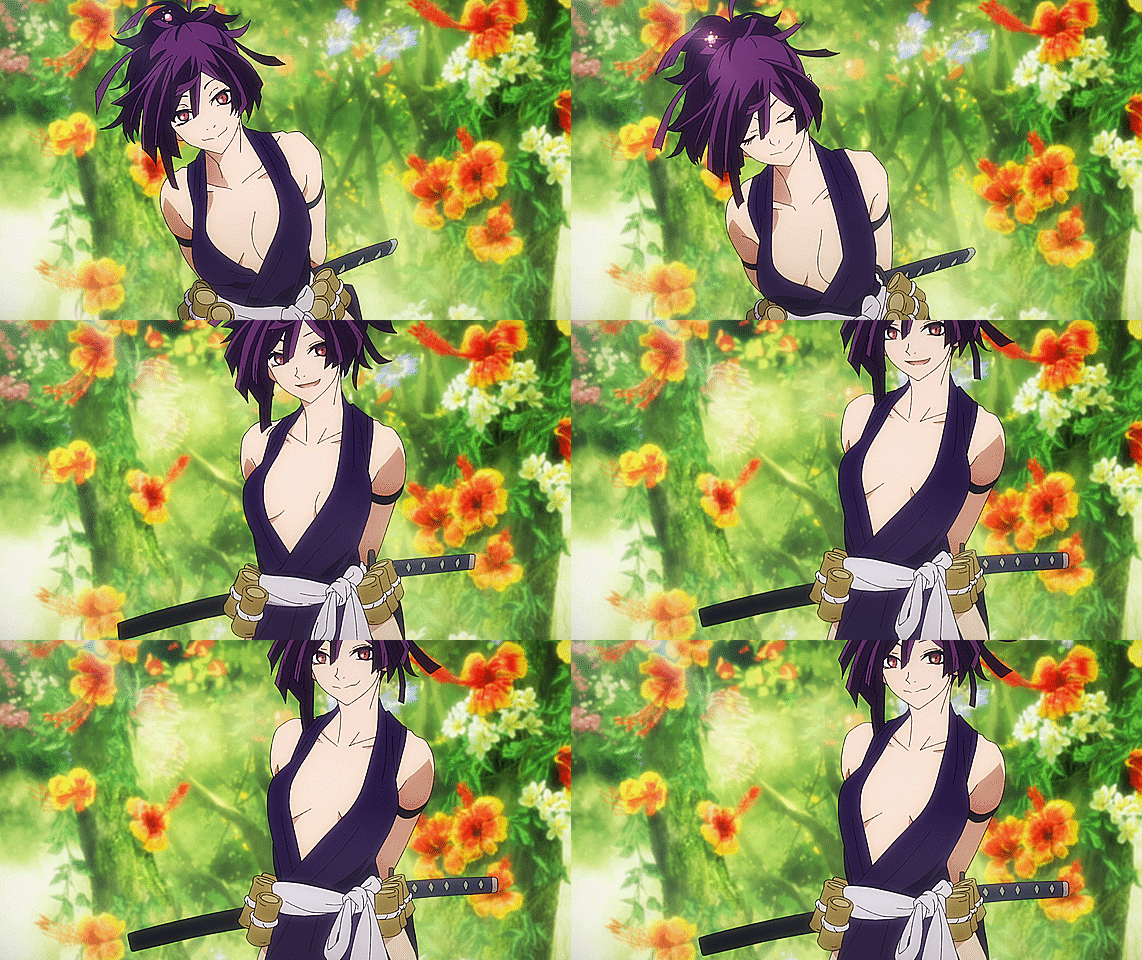
Hells Paradise is certainly an awesome-looking anime with high quality art and animation. The way the characters look isn’t super stylized, but still manages to be distinct enough. Character designs are colorful and memorable but not too over-the-top for the most part. Yuzuriha stood out quite a bit with eccentric clothes and purple hair, while Sagiri had a classically beautiful appearance, tall with long black hair. The balance of character styles was nice. I’ve seen Gabimaru’s physical type in anime several times – short and lean with white hair – but he still made it work.
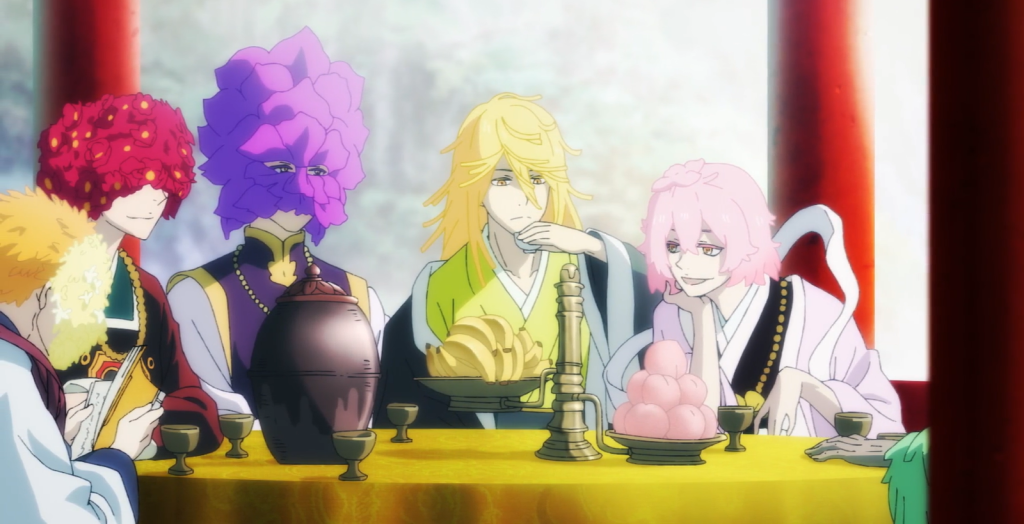
The designs for the antagonists, the Tensen, were especially creative. They have brightly colored hair and eyes, soft-looking skin, and attractive bodies. It all helps to show they are strange, but godlike and close to physical perfection. The creature designs were good, too. The Soshin monsters on the island had very weird appearances, sometimes reminiscent of AoT Titans, which worked to make them unsettling and threatening. Additionally, those bizarre butterflies and giant centipedes looked impressive and frightening.
Shadows and lighting throughout the series was great, looking especially cinematic during some of the key scenes. The lighting was usually good and bright, but not overwhelming. Another great element of the visuals was the color pallet. It was diverse and highly saturated, with mostly red, yellow, pink, purple, and white. The backgrounds and scenery on the island looked stunning, with flowers so colorful and beautiful they look like candy.
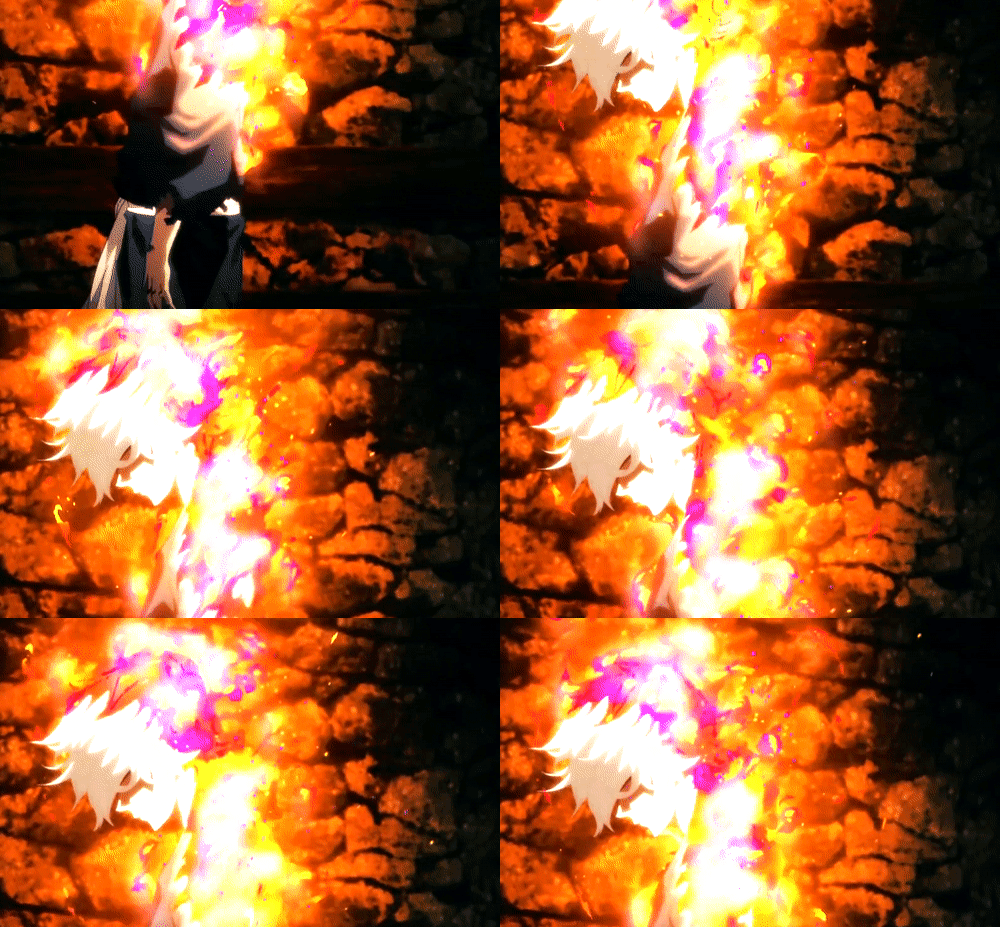
Other elements to mention include animation and face expressions. I pay a lot of attention to expressions, as it helps me connect emotionally to the characters. The face expressions in Hells Paradise were great – they often subtle, but I liked that. The animation was about average in terms of fluidity for most scenes, but the level of detail was higher than in the average anime. Action scenes were generally much smoother-looking, and characters had a lot of cool moves and interesting visual effects. My favorite visual effect was definitely Gabimaru’s neon fire.
All in all, the visuals were amazing. This is especially surprising and impressive given that it’s studio MAPPA, which failed miserably to make Attack on Titan’s final season look good. Vinland Saga season 2 was an improvement, but still not top-tier. Hell’s Paradise, on the other hand, is a feast for the eyes. Well done, MAPPA.
Story: 8/10
Hells Paradise is set in the Tokugawa period, which lasted from 1603 to 1867. Since there is a reference to the 47 Ronin taking place recently, the story is probably happening in the early 1700s. The premise is that a group of death-row criminals are offered a pardon from the Shogun if they can bring back the Elixir of Life from the mysterious island of Shinsenkyo. Each criminal will be escorted by a member of the Yamada Asaemon clan, who serve as executioners, sword testers, and samurai warriors.
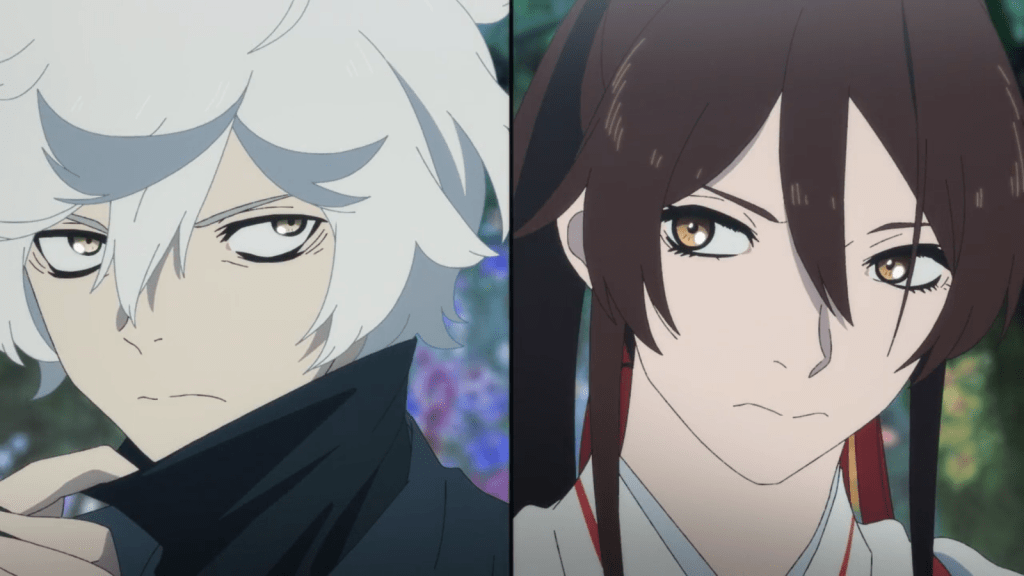
In that context, “Gabimaru the Hollow” is a shinobi boy who has ruthlessly killed many victims. Since he loves his wife, he has a strong reason to live. Accompanied by the executioner woman Sagiri, Gabimaru goes to the island to find the Elixir. But what he finds instead is a strange land with heavenly beauty and hellish monsters. His first task is simply to survive this cursed paradise. The ninja powers used by Gabimaru are the stuff of fantasy, as are the monsters and the spiritual power system of Tao. As you can see, the story contains an interesting mix of history and fantasy.
The story was well-written and followed a good structure. The pacing was extremely fast for the first two episodes or so, before slowing down when the characters reached the island. Episodes three to thirteen cover only three days in-universe. But because so much happens on the island to so many different characters, the pace never feels too slow. The conclusion was a little bit clumsy, but it mostly sufficed. During the last episode, the anime introduced an interesting psychological plot twist: Gabimaru has lost his memories. That final surprise was brilliant, in my opinion.
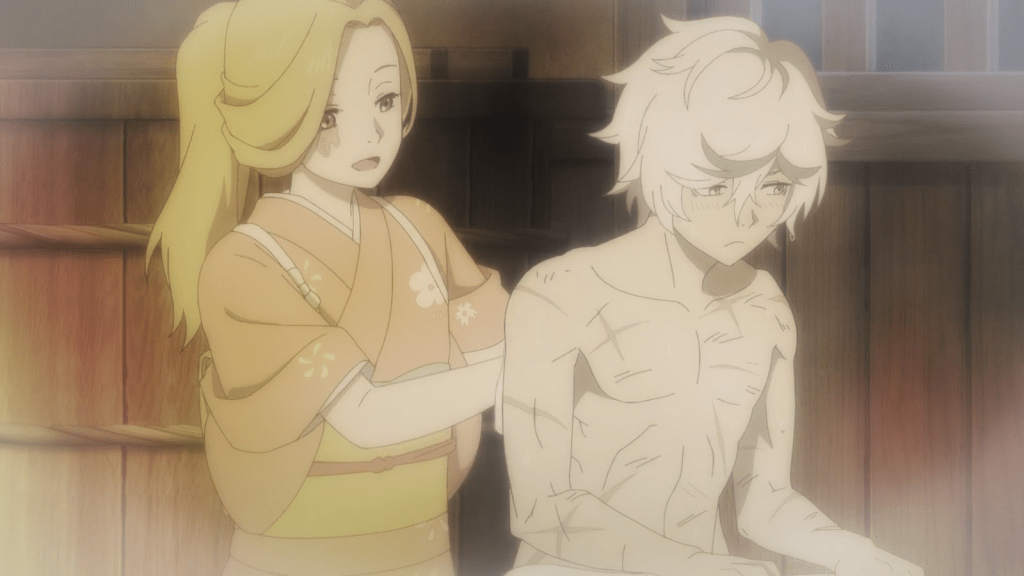
Within Hell’s Paradise, there are fascinating mysteries and bits of lore. The world-building was done very well. I especially liked how several of the characters tried to analyze the monsters and the religious symbols for clues about the truth. We still don’t know all the answers, but we are getting somewhere slowly. Part of world-building includes the power system, a spiritual force called Tao. This was definitely an interesting system. I may write more detailed thoughts on Tao in a separate post.
If there’s one thing I love about this category, it’s mentioning the story themes in an anime. Those in Hell’s Paradise surpassed what I expected for what is technically a shounen action anime. The themes include: discovering truth, finding true strength, balancing the mind and emotions, learning from others, and developing compassion. Tao being the balance of strong and weak energies is supposed to reflect the dichotomy of human experience – kindness and aggression; passion and calm; female and male, etc.
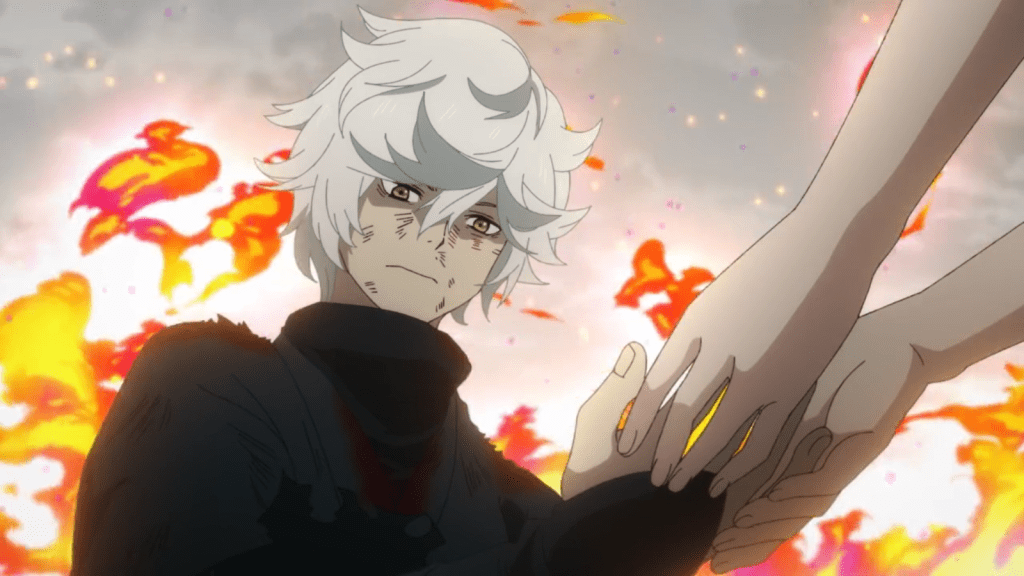
Since I’ve mostly been praising the story, let me make a quick criticism now. The biggest problem was that backstory was only explored directly before a character’s death. This happened with Rokurota, Tenza, and Senta. It’s a weakness because it allows audiences to easily predict who is going to die. Other than that, there were no major problems with the story category that I saw. One could complain that there are too many recycled elements, and Hell’s Paradise is unoriginal. But on the other hand, I think that’s the case with virtually any anime of a given genre. The story category easily deserves 8/10.
Audio: 8/10
Very little if any instrumental OST tracks stuck out at me, but the songs in Hell’s Paradise are pretty damn good. Opening song “W●RK” was performed by Millennium Parade and Sheena Ringo. It’s an unusual style, and I didn’t like it at first, but it grew on me over time. The better song, however, is definitely the outro: “Kamihitoe” by Uru. It is an astoundingly beautiful ballad that stirs up the emotions, especially during the chorus. It ties with the Dr. Stone: New World ending for my favorite anime song of the season.
Next, let me ramble about the Japanese voice-acting, which I so love to do. Chiaki Kobayashi played Gabimaru. This young seiyuu is relatively new to the world of voice-acting in anime, but I was impressed with how he pulled off his roles in Tomodachi Game and The Ice Guy and His Cool Female Colleague. Kobayashi has a very cool voice that reminds me a bit of Kouki Uchiyama, who is often typecast into roles like Gabimaru. I love Uchiyama, but I’m glad Kobayashi got this role. It’s good to have some new, fresh voices in the mix.
I would love to thoroughly discuss about at least five other cast members, because so many of them are awesome, but I’ll limit myself to two for brevity’s sake. As I mentioned, Mamiko Noto voiced Gabimaru’s wife, and did perfect as always with her mature and musical voice. Whoever played Yuzuriha did a fantastic job too, so I looked her up. Much to my surprise, the voice actress was Rie Takahashi, who I know as Emilia from Re: Zero. I’m shocked that the same person who voiced the sweet and shy half-elf can also pull off such a confident, sassy ninja girl. The voice-acting cast for Hell’s Paradise is awesome.
Characters: 7/10
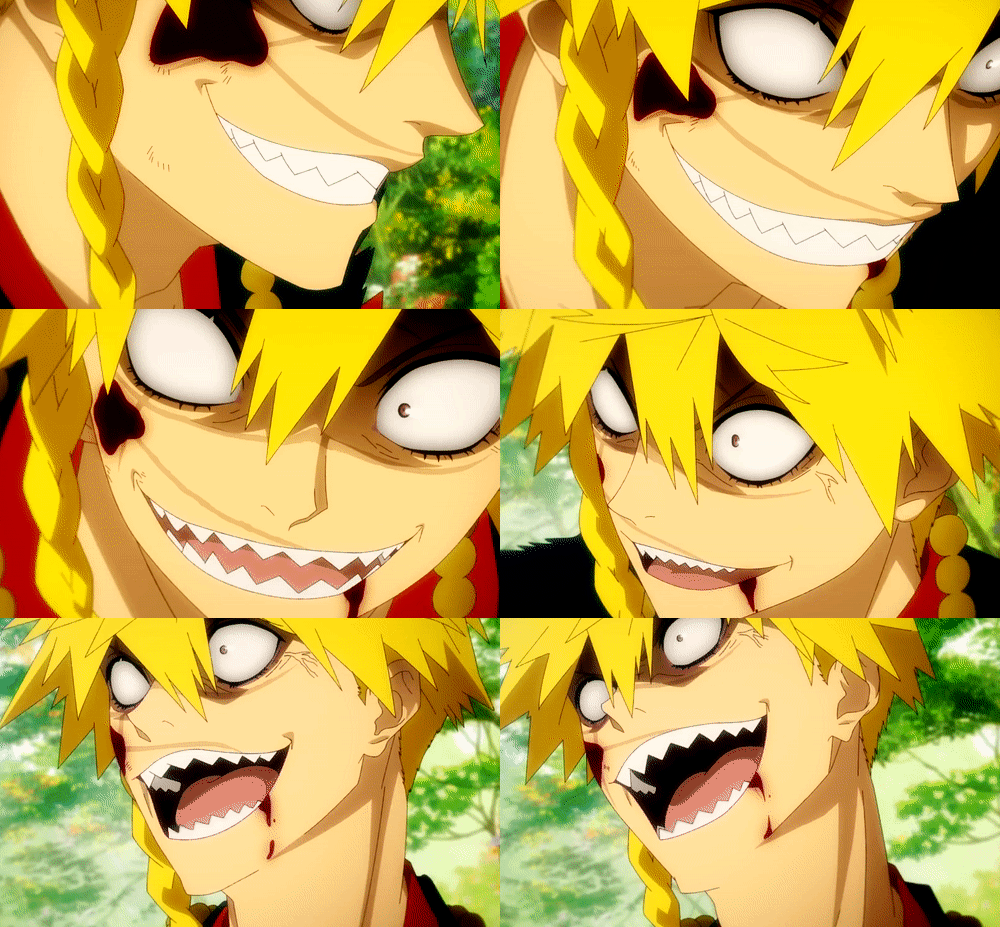
There were some significant issues with this category. The main problem was that the character concepts were lacking in originality. Almost every character was a trope incarnate. Nurugai, for example, is the last living member of an Emishi clan who was massacred by the Shogunate. Shion is the typical blind teacher character. Yuzuriha and Gabimaru are ninjas, which isn’t a very creative concept in anime. Senta is the typical sweet-natured bookworm, while Fuchi is the creepy nerd from biology lab. Even Chobei is a stereotype of an insanely enthusiastic, bloodthirsty bandit. The character concepts were unimaginative.
Beyond having overused starting concepts, some of the characters were also poorly developed. I’ve already pointed out how a few characters only got backstory on the episode of their death or defeat. That’s bad writing. The surviving characters had varying levels of growth and exploration, but nothing more than the bare minimum. Gabimaru and Sagiri were exceptions, since they were fairly well developed over the course of thirteen episodes.
Given these issues, I would normally grant the character category a sad score of 5/10. But that’s only one side of the story. There were also positive elements regarding this category. Even if the cast had overused starting concepts, the execution and delivery of these characters was genuinely good. With very minor exceptions, the characters are all likeable and relatable. There’s something to be said about making your characters more “fun” than original. Additionally, I thought Sagiri was a good counter-example to the general rule of trope characters. She was quite original.
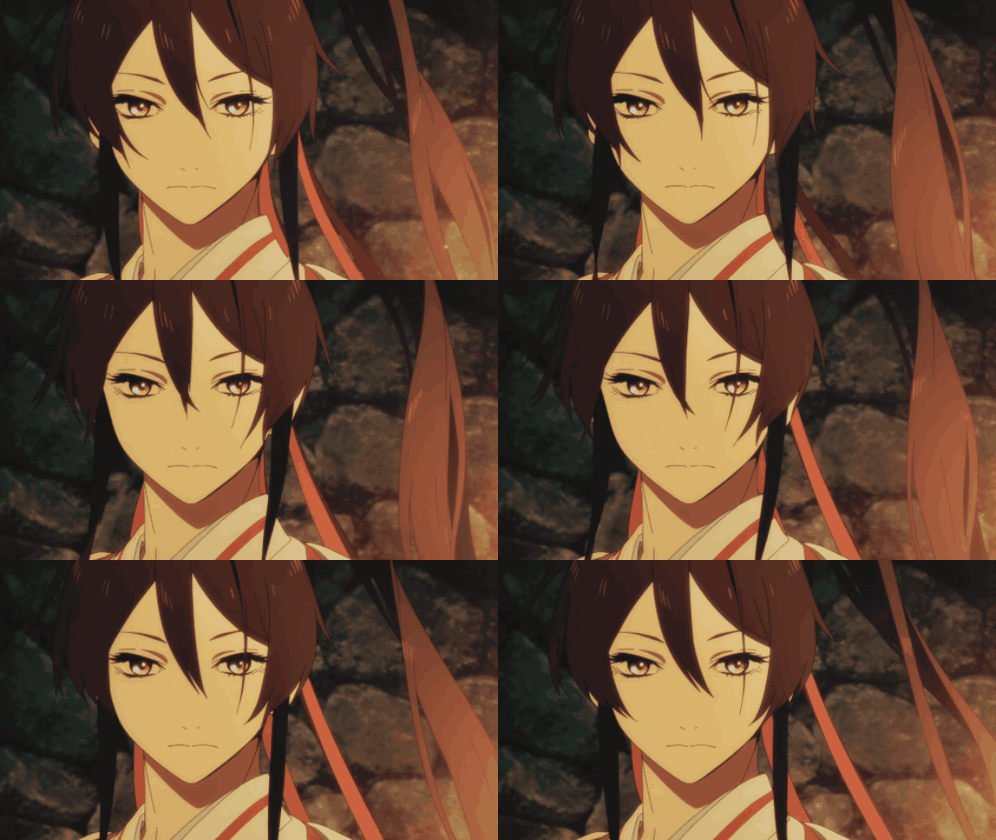
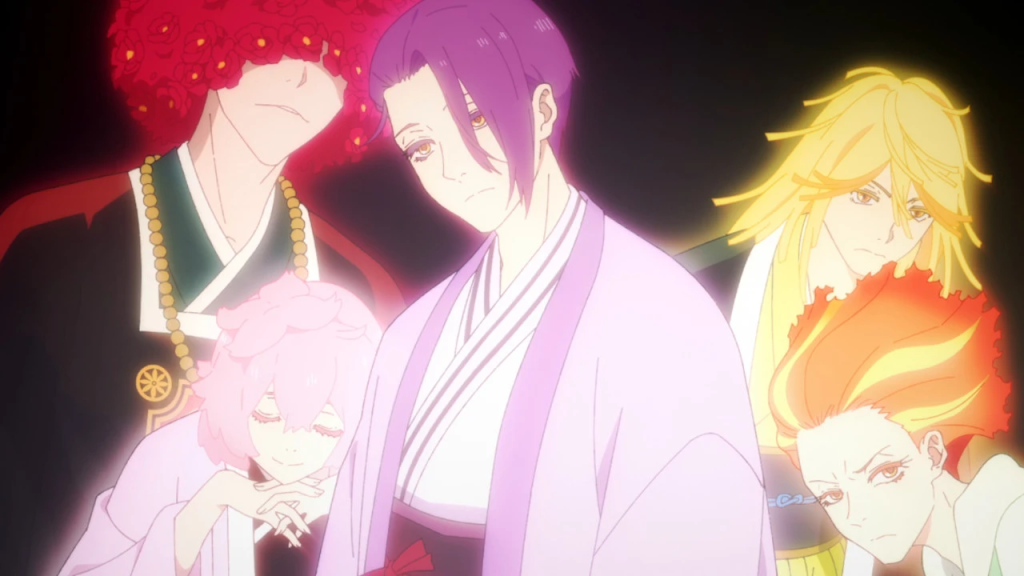
Speaking of Sagiri, another thing that Hell’s Paradise did well was its female characters. Compared to the average action anime, there was a better ratio of male and female characters. There were three strong women protagonists in addition to a the adorable Mei and a few feminine antagonists among the Tensen. And speaking of them, although we only got surface-level looks into their characters so far, the Tensen seem extremely interesting. I was especially intrigued by the fact that they seemed to have individual gender identities despite having no decided sex. (They can take both male and female forms.)
I found myself excited for Hell’s Paradise every week, and the characters were the main reasons for this. In short, this category was definitely imperfect, but because I enjoyed the characters so much, I think a score of 7/10 is reasonable.
Personal Enjoyment: 8/10
By and large, I truly enjoyed Hell’s Paradise. I’ll give a few examples of elements I appreciated, but first, I’ll include two examples of what I did not enjoy. The main problem was that in this anime universe, weakness and gentleness are associated with Yin energy and are exclusively feminine traits. The masculine traits are strength and Yan energy. Although Hell’s Paradise makes it very clear that both types of energy are equally important, it still feels wrong to me. Why should feminine things always be weak? Can there not be gentle masculinity? This issue was frustrating and rather sexist.
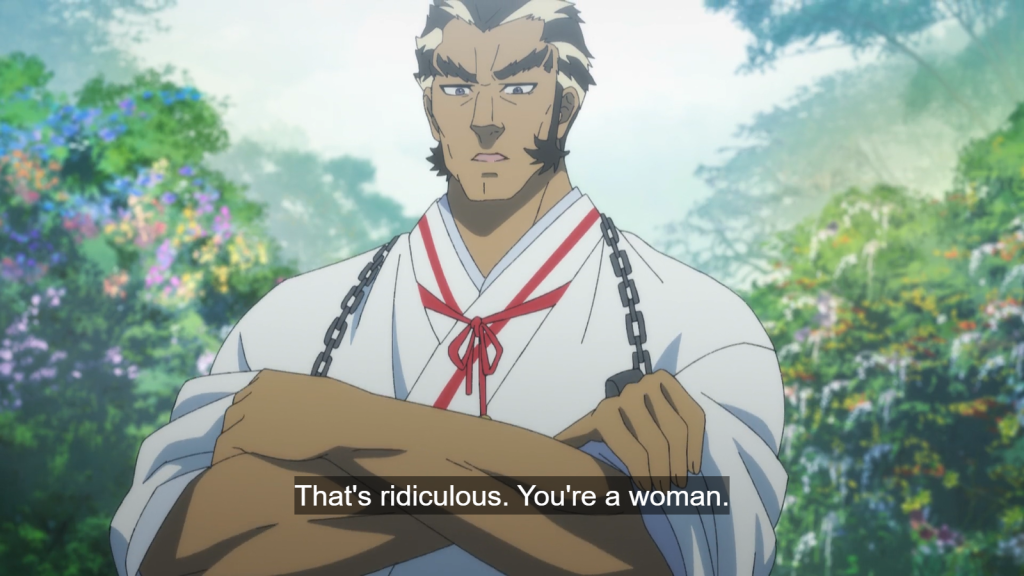
On a somewhat related note, I also didn’t like that one’s assigned sex at birth is apparently the decider for what kind of Tao energy a person gets. Males always have Yan energy and females always have Yin energy. Moreover, normal humans can never have two kinds of energy. (Only the nonhuman Tensen have this trait, since they can take both male and female forms.) These rules set up a strict gender binary, which isn’t how things work in reality. Plus, it means humans apparently can’t be nonbinary or genderfluid. As a nonbinary and gender-nonconforming person myself, I naturally dislike these limiting ideas.
As I mentioned earlier, there were a few problems, but I still had a lot of fun watching Hell’s Paradise. The good pacing and action made it exciting and easy to pay attention to throughout the season. I also enjoyed some of the story themes, like embracing difficult emotions to find true strength. The audio-visual quality of this anime was also key to making it so enjoyable. I loved the face expressions and a lot of the lighting choices and visual effects. The flowey scenery of Shinsenkyo is the stuff of dreams. It’s nearly impossible to skip the ED song because it’s so beautiful and soothing.
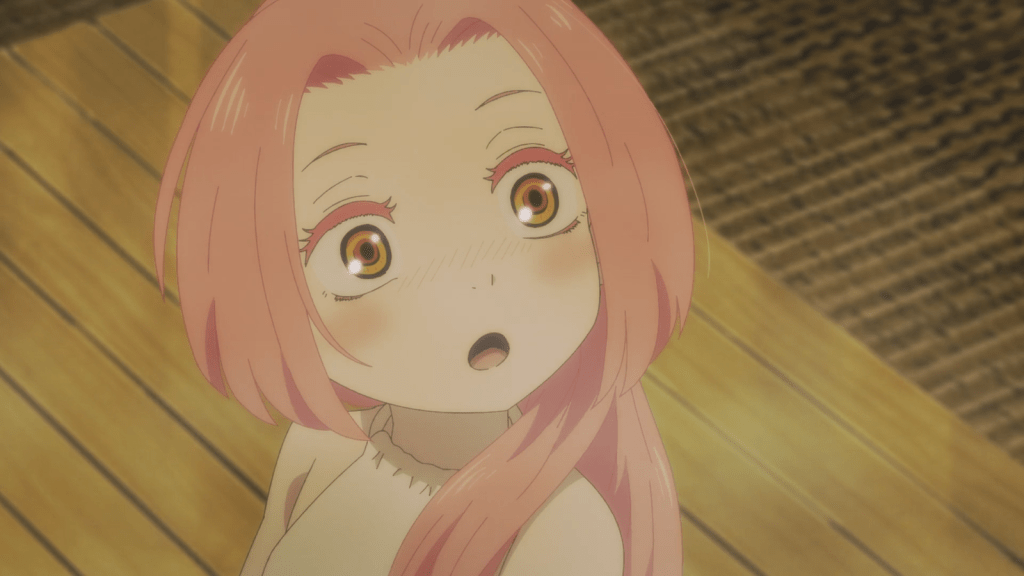
The characters were another great source of enjoyment for me. My three favorites of the Samurai clan of Yamada Asaemon were Sagiri, Senta, and Shion. My favorite criminals were Gabimaru, Nurugai, and Yuzuriha. They all have really interesting, cool, or funny character elements. If I had to choose one single favorite, it would be tough, but I would probably pick Sagiri. Her personality is really admirable and amazing to me because she’s so strong and so compassionate. On a final note, I would love it if Nurugai would give me a hug, too.
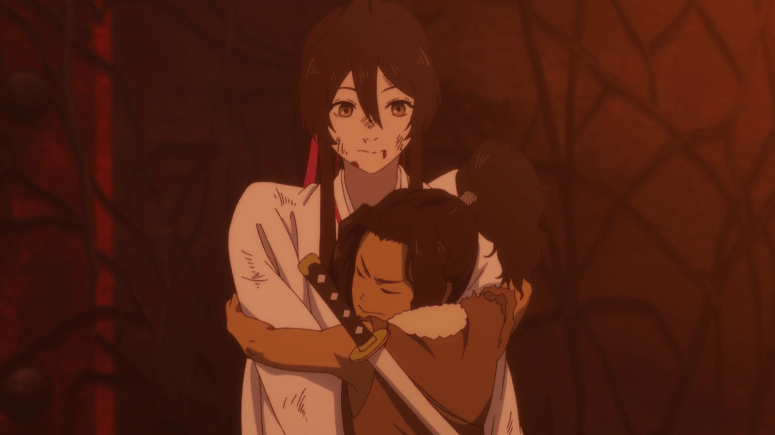
Overall Score: 8.0/10.0
The overall score is the average of the five scores for the other categories. 6s are average, 7s are pretty good, and 8s are great. Hell’s Paradise has been very well received not just by me but across the anime community. The series is currently sitting at 8.20 on MyAnimeList.net and has a median rating of “Very Good” on Anime News Network.
Hell’s Paradise wasn’t my #1 choice from Spring, but it’s definitely a good anime. I highly recommend it to anyone who enjoys historical fiction, fantasy, and shounen elements like high action and an interesting power system.
Thank you for reading~


One can only wonder what magical force keeps Yuzuriha from just flopping out of her top. That clothing isn’t very practical. Otherwise, I agree with your ratings on everything.
LikeLiked by 1 person
LOL
LikeLiked by 1 person