Spoiler Warning: Contains Spoilers for all but the last season of Beastars.
Content Warning: This discussion will include mentions of sexual assault, rape, cannibalism, and other dark topics.
From the story and characters to the songs and unusual 3D animation, I love Beastars. For this article, I am only referring to the anime because I still haven’t read the manga. Despite my personal enthusiasm for this series, I am well aware that it comes with issues. First of all, Beastars does a pretty poor job with queer representation despite plenty of opportunity. For another, the narrative shames and punishes characters for being sexually liberated. These issues are so typical in anime that I can usually look past them. But I haven’t yet mentioned the biggest potential problem with the story of Beastars. The worst reading of the meaning is enough to make or break my enjoyment of the show. If the creators were truly trying to impart this harmful message, I might lose my appreciation for Beastars. (Something similar happened when I lost interest in Made in Abyss after the pedophilic pandering was pointed out to me.)
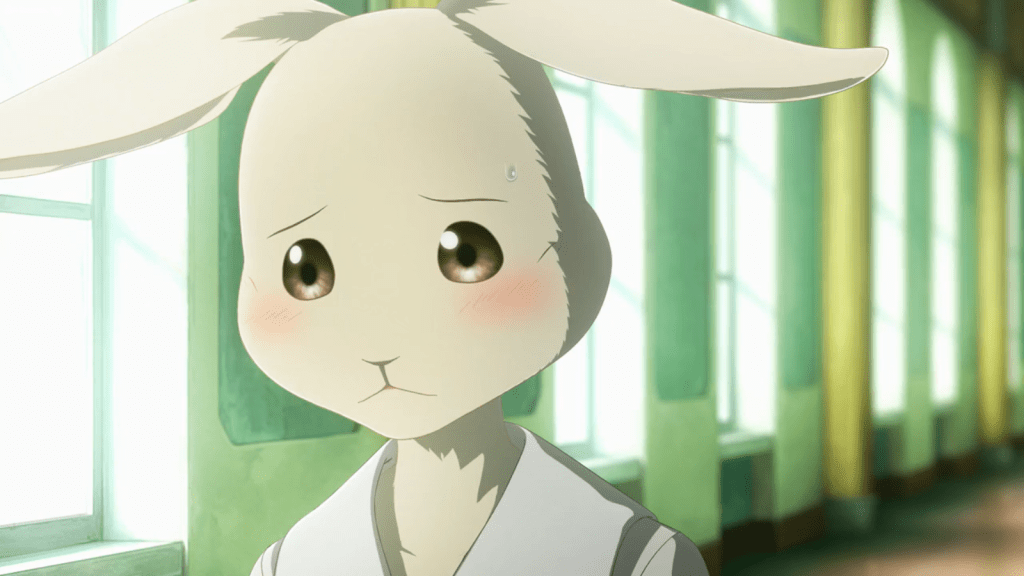
The bad reading of Beastars is that the whole thing is a purely sexual analogy meant to apply to humans. Devouring is code for rape. Carnivores are men: natural predators who have instincts telling them to sexually assault those who are victims. Herbivores are women, and they have instincts toward wanting to be chased and/or actually victimized. Obviously, this is a horrendous way to view sexual relationships between humans. It’s also not reflective of reality. Men are not naturally predatory, and women don’t want to be assaulted. These truths should be fairly obvious, and yet there are Reddit posts by fans saying that Beastars made them “feel seen as men” because of the carnivore analogy. If this is the true meaning of Beastars, it is disgusting and wrong.
As of right now, I am not convinced that Beastars was trying to say something so incorrect and damaging, but I may become convinced with better arguments or evidence than what I currently see. I think Beastars’ main message is much broader, if it has one at all. I don’t think every show must always have a meaning that relates to reality. Some shows can just be enjoyed without trying to make allegories. That being said, Beastars seems to be about existing in society without making assumptions or holding to prejudiced views. It’s about making the most of what you have – including biological disadvantages – and still being a moral person. It also points out the darkness of human society and human nature with our tendency to use and abuse others to satisfy our own wants and needs. Humans, in this way, “devour” each other all the time. It’s only a loose analogy, and it’s still not true that anyone has “insticts” of wanting to be abused. Again, there doesn’t even need to be a poignant analogy for Beastars to be enjoyable as fiction.
As you can probably guess, the event that inspired this anime rant was the release of Beastars Final Season Part 2. It dropped on Netflix in late March 2026 and I have yet to see it as of the time of writing this article. First of all, I was out of the anime news loop and didn’t hear about the release until April. I don’t regularly check or use Netflix, so it caught me by surprise. Secondly, I haven’t seen the final season yet because I’m afraid I won’t like it. Nevertheless, I have decided to watch the last 12 episodes as soon as I’m done writing this anime rant. As scared as I am, my excitement outweighs it. I will be covering the episodes here on Anime Rants as an extension of my Spring 2026 episode reviews. In case anyone needs some reminders, let’s briefly review Beastars so far.
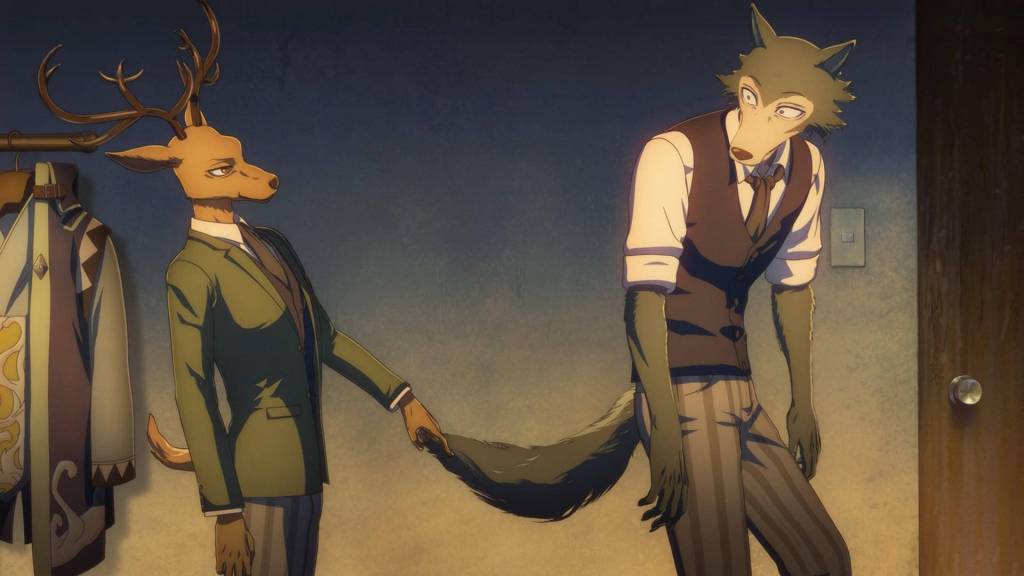
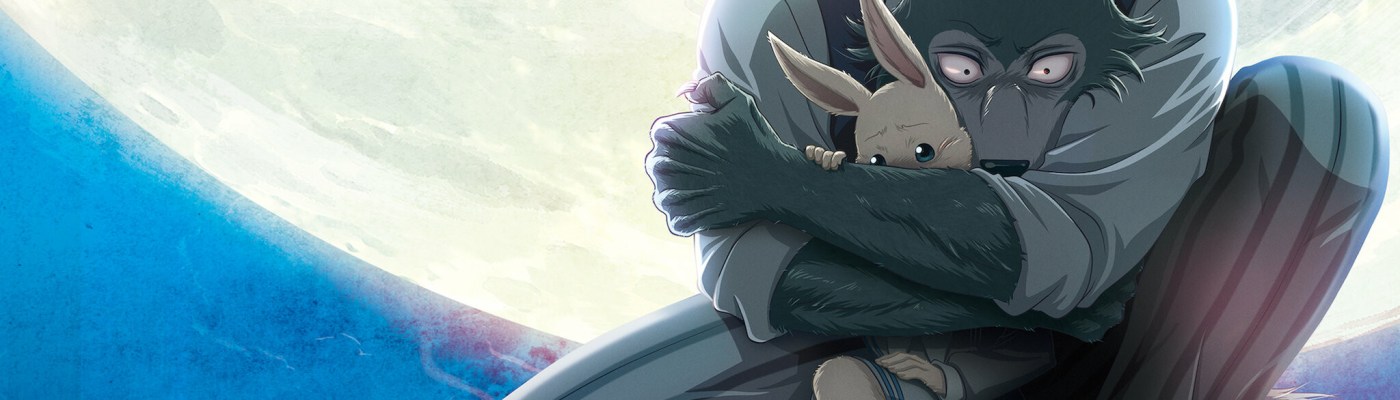
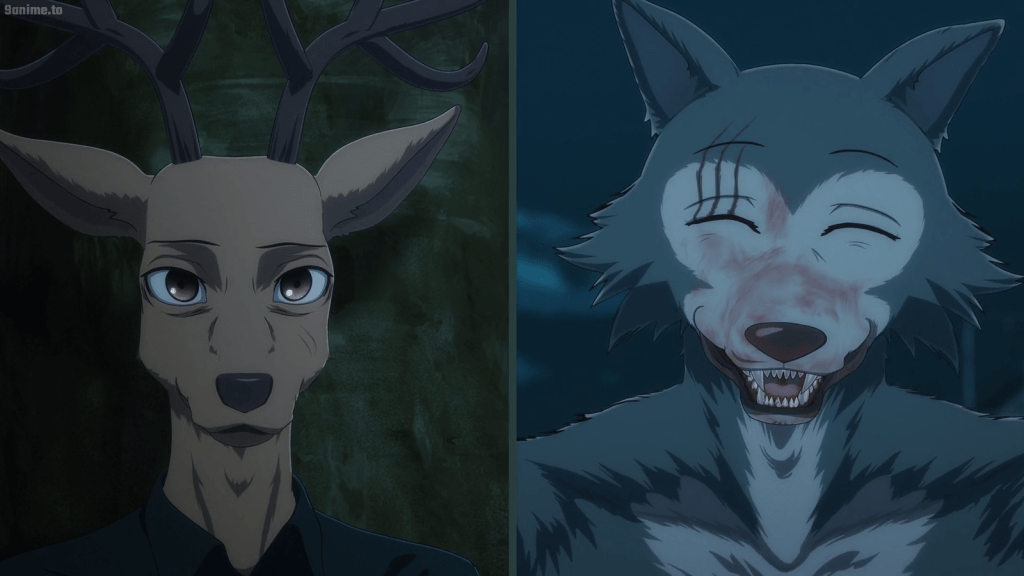
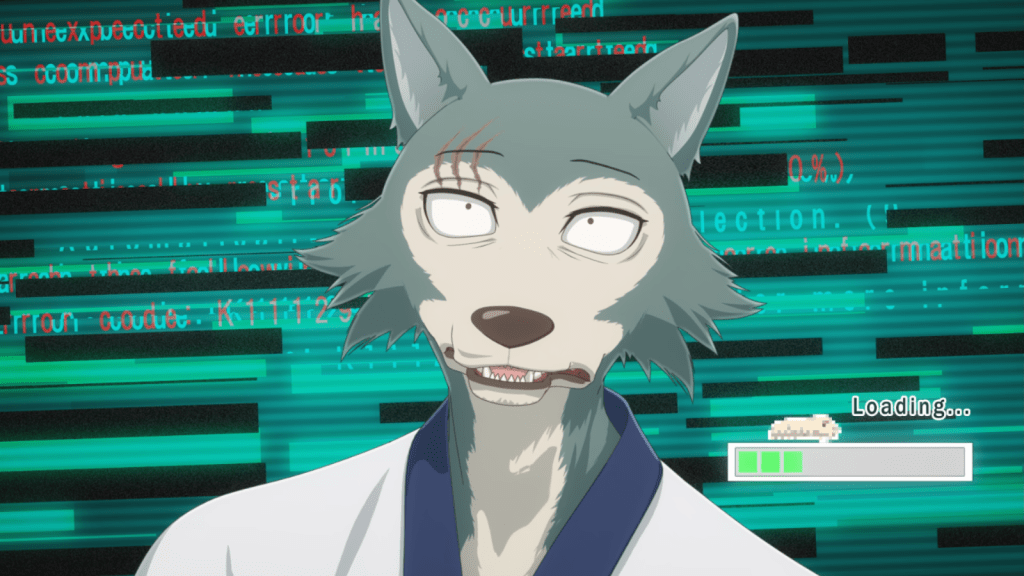
One night, a gray wolf named Legoshi instinctively attacked a rabbit named Haru, but in his hesitation to eat her, she escaped. Later, the odd pair of animals met and befriended each other at Cherryton High. As Legoshi tried to become a friend to herbivores, he struggled at the same time with the desire for meat. Season one established the relationship between Legoshi and Haru as well as introducing Louis, the red deer and aspiring future Beastar. After the Lion Group mafia kidnapped Haru, Legoshi saved her and Louis helped. He then went missing after killing the boss of the lions. In this season, we also learned about the tragic death of Tem, the alpaca, to a mysterious devourer at school. In the second season, Legoshi was tasked with solving this dreadful crime and bringing Tem’s killer to justice. His relationship with Haru, in the meantime, was unofficial and rocky. Elsewhere, Louis worked as the new leader of the Shishigumi (Lion Mafia).
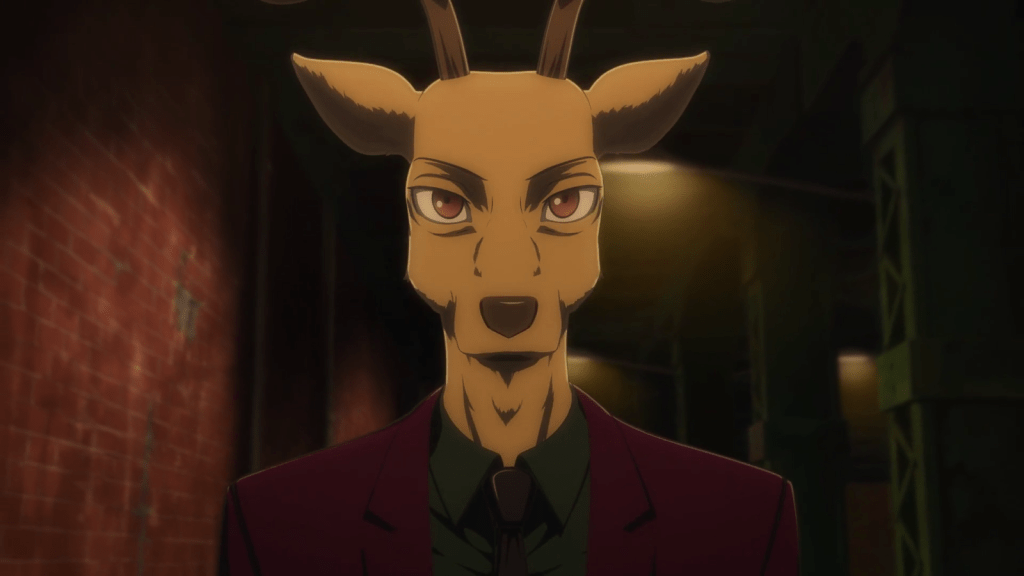
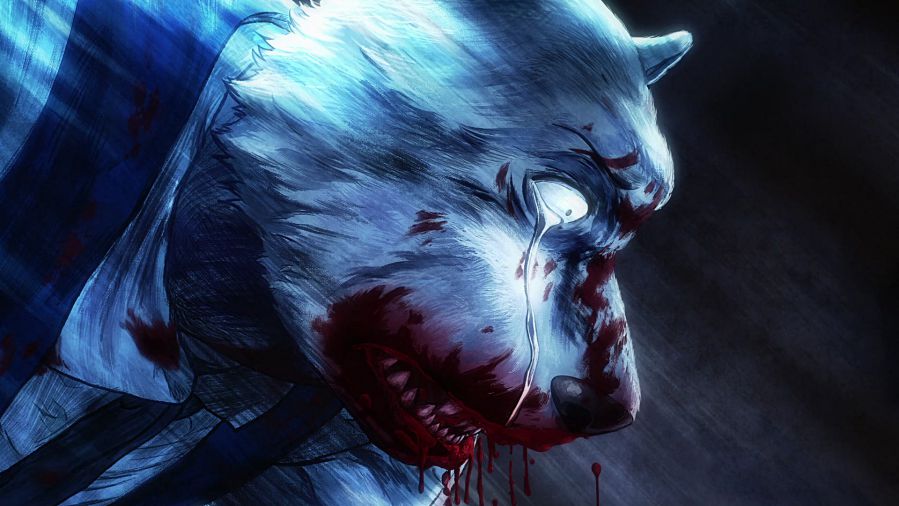
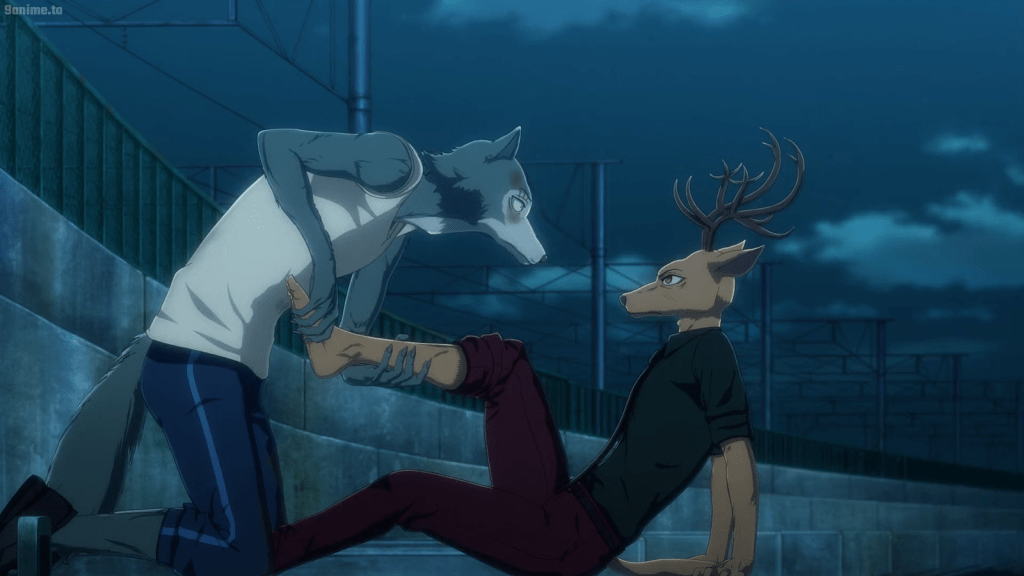
By the end of the second season, Legoshi found out that Tem’s killer was Riz the Grizzly Bear. The wolf engaged the bear in a deadly fight at night. After escaping the mafia once and for all, Louis encountered Legoshi, who was planning to fight Riz to the death and was badly wounded already. Desperate to keep Legoshi alive, Louis offered his own leg as a sacrifice. Despite all his training with Gouhin the Panda to resist meat, Legoshi was overcome with hunger and devoured Louis’ foot and lower leg. The superhuman strength from the meat helped Legoshi survive. But the final result of the fight was unknown because Riz decided to give up and turn himself in. Legoshi was put on a list of known devourers. At the end of the season, he dropped out of Cherryton High. As for Louis, he went back to finish his education and was given a fancy prosthetic leg.
A lot happened in the third season (Final Season part 1). The current Beastar, a horse named Yahya, convinced Legoshi to help him in his superhero work of restoring balance and protecting herbivores. Yahya needed Legoshi’s help in catching a serial murderer named Melon. This season taught us about “mixes,” – individuals born from parents of two different species. Regarded as freaks of nature, mixes usually have trouble fitting in and often have health issues or other disadvantages. Melon was a mix betweeen a leopard and a gazelle. We also learned that Legoshi was one-quarter komodo dragon, and that his mother killed herself after failing to accept herself as a mix (half dragon). Despite Melon being a psychopath, Legoshi still wanted to be with Haru and have children with her some day. Meanwhile, Louis struggled to love his fiance, a fellow deer, because he was sexually interested in carnivores more than herbivores.
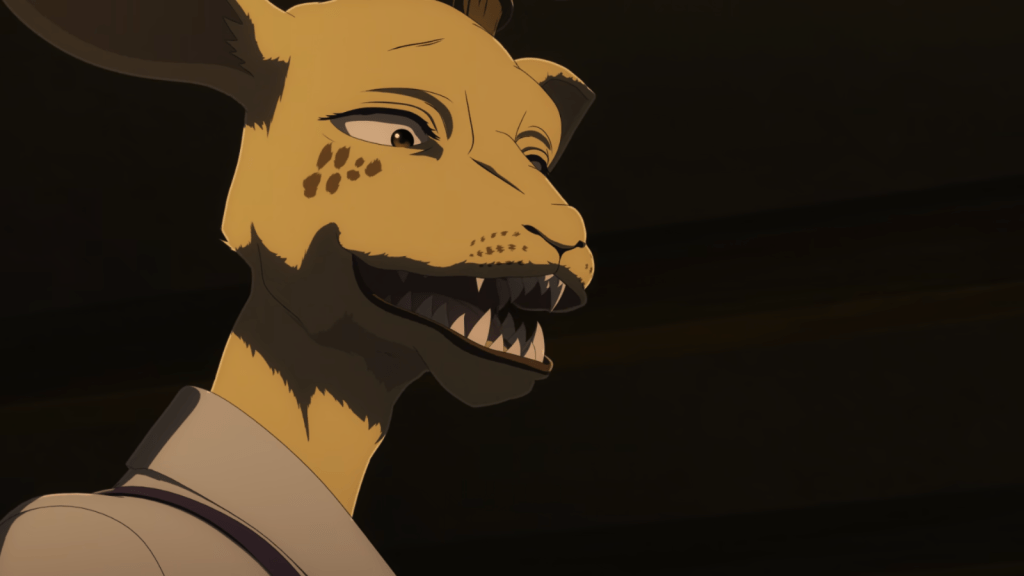
At the end of the season, Legoshi was targeted by Melon and tricked into meeting him alone. Melon threw Legoshi bound and gagged into the ocean. This is the cliffhanger we were left with at the conclusion of the final season part 1. Importantly, though the narrative depicts a soceity in which mixes are treated unfairly, it does not distinctly approve of the unfair treatment. Legoshi and we the audience believe that mixes should be treated fairly and equally. The narrative is making that difficult, but it’s not saying that this is the way things should be. If that changes in Beastars Final Season Part 2, it’s another issue that could ruin my enjoyment of the series. I couldn’t enjoy a story that promoted discrimination. Hopefully, I’m just thinking too fearfully.
Despite my anxiety that I’ll dislike what I see in this season, my curiosity and excitement are driving me strongly. I plan to start watching Beastars Final Season Part 2 on the same day that I release this blog post. As I mentioned earlier, I will be covering the twelve new episodes here at Anime Rants. In summary, the worst understanding of the meaning of Beastars is truly horrible, but I don’t think it’s true. We’ll see how I feel about the narrative and its issues after I complete the final season.
~Thank you for Reading~
Written by 7Mononoke at Anime Rants


One thought on “Beastars Anime Rant (A Perspective Before the Final Season)”